
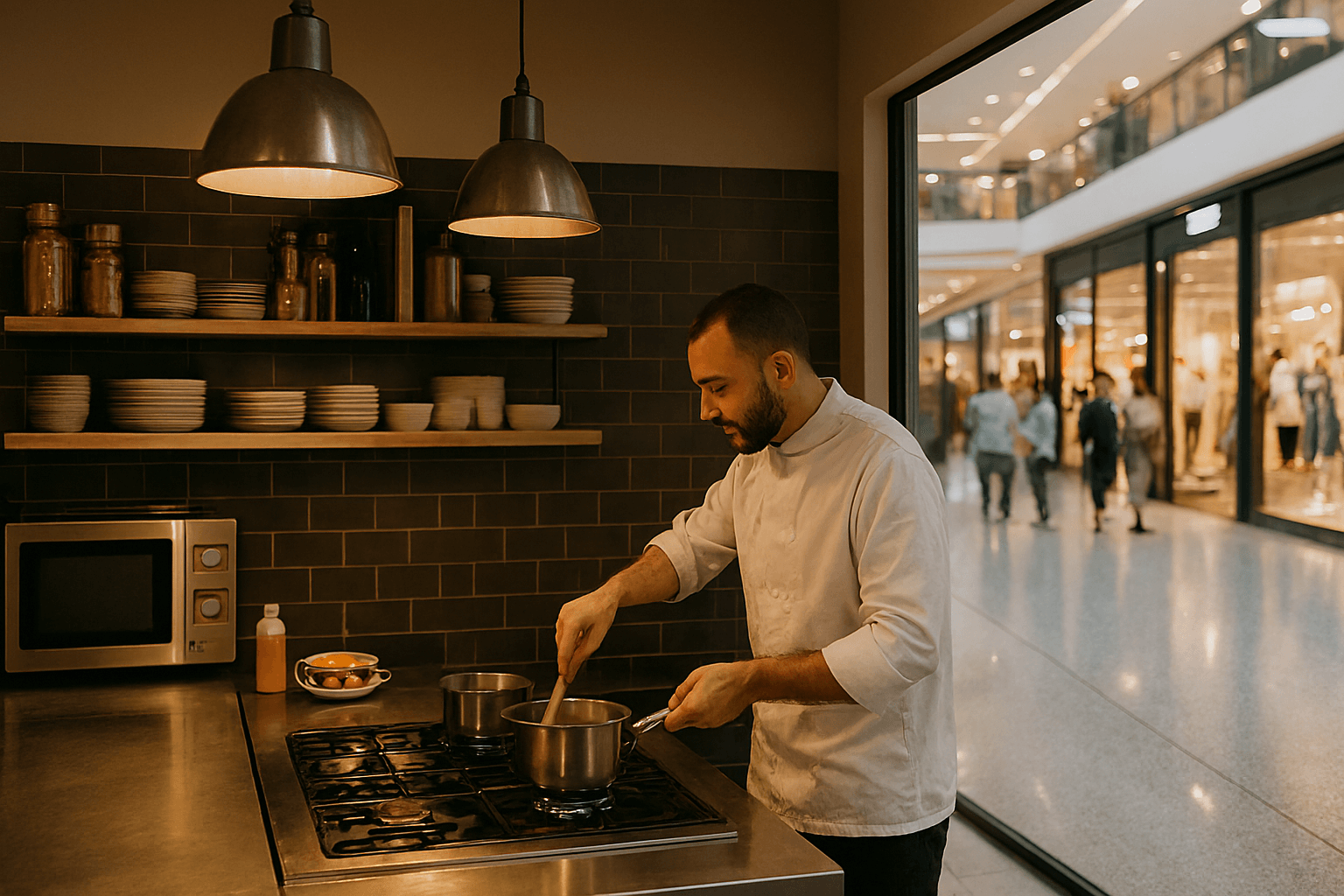
Hey there, fellow food fanatics and tireless restaurant trailblazers! Remember when “ghost kitchens” first started popping up? They were the shadowy figures of the culinary world – faceless, delivery-only operations tucked away in industrial parks. For a while, they felt like a fleeting trend, a pandemic-fueled experiment. But guess what? They’ve evolved. And the next stage, the “Micro-Kitchen,” isn’t just a trend; it’s a strategic move that could redefine how you think about expansion, efficiency and getting your delicious food into more hungry hands.
Forget the massive, multi-brand warehouses of yesteryear. We’re talking about something far more agile, strategic and, frankly, more exciting. Micro-kitchens are smaller, leaner, hyper-focused culinary outposts designed to slot into untapped niches and serve specific demand zones. Think of them as culinary special forces: small teams, targeted missions, maximum impact.
From Ghost to Micro: A Quick Evolution Check
The original ghost kitchen model had its perks: low overhead, pure delivery focus. But it also had its flaws. Long distances to customers often meant colder food, slower delivery and a disconnect from the local community. Not to mention the often exorbitant rents for large industrial spaces.
Enter the micro-kitchen. This isn’t just a downsized ghost kitchen; it’s a reimagining of the concept with a focus on:
- Proximity: Getting closer to the customer, drastically cutting down delivery times and improving food quality.
- Flexibility: Easily adaptable to various locations – think underutilized corners of existing businesses, small retail spaces or even purpose-built, compact units.
- Specialization: Often focused on a single brand or a very tight menu, optimizing for speed and consistency.
- Lower Initial Investment: Significantly less capital needed compared to a full-service restaurant or even a large ghost kitchen facility.
This shift isn’t just theoretical. It’s happening because consumer habits are cementing around convenience and quality. Convenience is becoming increasingly more important for consumers and consumers are more willing to try new brands that offer convenient delivery options. This is where micro-kitchens truly shine!
Why Should YOU Care? The Untapped Potential for Restaurant Operators
You might be thinking, “Another concept to wrap my head around?” But hear us out. Micro-kitchens offer solutions to some of the biggest headaches you’re probably facing right now:
1. Real Estate Headaches? Micro-Kitchens are the Aspirin!
Let’s be real, prime real estate is brutally expensive. Finding the perfect spot for a new full-service restaurant can feel like searching for a unicorn. Micro-kitchens offer an elegant workaround. Imagine setting up a compact kitchen in:
- A quiet corner of a bustling supermarket: Tapping into immediate grocery foot traffic for meal solutions.
- An underutilized hotel kitchen: Leveraging existing infrastructure during off-peak hours or for specific hotel dining concepts.
- A smaller, more affordable retail unit in a dense residential area: Directly serving a hungry neighborhood.
- Inside a large corporate campus: Catering to lunch crowds and after-hours events.
This flexibility allows you to expand your reach without the colossal investment of a traditional brick-and-mortar. It’s about being where your customers are, not just hoping they come to you.
2. Labor Shortage Woes? Streamline with Specialization!
The ongoing labor crunch is hitting everyone. Micro-kitchens, with their focused menus and streamlined operations, can be a game-changer. Instead of needing a full brigade of chefs covering every station, you can optimize for specific tasks. For instance, a micro-kitchen dedicated to gourmet burgers might have specialized staff for patty cooking, topping assembly and packing, making training quicker and operations more efficient.
This hyper-specialization can lead to:
- Reduced staff requirements: Fewer hands needed for a focused menu.
- Easier training: Staff master a smaller set of tasks more quickly.
- Improved consistency: Repetitive tasks lead to perfection.
3. Test New Concepts Without Breaking the Bank
Ever wanted to experiment with a new cuisine or a radically different menu item but balked at the risk of doing it in your main restaurant? Micro-kitchens are your low-risk sandbox. Launch a new virtual brand from a micro-kitchen, gather data, refine your offerings and, if it’s a hit, then consider scaling it. It’s the ultimate lean startup approach for the restaurant world.
4. The Data Goldmine: Precision Targeting
Because micro-kitchens are often delivery-focused (even if they have a small pickup window), they generate a ton of valuable data. You can track peak ordering times in specific neighborhoods, identify popular items for different demographics and even understand local weather impacts on demand. This data allows for incredible precision in marketing and menu adjustments, giving you a competitive edge.
The “How-To”: Launching Your Micro-Outpost
If you’re sitting there thinking, “Okay, I’m in. How do I shrink my operations without losing the soul of my food?” follow this roadmap:
- Audit Your Menu for “Travel-ability”: Not every dish is a road warrior. Pick the 5–10 items that hold their temperature and texture for at least 20 minutes. If it doesn’t look good in a cardboard box, it doesn’t make the cut for the micro-kitchen.
- Find Your “Host”: You don’t always need a new lease. Look into host kitchens – the practice of using another restaurant’s underutilized kitchen space to run your brand. It’s the ultimate “phygital” collaboration.
- Invest in the Tech Stack: This is non-negotiable. You need a unified POS that can aggregate orders from every delivery app into one screen. If your staff is juggling three tablets in a 300-square-foot space, efficiency goes out the window.
The Realities (Because It’s Not All Sprinkles and Cupcakes)
I’d be doing you a disservice if I didn’t mention the hurdles. While the overhead is lower, the competition for eyeballs is fierce. In a traditional restaurant, your signage does the marketing. In a micro-kitchen, you are at the mercy of the delivery app algorithms.
You need to be a digital marketing wizard. This means high-quality food photography, responding to every single review and using data to run targeted “Happy Hour” promos when the algorithm sees a dip in local traffic.
The Bottom Line: Adapt or Get Left Behind
The U.S. restaurant industry is currently in a “survival of the most agile” phase. The traditional model isn’t dying, but it is being forced to share the plate. Micro-kitchens offer a way to de-risk your business, explore new neighborhoods and meet customers exactly where they are: on their couches, in their offices or grabbing a quick bite at the grocery store.
Ready to Shrink Your Footprint?
The barrier to entry has never been lower, but the stakes for quality have never been higher. Whether you’re a single-unit independent or a growing regional chain, the micro-kitchen model offers a path to growth that doesn’t involve a million-dollar construction loan.