
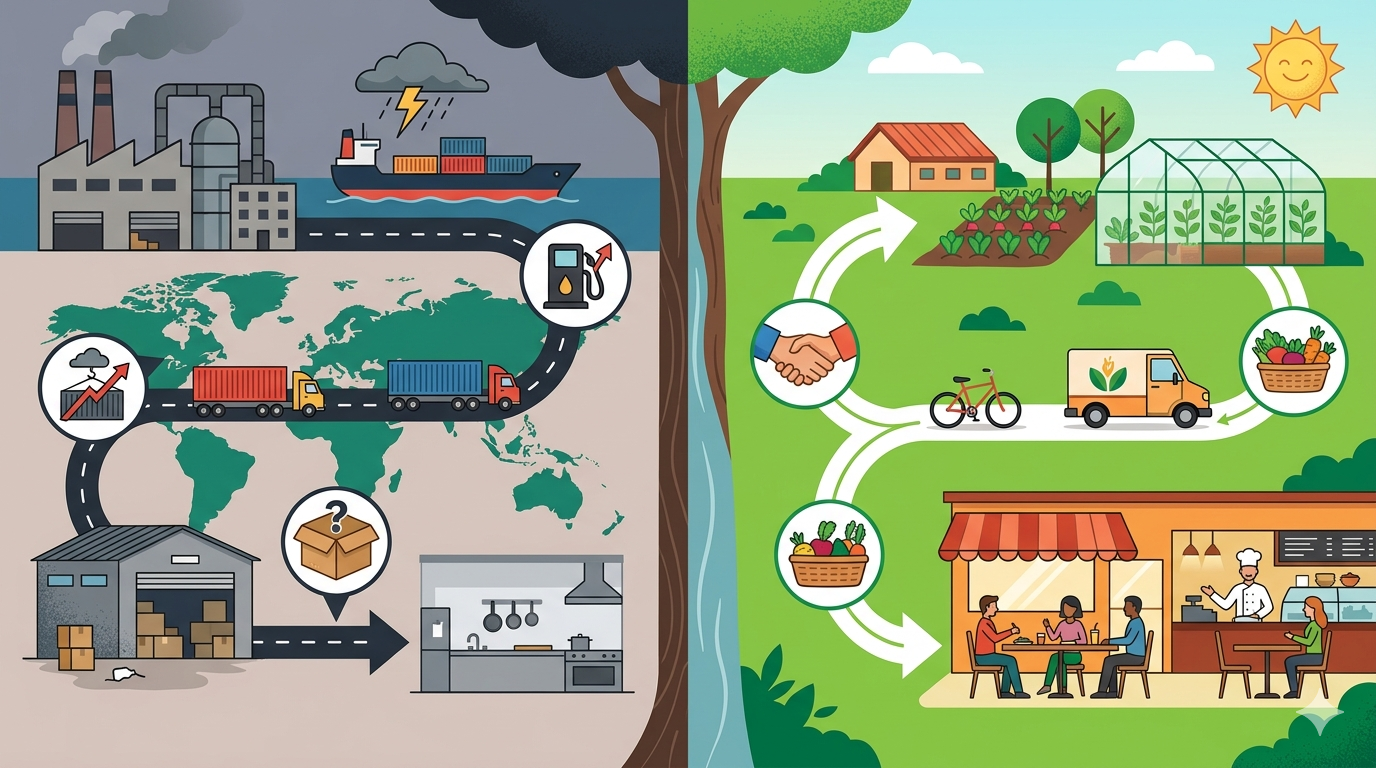
If you’ve managed a kitchen or a dining floor over the last few years, you’ve likely developed a sixth sense for “the call.” You know the one – it’s your broadline distributor calling at 6:00 AM to tell you that the romaine is out, the chicken thighs are stuck in a port three states away and the price of cooking oil has just jumped another 15%.
In the high-pressure world of 2026, global supply chains feel less like a well-oiled machine and more like a game of Jenga. One hiccup in international logistics or a climate event on the other side of the country can tumble your entire menu for the weekend.
But there is a silver lining. To combat this volatility, more restaurant managers are looking closer to home – literally. Welcome to the era of hyper-local sourcing. We’re talking about more than just “farm-to-table”; we’re talking about a strategic shift toward micro-supply chains that live within 50 miles of your front door.
Why “Hyper-Local” is No Longer Just a Marketing Buzzword
Historically, sourcing locally was seen as a luxury or a “boutique” choice, something for the high-end bistro with a chalkboard menu. It was often more expensive and took more time to coordinate.
However, in 2026, the math has changed. While local prices might be slightly higher on paper, the reliability of a local partner is worth its weight in gold. When you source from a vertical farm three blocks away or a cooperative of local growers, you aren’t paying for transcontinental fuel surcharges or refrigerated trucking. You are paying for food that is resilient to global shocks.
According to The Real Economy Blog, hyper-local sourcing has moved from a “nice-to-have” to a “risk-mitigation” strategy. By shortening the distance between the soil and the plate, managers are effectively “insuring” their menus against the unpredictability of traditional logistics.
The Operational Shift: Managing the “Micro-Sourcing” Model
Let’s get real for a second: swapping one massive distributor for twelve small vendors sounds like an administrative nightmare for a busy manager. How do you handle twelve different invoices, delivery times and quality standards?
The answer lies in the micro-sourcing tech stack. Modern inventory management systems now allow for ‘local hub’ integrations. Instead of calling twelve farmers, many cities now have digital cooperatives where you can see the daily inventory of dozens of local producers in one dashboard.
The “Flexible Menu” Strategy
To make hyper-local work, your kitchen needs to be agile. If the local kale crop is delayed by a week due to rain, your menu needs to reflect that. Successful managers are moving away from rigid, 20-page laminated menus and toward digital boards or high-quality daily inserts.
Building the ‘Human’ Supply Chain
The most beautiful part of hyper-local sourcing isn’t just the produce, it’s the relationships. When you work with a local baker or a neighborhood urban farm, you aren’t just an account number. You are a partner.
When things get tough — like a sudden freeze or a spike in demand — a local partner will go the extra mile for you because your success is tied to theirs. They might deliver a crate of emergency eggs in their own car just to make sure your Sunday brunch isn’t a disaster. You don’t get that kind of neighborly support from a global conglomerate.
As highlighted by The National Restaurant Association’s What’s Hot 2026 Culinary Forecast, the story behind the food has become a primary driver for guest satisfaction. Guests in 2026 want to know that the honey in their dressing came from the hives on top of the library down the street. It fosters a sense of community that builds incredible guest loyalty.
The Hidden Cost Savings: Waste and Shelf Life
We often focus on the purchase price of local goods, but we forget to factor in the waste price.
Traditional produce often spends 7 to 10 days in transit before it reaches your walk-in. By the time it gets to you, its shelf life is already ticking down. Hyper-local produce is often harvested and delivered within 24 hours. That extra week of freshness translates directly to:
- Lower spoilage: You aren’t throwing away “slimy” greens on Wednesday that you bought on Monday.
- Better flavor: Because the produce is picked at peak ripeness (rather than being picked green to survive shipping), you need less salt, fat and sugar to make it taste amazing.
- Smaller footprint: Your sustainability metrics improve automatically, which is a major win for the growing segment of eco-conscious diners.
In fact, many vertical farming companies are now partnering directly with restaurants to install on-site micro-gardens, removing the supply chain entirely!
How to Start Your Local Journey (Without Losing Your Mind)
You don’t have to fire your big distributor tomorrow. In fact, most successful ‘hyper-local restaurants still use broadliners for staples like flour, oil and dry goods.
- Start with “hero” ingredients: Pick three items — maybe your greens, your eggs and your bread. Find local masters for these and feature them prominently on your menu.
- Audit your neighbors: Use a Saturday morning to visit the local farmers’ market. Talk to the growers. Most are looking for stable, wholesale partnerships and will be thrilled to discuss a ‘restaurant-direct’ pricing model.
- Update your marketing: If you’re paying for local quality, tell people! Put the name of the farm on the menu. Tag them in your Instagram posts. Let your guests know they are supporting the local economy by eating at your table.
Conclusion
Hyper-local sourcing isn’t just a trend; it’s a return to the roots of hospitality. It’s about being a part of a neighborhood ecosystem that supports itself. In an age of supply chain volatility, looking closer to home isn’t just a “green” choice; it’s the smartest business move a restaurant manager can make.
By building a resilient, transparent and flavor-packed supply chain, you aren’t just feeding your guests; you’re nourishing your community and protecting your bottom line.