Leveling Up the Workplace: How Gamification is Boosting FOH and BOH Productivity

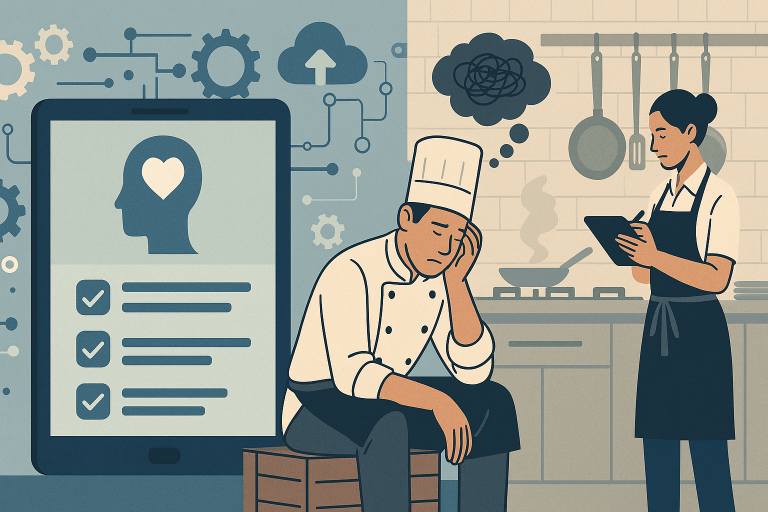
Let’s face it, keeping restaurant staff motivated and engaged is no small feat. Between high turnover rates, burnout and the daily hustle of service, operators are constantly searching for ways to make work feel less like a grind and more like a game. Enter: gamification.

No, we’re not talking about turning your kitchen into a Mario Kart track (though, imagine the apron designs!). We’re talking about using game mechanics – points, leaderboards, badges and real-time rewards – to transform everyday tasks into engaging challenges. And thanks to restaurant management software and third-party apps, this isn’t just a fun idea, it’s a strategic solution to one of the industry’s biggest headaches: staff retention.

What Is Gamification, Really?

Gamification is the art of applying game-like elements to non-game environments. Think of it as turning your team’s daily goals into quests, their achievements into badges and their performance into a leaderboard. It’s not just about play; it’s about purpose.

According to Playzo’s 2025 gamification insights, restaurants using gamified systems have seen boosts in loyalty, productivity and even customer satisfaction. But the real magic? It’s happening behind the scenes – in the FOH and BOH trenches.

FOH: Turning Service Into a Scoreboard

Front-of-house staff are the face of your brand. They juggle upselling, table turns, guest satisfaction and more – all while keeping their cool. Gamification helps them stay sharp and motivated.

1. Upselling with points and badges

Imagine a server named Maya. She’s using a POS system integrated with a gamification app. Every time she upsells a premium cocktail or dessert, she earns points. Hit 50 points in a shift? She unlocks a “Mix Master” badge and a $10 bonus.

This isn’t fantasy, it’s how platforms like Smartico are helping restaurants gamify loyalty and team motivation in real time. The result? Maya’s not just selling, she’s playing to win.

2. Speedy table turns with leaderboards

Now picture a leaderboard displayed in the staff room. It shows average table turn times per server. The top three get priority shifts or a free meal at the end of the week. Suddenly, everyone’s invested in efficiency – not just because it helps the restaurant, but because it helps them shine.

This kind of visibility and reward system fosters healthy competition and encourages FOH staff to work smarter, not harder.

BOH: Speed, Accuracy and a Dash of Fun

Back-of-house teams are the unsung heroes of hospitality. They’re under pressure to deliver fast, accurate orders while managing inventory, prep and plating. Gamification brings recognition and rhythm to their workflow.

1. Minimizing order errors with real-time feedback

Let’s say your kitchen team uses a management app that tracks order accuracy. Every correct dish earns a point. Every week, the top scorer gets a “Precision Pro” badge and a gift card.

This isn’t just about prizes, it’s about pride. When staff see their accuracy improving and their efforts acknowledged, they’re more likely to stay engaged and less likely to burn out.

2. Speed challenges with tiered rewards

During peak hours, BOH staff can opt into “Speed Rounds.” Complete 20 orders in under 30 minutes with zero errors? You unlock a tiered reward – maybe a bonus, maybe a badge, maybe bragging rights.

Apps like those featured in Top Business Software’s 2025 roundup offer customizable challenges that integrate with kitchen display systems and prep stations. It’s like Iron Chef, but with less yelling and more retention.

Why It Works: Engagement, Recognition and Culture

Gamification isn’t just bells and whistles, it taps into intrinsic motivators. People want to feel competent, connected and recognized. When your team sees their progress, earns rewards and feels part of something bigger, they’re more likely to stick around.

Here’s what happens when gamification is done right:

  • Increased engagement: Staff check their progress like they check Instagram.
  • Improved performance: Metrics become milestones, not just numbers.
  • Stronger culture: Teams cheer each other on, celebrate wins and build camaraderie.

Getting Started: Tools That Make It Easy

You don’t need to build a custom app to gamify your restaurant. Many restaurant management platforms now offer built-in gamification features and third-party apps can integrate seamlessly.

Look for tools that offer:

  • Real-time tracking and feedback
  • Customizable challenges and rewards
  • Integration with POS and KDS systems
  • Mobile access for staff visibility

Start small – maybe a weekly upsell challenge or a monthly accuracy badge. Then scale as your team gets into the groove.

Final Thoughts: Play to Retain

In an industry where turnover is high and margins are tight, gamification offers a fresh way to boost morale, performance and retention. It’s not about turning work into a game, it’s about turning goals into growth.

So whether you’re running a bustling bistro or a fast-paced ghost kitchen, consider adding a little play to your day. Your team (and your bottom line) will thank you.

Designing for Speed: Optimizing Kitchen Layouts for High-Volume Service

If the dining room is the stage, the commercial kitchen is the high-performance engine that powers the entire restaurant. When that engine sputters – due to bottlenecks, wasted steps or cross-traffic chaos – the entire operation slows down. For any establishment focused on high-volume service, whether it’s a bustling fast-casual spot or a busy full-service restaurant, the layout of the back-of-house (BOH) isn’t just about aesthetics; it is the ultimate determinant of speed, consistency and profitability.

Optimizing a kitchen for speed isn’t about running faster; it’s about designing a space where unnecessary movement is eliminated. It’s about applying the principles of efficient industrial flow, often referred to as Lean Management, to the culinary world.

Let’s dive into how you can design or reconfigure your kitchen to be a well-oiled machine that handles peak service like a dream.

1. The Core Principle: A Linear Flow

The single most crucial element of a high-speed kitchen is ensuring a logical, linear flow of products and personnel. This means ingredients should enter the kitchen area and move along a defined, one-way path from beginning to end without doubling back or crossing paths unnecessarily.

A perfect linear flow follows this sequence:

  1. Receiving & storage: Ingredients arrive and go immediately to dry storage, refrigeration or freezer units.
  2. Preparation (prep): Stored ingredients are moved to dedicated prep stations.
  3. Cooking (line): Prepped ingredients are moved to the cooking line (grills, ovens, fryers).
  4. Expediting & plating (the pass): Cooked food moves to the pass for final garnishing and pickup by the Front-of-House (FOH) staff.
  5. Service: Food leaves the kitchen.
  6. Warewashing: Dirty dishes return to a dedicated, isolated area for cleaning, without crossing into the food prep or cooking zones.

When this flow is strictly maintained, you eliminate the “motion” waste (excessive walking) and “waiting” waste (bottlenecks) that plague inefficient kitchens, especially during a rush.

2. Choosing Your Ideal Layout: Assembly Line vs. Zone Style

While many kitchen designs exist, two are fundamentally engineered for high volume and speed:

A. The assembly line layout (The QSR champion)

This layout is the speed demon of the restaurant world, perfect for quick-service restaurants (QSRs), sandwich shops or any operation with a limited, repetitive menu.

  • How it works: All equipment is arranged in a straight line or in a tight U-shape. Each station performs one specific, simple task sequentially, much like a classic factory assembly line. Think of a burrito or pizza station where the cook slides the product down the line, adding ingredients at each step until it’s finished at the end.
  • Speed advantage: It drastically reduces complex decision-making and cross-traffic. The cook never leaves their station and the flow of the dish is continuous and highly predictable.

B. The zone-style layout (The flexible powerhouse)

This style is better suited for full-service restaurants with diverse menus requiring multiple cooking methods (e.g., separate sauté, grill, fryer and cold-prep sections).

  • How it works: The kitchen is divided into distinct, self-contained zones based on the task. The grill zone has all its necessary tools and refrigerated drawers; the pastry zone is isolated with its own prep area etc. The center of the kitchen is usually a wide, clear aisle that acts as the artery connecting these zones.
  • Speed advantage: It allows multiple teams to work simultaneously without interfering with one another. If the sauté station is slammed, it doesn’t slow down the cold prep (salads, appetizers), keeping the overall ticket time manageable.

3. The Details: Micro-Optimization for Productivity

Once the macro-layout is chosen, efficiency lives in the details of each workstation.

The magic of the “kitchen triangle”

Adapting the classic residential kitchen triangle (stove, sink, fridge) for a commercial setting is vital. For every specific cooking station (e.g., the grill station), ensure the three core elements are within a single step’s reach:

  1. Cooking surface: The grill or range.
  2. Prep sink/handwash station: Essential for immediate cleaning and safety compliance.
  3. Mise en place storage: Refrigerated drawers or countertop containers holding all frequently used ingredients.

If a cook has to take more than two steps to grab the tongs, reach the cutting board or get a main ingredient, the station is inefficient.

The strategic placement of tech: KDS and POS

Technology should reinforce, not disrupt, the physical flow. A kitchen display system (KDS) needs to be mounted exactly where the expeditor can manage the pass and where the cooks can clearly see their designated tickets without breaking their rhythm.

For the FOH-to-BOH transition, the distance between the POS terminals and the expedite station should be minimal to allow servers to efficiently drop off dirty plates and pick up new orders, limiting their time spent in the kitchen and reducing collision risk. A common practice is to have the dish return area strategically positioned near the back service entrance for servers but far away from the food prep line.

Isolating the warewashing zone

This is often overlooked but critical for flow. The dishwashing area must be a dead-end zone. Dirty plates coming in should never pass through the path where clean food is exiting. By isolating this area, you eliminate the risk of cross-contamination and prevent servers carrying stacks of dirty dishes from bumping into chefs carrying finished plates. Learning how to strategically zone your kitchen for maximum efficiency is a game-changer.

4. Designing for Comfort and Safety (The Ergonomics of Speed)

A high-speed kitchen is also a high-stress environment, and fatigue slows everyone down. Design choices that promote ergonomics translate directly into sustained speed.

  • Adjustable surfaces: Allowing staff to adjust counter height to match their tasks (slicing vs. standing at a grill) can reduce strain and improve precision.
  • Anti-fatigue mats: These are non-negotiable on the line. They absorb shock and reduce the strain on the feet and back of cooks who stand for eight to twelve hours, helping them stay energized and focused.
  • Visibility: An open kitchen concept – or at least an open line – allows the Executive Chef or expeditor to supervise all stations instantly, catching errors before they become “defects” (wasted food). This ease of supervision improves team responsiveness.

In the end, designing a high-volume kitchen comes down to relentless efficiency and continuous improvement. By viewing your kitchen through the lens of maximizing flow and eliminating waste, you can turn a space that once saw frustrating bottlenecks into a high-octane production line that delights customers with consistent speed. The power of applying Lean Management principles to your restaurant goes beyond the kitchen and into your inventory and overall operations. It’s the smart way to move more meals and make more money.

6 Strategies to Overcome Slow Days at Restaurants

There are those times during the year when selling is just difficult, no matter what you do. Every restaurant owner would love to see his or her restaurant packed with customers, with orders building up, plates pouring out of the kitchen, ready to be given to clients, and yes, with sales surging! However, gloomy restaurant days are indeed a norm for most. Most restaurants have days with extremely low sales, fewer walk-ins, fewer delivery orders and, overall, very uninteresting sales money.

Nevertheless, there are things you can do to lessen their impact on your bottom line even though there isn’t much you can do at certain times of the year. Here are 6 strategies that you can make use of to try turn the tables around:

  1. Plan target campaigns: On slower days, you can set up your weekly promotional programs. You can plan reward schemes for your restaurants as well as marketing initiatives. An excellent illustration of this would be to implement a promotion like “Mexican Tuesdays,” which would encourage families to eat out Mexican food on a Tuesday night rather than preparing meals at home on Tuesdays, which are typically slow days. You can gather adequate consumer information with the aid of restaurant management software to develop efficient and precisely focused marketing campaigns. Additionally, you can notify customers via text message about discounts and special deals.
  2. Establish loyalty programs: Loyalty programs are a terrific approach to foster relationships and generate repeat business. Instead of always looking for new customers, it can be far simpler to get repeat customers. An excellent method to keep your business in front of the neighborhood’s residents is to create a loyalty program that provides special rewards and discounts for clients in your zip code. For example, having a points system or punch cards would be great ways to improve dull restaurant days.
  3. Promote online ordering: 60% of U.S. consumers order delivery or takeout once a week. Due to the shift to off-premises dining, establishments like yours must adapt their business practices to meet customer preferences. One of the easiest and most effective ways to capture online sales is to make your online ordering platform easier to find and use. Ensuring that your website, social media accounts, online ordering system and appropriate restaurant promotion are all visible such as on table menus, bathroom signs and even on the receipt is key to boosting your online sales. Additionally, it will raise knowledge of your online ordering procedure among diners who were previously strangers.
  4. Have themed events: Having a unique event or themed night that customers can find fun and engaging regardless of whether it is Monday or Tuesday is an intriguing way to boost sales during these slow days. Two excellent suggestions for these events include TV-themed nights, where your restaurant could show the most recent episode of a comedy or another TV show on Netflix. When you combine that with a special promotion like “buy 2 get 1 free” you’ll have customers rushing to your restaurant in no time!
  5. Exclusive weekday offers: To promote customer visits on slow days at the restaurant, exclusive weekday discounts should be introduced. An interesting illustration of this is how Barbeque Nation, a well-known restaurant chain, charges less for its midweek buffet than for its weekend buffet. POS systems will give you reports for each item sold or in stock based on your previous sales history. You can adjust the prices or fiddle with special deals and promotions on certain things based on how well they perform. Food items have higher profit margins than liquor items, but it would be a fantastic idea to use bargain pricing on weekdays to encourage more dine-in business.
  6. Go crazy on social media: Up your social media output on Facebook, Instagram and all other platforms. Utilize your imagination. Announcing specials online, soliciting menu item suggestions from the public, and offering promos are excellent strategies for thriving during your slow months. Making Facebook events and posting entertaining images of various events is a terrific method to inform prospective consumers about what is happening at your restaurant as well. This would help create a lot of engagement and make it the last strategy to overcome slow days at restaurants.

Overall, there you have it! 6 strategies you can use to brighten up those dull business days at your restaurant.

Enhancing Restaurant Profitability: The Role of Revenue Management

Running a quick-service restaurant is quite the juggling act. You’re constantly balancing customer satisfaction, order volumes, pricing, staff management and, of course, profitability. The key to thriving in this industry? Revenue management coupled with operational efficiency. Now, this may sound like corporate jargon, but let’s break it down in a manager-friendly way.

At its core, RM is about selling the right product to the right customer at the right time, for the right price, through the right channel. It’s about creating win-win scenarios where your customer feels valued and your profits rise. This involves strategic pricing (like dynamic pricing), optimizing your menu to drive higher-margin sales, and managing different distribution channels efficiently.

Firstly, let’s talk about the menu. Your menu isn’t just a list of offerings; it’s a powerful sales tool. By highlighting higher-margin items and creating appealing combo offers, you can guide customers towards choices that boost your revenue and their satisfaction. This might involve upselling or cross-selling techniques like suggesting meal upgrades or add-ons.

But there’s more to RM than your in-house operations. In today’s digital world, your quick-service restaurant is linked to various third-party delivery platforms like UberEats and DoorDash. These platforms increase your reach but also bite into your profits with their commissions. Your RM strategy needs to balance this dynamic by effectively managing orders across channels and driving more first-party orders, i.e., orders directly from your customers.

More direct orders mean more control over customer relationships, improved profitability and a direct line to customer feedback. How can you drive this shift? Consider exclusive benefits for direct orders, like special items, discounts or perks. Leveraging your loyalty program can also be a strong motivator, rewarding customers with points or exclusive deals for their direct orders.

This brings us to operational efficiency. With multiple channels to manage, from in-house dining and pick-up orders to various delivery platforms, the operations can become a whirlwind. Keeping your kitchen and staff ready to handle this multifaceted demand is crucial. Technology can be a big help here, streamlining processes and improving efficiency.

More than that, efficient operations play a significant role in customer experience. Imagine a customer waiting too long for their order because your kitchen is overwhelmed with deliveries from a third-party platform. Or worse, the dreaded mix-up of orders. Operational efficiency directly affects customer satisfaction and, in turn, your reputation and repeat business.

The backbone of successful RM and operational efficiency is quality data. Having accurate insights about customer preferences, order habits, peak hours and more allows you to make informed, strategic decisions. Investing in systems that capture and analyze this data effectively is non-negotiable.

And while third-party platforms may take a slice of your profits, remember they also bring visibility and new customers. So, use them as customer acquisition tools. Provide superior food and service to these customers, making their first interaction memorable. Over time, with consistent quality and strategic promotions, these customers can be converted into first-party orders.

In conclusion, the dual strategy of RM and operational efficiency can significantly enhance profitability for your quick-service restaurant. It’s a game of strategic pricing, effective menu design, efficient operations and savvy management of multiple distribution channels. It might require upfront investment in technology and data analysis, but the long-term profitability gains make it a worthwhile journey. After all, satisfied customers and a thriving bottom-line are the dream of every restaurant manager, aren’t they?

Mastering Local SEO and Google Business Profile for Restaurants

If you run a restaurant, your next table is often decided on a phone screen – “best brunch near me,” “late-night pizza,” “Thai takeout.” Winning those moments is what local SEO (search visibility for nearby intent) is all about. At the center of it is your Google Business Profile (GBP): the panel that shows your name, hours, menu, photos, reviews, buttons for “Call,” “Directions,” “Order,” and more. Below is a practical, restaurant-specific playbook to tighten up your GBP and the local signals that feed it.

Why local SEO matters right now

  • According to BrightLocal, Google is the dominant review and discovery platform. In 2024, 81% of consumers used Google to read business reviews – by far the most of any platform. 77% check at least two review sites, and 41% check three or more, so consistency matters.
  • Freshness and responses are difference-makers. 27% of consumers expect reviews from the last two weeks, and 88% say they would use a business that replies to all reviews, vs. 47% if it doesn’t reply.

Google is cleaning up spam. Search Engine Land reports that in 2023, Google blocked or removed 170+ million policy-violating reviews (up 45% year over year), plus more than 12 million fake business profiles. That’s good news for honest operators.

How Google ranks local results (the 3 levers you control)

Google’s own guidance says local rankings are informed by relevance, distance and prominence. You can’t move your building, but you can maximize relevance (complete, accurate info) and prominence (quality reviews, photos and buzz). 

Translation for restaurants:

  • Relevance: your categories, cuisine types, menu, attributes (e.g., “vegetarian options,” “outdoor seating”), and posts match what searchers want.
  • Distance: people searching closer to you are more likely to see you – so make sure your map pin and service areas are exact.
  • Prominence: volume/quality/recency of reviews, media coverage, links and how complete and active your profile is.

For a step-by-step breakdown, Google’s restaurant-specific help page is a great checklist (claim/verify, menus, Order with Google, Reserve with Google, photos, and performance tracking). 

Nail the fundamentals: your GBP “source of truth”

  1. Choose precise categories
    Primary: “Restaurant,” or better, your cuisine (e.g., “Italian restaurant”). Add one or two secondary categories only if they reflect core offerings (e.g., “Pizza restaurant,” “Wine bar”). Over-categorizing can backfire.
  2. Exact hours (including kitchen hours + special hours)
    Add “More hours” for delivery, takeout, pickup and holiday/special hours so guests aren’t surprised. If your kitchen closes earlier than the dining room, reflect that in “More hours” and your description. 
  3. Name, Address, Phone (NAP) hygiene
    Use your real-world name as on signage; avoid keywords, taglines or phone numbers in the name field. Ensure the pin drops on the right door.
  4. Select the correct attributes
    Mark things like “vegetarian options,” “family-friendly,” “outdoor seating,” “live music,” “free Wi-Fi” or “wheelchair accessible.” These drive discovery in Maps filters.

Make your menu, reservations and ordering unmistakably easy

  • Menu: Use the GBP menu editor to upload a clean, sectioned menu with item descriptions and prices. Avoid fuzzy PDF photos; add dish photos separately to show plating and portion.
  • Reserve with Google: Connect a supported booking/waitlist partner so the “Reserve” button appears – this reduces friction from discovery to seated covers.
  • Order with Google: Link your preferred online ordering provider and set it as preferred so you steer orders to the best margin channel.

Use posts strategically, including Google’s new “What’s Happening”

Google is rolling out “What’s Happening” on restaurant profiles – an area to spotlight weekly specials, events and promos, either by posting directly or syncing from Instagram/Facebook/X. Launch is phased across select countries. Make it part of your weekly routine: lunch special Tue–Fri, happy hour, live jazz Friday, chef’s table. 

Tip: Treat Posts like mini-ads in search. Use crisp photos, a clear offer, times/dates and a call-to-action (Reserve, Order, Call). Consistency signals activity and relevance.

Win (and keep) more stars: a review flywheel that actually works

  1. Request reviews ethically and consistently.
    Train hosts/servers to invite reviews after a great table touch. Put QR codes on bill wallets and takeaway receipts pointing to your GBP.
  2. Respond to every review.
    Consumers strongly prefer businesses that reply to all reviews; this is one of the most persuasive local signals you control. Keep responses short, personal and specific to the visit.
  3. Prioritize recency.
    With 27% of consumers look for reviews in the last two weeks, aim for a steady cadence, e.g., 15–20 new reviews each month for a busy mid-size venue.
  4. Guard against fake reviews.
    If you see a sudden spike of suspicious ratings, flag them and cite specifics. Google has stepped up enforcement with ML systems; more than 170M policy-violating reviews were taken down in 2023.   

Photos & videos: your silent maître d’

Great visuals lift click-throughs and on-profile conversions. Upload:

  • Exterior (day/night so guests recognize the frontage)
  • Interior (bar, dining room, patio)
  • Signature dishes & drinks (think “scroll-stopping”)
  • Team & chef moments (builds trust and personality)

Follow Google’s image guidelines and keep rotations seasonal (e.g., summer patio vs. winter tasting menu).

Track what’s working in GBP Insights

Under ‘Performance’, watch:

  • Searches & queries (what people typed to find you)
  • Menu clicks (which sections drive interest)
  • Bookings and calls from profile buttons

Use these to align posts, menu highlights and staffing. If “gluten-free pizza” spikes on weekends, promote it on Thursdays and staff for dough preparation.    

Beyond Google: keep consistency across the web

While Google dominates, diners often cross-check on other platforms. In 2024, 36% of consumers used two review sites and 41% used three or more during research—so align hours, menus and photos across Yelp, TripAdvisor, OpenTable, Facebook and Apple Maps to avoid drop-offs.    

A 30-day action plan for operators

Week 1 – Fix the foundation
  • Claim/verify your GBP; correct categories, hours (including “More hours”) and pin location.
  • Add core attributes (dietary options, outdoor seating, live music).
  • Upload 10-15 high-quality photos (3 exterior, 5 interior, 5 dishes/drinks).
Week 2 – Remove friction
  • Connect “Reserve with Google” and your preferred “Order with Google” provider.
  • Build a structured, readable on-profile menu; link your menu URL if hosted on your site.
Week 3 – Build momentum
  • Launch a weekly “Post” cadence (specials/events) and test Google’s “What’s Happening” feature if available in your region.
  • Train front-of-house to request reviews; place QR codes on checks and takeout bags. 
Week 4 – Measure and refine
  • Review Insights for queries, menu clicks, bookings and calls – double-down on what converts.
  • Reply to 100% of reviews (positive and negative). If you spot suspicious activity, flag it. 

Common pitfalls to avoid:

  • Keyword-stuffed names (“Joe’s Trattoria – Best Italian & Pizza Chicago”): this risks suspensions. Use your real-world name.
  • Stale menus (old prices, discontinued items), mismatched hours or missing kitchen cut-off times: these create bad experiences and negative reviews. Use “More hours” and “Special hours.”
  • Ignoring social proof: with consumers expecting fresh, replied-to reviews, silence looks like neglect. Build a weekly response habit. 

Final thought

Local SEO is not a one-time project, it’s a set of habits. Keep your profile accurate, your visuals fresh, your posts timely and your review responses thoughtful. Do that and you’ll show up more often for the exact guests who are already hungry for what you serve and make it effortless for them to book a table or tap “Order.”

Contactless is Here to Stay: The Evolution of QR Code Menus and Mobile Payments

The restaurant industry has always been a dynamic space—shaped by shifting consumer expectations, technological innovation and the relentless pursuit of efficiency. Among the most transformative changes in recent years has been the rise of contactless dining, driven by QR code menus and mobile payments. What began as a pandemic workaround has evolved into a permanent fixture of modern hospitality. For restaurant operators and managers, embracing this evolution isn’t just about keeping up, it’s about staying ahead.

QR Code Menus: More Than a Pandemic Trend

QR code menus surged in popularity during COVID-19, offering a hygienic alternative to physical menus. But their relevance has only grown since. In 2025, QR menus are no longer just a safety measure – they’re a strategic asset. According to Orders.co, QR menus are becoming more personalized, interactive and secure. They allow restaurants to update offerings in real time, eliminating the need for costly reprints and enabling dynamic pricing, seasonal specials and instant promotions.

From a branding perspective, custom QR menus reinforce identity and create a sleek, modern impression. They’re also eco-friendly, reducing paper waste and aligning with sustainability goals, which is a growing priority for diners and operators alike.

Upselling Made Easy

One of the most underrated advantages of QR code menus is their potential for upselling. Traditional menus rely on server suggestions or static descriptions. QR menus, on the other hand, can be programmed to highlight add-ons, suggest pairings and showcase high-margin items with enticing visuals.

Imagine a guest scanning the menu and being greeted with a featured cocktail of the day, a dessert pairing suggestion or a prompt to upgrade to a premium side. These nudges are subtle but effective. As Deliko notes, QR menus allow guests to explore add-ons and offers without waiting for staff, creating more opportunities for impulse purchases and personalized experiences.

Additionally, integrating loyalty programs or feedback forms directly into the QR experience can deepen engagement and encourage repeat visits. It’s not just about selling more—it’s about building relationships.

Mobile Payments: Speed, Simplicity, Satisfaction

The shift to mobile payments and digital wallets has revolutionized the checkout experience. Guests no longer need to wait for the bill, fumble with cash or hand over a credit card. With a few taps, they can settle their tab and be on their way. This isn’t just convenient, it’s transformative.

For operators, mobile payments mean faster table turns, reduced labor strain and fewer errors. As highlighted in MenuTiger’s 2025 forecast, contactless payments are becoming the norm, not the exception. They streamline operations, improve transparency and align with the digital-first expectations of today’s diners.

Digital wallets also open the door to integrated tipping, split payments and real-time analytics. Managers can track peak hours, average spend and payment preferences with greater precision, enabling smarter staffing and inventory decisions.

Enhancing the Guest Experience

Ultimately, the goal of any technological upgrade is to enhance the guest experience. QR code menus and mobile payments do just that – by putting control in the hands of the diner. Guests can browse at their own pace, customize orders and pay when ready. This autonomy reduces friction and fosters a sense of ease.

For busy restaurants, this means fewer bottlenecks, happier guests and more efficient service. For staff, it means more time to focus on hospitality rather than logistics. And for managers, it means a smoother operation with better data and fewer headaches.

Implementation Tips for Operators

If you’re considering – or refining – your contactless strategy, here are a few tips:

  • Choose a reliable QR platform: Look for one that integrates with your POS system, supports dynamic updates and offers customization options.
  • Train your staff: Ensure they understand how to guide guests through the process and troubleshoot common issues.
  • Promote the experience: Use signage, table tents and social media to highlight the benefits of your contactless setup.
  • Monitor feedback: Use built-in survey tools or follow-up messages to gather insights and improve the system.

The Future Is Contactless and Connected

As we look ahead, the evolution of contactless dining will continue. Expect to see augmented reality menus, voice-activated ordering and deeper integration with loyalty platforms. But at its core, the value remains the same: speed, simplicity and satisfaction.

For restaurant operators and managers, the message is clear. Contactless isn’t a temporary fix – it’s a permanent upgrade. By embracing QR code menus and mobile payments, you’re not just adapting to the times. You’re shaping the future of dining.

How to Select the Right POS for Your Restaurant

Choosing the right point-of-sale (POS) system is one of the most critical decisions a restaurant operator can make. A well-integrated POS doesn’t just process payments, it’s the nerve center of your operation. From managing orders and tracking inventory to analyzing sales and streamlining staff workflows, the right POS can elevate your restaurant’s efficiency, profitability and guest experience.

But with so many options in the market, how do you choose the one that fits your business best? This guide breaks down the core functionalities of a POS system and outlines key considerations to help you make an informed decision.

What Does a POS System Do?

At its core, a POS system facilitates transactions. But modern restaurant POS platforms go far beyond the cash register. Here’s what a robust POS typically includes:

  • Order management: Accepts dine-in, takeout and delivery orders, routes them to the kitchen and tracks fulfillment.
  • Payment processing: Handles credit/debit cards, mobile wallets and contactless payments.
  • Inventory tracking: Monitors ingredient usage, alerts for low stock and helps reduce waste.
  • Employee management: Tracks hours, schedules shifts and monitors performance.
  • Sales reporting: Provides insights into peak hours, best-selling items and revenue trends.
  • Customer relationship tools: Supports loyalty programs, feedback collection and personalized promotions.

Cloud-based systems are increasingly popular, offering remote access, automatic updates and seamless integration with other platforms. According to DCA POS, over 80% of restaurants now use cloud-based POS systems—a sharp rise from just a few years ago.

Key Considerations When Choosing a POS

Selecting a POS isn’t just about features—it’s about fit. Here are the top factors to evaluate:

1. Restaurant type and size

A quick-service café has different needs than a full-service fine dining establishment. Consider:

  • Speed and simplicity for fast-paced environments
  • Table management and tipping for dine-in service
  • Multi-location support for chains or franchises

Your POS should match your operational flow and scale with your growth.

2. Ease of use

Your team needs to learn and use the system quickly. Look for:

  • Intuitive interfaces
  • Minimal training time
  • Responsive customer support

A clunky system can slow down service and frustrate staff. As Superior Seating notes, the best POS systems are designed to simplify—not complicate—your daily operations.

3. Integration capabilities

Your POS should play well with others. Key integrations include:

  • Online ordering platforms
  • Delivery services
  • Accounting software
  • Inventory management tools
  • Loyalty and marketing platforms

The more seamless the connections, the less manual work you’ll need to do.

4. Hardware requirements

Some POS systems run on tablets or smartphones, while others require proprietary terminals. Consider:

  • Your existing hardware setup
  • Space constraints at your counter or kitchen
  • Durability and reliability in a busy environment

Mobile POS systems are ideal for pop-ups or food trucks, while traditional setups may suit high-volume restaurants better.

5. Data and reporting

A good POS doesn’t just record transactions—it helps you make smarter decisions. Look for:

  • Real-time sales dashboards
  • Customizable reports
  • Forecasting tools

These insights can help you optimize staffing, menu design and inventory purchasing.

6. Security and compliance

Protecting customer data and complying with payment regulations is non-negotiable. Ensure your POS offers:

  • End-to-end encryption
  • PCI compliance
  • Secure user permissions

Security breaches can damage your reputation and lead to costly penalties.

7. Cost structure

POS systems vary widely in pricing. Consider:

  • Upfront hardware costs
  • Monthly software fees
  • Transaction fees
  • Add-on features

Make sure to factor in long-term value, not just initial cost. As Forbes Advisor points out, the best systems balance affordability with robust functionality.

Test Before You Commit

Before signing a contract, request a demo or trial period. Involve your team in testing the system during peak hours and slow shifts. Ask:

  • Is it easy to navigate?
  • Does it speed up service?
  • Are reports clear and actionable?

Real-world testing reveals more than any brochure or sales pitch.

Final Thoughts

Your POS system is more than a tool—it’s a partner in your restaurant’s success. The right choice can streamline operations, boost revenue and enhance the guest experience. The wrong one can lead to inefficiencies, frustration and lost opportunities.

Take the time to assess your needs, compare options and invest in a system that supports your vision. Whether you’re launching a new concept or upgrading an existing setup, a smart POS decision sets the foundation for growth.

The Ghost Kitchen vs. The Traditional Restaurant Model: Which One’s Right for You?

Picture this: you’re sitting across from a fellow restaurant operator over lunch, tossing around ideas for your next big move. Do you double down on your cozy brick-and-mortar spot or explore the sleek, delivery-driven world of ghost kitchens? It’s a question more and more restaurateurs are asking—and for good reason. The industry is evolving fast, and both models offer compelling advantages (and a few curveballs).

Let’s break it down—financials, operations, tech—and help you decide which path, or hybrid, might be the best fit for your business.

Financial Implications: Overhead vs. Opportunity

Let’s start with the dollars and cents. Traditional restaurants come with hefty upfront costs—think rent, décor, furniture, signage and staffing. You’re investing in ambiance, location and the full dine-in experience. That’s powerful, especially if your brand thrives on atmosphere and personal service.

Ghost kitchens, on the other hand, are leaner. No dining room, no front-of-house staff and often, no prime real estate. You’re paying for kitchen space, utilities and tech infrastructure. Ghost kitchens can reduce build-up costs by up to 75% and are 3-5 times faster and cheaper to launch, making them attractive for entrepreneurs testing new concepts or expanding delivery reach.

But here’s the catch: ghost kitchens rely heavily on third-party delivery platforms, which can eat into margins with fees ranging from 15% to 30%. Traditional restaurants may have higher fixed costs, but they retain more control over pricing and customer relationships.

Bottom line: Ghost kitchens offer lower overhead and faster scalability. Traditional restaurants offer richer margins and brand-building potential. Your choice depends on your goals—and your appetite for risk.

Operational Differences: Front-of-House vs. Fulfillment Focus

Running a traditional restaurant is a dance of logistics and hospitality. You’re managing reservations, walk-ins, table turns and the guest experience. It’s high-touch, high-pressure and deeply rewarding when done right.

Ghost kitchens flip the script. They’re fulfillment centers for food—focused on speed, consistency, and volume. Orders come in digitally, get prepped, packed and sent out. There’s no need for servers, hosts or bussers. You might even run multiple brands from the same kitchen, each targeting different demographics or cuisines.

This operational flexibility is a major draw. Ghost kitchens are a great way to test new menus or reach underserved delivery zones without opening a full-service location.

That said, ghost kitchens lack the human touch. There’s no face-to-face feedback, no ambiance and limited brand storytelling. If your concept relies on emotional connection or experiential dining, a ghost kitchen might feel… ghostly.

Bottom line: Traditional restaurants are built for hospitality. Ghost kitchens are built for efficiency. Choose based on your strengths—and your customer’s expectations.

The Role of Technology: Digital First vs. Digital Enhanced

Technology is the backbone of both models, but it plays out differently.

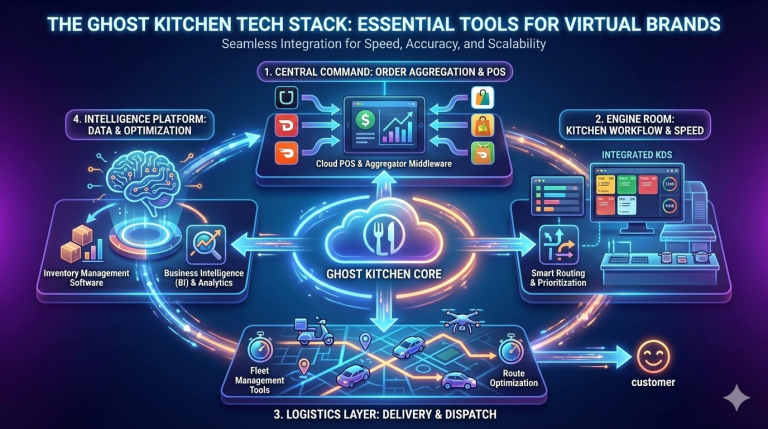
Ghost kitchens are digital-first. Everything—from ordering to fulfillment—is powered by tech. You’ll need robust POS systems, inventory management tools and integrations with delivery platforms. Data is king: you’ll track order trends, optimize prep times and tweak menus based on performance.

Traditional restaurants use tech to enhance the experience. QR code menus, mobile payments, reservation platforms and loyalty apps are now standard. But the core remains human-centered—tech supports the service, not replaces it.

Interestingly, hybrid models are emerging. Some brick-and-mortar restaurants now run ghost kitchen operations out of their existing kitchens during off-peak hours. Others use delivery-only brands to supplement dine-in revenue. This hybrid approach can maximize kitchen utilization and diversify income streams.

Bottom line: Ghost kitchens require a tech-first mindset. Traditional restaurants benefit from tech, but don’t depend on it. A hybrid model lets you play both sides.

So… Which Model Is Right for You?

Here’s a quick gut-check to help you decide:

  • Go ghost if you’re launching a new concept, targeting delivery-first customers or want to scale quickly with minimal overhead.
  • Stay traditional if your brand thrives on ambiance, personal service and in-person connection.
  • Try hybrid if you have an existing kitchen and want to expand your reach without opening a new location.

Ultimately, it’s not about choosing sides—it’s about choosing strategy. The best operators are nimble, data-driven and customer-focused. Whether you’re plating up in a dining room or boxing meals in a ghost kitchen, success comes from knowing your audience and delivering consistently.

Sustainability in 2025: Beyond Eco-Friendly Packaging

We often hear “eco-friendly packaging” as the sustainability hallmark in foodservice. But by 2025, restaurant operators who want to lead (not just follow) need to take a broader view. Packaging is just one piece of the puzzle. The real gains come when you pair it with clever waste tracking, energy-smart kitchens and local sourcing that builds resilience and community value.

Here’s how you can take your sustainability efforts deeper, in ways that also boost your bottom line, reduce risk and deepen customer loyalty.

1. Food Waste Tracking: Visibility as Leverage

Packaging is a visible environmental touchpoint, but food wasted inside the kitchen is hidden money (and carbon) slipping through your fingers. A lot of modern sustainability gains happen when that waste is tracked, analyzed, and acted upon.

Why tracking matters now

In many restaurant operations, food waste amounts to 5–15% of total food purchases. With no data, it’s almost impossible to know where your biggest “leaks” are—trim, spoilage, plate waste or overproduction. The technology shift of 2025 is giving operators that visibility in real time.

What’s new in 2025

AI-driven systems—some combining scales, cameras, optical sorting, and machine learning—can automatically detect, classify, and weigh discarded food during prep or at the pass. A PubMed study in the HORECA sector (hotels, restaurants, cafes) reported meaningful reductions in waste after deploying such systems.

How to start
  • Pick a module (prep, pass, plate) and deploy the tracking in one station first.
  • Train your team: most of the value comes from what staff do with the data.
  • Review waste “hot spots” weekly, set reduction goals and reward progress.
  • Integrate it with inventory and menu planning systems so waste insights feed upstream decisions.

2. Energy-Efficient Kitchen Infrastructure: Doing More With Less

Once you’ve got a grip on waste, the next frontier is energy—the electricity, gas, chillers and HVAC units that hum nonstop behind your dining room walls. Upgrades here are sustainability in everyday action.

Why it matters

Commercial kitchens are energy-intensive environments. Inefficient equipment wastes fuel and emits more carbon. In tight-margin foodservice, energy bills are not trivial. Over time, the ROI for efficient appliances, smart controls and systems integration can be compelling.

What’s trending now
  • Energy Star–rated appliances are considered baseline, not luxury. 
  • Smart cooking equipment (ovens, combi units, induction, low-flow steamers) can dynamically adjust power usage based on load.
  • Integrated energy management systems (EMS) take data from HVAC, refrigeration, lighting, kitchen gear and orchestrate power use (e.g. cycling non-critical loads, shifting usage to off-peak).
  • LED lighting, efficient ventilation hoods (variable-speed exhaust fans), better insulation and heat recovery are all “low hanging fruit” upgrades. 
A practical rollout path
  1. Audit first: Use energy meters to benchmark your biggest energy draws.
  2. Phase replacement: Start with low-hanging, high-impact items, e.g., ENERGY STAR refrigerators, smart ovens, efficient water heaters.
  3. Install EMS: Let your equipment “talk” with each other.
  4. Train staff: Energy savings often slip if operators don’t follow best practices (shutting doors, calibrating burners, preventive maintenance).
  5. Track and publicize results: Use energy-savings data in your sustainability reporting or marketing.

In short: go beyond “better bulbs” and aim for a holistic, intelligent kitchen.

3. Locally Sourced Supply Chains: Resilience, Freshness & Carbon Savings

When most people say “sustainable restaurant,” they picture recycled takeout containers or compost bins. But the real leverage is in your upstream decisions: what you buy and from whom.

Why local sourcing is strategic in 2025
  • Carbon & emissions reduction: Shorter transport, reduced refrigeration, fewer cross-border logistics all lower your footprint.
  • Transparency and trust: Diners increasingly ask “Where did my food come from?” A local or regional chain is often easier to trace and tell than a global import pipeline.
  • Supply resilience: When global supply chains are volatile (weather, geopolitics, pandemics), having robust local partners gives you backup.
  • Community and brand strength Sourcing from local farms or small producers builds ties in your community. It gives you stories you can tell, creating a brand that feels grounded.
Implementation tip
  • Segment your menu: Don’t try to make everything local at once; start with produce, herbs, greens or a few “local specials.”
  • Build farmer/producer relationships: Visit the farms, know their methods. Co-develop forecasting and delivery rhythms.
  • Collaborate with co-ops or local distributors: You may not have scale, but a local aggregation hub helps reduce cost and logistics friction.
  • Be flexible with seasonality: Accept that some ingredients won’t always be local; make it part of your menu design.
  • Tell the story: Educate servers, highlight suppliers, show photos or maps in your menus or on your website.

One inspiring case: a restaurant in Mexico City sources from chinampa (floating) farms in Xochimilco, and creatively turns scraps into sauces and beverages—operating essentially bin-free. 

4. Pulling It All Together: The Integrated Sustainability Ecosystem

None of these levers—waste tracking, energy efficiency, local sourcing—works well in isolation. In 2025, the most forward-thinking restaurant operators think in ecosystems. Here’s how to tie the pieces:

  • Closed-loop metrics: Combine waste data + energy data + procurement data into dashboards. You’ll see how buying “too much” local produce that spoils means energy and waste losses.
  • Cross-functional teams: Sustainability is no longer just operations or marketing. Get chefs, procurement, facilities and even front-of-house aligned on common goals.
  • Continuous iteration: Use your waste-tracking system to detect new patterns, then tweak procurement, menu mix or operations.
  • Marketing and brand value: Real, measured sustainability isn’t greenwashing. Publishing real data (e.g. “we reduced kitchen waste 30% in six months”) strengthens reputation with eco-conscious diners.
  • Leverage partnerships: Collaborate with local composters, energy providers, community-supported agriculture (CSAs) or clean-tech vendors to expand your impact beyond your four walls.

A Few Words of Encouragement (and Realism)

Switching from “just composting and green packaging” to a truly integrated sustainability program is ambitious. But small, consistent steps compound fast. Here are some tips to help you stay motivated and on track:

  • Start with pilot projects (one kitchen station, one menu item, one energy zone). Early wins build momentum.
  • Engage your team — regular sharing of data, competitions or recognition for waste-reduction champions.
  • Be transparent with guests — they love a good behind-the-scenes story.
  • Reinvest savings into further upgrades. A portion of energy or food cost savings can fund the next round.
  • Don’t wait for perfection. Even 10–20% reduction in waste or energy is meaningful — and paves the way to deeper gains.

In 2025, “sustainability” needs to be more than packaging labels or biodegradable wrappers. It needs to be part of your operations DNA — smart, measured and continuously improving. When you succeed, you lower costs, mitigate risks and build the kind of restaurant brand that resonates with customers and communities.

Beyond the Usual: Why “Hyper-Personalization” is Your Restaurant’s Secret Ingredient

Let’s get real for a second. We’re all in a battle for guests at our tables (and orders in apps). The competition is fierce and “good food” just isn’t enough anymore. Diners expect more. They’re used to being recognized, catered to and appreciated by the brands they love, from their streaming services to their local coffee shop.

And guess what? They expect it from you, too.

This isn’t about knowing a regular’s name (though that’s a great start!). This is about hyper-personalization, the most powerful tool you have to turn a one-time visitor into a loyal, raving fan. It’s about using the data you already have—or can easily start collecting—to create an experience so tailored it feels like magic.

So, let’s talk about how to get there.

The “What” and “Why” of Hyper-Personalization

Think of it like this:

  • Personalization is saying, “Welcome back, Jackie!”
  • Hyper-personalization is saying, “Welcome back, Jackie! We’ve saved you a seat near the window and since you loved the Chicken Tikka last time, we thought you might want to try our new Lamb Vindaloo. It’s got that same spicy kick you like.”

It’s the difference between a generic “we miss you” email and one that offers a 20% discount on the exact dish they haven’t ordered in three months. It’s taking what you know and using it to anticipate their needs, preferences and desires.
Why does this matter? Because it creates unique experiences, drives loyalty, increases order values and makes your customers feel seen and valued in a way that generic marketing never will.

The Data You’re Already Sitting on (and How to Get More)

You might think you need a fancy tech stack and a team of data scientists to do this. You don’t. You’re already collecting a ton of data and, with a few smart moves, you can get even more.

  1. Your POS (Point of Sale) System: This is your goldmine. It’s not just for ringing up orders. A modern POS can tell you:
  • What a customer orders, how often and at what time of day.
  • Their average check size.
  • What dishes are most popular (and which ones are just taking up space on your menu).

Example in action: You notice that a group of customers consistently orders your vegan menu items on Tuesday nights. Use this data to run a targeted social media ad for your “Terrific Tuesday Vegan Specials” and send a push notification to that specific customer segment.

  1. Your Loyalty Program: A loyalty program is more than just a punch card. It’s a direct line to your best customers. When they sign up, you get their email, phone number and maybe even their birthday. From there, every interaction they have with your brand adds to their profile.

Example in action: It’s a customer’s birthday month. Instead of a standard “Happy Birthday,” you send an email with a personalized offer for a free dessert—specifically their favorite chocolate lava cake, which you know they order every time.

  1. Online Ordering and Reservations: If you have an online ordering platform or a reservation system, you’re getting a ton of valuable data that is great for hyper-personalization. You know what people browse, what they add to their cart and then abandon, and what they prefer to order for delivery versus dine-in.

Example in action: A customer browses your online menu and spends a lot of time on your burger section but doesn’t order. The next day, you send an email with a limited-time offer: “We noticed you were eyeing our Double-Bacon Smash Burger. Come get it for 15% off today!” 

  1. The Old-Fashioned Way (with a Digital Twist): Don’t underestimate the power of human connection. Train your front-of-house staff to note preferences. Maybe a customer always asks for extra ranch on the side or always orders a specific wine with their pasta. A simple note in your CRM (Customer Relationship Management) system can make all the difference.

Example in action: A couple comes in for a special occasion. Your host notes it in the system. The next time they book a table, a staff member can greet them by saying, “It’s so great to have you back! We remember you were celebrating your anniversary last time. Anything special tonight?”

From Data to Appreciated: Putting It All Together

So, you’ve got the data. Now what? The real magic happens when you use that data to create a seamless, appreciated experience for your guests.

Personalized Marketing:

Segment your customers and send them offers that actually matter.

  • Dormant Diners: “We haven’t seen you in a while! Here’s a free appetizer on us to get you back in.”
  • High-Spenders: “As a VIP guest, you get an exclusive sneak peek at our new seasonal menu.”
  • Happy Hour Hounds: “The weather’s great! Your favorite cocktails are half-price until 7 p.m. tonight.”
Smart Menu Recommendations:
  • An AI-powered kiosk can suggest a side dish based on the main course a customer just ordered.
  • Your online ordering app can remind a returning customer to add their favorite drink to their cart.
Predictive Service:
  • Use your data to predict busy periods and staff accordingly, ensuring a smooth experience.
  • Track what’s popular and what’s not to inform your next menu update. 

Hyper-personalization isn’t about being creepy; it’s about being thoughtful. It’s about building a relationship with your customers that’s based on respect and understanding. And in an industry where margins are tight and competition is fierce, that relationship is the one thing that will keep your restaurant thriving for years to come.

Start small, collect that data and watch as your customers go from just satisfied to absolutely appreciated.