The ROI of Kitchen Automation: Is it Time for a Robot Chef?

Is your kitchen ready for a robotic revolution? For restaurant operators and managers grappling with high labor costs and persistent staffing challenges, the question of whether to invest in kitchen automation is no longer a matter of science fiction, it’s a critical business decision. The real conversation isn’t about whether a robot can cook, but whether the return on investment (ROI) justifies the significant upfront cost.

Let’s dig into the financial realities and operational benefits of bringing automation into your back-of-house.

Understanding the Investment: Beyond the Price Tag

Calculating the ROI of kitchen automation starts with a clear-eyed look at all the costs involved. The investment goes well beyond the initial purchase price of the equipment. A full accounting includes:

  • Initial capital: This is the cost of the robotic system itself. A single-function machine, like a robotic fryer, might cost a few thousand dollars, while a more comprehensive automated kitchen setup could run into the hundreds of thousands.
  • Installation & integration: Some systems are designed as “drop-in” solutions, but others might require significant kitchen renovations or a complete overhaul of your existing workflow.
  • Training & onboarding: Your team will need to learn how to operate, monitor and troubleshoot the new technology. Be sure to factor in the time and resources required for this training.
  • Ongoing costs: These include maintenance, software licensing fees and energy consumption. While robots don’t earn a salary, these costs are a crucial part of the long-term investment.

The ROI Calculation: Where the Savings Happen

The fundamental ROI formula is simple: (Net Profit / Cost of Investment) x 100. When it comes to kitchen automation, your “Net Profit” is a combination of direct cost savings and indirect revenue gains.

1. Direct labor cost reduction

This is the most visible benefit. By automating repetitive, labor-intensive tasks like frying foods, assembling bowls or flipping burgers, you can reduce the number of employees needed for those specific stations. But the real win is in reallocating your existing staff. Instead of assigning a high-wage employee to a monotonous task, you can have them focus on more complex roles that require a human touch, like customer service or inventory management.

Consider the financial impact of employee turnover. The restaurant industry has notoriously high turnover and the costs associated with recruiting, hiring and training new staff can be substantial. By automating the most difficult and dangerous jobs – like handling hot oil – you can improve employee satisfaction and retention. For example, a multi-unit Burger King franchisee, Trinity Corp., reported an 8% increase in profits after implementing an automated cooking oil management system.

2. Enhanced consistency & reduced waste

Robots are programmed for precision, ensuring every dish is prepared with the exact same timing, temperature and portioning. This leads to enhanced consistency in food quality, a key factor in building customer loyalty and a strong brand reputation, especially for multi-location chains. This level of consistency can be a powerful driver of repeat business.

Additionally, automation can significantly reduce food waste. Robots can be programmed to dispense precise portions, eliminating the human error that often leads to over-portioning or spoilage. This is a direct saving on one of your largest expenses: food costs.

3. Increased throughput & sales

Automation can dramatically increase the speed of service, particularly during peak hours. A robotic system can work continuously without breaks, fatigue or errors. For a fast-casual or quick-service restaurant, this can mean a substantial increase in throughput – the number of customers you can serve per hour. More throughput directly translates to higher sales and a better overall customer experience due to shorter wait times.

A great example is Chipotle, which has been testing a robotic kitchen assistant named “Chippy” to make and season tortilla chips, a repetitive but crucial task. This allows human staff to focus on customer-facing roles, improving service speed during high-volume periods.

Real-World Examples and ROI Projections

The market for kitchen automation is rapidly expanding. Companies offer everything from full-stack solutions to single-task robots.

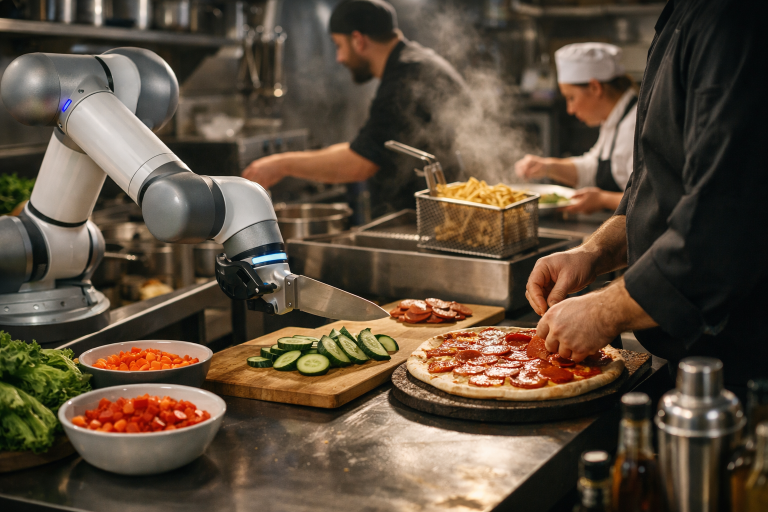
  • Miso Robotics’ Flippy: This AI-powered robotic arm automates the fry station. Companies like White Castle have implemented Flippy to improve efficiency and consistency in their kitchens.
  • Sweetgreen’s “Infinite Kitchen”: This fully automated kitchen system streamlines the assembly of salads and warm bowls, improving order accuracy and speed. Sweetgreen has reported improvements in both order accuracy and labor turnover since implementing this technology.

While a one-size-fits-all ROI calculation is impossible, a good benchmark for restaurant equipment ROI is to aim for a payback period of one to three years. For a comprehensive overview read this.

Making the Decision: Is it Time?

Deciding whether to invest in kitchen automation requires a detailed ROI analysis. Start by identifying the specific pain points in your operation—are you losing money to high labor turnover? Is inconsistent food quality hurting your reputation? Is your service speed slowing down during busy shifts?

Automation is not about replacing your staff. Instead, it’s about empowering them. By taking over the tedious and dangerous tasks, you free your human team to focus on what they do best: creating great food and delivering exceptional hospitality.

Before you make the leap, explore the possibilities and do your homework. Read industry reports, talk to other operators who have adopted this technology and run a detailed cost-benefit analysis tailored to your specific restaurant. The future of the kitchen is here, and for many, the ROI is starting to look very attractive.

A Manager’s Guide to AI: From Scheduling to Inventory Management

The restaurant industry operates on precision. From predicting daily rushes to ensuring zero food waste, every operational detail impacts profitability. While traditional management often relies on intuition and extensive manual processes, artificial intelligence (AI) is rapidly emerging as a transformative tool. For restaurant managers, AI is no longer a futuristic concept but a practical assistant poised to optimize everything from staff scheduling to inventory control.

This guide explores how AI can be seamlessly integrated into your daily operations, offering tangible benefits that enhance efficiency, reduce costs and ultimately drive better business outcomes.

AI in Action: Smart Scheduling for Optimal Staffing

One of the most persistent headaches for any restaurant manager is staff scheduling. The challenge lies in balancing labor costs with service quality, ensuring you have enough hands on deck without overstaffing. AI-powered scheduling platforms are revolutionizing this process.

How it works: These systems leverage historical sales data, seasonal trends, local event calendars, weather forecasts and even employee performance metrics to predict demand with remarkable accuracy. Instead of relying on guesswork, managers receive data-driven recommendations for optimal staffing levels for each shift.

Case in Point: Consider a popular downtown bistro. Traditionally, Manager Alex would spend hours creating weekly schedules, often adjusting on the fly based on unexpected surges or lulls. With an AI scheduling tool, the system analyzes past Tuesdays when a local sports team had a home game, correlating it with a 30% increase in dinner reservations. It then automatically suggests adding an extra server and a line cook for that upcoming Tuesday evening. Similarly, it might predict a slower Wednesday lunch due to poor weather, recommending a slight reduction in front-of-house staff.

Benefits for Managers:

  • Reduced labor costs: minimize overstaffing without compromising service.
  • Improved employee Satisfaction: offer more consistent and fair schedules, leading to better work-life balance and reduced turnover.
  • Time savings: drastically cut down the hours spent on manual schedule creation and adjustments.

Precision Inventory: Minimizing Waste with AI

How it works: AI inventory systems integrate with your POS data, supplier information and even smart kitchen equipment. They track every ingredient used, monitor purchase patterns and analyze sales trends to predict future demand for specific items. Some advanced systems can even factor in external variables like menu changes, promotions and seasonal ingredient availability.

Case in Point: Maria manages a busy Italian restaurant known for its fresh pasta and seasonal specials. Before AI, she would manually count ingredients weekly, often finding herself with too much fresh basil one week and running out of imported parmesan the next. An AI inventory system connects directly to her POS, monitoring how much pasta and sauce are sold daily. It learns that on weekends, customers order significantly more tiramisu, and it automatically adjusts future order recommendations for mascarpone and espresso. The system also flags ingredients nearing their expiration date, prompting Maria to use them in a daily special or adjust future orders.

Benefits for Managers:

  • Significant waste reduction: minimize spoilage and discarded ingredients through accurate demand forecasting.
  • Optimized ordering: prevent over-ordering and stockouts, ensuring fresh ingredients are always available without excessive surplus.
  • Cost control: directly impact your bottom line by reducing food costs and improving ingredient utilization.

Menu Optimization: AI-Driven Profitability

Your menu is your restaurant’s most powerful marketing tool and a direct driver of profitability. AI can unlock insights that go beyond traditional menu engineering, helping managers design a menu that maximizes revenue.

How it works: AI analyzes vast amounts of sales data, customer preferences, profit margins of individual dishes and even competitor pricing. It can identify patterns in what dishes are frequently ordered together, which items are highly profitable but under-ordered and how pricing impacts demand. Some systems can even suggest modifications to ingredients or preparations to improve profit margins without sacrificing quality.

Case in Point: Carlos, manager of a trendy gastropub, wants to refresh his menu. His AI menu optimization tool reveals that while his signature burger is a top seller, its profit margin is relatively low due to expensive ingredients. Conversely, a vegetarian risotto has a high-profit margin but is rarely ordered. The AI suggests slightly increasing the burger’s price (identifying a price point where demand won’t significantly drop) and also recommends a slight tweak to the risotto’s description and placement on the menu to boost its appeal. It also points out that adding a specific craft beer pairing to certain appetizers could increase both beer and appetizer sales.

Benefits for Managers:

  • Maximized profitability: identify high-profit, low-selling items and strategies to boost their popularity.
  • Data-driven pricing: optimize pricing for maximum revenue without deterring customers.
  • Enhanced customer experience: Understand customer preferences to offer a more appealing and relevant menu.

Embracing the AI Future: A Strategic Advantage

The integration of AI into restaurant management is not about replacing human decision-making but about augmenting it with unparalleled data insights and automation. For busy managers, AI tools act as a sophisticated assistant, handling the heavy lifting of data analysis and predictive modeling, freeing up valuable time to focus on leadership, customer experience and creative problem-solving.

As the industry continues to evolve, leveraging AI will become less of a luxury and more of a necessity for staying competitive. By embracing these technologies now, restaurant managers can build more efficient, profitable and resilient operations, positioning their establishments for long-term success. The future of restaurant management is intelligent and it’s here.

Beating the Turnover Crisis: Retention Strategies That Actually Work

Hey there, restaurant pros! Let’s be real, the restaurant industry is a whirlwind. One minute you’re crushing a dinner rush, the next you’re scrambling to cover a no-show. And if there’s one thing that keeps every operator and manager up at night, it’s the dreaded turnover crisis. It feels like a revolving door sometimes, right? Just when you’ve got a great team humming, someone new is walking out, leaving you back at square one.

But what if we told you it doesn’t have to be this way? What if you could build a team that sticks around, feels valued and genuinely loves coming to work? It’s not magic; it’s smart, intentional retention. And today, we’re sharing some snappy strategies that actually work, complete with real-world (well, hypothetical real-world!) examples.

1. Show Me the Money (and the Benefits!) 

Okay, this might seem obvious, but it’s the foundation. In today’s competitive market, a living wage and decent benefits aren’t just perks; they’re expectations. Your team works incredibly hard, often under pressure, and they deserve to be compensated fairly.

Hypothetical Example: Imagine Sarah, one of your star servers. She’s fantastic with customers, always picks up extra shifts and mentors new hires. If she’s making minimum wage while the coffee shop down the street offers a dollar more and health benefits, you’re at risk. Proactively reviewing your pay scales and offering benefits like health insurance, paid time off or even a simple contribution to a retirement plan, can be the difference between Sarah staying or heading for greener pastures. Remember, the cost of replacing Sarah (recruiting, training, lost productivity) often far outweighs a modest raise or benefit package.

Check out this insightful article on how to calculate the true cost of employee turnover—it might shock you!

2. Flexibility is the New Gold Standard 

Gone are the days when employees were expected to bend their entire lives around a rigid work schedule. Modern teams, especially younger generations, crave flexibility. It shows you respect their life outside of work.

Hypothetical Example: Take Mark, your talented line cook. He’s a single dad and sometimes his kid’s daycare closes early. If your scheduling system is rigid, Mark might have to choose between his job and his family, often leading to him leaving. But if you use scheduling software that allows for easy shift swaps or if you encourage managers to work with staff on compressed workweeks or consistent days off, Mark feels supported. He knows his manager, Jessica, genuinely cares and he’s more likely to be loyal and productive. This isn’t about being a pushover; it’s about being understanding and using available tech to make it work for everyone.

3. Invest in Their Growth (They’re Not Just a Number!) 

Nobody wants to feel stuck. Your team wants to learn, grow and see a future with your restaurant. Providing clear paths for advancement and investing in their skills development is a huge retention booster.

Hypothetical Example: Meet David, a diligent busser who’s expressed interest in becoming a server. Instead of just nodding and saying “we’ll see,” offer him a structured mentorship. Have a senior server, like Sarah (who we kept with good pay!), train him on table service during slower hours. Send him to an online course on wine knowledge or even just regularly discuss his aspirations during check-ins. When a server position opens up, David is already partially trained and feels like his ambition is valued. He’s not just a busser, he’s a future server and he’s invested in your restaurant’s success because you’re invested in his.

For more tips on nurturing your team, this article on  employee retention strategies offers some great suggestions.

4. Create a Culture of Respect & Recognition 

This is huge. People don’t leave jobs; they often leave bad managers or toxic environments. A positive, respectful culture where hard work is recognized can be more powerful than almost anything else.

Hypothetical Example: Your dishwashing team works tirelessly, often unseen. Imagine Maria, one of your long-standing dishwashers. If her only interactions with management are criticisms, she’s going to burn out. Instead, what if Manager Jessica starts a “Back-of-House Hero” award each month, complete with a small bonus or a preferred parking spot? Or what if she simply makes a point to say “thank you” by name every night, acknowledging their crucial role? Maria feels seen, appreciated and like a vital part of the team, not just a cog in the machine. A little appreciation goes a long way!

Want to dive deeper into building a positive workplace? Check out these employee engagement ideas for inspiration!

The Bottom Line: Be Proactive, Not Reactive

The turnover crisis isn’t going to solve itself. It requires a proactive approach, putting your team at the center of your strategy. By offering fair compensation, fostering flexibility, investing in growth and building a culture of respect, you’re not just filling shifts; you’re building a loyal, dedicated team that will help your restaurant thrive. So, what’s your first step toward beating the turnover crisis? Let’s get cracking!

The Rise of the “Gig-Worker” in Hospitality

Hey there, hospitality heroes! Let’s talk about something that’s quietly (or not so quietly!) reshaping our industry: the gig worker. Remember when “gig” primarily referred to a musician’s show? Well, now it’s a huge part of the workforce and it’s definitely made its way into restaurants, hotels and event spaces.

It used to be pretty black and white: you had full-time staff, part-time staff and maybe some seasonal hires. But these days, with apps and platforms connecting businesses directly with available talent, things are getting a lot more colorful. According to the Bureau of Labor Statistics 25% of hospitality workers in the U.S. work part-time. So, what exactly is the deal with gig workers in hospitality and how can we make it work for us? Let’s dive in with a friendly chat!

What Exactly is a Gig Worker in Our World?

Think of a gig worker as someone who takes on short-term, temporary or project-based work, often through digital platforms. In hospitality, this could be:

  • A seasoned server picking up shifts at different restaurants a few nights a week.
  • A banquet bartender booked for a single event through an app.
  • A temporary chef brought in for a specific menu launch or to cover a vacation.
  • A cleaning professional contracted for an Airbnb turnaround.

The key here is flexibility for both sides. For the worker, it’s about setting their own hours and choosing gigs that fit their lifestyle. For us, the businesses, it’s about getting skilled help precisely when and where we need it.

Why the Buzz? The Pros for Your Business

Okay, so why are more and more hospitality businesses—from bustling city bistros to elegant event venues—leaning into the gig model? The benefits are pretty compelling, especially in our post-pandemic world where staffing has been a constant puzzle.

  • Flexibility on demand: This is arguably the biggest selling point. Have a huge private party booked last minute? A sudden spike in reservations due to a local festival? Instead of panicking about overworking your core staff or offering huge overtime, you can tap into a pool of pre-vetted gig workers. It means you can scale up or down your workforce almost instantly, matching labor to demand perfectly. No more paying staff to stand around during slow periods!
  • Reduced overhead: Gig workers are typically independent contractors, which means you’re generally not responsible for things like health insurance, paid time off or unemployment benefits. This can lead to significant cost savings compared to traditional employees. Plus, the administrative burden of payroll processing can be simpler, especially if you’re using a platform that handles the invoicing.
  • Access to specialized skills: Sometimes you need a specific talent for a short period. Maybe a chef specializing in vegan cuisine for a special event or a bartender with flair for a cocktail competition. Gig platforms can connect you with these niche skills without the commitment of a full-time hire. It’s like having a roster of all-stars available on call.
  • Trial runs for potential hires: Think of it as an extended interview. If you consistently find a particular gig worker to be outstanding, reliable and a great culture fit, it’s a fantastic way to identify potential permanent hires. You get to see them in action, under real pressure, before making a long-term commitment. This can significantly reduce the risk of a bad hire!

Navigating the Nuances: The Cons & Challenges 

While the gig model offers exciting advantages, it’s not without its complexities. It’s crucial to go into this with your eyes wide open.

  • Maintaining consistency & culture: This is a big one. Your brand relies on consistent service and a cohesive team culture. When you have different gig workers coming and going, it can be harder to instill your specific service standards and ensure everyone embodies your restaurant’s vibe. Think about your regulars who love a certain server’s personality—a new face every time might feel less personal. Implementing brief, clear guidelines or a quick “pre-shift huddle” for gig workers can help maintain your standards.
  • Training & onboarding time: Even if it’s just for a shift, there’s still a brief learning curve. Gig workers need to know your POS system, where things are stored, your specific menu items and your service flow. While they bring skills, they might not know your way of doing things. Streamlined onboarding materials (think a quick “gig worker survival guide” or a short video walkthrough) can be invaluable.
  • Worker classification concerns: This is a legal tightrope! It’s absolutely critical to understand the distinction between an independent contractor (gig worker) and an employee. Misclassifying workers can lead to significant penalties, fines and legal battles. Generally, if you dictate their hours, control their methods or provide extensive training, they might be considered an employee. Always err on the side of caution and consult legal counsel if you’re unsure. This piece on full-time employees vs. independent contractors from the U.S. Chamber of Commerce provides a helpful overview.
  • Less loyalty, potentially: While you save on benefits, gig workers might have less inherent loyalty to your specific establishment. They’re often juggling multiple gigs, so they might cancel last minute for a higher-paying or more convenient opportunity. Building a positive relationship, even with gig workers, by offering fair pay and a great working environment, can encourage them to prioritize your shifts.

Making the Gig Economy Work for Your Hospitality Business

So, how do we harness the power of the gig economy without falling into the common traps?

  • Integrate smartly: Use gig workers to complement your core team, not entirely replace them. They’re fantastic for filling gaps, covering peak times or special events, and allowing your full-time staff to have more stable schedules and less burnout.
  • Clear communication is key: For every gig, be super clear about expectations, roles and any specific procedures. Provide essential information upfront.
  • Leverage technology: Utilize reputable gig platforms designed for hospitality (like Qwick or Instawork). These platforms often handle vetting, background checks and payment processing, making your life much easier. Many platforms offer insights into worker ratings, which can help you choose reliable individuals.
  • Foster a welcoming environment: Even for temporary staff, a friendly face and a clear briefing can make a huge difference. Treat them as valued contributors and they’re more likely to perform well and return.
  • Stay informed on regulations: The legal landscape around gig workers is constantly evolving. Keep up-to-date with federal and state regulations regarding worker classification and seek specific legal advice when needed to avoid costly mistakes. 

The rise of the gig worker in hospitality is a trend that’s here to stay. It presents both exciting opportunities for flexibility and cost savings, as well as new challenges in maintaining consistency and navigating legal complexities. By understanding its nuances and strategically integrating gig talent into your operations, you can build a more agile, efficient and resilient hospitality business ready for whatever comes next. It’s all about adapting, learning and making the modern workforce model work for you. Cheers to that!

Training the Next Generation: How to Onboard Gen Z Employees in the Restaurant Industry

Welcome to the new era of restaurant staffing! If you’re a restaurant operator or manager, chances are you’ve already met your first Gen Z hire—or you’re about to. Born between 1997 and 2012, Gen Z is stepping into the workforce with fresh energy, high expectations and a digital-first mindset. They’re not just looking for a paycheck—they’re looking for purpose, flexibility and a workplace that aligns with their values.

So how do you onboard and train this generation effectively? Let’s dive into what makes Gen Z tick and how you can create an onboarding experience that sets them—and your restaurant—up for long-term success.

Understanding Gen Z: What They Want from Work

Before we talk training, it’s important to understand what Gen Z expects from the workplace:

  • Work-life balance is non-negotiable. Gen Z values their time and mental health. They’re not afraid to walk away from jobs that feel chaotic or unsupportive.
  • Technology is second nature. This generation grew up with smartphones and social media. They expect digital tools to be part of their work experience.
  • Clear, honest communication matters. Gen Z wants transparency, regular feedback and a sense of inclusion. They’re not fans of vague instructions or top-down management styles.

According to Stanford’s research on Gen Z, this cohort is pragmatic, collaborative and driven by values. They want to make a difference—and they want to know how their work contributes to something bigger.

Onboarding Gen Z: Make It Meaningful from Day One

Your onboarding process is your first impression. For Gen Z, it’s not just about learning the menu or clocking in—it’s about feeling welcomed, respected and excited to be part of your team.

Here’s how to make onboarding Gen Z-friendly:

1. Start with purpose

Gen Z wants to know why your restaurant exists and how they fit into that story. Share your mission, values and community impact. If you support local farms, reduce food waste or host charity nights—talk about it!

Let them see that their role isn’t just transactional. It’s part of a bigger picture.

2. Use tech to train

Forget the paper handbooks. Gen Z thrives on interactive, mobile-friendly training. Consider using:

  • App-based learning modules
  • Short video tutorials
  • Digital checklists and quizzes
  • Online scheduling tools

Platforms like Restaurant365 highlight how mobile scheduling and digital communication can boost engagement and retention.

Training should be bite-sized, visual and accessible on their phones. Bonus points if it’s gamified or includes peer-to-peer learning.

3. Pair them with a mentor

Gen Z values relationships and guidance. Assign a seasoned team member to show them the ropes, answer questions and offer encouragement. This builds trust and helps new hires feel like part of the family.

Mentorship also reinforces your restaurant’s culture and standards in a more personal way than any manual ever could.

Training Techniques That Stick

Once onboarding is complete, ongoing training is key to keeping Gen Z engaged and growing.

1. Offer clear growth paths

Gen Z doesn’t want to feel stuck. Show them how they can move from host to server, line cook to sous chef, or even into management. Create structured levels with titles like “Level 1 Server” or “Shift Lead Trainee” to make progress visible.

The team at Supy.io emphasizes the importance of layered training and career roadmaps to retain Gen Z talent.

2. Give frequent feedback

This generation grew up with instant likes and comments. They expect regular feedback—not just during annual reviews. Make it a habit to offer quick, constructive input after shifts, during team huddles or via messaging apps.

Recognition matters too. A simple “Great job handling that rush!” goes a long way.

3. Respect their time

Gen Z values predictability and flexibility. Use scheduling software that lets them swap shifts, view schedules in advance and communicate availability easily. Avoid last-minute changes whenever possible.

If you can offer mental health days or flexible hours, even better. According to Forbes, Gen Z places a high priority on wellness and expects employers to support it.

Communication: Keep It Clear and Inclusive

Gen Z prefers short, direct messages—often via text or apps like Slack. They’re not big on long emails or formal memos. Keep communication:

  • Brief and actionable
  • Inclusive and respectful
  • Open to feedback and dialogue

They also appreciate visual communication—think infographics, videos, and emojis. If you’re announcing a new policy or celebrating a team win, consider using a group chat or digital bulletin board.

And don’t forget to listen. Gen Z wants their voice to matter. Invite their input on menu ideas, shift improvements or sustainability efforts. You might be surprised by their creativity and insight.

Final Thoughts: Build a Culture They Want to Stay In

Training Gen Z isn’t just about teaching tasks—it’s about building a culture where they feel seen, supported and inspired. When you invest in thoughtful onboarding and training, you’re not just filling shifts—you’re building a team that grows with you.

So take the time to understand what motivates this generation. Embrace technology, offer flexibility and communicate with clarity. The payoff? A loyal, energized team that helps your restaurant thrive in the years ahead.

Engineering Your Menu for Profit: Leveraging Data to Boost Sales

Running a restaurant isn’t just about cooking delicious food – it’s about making smart decisions so every plate served contributes to your bottom line. If you’re a restaurant owner or manager looking to make your menu do more heavy lifting, there are three powerful levers to pull: using sales data for pricing strategies, designing dish placement to steer choices and using digital tools to experiment with new items. Let me walk you through how the data works, why it matters and how to put it into action with confidence.

Pricing Strategies That Actually Move the Needle

The foundation of profitable menu engineering is knowing your cost structure and analysing your sales data. Every dish has two critical numbers: how much it costs you to produce (ingredients, labor, plating etc.) and how much it contributes toward your fixed and overhead costs – and eventually profits. To do this, track sales volumes, food cost, portion costs and labor costs. Once you’ve got those, you can compute contribution margins for each dish. Dishes that sell often but contribute little should either be reworked (smaller portion? cheaper ingredients?) or offset by stronger pricing or pairing.

Pricing doesn’t just mean the dollar number though. How you present it matters. Using psychological pricing, such as anchor pricing (placing a high-priced item that makes other items look more reasonable in comparison), decoy options, charm pricing (e.g. ending prices in .99 or .95) and limiting the prominence of currency signs can shape perception without slashing margins. Using your POS data and competitor-benchmarking can help you fine-tune prices to what customers are willing to pay while protecting your profit margins. 

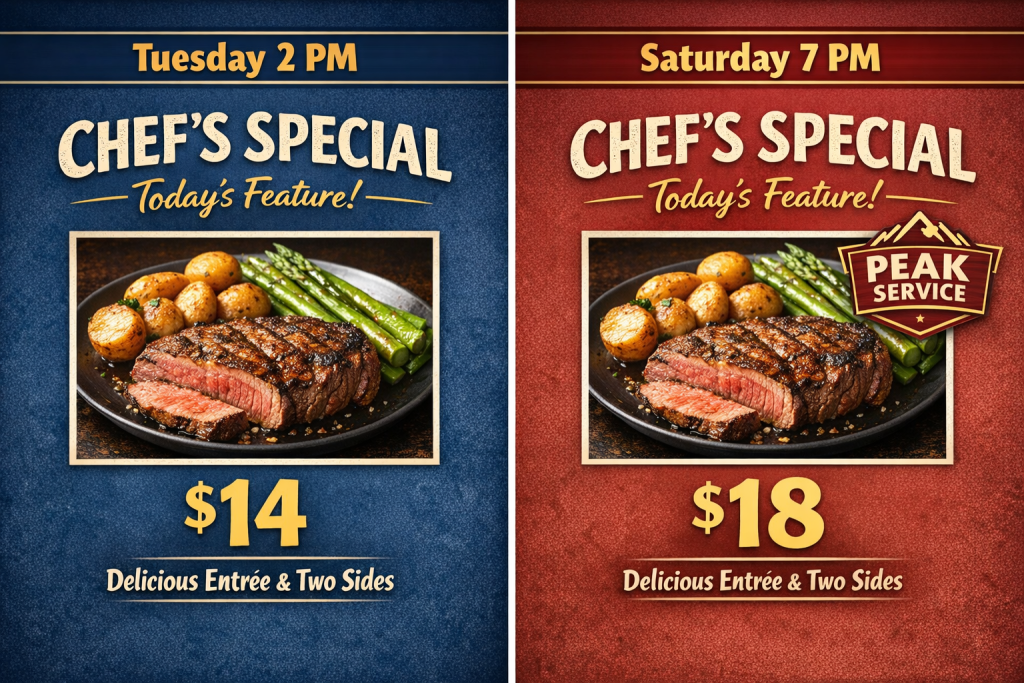
You might also think in terms of dynamic or demand-based pricing if your restaurant has fluctuating traffic: lunch vs dinner, weekends vs weekdays. But the most immediate gains often come from simple rebalancing: boosting prices slightly on high margin items, lowering or replacing low demand/low margin items and ensuring the popular crowd-pleasers don’t drain your profitability.

Dish Placement: Where You Put Things Matters

If pricing is the “what,” placement is the “where.” Where a dish appears on the menu influences what your guests notice first and, ultimately, order. There’s plenty of research on menu psychology: people tend to read menus in patterns (top left, top right, center), which has led to concepts like the “Golden Triangle”. Dishes placed in those prime zones tend to get more attention.

It helps to classify your menu items into categories based on two dimensions: popularity (how often customers order them) and profitability (how much profit you make per sale). Many refer to these as Stars (high-popularity, high-profit), Plow-horses (high-popularity, lower profit), Puzzles (high profit but low popularity), and Dogs (low profit, low popularity). Once you know which is which, you can decide:

  • To feature Stars prominently. Put them in prime menu real estate – upper right, center, maybe highlighted sections.
  • Look for ways to help Puzzles: give them visibility, tweak descriptions, possibly adjust price or ingredients to make them more appealing or cost-effective.
  • For Plow-horses, see if you can improve margins or reduce costs without damaging popularity.
  • For Dogs, seriously consider removal or reinvention unless they serve a strategic purpose (e.g. kids’ menu, dietary niche or they support your brand identity).

Also, menu layout design matters: how many items per category (too many means decision paralysis), how organized and readable the menu is, spacing, fonts, even color accents for highlighting. Clean, uncluttered menus encourage quicker decisions and reduce waste. 

Using Digital Menus to Test New Items & Iterate

One of the advantages of modern tech is that you can run menu experiments with relatively low risk. Digital menus – on tablets, QR codes, apps or web ordering interfaces – give you flexibility. You can test new dishes, tweak descriptions, experiment with pictures or temporarily promote an item without printing new physical menus.

Here are ways to use digital menus to test and learn:

  • Launch a new item as a “special” or “featured dish” in your digital menu. Monitor its sales, contribution margin, prep time and customer feedback. If it performs well, promote it; if not, retire or improve it.
  • A/B test the presentation: try two versions of a digital menu with different placement, photos vs no photos, more descriptive text vs simpler. See which leads to higher orders of high-margin items.
  • Use analytics from digital POS and ordering platforms to see which dishes are being clicked, how often customers abandon a choice, where in the digital menu navigation they linger. This gives you insight into what catches attention and what doesn’t.
  • Adjust digital-only pricing: you might offer a “digital exclusive” or bundle deals via app or website to test how price changes influence purchase without affecting your physical menu.

Digital tools also let you update prices, remove or add items quickly in response to cost changes (e.g., ingredient inflation) or customer preferences (e.g. demand for plant-based or gluten-free options). This agility helps keep your menu aligned both with what customers want and what you need financially.

Pulling It All Together: A Roadmap

To build a menu engineered for profit, follow these steps over a few months, not trying to do everything at once:

First, gather your data: sales history from your POS, costs of ingredients and labor, prep times, seasonal variation and customer feedback. Build a menu matrix (popularity vs profitability) so you can see clearly where each dish sits.

Then revisit pricing. Raise what you can, reconsider what you can’t and use pricing psychology to soften increases or reposition items.

Next, rethink placement. Move stars into prime spots, give puzzles more visibility (if you believe they deserve it), declutter where needed.

Start using digital menus as your lab. Run small, low-cost experiments with new items, description tweaks or presentation changes. Measure results.

Finally, review regularly: every quarter or when a major cost change (ingredient price shift, wage change etc.) happens. Your menu shouldn’t be static. A menu that looks great today may be costing you tomorrow if you aren’t adapting.

Engineering your menu with data isn’t cold or clinical; it’s caring about your food, your customers and your business all at once. When you treat your menu not just as a list but as a powerful tool, you’ll be surprised how much more revenue you can unlock. 

Here’s to menus that thrill your customers and your bottom line.

Sober-Curious Dining: Why Non-Alcoholic Beverage Programs are the Smartest Move Restaurants Can Make in 2025

In 2025, the restaurant industry is witnessing a quiet revolution—one that’s reshaping beverage menus, redefining hospitality and opening up new revenue streams. The rise of non-alcoholic beverage programs and sober-curious dining isn’t just a passing fad; it’s a cultural shift driven by wellness, inclusivity and changing consumer values.

For restaurant operators and managers, this trend presents a golden opportunity to innovate, differentiate and connect with a broader audience. Let’s explore what’s fueling the movement—and how your restaurant can capitalize on it.

The rise of the sober-curious movement

The term “sober-curious” refers to individuals who are rethinking their relationship with alcohol—not necessarily abstaining entirely, but choosing to drink less or explore alcohol-free alternatives. This mindset is especially prevalent among Millennials and Gen Z, who prioritize wellness, mental clarity and social inclusivity.

According to OpenTable, 48% of Americans are interested in drinking less alcohol in 2025, and 41% say they’re likely to order mocktails when dining out. Meanwhile, non-alcoholic beverage sales are surging, with mocktails, herbal infusions and fermented drinks leading the charge.

Why this trend matters for restaurants

Non-alcoholic beverage programs are no longer niche—they’re essential. Here’s why:

  • Broader appeal: These drinks cater to non-drinkers, designated drivers, health-conscious guests and those simply seeking variety.
  • Higher profit margins: Non-alcoholic drinks often cost less to produce but can be priced similarly to cocktails.
  • Brand differentiation: Offering sophisticated zero-proof options positions your restaurant as forward-thinking and inclusive.
  • Repeat business: Guests who feel seen and accommodated are more likely to return—and bring friends.

What makes a great non-alcoholic beverage program?

To truly capitalize on this trend, restaurants must go beyond soda and juice. Today’s diners expect complexity, creativity and presentation. Here’s what to include:

1. Craft mocktails
  • Use premium ingredients like organic juices, exotic herbs and artisanal syrups.
  • Think beyond sweetness—balance acidity, bitterness and umami for depth.
  • Examples: Yuzu Pineapple Paloma, Faux Espresso Martini, Peach Cobbler Mocktail
2. Functional beverages
  • Tap into wellness with adaptogenic teas, kombucha and energy refreshers.
  • Highlight benefits like gut health, stress relief or hydration.
3. Non-Alcoholic Spirits & Aperitifs
  • Brands like Seedlip, Lyre’s and Ritual offer alcohol-free alternatives with sophisticated flavor profiles.
  • Use them to create “zero-proof” versions of classic cocktails.
4. Gourmet sodas & infusions
  • Offer house-made sodas with flavors like elderflower, hibiscus or tamarind.
  • Infuse sparkling water with herbs, citrus or botanicals for a spa-like experience.

How to integrate these offerings into your menu

  • Create a dedicated section: Give non-alcoholic drinks their own spotlight—don’t bury them under “Soft Drinks.” Use enticing names and descriptions that evoke flavor and experience.
  • Train your staff: Bartenders and servers should be able to speak confidently about ingredients, pairings and preparation. Treat mocktails with the same reverence as cocktails.
  • Pair with food: Offer zero-proof pairings with tasting menus or prix fixe options. This elevates the dining experience and encourages exploration.
  • Price strategically: Don’t underprice. Guests are willing to pay for quality and presentation. Position these drinks as premium offerings.

Marketing tips to drive awareness and sales

Social mediaShowcase your mocktails with vibrant photography and behind-the-scenes videos.
EventsHost “Dry Nights” or sober-curious tastings to attract new audiences. 
CollaborationsPartner with wellness influencers or local producers to co-create signature drinks. 
StorytellingShare the inspiration behind your beverage program—whether it’s sustainability, inclusivity or flavor innovation. 

Final thoughts: hospitality that includes everyone

The sober-curious movement isn’t about restriction—it’s about choice. By embracing non-alcoholic beverage programs, restaurants can foster a more inclusive, health-conscious and memorable dining experience.

In a competitive landscape, it’s not just what’s on the plate that matters—it’s what’s in the glass. And in 2025, that glass might just be filled with a lavender-infused, zero-proof spritz that keeps guests coming back for more.

Emerging Trends in Restaurant Management Software

Cloud-based restaurant management software has become the new standard for operators seeking flexibility and scalability. Rather than relying on on-premises servers, modern systems deploy through SaaS models. This shift from on-premise hardware to cloud-based software empowers managers to access analytics dashboards and control inventory from any internet-connected device, whether they’re in the front-of-house dining room or at home reviewing weekly reports. By centralizing data, cloud solutions also reduce the risk of hardware failure and simplify maintenance. As restaurants increasingly embrace digital restaurant solutions, software providers are investing heavily in secure infrastructures that guarantee 99.9% uptime and automatic updates.

Cloud-based and SaaS solutions

SaaS offerings eliminate large upfront license fees for restaurant owners. Instead, operators pay monthly subscriptions based on number of terminals or locations. This pay-as-you-grow model aligns cost with revenue, making it accessible for independent bistros and large chains alike. Cloud-based platforms also enable seamless integration with third-party tools such as payment gateways, marketing platforms, and accounting suites.

Mobile-first interfaces and remote access

Remote management is now a necessity. Tablet and smartphone interfaces allow managers to adjust menu items, update promotions or review sales figures while off-site. A robust restaurant management software will offer a dedicated mobile ordering app that syncs in real time with the kitchen display system. This reduces manual entry errors and ensures that front-line staff have up-to-the-minute information on order status and table availability.

Key features shaping the future

Today’s platforms combine multiple modules into one cohesive system. Operators no longer need separate tools for payments, reservations or customer relationship management. The rise of all-in-one restaurant management software has accelerated adoption of advanced features previously reserved for enterprise brands.

  • Real-time inventory management

Inventory management systems track stock levels in real time. Alerts trigger when supplies reach reorder thresholds, minimizing waste and out-of-stock incidents. Some systems even forecast future usage based on historical sales data, seasonal trends and upcoming reservations. By integrating inventory management with the POS, restaurants can automate purchase orders with approved suppliers, saving labor hours and reducing human error.

  • Integrated POS and payments

Tight coupling between the POS terminal and back-end software accelerates checkout and streamlines reporting. Modern POS modules accept credit cards, mobile wallets and emerging contactless payment methods. They automatically post daily transactions to the accounting system and feed sales data into the analytics dashboard, providing managers with consolidated performance metrics.

  • Table reservation software and customer engagement

Seamless table reservation software integrates with the restaurant’s website and third-party booking platforms. Two-way synchronization prevents double bookings and overcapacity. Most systems include automatic confirmation messages and pre-shift reminders to guests. When combined with CRM for restaurants, operators can track guest preferences, dietary restrictions and visit history—enabling personalized marketing campaigns and loyalty programs.

      Competitive landscape and best practices

      As adoption grows, competition among providers intensifies. Restaurants must evaluate vendors on functionality, ease of use and total cost of ownership. Conducting thorough market research ensures optimal ROI and future-proof operations.

      • Top vendors comparison: Leading solutions vary by segment. Independent operators might favor lightweight systems with transparent pricing, while large enterprises require advanced staff scheduling tools and support for multi-location inventory management. Key differentiators include uptime SLAs, data portability and availability of local support.
      • Pricing models and calculating ROI: Subscription fees usually range from $50 to $300 per terminal per month. Some providers add fees for premium modules, training or 24/7 support. To calculate ROI, restaurants should quantify labor savings from automation, reductions in food waste and incremental revenue from upsells enabled by CRM campaigns. Even a modest 5% lift in table turnover can offset subscription costs within months.

      Implementation strategies for restaurants

      Successful technology adoption hinges on strong project management and staff buy-in. Rushing deployment can sow confusion and lead to resistance.

      • Change management and staff scheduling tool adoption: Involving employees early in vendor selection builds ownership. Hands-on training sessions and easy-to-follow guides help staff feel confident. Managers should schedule pilot periods where parallel processes run to validate system accuracy before full cutover.
      • Integration with legacy systems: Many restaurants still rely on desktop accounting or payroll tools. Selecting software with open APIs simplifies data flow between new and legacy platforms. Phased rollouts—starting with POS integration, followed by inventory management and CRM—allow teams to adapt gradually.

      Measuring impact and ROI

      Quantifiable improvements justify continued investment and support budget requests for feature upgrades:

      • Automation reduces manual tasks such as order entry and invoice reconciliation. 
      • Real-time visibility into inventory cuts spoilage costs, which typically account for 4–10% of food costs. 
      • Consolidated reporting eliminates hours of spreadsheet work each week.

      Future outlook

      Innovation continues at a rapid pace. Staying ahead requires monitoring emerging technologies and evolving guest expectations.

      • AI and machine learning in Kitchen Display System optimization: AI-driven forecasting will refine inventory orders to the gram. Predictive analytics can anticipate rush periods and auto-adjust staff schedules. Machine learning algorithms will optimize route planning for delivery drivers, minimizing wait times and improving food quality.
      • Contactless dining and online ordering platform evolution: Contactless QR-code menus and mobile ordering apps will proliferate. Future platforms may integrate voice assistants for hands-free ordering. Blockchain-based supply chain tracking could ensure ingredient provenance, meeting rising consumer demands for transparency.

      In an industry defined by thin margins and fierce competition, restaurant management software has emerged as a catalyst for efficiency, growth and guest loyalty. By embracing these trends and partnering with the right technology provider, operators can deliver exceptional dining experiences while safeguarding their bottom line.

      Loyalty on the Menu: How Tech Is Serving Up Repeat Customers

      In today’s dynamic restaurant landscape, customer loyalty has become both an art and a science. Operators no longer rely solely on punch cards or paper vouchers to encourage repeat visits. Instead, sophisticated customer engagement technology now fuels personalized dining experiences and drives measurable growth. But what does it take to develop a loyalty strategy that resonates with modern diners, balances operational complexity and delivers a solid return on investment? 

      This comprehensive guide examines the evolution of restaurant loyalty programs, highlights leading-edge tools—from mobile ordering apps to AI-powered recommendations—and offers actionable best practices for seamless loyalty app integration. Along the way, we consider case studies and competitive analysis to surface industry benchmarks and future outlooks. By the end, you will have a clear roadmap to harness the power of customer loyalty technology in restaurants.

      The evolution of customer loyalty in restaurants

      For decades, restaurants counted on paper-based loyalty cards and simple discount schemes to keep guests coming back. Those early loyalty programs built a foundation for what loyalty marketing could achieve. Yet the approach had limitations: it offered little personalization, lacked real-time insights and required manual tracking. 

      As digital transformation accelerated across industries, diners began to expect more seamless, tech-driven experiences. They wanted mobile ordering apps that remembered their favorite orders, personalized promotions based on past visits, and rewards that integrated with popular mobile wallet rewards systems. 

      The rise of Customer Relationship Management (CRM) for restaurants made it possible to capture customer data at each touchpoint and leverage it for targeted campaigns. This shift from generic coupons to intelligent customer engagement technology marked a fundamental change in how restaurants build and sustain loyalty and guest experience.

      Key technologies transforming restaurant loyalty

      • Mobile ordering apps: Mobile apps have emerged as a centerpiece of modern restaurant loyalty programs. They allow diners to place orders ahead, earn points on every purchase, and receive push notifications for limited time deals. With mobile ordering apps, restaurants can collect first-party data on ordering habits, track frequency patterns, and tailor offers that increase average check size and guest frequency. Plus, integrating mobile ordering with loyalty app integration ensures that rewards are applied seamlessly at checkout, enhancing the diner retention strategy.
      • Digital punch cards: Digital punch cards recreate the simplicity of traditional stamp cards in an app environment. By scanning a QR code or using a web link, guests accumulate virtual punches toward free menu items or exclusive perks. This gamified approach leverages established behavioral insights and encourages repeat visits through progress tracking and milestone celebrations. In contrast to paper cards, digital punch cards reduce fraud, streamline data capture and provide analytics that inform future campaign adjustments.
      • AI-powered recommendations: As guest expectations rise, AI-powered recommendations have become a differentiator. Machine learning models analyze ordering histories, demographic segments and time patterns to suggest menu items a diner is most likely to enjoy. For instance, a guest who frequently orders vegetarian dishes might receive personalized suggestions for a new plant-based entrée or an add-on side. These intelligent prompts boost upsell rates and reinforce the perception of a tailored dining experience.
      • Customer Relationship Management (CRM) systems: A robust CRM for restaurants unifies customer data across channels—online, in‑app, in‑store and third‑party delivery platforms. By centralizing guest profiles, purchase history and communication preferences, CRM systems empower marketing teams to design segmented campaigns that resonate with specific diner personas. Integrating loyalty data into the CRM also enables automated workflows: for example, a guest reaching a certain tier might automatically receive a thank you email or an exclusive invitation to a chef’s tasting event.

      Gamification in restaurants

      Gamification in restaurants uses game mechanics like points, badges and leaderboards to elevate guest engagement. By turning repeat visits into a friendly competition or offering bonus points for off‑peak dining, restaurants can balance traffic flow and incentivize brand advocates to share their progress on social channels. This competitive edge not only amplifies word‑of‑mouth but also deepens emotional connections between guests and the brand.

      Designing an effective loyalty program

      • Personalization and segmentation:

      A one‑size‑fits‑all program falls flat in a diverse market. Effective loyalty programs use segmentation to deliver contextually relevant offers. Segments might include frequent lunch guests, weekend families or new diners. Personalization ensures that each segment receives tailored rewards: perhaps a free appetizer for loyal lunch regulars or a family meal deal for weekend visitors. This level of precision reinforces positive experiences and enhances diner loyalty.

      • Seamless integration with POS and mobile wallets:

      For a loyalty program to succeed operationally, it must integrate deeply with point of sale systems and popular mobile wallet rewards platforms. A well‑configured integration automatically applies earned points or tier benefits at checkout, removing friction for staff and guests alike. It also facilitates real‑time syncing of transaction data, ensuring accurate tracking and avoiding discrepancies that could erode trust.

      • Rewards structure and tiered Benefits: 

      A tiered rewards structure motivates guests to climb levels and unlock premium perks, such as birthday gifts, early access to new menu items or priority reservations. For example, a bronze level might offer 1 point per dollar spent, silver 1.25 points, and gold 1.5 points. Each threshold can unlock additional benefits, encouraging incremental spend and more frequent visits. Balancing perceived value with cost is critical: generous rewards drive excitement, but program designers must model breakage rates and redemption forecasts to maintain profitability.

      Competitive analysis and industry trends

      Analyzing leading restaurant chains and nimble startups reveals diverse approaches to customer engagement technology. Some national chains have built proprietary mobile ordering apps with embedded loyalty programs that drive millions of downloads. Others partner with platform providers to deploy digital punch cards and integrate mobile wallet capabilities. Emerging players in the ghost kitchen space use AI‑driven upsell prompts to maximize revenue per order. By benchmarking program features—such as tier mechanics, reward velocity and data‑driven personalization—operators can uncover best practices and identify gaps in their own strategy.

      Implementation best practices

      • Platform selection and integration:

      Selecting the right technology partner requires evaluating features, customization options and integration capabilities. Restaurant operators should seek platforms that offer open APIs for loyalty app integration, flexible reward configurations and built‑in analytics dashboards. Conducting pilot tests in select outlets helps validate functionality and staff adoption before a full rollout.

      • Staff training and change management:

      Technology alone does not guarantee success. Staff training is vital to ensure that servers, hosts and baristas understand how to promote the loyalty program, assist guests with enrollment and troubleshoot mobile app questions. Role‑based training sessions, digital quick reference guides and incentive programs for staff can accelerate adoption and drive consistent guest experiences.

      • Data privacy and security:

      Compliance with data privacy regulations, such as GDPR or CCPA, is non‑negotiable. Loyalty programs collect sensitive personal and transactional information, requiring secure storage, encryption and clear consent mechanisms. Operators should partner with technology providers that adhere to industry security standards and offer transparent data usage policies.

      Measuring success and ROI

      • Key performance indicators: Evaluating program performance involves tracking metrics like repeat visit rate, average spend per loyalty member, redemption rate and customer lifetime value. Monitoring shifts in these KPIs over time reveals whether the loyalty program is driving incremental revenue and strengthening diner relationships.
      • Analytics tools and dashboards: Comprehensive analytics tools consolidate data from mobile apps, POS and CRM systems into intuitive dashboards. Visualizations of program engagement—such as points earned versus redeemed, new member signups and churn rates—enable marketing teams to refine offers, optimize communication cadence and forecast program costs.

      Future outlook: emerging innovations

      Looking ahead, restaurants will leverage advanced technologies, such as blockchain for transparent reward tracking, augmented reality for immersive menu experiences, and voice ordering integrated with loyalty accounts. Predictive analytics will anticipate guest needs before they arise and hyper‑personalized promotions will deliver the right offer at the exact moment. As the industry evolves, operators who invest in customer engagement technology and continuously iterate on loyalty program design will secure a competitive advantage and deeper emotional bonds with diners.

      Conclusion

      In an era where diners demand convenience, personalization and value, customer loyalty and engagement technology has become essential for restaurant success. By combining mobile ordering apps, digital punch cards, AI‑powered recommendations and robust CRM systems, operators can craft compelling loyalty programs that drive repeat business and foster brand advocacy. Careful planning—anchored in data‑driven insights, staff training and privacy‑first practices—ensures operational efficiency and sustainable growth. As new innovations emerge, the most forward‑thinking restaurants will leverage them to stay ahead of evolving guest expectations. Ultimately, a well‑executed loyalty strategy not only rewards diners but also transforms them into passionate advocates, fueling long‑term profitability and market leadership.

      Locally Sourced & Hyper-Regional Ingredients: Why They’re the Secret Sauce for Restaurants in 2025

      Let’s be honest—“local” isn’t just a buzzword anymore. In 2025, it’s a full-blown movement. Diners aren’t just asking what’s on the menu—they’re asking where it came from, who grew it and how far it traveled to get to their plate. And for restaurant operators, that shift in mindset is opening up a world of opportunity.

      Whether you’re running a neighborhood bistro or managing a multi-unit concept, embracing locally sourced and hyper-regional ingredients isn’t just good ethics—it’s good business.

      What do we mean by “hyper-regional”?

      You’ve probably heard of farm-to-table. Hyper-regional takes that idea and zooms in even further. It’s about sourcing ingredients from your immediate surroundings—your city, your county, maybe even your own rooftop garden. Think heirloom tomatoes from the farmer down the road, wild mushrooms foraged in your local woods or seafood caught just off your coast.

      This isn’t just about freshness—it’s about identity. Hyper-regional menus reflect the unique flavors, stories and ecosystems of your area. They turn your restaurant into a culinary ambassador for your region.

      Why it’s trending (and not slowing down)

      According to the National Restaurant Association’s What’s Hot 2025 Culinary Forecast , sustainability and local sourcing are the #1 restaurant trend of 2025. And it’s not just about environmental impact—diners are actively seeking out restaurants that support local economies and offer transparency in sourcing.

      Meanwhile, TouchBistro’s State of Restaurants Report found that 42% of operators plan to add more local food items to their menus this year. That’s a big shift—and it’s being driven by consumer demand, rising food costs and a desire for authenticity.

      The benefits for your restaurant

      1. Unmatched freshness and flavor

      Produce that’s harvested hours before service? Seafood that was swimming yesterday? That kind of freshness is hard to beat—and your guests will taste the difference.

      1. Stronger community ties

      Working with nearby farms, fishers and artisans builds relationships that go beyond transactions. It creates a network of mutual support—and gives you access to exclusive, high-quality ingredients.

      1. Menu differentiation

      Hyper-local dishes stand out. They tell a story. They give guests a reason to choose your restaurant over a chain or generic competitor.

      1. Sustainability and transparency

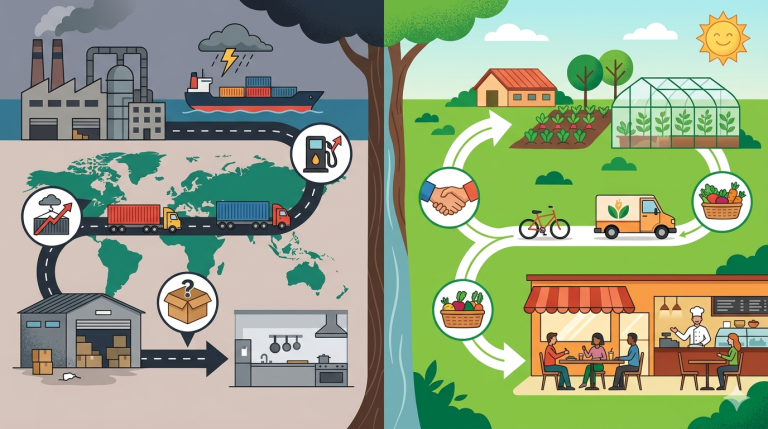
      Shorter supply chains mean fewer emissions, less packaging and more accountability. Diners appreciate knowing where their food comes from—and they reward restaurants that are honest and intentional.

      1. Marketing gold

      “Locally foraged chanterelles” or “sourced from Smith Family Farm” sounds a lot more compelling than “mixed greens.” These details make your menu—and your brand—more memorable.

      How to make It work (without losing your mind)

      Okay, so you’re sold on the idea. But how do you actually pull it off?

      • Start small: You don’t have to overhaul your entire supply chain overnight. Begin with one or two ingredients—maybe your eggs, herbs or seasonal vegetables—and build from there.
      • Build relationships: Visit farmers’ markets. Talk to local producers. Ask about growing practices, availability and delivery options. Many small farms are eager to work with restaurants—they just need a little guidance on volume and consistency.
      • Embrace seasonality: Hyper-local menus thrive on what’s fresh right now. That means your offerings will change—and that’s a good thing. Seasonal specials create excitement and keep guests coming back to see what’s new.
      • Tell the story: Highlight your sourcing on the menu, your website and social media. Train your staff to talk about where ingredients come from and why they matter. Transparency builds trust—and loyalty.

      Challenges to watch for

      Let’s keep it real—hyper-local sourcing isn’t without its hurdles. Small farms may not be able to meet high-volume demands year-round leading to inconsistent supply. Local ingredients can be more expensive than bulk commercial options. Coordinating multiple small deliveries takes time and planning.

      But with the right strategy—and a little flexibility—these challenges are manageable. Many operators find that the benefits far outweigh the bumps.

      Final thoughts: flavor with purpose

      In 2025, diners want more than just a good meal—they want a meaningful one. Locally sourced and hyper-regional ingredients offer a way to serve food that’s fresh, flavorful and full of purpose.

      For restaurant operators, this trend isn’t just about keeping up—it’s about standing out. It’s about building a brand that reflects your values, your community and your commitment to quality.

      So go ahead—start small, think big, and let your menu tell a story that begins right outside your door.