Smart Kitchens and IoT Integration: How Connected Devices Are Optimizing Restaurant Operations

In 2025, the restaurant kitchen is no longer just a place for sizzling pans and prep stations—it’s a high-performance hub powered by data, automation and intelligent connectivity. As operating costs rise and customer expectations evolve, smart kitchens and IoT integration are emerging as game-changing solutions for restaurants seeking greater efficiency, consistency and control.

From predictive maintenance to real-time inventory tracking, connected devices are transforming back-of-house operations into streamlined, responsive ecosystems. And the best part? These innovations aren’t reserved for enterprise chains—they’re increasingly accessible to independent operators and multi-unit franchises alike.

What is a smart kitchen?

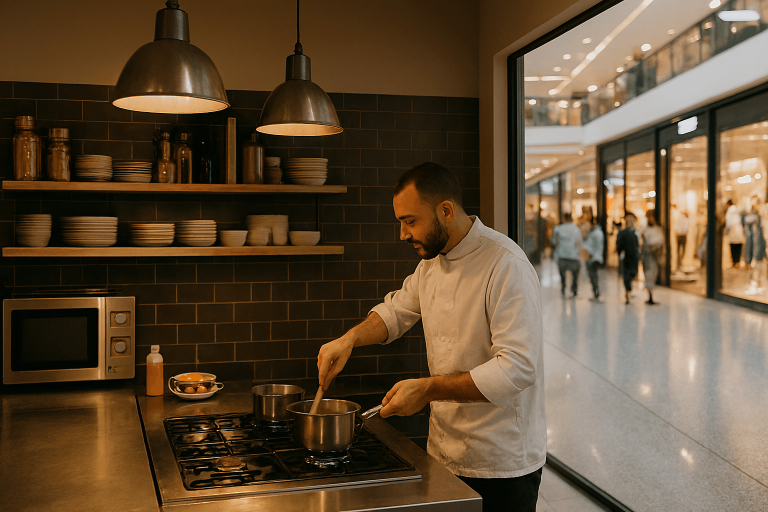
A smart kitchen leverages Internet of Things (IoT) technology to connect appliances, sensors and systems into a unified network. These devices communicate in real time, enabling automation, remote monitoring and data-driven decision-making.

Examples include:

  • Ovens that adjust temperature based on food type and cooking progress
  • Refrigerators that track internal conditions and alert staff to spoilage risks
  • Fryers that monitor oil quality and usage patterns
  • HVAC systems that optimize energy consumption based on occupancy and time of day

According to Mordor Intelligence, the global smart kitchen appliances market is expected to reach $23.88 billion in 2025, growing at a CAGR of 16.83% through 2030. This surge reflects a growing appetite for tech-enabled efficiency across the hospitality sector.

Operational benefits of IoT integration

  1. Energy efficiency and cost savings

Smart appliances don’t just cook—they conserve. IoT-enabled systems monitor energy usage across devices, identifying inefficiencies and adjusting operations to reduce waste. With energy now consuming nearly 6% of average restaurant operating costs, these savings can significantly impact the bottom line.

  1. Predictive maintenance and reduced downtime

Equipment failure is costly. In fact, downtime across the restaurant industry is estimated to cost $46 billion annually (86 Repairs). IoT sensors can detect early signs of malfunction—such as temperature fluctuations or abnormal power usage—and alert operators before breakdowns occur.

This proactive approach extends equipment lifespan, reduces emergency repair costs and ensures uninterrupted service during peak hours.

  1. Food safety and compliance

Maintaining safe food temperatures is non-negotiable. IoT-enabled refrigeration and cooking systems continuously monitor conditions, sending alerts if thresholds are breached. This helps restaurants stay compliant with health regulations and avoid costly violations.

Some platforms also log temperature data automatically, simplifying HACCP reporting and reducing manual labor.

Real-time data for smarter decisions

Smart kitchens generate a wealth of data—from prep times and energy usage to ingredient turnover and guest traffic. When integrated with POS systems and kitchen display units, this data becomes a powerful tool for:

  • Menu optimization: Identify best-selling items and adjust offerings based on demand
  • Labor forecasting: Align staffing levels with predicted order volume
  • Inventory control: Track ingredient usage and automate reordering to reduce waste

As highlighted by Chef’s Icon, these insights allow operators to make informed decisions that improve consistency, reduce costs and enhance the guest experience.

Guest experience meets back-of-house intelligenceWhile smart kitchens primarily optimize internal operations, they also impact the front-of-house. For example:

  • Order ready boards: Display real-time order status for guests and delivery drivers, reducing congestion and improving transparency
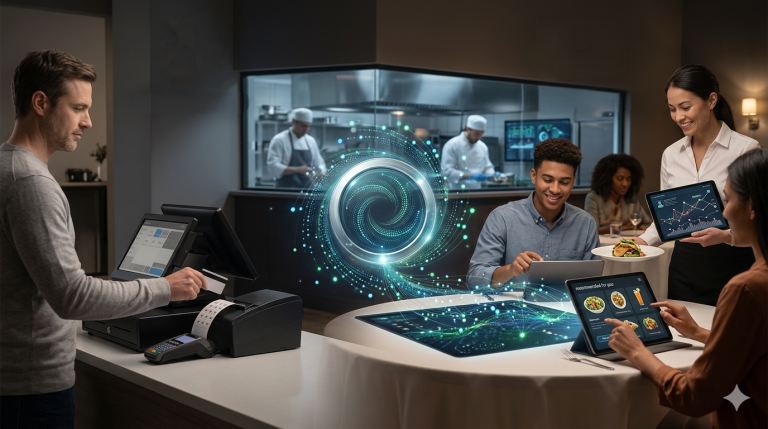
  • Smart tables: Allow guests to place orders, request refills and pay directly from their seats
  • AI-powered forecasting: Predict guest traffic and demand down to the hour, helping staff prepare accordingly

These features not only streamline service—they elevate the overall dining experience.

Challenges and considerations

Despite the benefits, IoT integration comes with considerations:

  • Upfront investment: Smart appliances and platforms can be costly, though ROI is often realized within 12–24 months
  • Data security: With increased connectivity comes the need for robust cybersecurity protocols
  • Staff training: Teams must be trained to operate and maintain new systems effectively

Restaurants should start with a clear strategy—identifying pain points, evaluating vendor options and piloting solutions before scaling.

The future of smart kitchens

Looking ahead, expect even deeper integration across devices and systems. Innovations on the horizon include:

  • Device orchestration platforms: Seamlessly connect mixed hardware environments for unified control
  • AI-powered recipe management: Adjust cooking parameters based on real-time feedback and guest preferences
  • Sustainability dashboards: Track carbon footprint and resource usage across locations

As the industry continues to evolve, smart kitchens will become the norm—not the exception.

The Evolution of Online Ordering and Delivery: What 2025 Means for Restaurants

In 2025, online ordering and delivery are no longer side hustles for restaurants—they’re central pillars of profitability, customer engagement and operational strategy. What began as a convenience has evolved into a full-fledged ecosystem, reshaping how restaurants connect with guests, manage logistics and compete in a crowded digital marketplace.

Whether you’re running a fast-casual concept or overseeing a multi-unit franchise, understanding the latest trends in online ordering and delivery is essential to staying ahead.

From phone orders to predictive platforms

The earliest iterations of food delivery were simple: a phone call, a paper menu and a hope that the order arrived correctly. Today, digital ordering platforms offer real-time tracking, AI-powered upselling and seamless payment integrations. The shift has been dramatic—and profitable.

According to Statista, the global online food delivery market is projected to generate $1.39 trillion in revenue in 2025, with growth expected to reach $2.02 trillion by 2030. In the U.S. alone, the market is forecast to hit $429.9 billion this year, up from $353.3 billion in 2024 (Deliverect).

This isn’t just a pandemic-era spike—it’s a long-term shift in consumer behavior.

The rise of first-party ordering

While third-party platforms like DoorDash and Uber Eats still dominate, many restaurants are reclaiming control through first-party ordering systems. These branded apps and websites allow operators to:

  • Avoid steep commission fees (often 15–30%)
  • Own customer data for remarketing and loyalty
  • Customize the user experience to reflect their brand

A recent article from Teem highlights that rising third-party fees and growing consumer demand for personalization are driving this shift. In fact, 58% of U.S. consumers now prefer ordering directly from a restaurant’s app or website.

AI and personalization: the new norm

Artificial Intelligence is no longer a novelty—it’s a necessity. From dynamic menu recommendations to predictive delivery times, AI is helping restaurants optimize every stage of the ordering journey.

Restaurants using AI-driven upselling tools have reported 15–30% increases in average order value, especially when suggestions are tailored to customer preferences.

Examples include:

  • Suggesting a dessert based on past orders
  • Recommending combos during peak hours
  • Adjusting delivery estimates based on traffic and kitchen load

These features don’t just boost revenue—they enhance the guest experience and build loyalty.

Delivery logistics: faster, smarter, greener

Speed and transparency are now table stakes. Customers expect accurate ETAs, real-time tracking and contactless options. In response, restaurants are investing in:

  • Integrated delivery software that syncs with POS systems
  • Autonomous vehicles and drones for last-mile delivery
  • Eco-friendly packaging and route optimization to reduce carbon footprints

According to EasyRoutes, advanced route optimization and sustainability are among the top six trends shaping food delivery in 2025. With 52% of U.S. consumers calling food delivery “essential” to their lifestyle, efficiency and environmental responsibility are no longer optional.

Ghost kitchens and virtual brands

The delivery boom has also given rise to ghost kitchens—delivery-only operations that reduce overheads and expand reach. While some early models have struggled, hybrid setups and virtual brands are thriving.

Operators can now run multiple concepts from a single kitchen, targeting different demographics and cuisines without the cost of dine-in service. This flexibility allows for rapid testing, seasonal menus and geographic expansion.

What it means for restaurant operators

The evolution of online ordering and delivery presents both challenges and opportunities. To stay competitive, restaurants should:

  • Invest in first-party platforms to build direct relationships with customers
  • Leverage AI for personalization and operational efficiency
  • Streamline delivery logistics with integrated tech and sustainable practices
  • Explore virtual brands or ghost kitchens to diversify revenue streams

The key is to treat online ordering not as an add-on, but as a core part of your business model.

Final thoughts

Online ordering and delivery have come a long way—from phone calls and paper menus to predictive algorithms and drone drop-offs. In 2025, they’re not just reshaping how restaurants operate—they’re redefining what it means to serve.

Smart Bites: Unlocking the Power of AI in the Restaurant Industry

The restaurant industry has long thrived on a blend of tradition, creativity and human touch. Yet, as digital transformation accelerates across sectors, restaurateurs are exploring how AI in restaurants can unlock efficiencies, delight diners and drive revenue. From the back kitchen where robotic arms handle repetitive tasks to the front of house where chatbots engage guests, artificial intelligence is reshaping dining

In this professional review, we dig into emerging trends, internal insights, competitive angles and best practices that B2B decision makers need to consider. We’ll also propose a roadmap for adopting restaurant AI solutions, backed by real metrics.

The rise of AI-driven restaurant operations

Operational excellence lies at the heart of any successful restaurant. As margins tighten and labor shortages persist, many operators turn to smart restaurant tech to automate workflows. AI-driven restaurant analytics and machine learning restaurant platforms process streams of data in real time. Whether analyzing point-of-sale logs or kitchen sensor outputs, these systems identify patterns that elude human teams, enabling more precise control over daily functions.

Kitchen automation and robotics

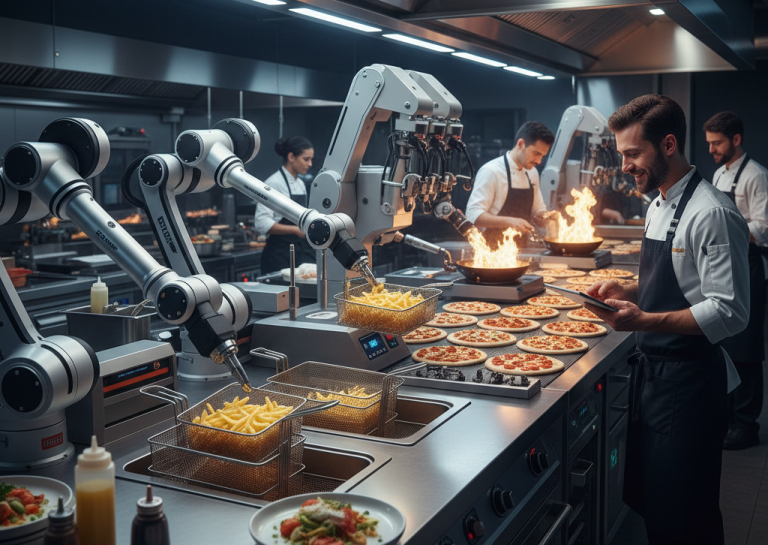
Robotic food preparation is no longer science fiction. Autonomous arms can chop, grill and plate with repeatable accuracy. When paired with kitchen automation systems, they reduce human error and free chefs to focus on creativity. 

Integrating food robotics requires upfront capital, but the long-term labor savings and consistency often yield an ROI in under two years. Operators should pilot with a single station, refine workflows, then scale across multiple kitchens.

Smart inventory management

Spoilage remains a perennial challenge in foodservice. Predictive maintenance and smart sensors help address this. AI restaurant solutions monitor temperature, humidity and stock levels to forecast when ingredients will expire or run low. 

By analyzing historical use and upcoming reservations, advanced models automatically generate reorder alerts, helping supply teams preempt shortages. The key is integrating internal inventory records with external supplier APIs for seamless replenishment.

Enhancing customer experience with AI

Beyond operations, AI in restaurants can elevate guest satisfaction. Today’s diners expect personalized service, whether they book a table or order via an app. AI-driven chatbots and virtual concierges guide guests through menus, upsell sides and handle dietary queries with ease. But it doesn’t stop there. Underlying machine learning restaurant models can also detect sentiment, adapting tone and suggestions to individual preferences.

Personalized menu recommendations

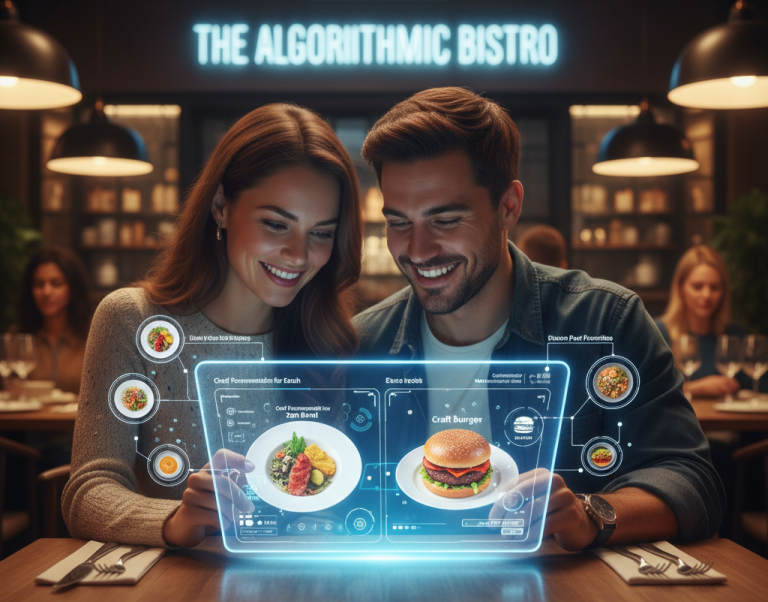
Menu personalization uses customer histories and predictive analytics to tailor suggestions. For example, if a frequent visitor often orders plant-based options paired with spicy notes, the system highlights a new vegan curry. This frictionless experience encourages incremental spends

Pilot studies show personalized recommendations can boost average check value by up to 12%. Implementing this requires anonymized data capture, preference tagging and A B testing to refine algorithmic prompts without overwhelming guests.

Chatbots and virtual assistants

Customer service AI extends from online ordering to on-premise kiosks. Natural language processing powers chatbots that handle reservation changes, special requests and loyalty inquiries. Unlike static IVR menus, these virtual assistants learn from interactions, improving accuracy over time. 

That said, balancing automation with human touch remains crucial; some complex issues still require a live agent. A hybrid model routes routine queries to AI and escalates nuanced matters, delivering speed without sacrificing empathy.

AI-powered analytics and decision-making

At the heart of digital transformation lies data. AI-driven restaurant analytics platforms consolidate feeds from POS, kitchen display systems, online reviews and social media. By unifying these disparate sources, leaders gain a holistic picture of their business. Data lakes power dashboards that reveal top-selling dishes, peak traffic windows and emerging customer sentiments.

Predictive sales forecasting

Accurate sales forecasts hinge on more than historical data; they incorporate seasonality, local events and external factors like weather. Advanced time series models can predict daily traffic with surprising precision. This facilitates more efficient rostering and helps reduce labor costs. Predictions are also valuable in adjusting ingredient orders, cutting waste further.

Dynamic pricing strategies

Dynamic pricing in restaurants remains nascent but promising. By analyzing demand curves, competitor pricing and inventory levels, AI systems can recommend price adjustments for menu items or time-based promos. Imagine off-peak discounts during slower lunch hours to stimulate traffic, or premium pricing for highly popular weekend slots. Early adopters report a 5-8% lift in revenue. Ethical considerations aside, dynamic pricing demands transparency to retain customer trust.

Implementation best practices for AI in restaurants

Launching AI in restaurants requires a holistic plan. It’s not just about installing software or robots; it’s about aligning people, processes and technology for sustained success.

  • Data collection and integration: 

High-quality data fuels every AI initiative. Operators must centralize data pipelines, ensuring POS systems, CRM platforms, and kitchen sensors feed a unified repository. Consistency in data schemas, real-time feeds and robust APIs underpin accurate modeling. It’s often wise to partner with integration specialists to streamline data lake creation and maintenance.

  • Staff training and change management: 

Even the best AI systems fail without proper adoption. Staff need training to interpret dashboards, manage alerts and override automation when necessary. Regular workshops, hands-on simulations and clear documentation foster confidence. Leadership should communicate the benefits clearly, showing how technology augments jobs rather than replacing teams.

Challenges and ethical considerations

No technology journey is without hurdles. AI deployments in restaurants raise pressing questions around data privacy, security and the balance between efficiency and human connection.

  • Data privacy and security: 

Handling guest data demands strict compliance with regulations like GDPR or CCPA. Whether it’s credit card details, dietary preferences or visit histories, operators must encrypt data at rest and in transit. Periodic security audits, role-based access controls and breach response plans are non negotiable. Breaches not only erode trust but can incur hefty fines.

  • Balancing automation with the human touch: 

While food robotics and chatbots handle routine tasks, the essence of hospitality lies in personal interactions. Guests value genuine warmth, spontaneous conversations and the occasional chef’s recommendation off-menu. Restaurants must strike a balance, reserving full automation for background processes and ensuring front-line staff retain autonomy to personalize experiences.

Future Trends

  • AI and the dining experience:

Looking ahead, AI in restaurants will converge with immersive technologies, creating novel experiences that blur digital and physical realms.

  • Augmented reality menus: 

Imagine scanning a QR code and seeing lifelike 3D renderings of menu items on your table. AR menus powered by AI can adjust visuals based on dietary filters, portion requests or paired beverage suggestions. Early pilots show that diners using AR menus spend up to 15% more as they grasp portion sizes and ingredients more clearly.

  • Voice-activated ordering: 

Voice assistants are poised to play a bigger role in restaurants. From drive-thru lanes where customers place orders verbally to in-restaurant kiosks that handle spoken requests, natural language interfaces can reduce wait times and boost order accuracy. Integration with reservation systems could also allow guests to reorder favorites by voice the moment they arrive.

Embracing AI in restaurants for sustainable growth

AI in restaurants is not a fleeting craze. It’s a strategic imperative for operators aiming to thrive in a competitive, fast-paced foodservice landscape. By investing in kitchen automation, predictive analytics and guest facing AI solutions, restaurants can enhance efficiency, delight customers and unlock new revenue streams. Of course, success demands careful planning, strong data governance, and a commitment to preserving the human spirit of hospitality. Yet when executed well, the fusion of human expertise and artificial intelligence yields a resilient, future-ready operation—one that feeds both the appetite for innovation and the timeless desire for memorable dining experiences.

Serving Security: The Ultimate Guide to Cybersecurity for Restaurants

Restaurants handle sensitive customer information on a daily basis. Payment card data, reservation records, loyalty program details all flow through digital systems. Protecting this data requires robust cybersecurity for restaurants. Preventing data breach events depends on identifying network vulnerabilities. From mobile ordering apps to cloud-based point-of-sale platforms, digital transformations streamline dining experiences but also expand the risk footprint. A single breach can disrupt service, damage reputation and incur hefty fines. 

For independent diners or large franchises, understanding cybersecurity fundamentals is crucial. Moreover, evolving regulations such as the Payment Card Industry Data Security Standard demand strict adherence to data protection standards. As threats escalate, restaurant managers and IT teams must collaborate closely. 

Effective cybersecurity for restaurants demands a layered approach. This guide explores restaurant cyber risk management and food service data security in depth.

Why cybersecurity for restaurants matters

Data breaches can cost millions in fines, brand damage and lost customer trust. In 2024, a high-profile attack targeted a U.S. national burger chain, exposing millions of payment records and triggering regulatory investigations. 

Cybersecurity for restaurants is no longer optional. Modern dining depends on digital ordering, contactless payments, online reservations and centralized inventory systems. Each innovation introduces new attack surfaces and network vulnerabilities. Without proactive measures, restaurants risk service interruptions, data loss and compliance failures that can shut down operations temporarily or permanently.

Moreover, evolving customer expectations demand secure experiences. Guests want assurance that their payment security is robust and personal data is safe. Integrating cybersecurity into core business processes enhances resilience, maintains PCI compliance and strengthens brand credibility. Ultimately, investing in restaurant cybersecurity best practices delivers both operational stability and business growth. Investment in network security restaurant solutions, payment security restaurant protocols, and robust monitoring underpin restaurant data breach prevention efforts.

Common cyber threats facing restaurants

Restaurants face a range of digital threats that target payment processing, network infrastructure and staff credentials. Understanding these risks is the first step in building an effective cyber defense strategy.

  • Point-of-sale (POS) malware

Point-of-sale malware remains one of the leading causes of data breach events in the food service sector. Attackers inject malicious code into POS devices, capturing card data in real time. Once credentials are stolen, fraud can spread across payment networks. 

To counter this threat, restaurants should implement POS security for restaurants practices such as regular software updates, application whitelisting and endpoint encryption. These measures help to prevent unauthorized code execution and ensure that payment data remains secure during processing. This approach enhances malware protection across terminals.

  • Phishing and social engineering

Front-line staff often represent the weakest security link. Phishing campaigns leverage deceptive emails or SMS messages to trick employees into revealing login credentials or clicking malicious links. Social engineering can also occur over phone calls or in person, especially during busy service hours. 

Regular simulated phishing exercises, clear reporting channels, and comprehensive security awareness programs help to reduce this risk. A culture of vigilance ensures that suspicious requests are flagged and investigated promptly.

  • Network vulnerabilities

Unsegmented networks allow attackers to move laterally once they gain initial access. Restaurants that host guest WiFi on the same network as POS or back-office systems risk exposing critical infrastructure to outsiders. 

Network segmentation, combined with firewall controls and secure wireless configurations, mitigates these network vulnerabilities. By isolating guest traffic from internal assets, restaurants can maintain a secure environment while still offering convenient internet access to patrons.

  • Other threats 

Ransomware attacks lock down servers or digital signage systems, demanding payment to restore service. Distributed denial-of-service (DDoS) attacks can overload online ordering portals, disrupting revenue streams. Emerging risks such as IoT device exploits like smart thermostats or kitchen sensors further expand the attack surface. 

A holistic cybersecurity for restaurants approach addresses all potential entry points, from digital ordering apps to temperature control systems. Recent industry research indicates that 60% of food service data security incidents involve POS system compromises.

Key components of an effective restaurant cybersecurity strategy and best practices

A robust cybersecurity framework combines technical controls, policy enforcement and ongoing monitoring. Core components include securing payment systems, network defenses and data protection protocols. Following these restaurant cybersecurity best practices reduces risk and simplifies compliance.

Securing point-of-sale systemsProtecting POS systems is foundational to any cybersecurity for restaurants plan. Endpoint encryption ensures card data remains unreadable if intercepted. Application whitelisting restricts execution to known verified software, blocking malware attempts. Automated patch management keeps operating systems and payment applications up to date, closing security gaps. Tokenization replaces sensitive card numbers with unique identifiers, reducing the value of stolen data. By integrating multiple layers of defense, restaurants can harden POS terminals against both external attacks and insider threats. 
Network segmentation and firewallsSegmenting networks separates public, guest and operational traffic, isolating guest WiFi traffic from POS and back-office servers. Firewalls enforce strict rules between segments. Virtual LANs and software-defined networking provide flexible segmentation, improving threat containment. Next-generation firewalls offer intrusion detection and prevention capabilities, alerting staff to anomalous activity. Together, segmentation and firewall controls form a robust perimeter that guards against lateral movement and unauthorized access. 
Data encryption and protectionEncrypting data at rest and in transit is critical for securing sensitive information. Transport Layer Security (TLS) protocols protect data as it moves between devices, mobile ordering apps, and cloud servers. Full-disk encryption secures local storage on servers and POS terminals. Backup encryption ensures offline copies remain protected, enabling swift recovery after an incident. Additional measures such as secure key management, hardware security modules, and regular vulnerability scanning further strengthen data protection. Employing encryption throughout the data lifecycle addresses a core requirement of PCI compliance. 
Staff training and awarenessEven the most advanced technology cannot fully protect an organization without well-trained personnel. Employee training programs empower staff to recognize threats, follow security protocols and report suspicious incidents promptly. Effective initiatives include structured modules that cover phishing recognition, password hygiene and safe device usage. Interactive workshops and digital learning platforms reinforce concepts over time. Gamified quizzes and leaderboards increase engagement. Clear policies should define acceptable use of devices, internet access and remote work procedures. Periodic simulated phishing exercises test employees in real-world scenarios. Results highlight vulnerabilities and guide targeted training. Automated reporting features streamline incident response, enabling IT teams to contain threats quickly. Reinforcement sessions for staff who fall for simulations help close knowledge gaps. By combining continuous training with simulated exercises, restaurants transform staff into active defenders and improve employee training outcomes. 

Regulatory compliance

Understanding and adhering to relevant regulations is essential for any restaurant aiming to secure customer data and satisfy audit requirements. The Payment Card Industry Data Security Standard (PCI DSS) sets baseline controls for payment environments.

Understanding PCI DSS requirements:

PCI DSS outlines twelve core requirements, including maintaining secure networks, encrypting cardholder data and monitoring access. For restaurants, key areas often involve regular vulnerability scanning, logging and monitoring POS systems, and implementing strong access controls. Achieving compliance involves quarterly network scans, annual self-assessments and, for larger merchants, third-party audits.

Maintaining compliance:

Compliance is an ongoing effort, not a one-time project. Automated compliance management tools track system changes, highlight configuration drift, and generate audit-ready reports. A dedicated compliance officer or security manager ensures that updates to PCI DSS versions are understood and implemented. Regular reviews of policies, periodic staff training and thorough documentation help sustain a compliant posture. Successfully navigating PCI compliance requirements enhances overall payment security posture.

Beyond PCI DSS:

There are other regulations that may apply to restaurants. For instance, local data protection laws governing personal information. By integrating compliance into daily operations, restaurants can avoid fines, legal exposure and negative publicity. A well-executed compliance strategy supports both risk management and customer confidence.

Implementing a cyber incident response plan for restaurant cyber risk management

No security program is foolproof. Restaurants must prepare for potential incidents with a formal Cyber Incident Response Plan (CIRP). Such a plan outlines roles, processes and communication protocols in the event of a breach.

  1. Preparation involves establishing an incident response team, defining roles and responsibilities, and assembling response templates. Contact lists for IT staff, legal counsel and public relations must be current.
  2. Identification relies on monitoring logs, intrusion detection alerts and user reports to detect anomalies. Rapid discovery of a data breach or malware infection reduces dwell time.
  3. Containment requires isolating affected systems, revoking compromised credentials and applying emergency patches. Network segmentation helps to limit spread.
  4. Eradication and recovery involve removing malware, rebuilding or restoring systems from encrypted backups, and verifying restoration integrity. Conducting forensic analysis determines the root cause. 
  5. Finally, post-incident review documents lessons learned, updates policies and refines response playbooks. A clear plan ensures that cybersecurity for restaurants remains resilient under pressure.

Future trends in restaurant cybersecurity

As technology evolves, restaurants must adapt to emerging threats and innovations.

  • Artificial Intelligence and threat detection: AI powered security platforms analyze network traffic patterns to detect anomalies in real time. Machine learning models can identify novel malware signatures and flag suspicious user behavior, reducing response times.
  • Zero trust architectures: Zero trust principles never trust, always verify apply to internal and external access. Micro segmentation and continuous authentication ensure that no device or user is implicitly trusted, minimizing attack surfaces.
  • Cloud native security solutions: Migrating POS and inventory systems to the cloud offers scalability and centralized security controls. Cloud native security platforms provide automated compliance checks, unified dashboards, and integrated encryption services.
  • Blockchain for data integrity: Emerging blockchain based systems promise immutable transaction records. For loyalty programs and supply chain tracking, blockchain can secure data integrity and enhance transparency.

By embracing these trends, restaurants can stay ahead of attackers. Continuous evaluation of new technologies and strategic partnerships with managed security providers help maintain a robust cybersecurity posture. Next gen network security restaurant platforms will reshape threat detection. Staying current with emerging models is fundamental to sustained cybersecurity for restaurants.

Conclusion and next steps

Cybersecurity for restaurants demands a comprehensive, multi layered approach. From securing point-of-sale systems to conducting simulated phishing exercises, each element contributes to a resilient defense. Regulatory compliance, incident response planning and continuous staff training form the backbone of a robust security program. AI driven threat detection, zero trust architectures and cloud native tools represent the next frontier in restaurant cyber risk management.

Restaurants that invest in restaurant cybersecurity best practices not only protect customer data but also safeguard brand reputation and revenue streams. The cost of prevention is far less than the cost of recovery. Now is the time to assess existing security measures, identify gaps and implement a tailored cybersecurity roadmap. By doing so, restaurants can serve guests with confidence, knowing that networks, devices and data remain secure. Embracing restaurant cyber risk management and food service data security best practices positions operations for long term success.

Sustainable Tech in Restaurants: Smart Innovation for a Greener Future

The future of hospitality isn’t just fast, efficient or digital—it’s sustainable. As diners grow more conscious of where their food comes from, how it’s made and its environmental impact, the pressure on restaurants to operate responsibly is greater than ever. In this evolving landscape, sustainable tech in restaurants has emerged not just as a trend, but as a critical strategy for long-term success.

Whether you’re a quick-service operator or managing a high-end dining brand, integrating sustainable technologies into your restaurant operations can help cut costs, reduce waste and build deeper trust with customers who care about more than what’s on the plate.

Why sustainability now?

Sustainability is no longer a side dish—it’s become a main ingredient in how restaurants are evaluated by guests, employees and regulators alike. With climate change, resource scarcity and shifting consumer expectations front and center, restaurants that don’t make intentional moves toward eco-efficiency risk falling behind.

An ever-increasing number of diners across generations are opting for restaurants that are committed to sustainability. Meanwhile, tech-forward solutions are making it easier than ever to implement sustainability without sacrificing service quality or profit.

Where tech meets sustainability

At the intersection of operational efficiency and environmental stewardship, you’ll find a host of technologies that allows restaurants to reduce their ecological footprint without overhauling their business model. Here’s a closer look at some of the most impactful tools:

1. Smart inventory management

Food waste isn’t just an environmental issue—it’s a financial one. Smart inventory systems, often powered by AI, track shelf life, forecast demand and help order only what’s needed. This prevents excess stock, reduces spoilage and minimizes unnecessary packaging waste.

2. Energy-efficient equipment

Energy-guzzling fryers, walk-ins and dishwashers are being replaced by ENERGY STAR certified appliances that use less water and power without compromising performance. Many of these devices also come with IoT features that monitor energy usage and suggest optimization strategies.

3. Waste tracking tech

Platforms that use smart scales and AI can track what’s being tossed in the trash—and why. Identifying patterns in plate waste or prep losses allows kitchens to fine-tune recipes, portion sizes and prep processes.

4. Eco-friendly packaging automation

Sustainable packaging alone isn’t enough—it has to scale efficiently. Automation platforms now allow restaurants to streamline sustainable to-go packaging workflows, ensuring eco-friendly containers are used consistently and appropriately without slowing down service.

5. Carbon tracking software

Several platforms have emerged to help restaurants calculate their carbon footprint across operations—from supplier transportation to kitchen emissions—and suggest offsetting initiatives or operational tweaks.

Benefits beyond the environment

Adopting sustainable tech in restaurants isn’t just about saving the planet (though that’s a worthy goal). There are concrete operational benefits that make the case even stronger:

  • Reduced operating costs through lower utility bills and waste disposal fees.
  • Stronger brand loyalty from environmentally conscious consumers.
  • Increased staff retention, especially among younger employees who prioritize values-driven employers.
  • Positive PR and industry recognition, which can attract partnerships and local support.
  • Compliance with evolving regulations, as sustainability mandates become more common at local and federal levels.

In short: sustainability pays off—in goodwill, in efficiency and, increasingly, in profit.

Making sustainable tech work for you

Every restaurant is different, and there’s no one-size-fits-all roadmap for becoming a sustainable operation overnight. The key is to start smart and scale intentionally. Here’s how:

  • Assess where your biggest environmental impact lies—is it energy use, water waste, food waste or packaging?
  • Pick one area to tackle first and find a technology partner that aligns with your budget, scale and goals.
  • Train your team thoughtfully, making sustainability part of the culture—not just a checkbox.
  • Measure and share your progress, using dashboards, customer-facing displays or sustainability sections on your website and menu.

Being transparent with your audience about your efforts—flaws and all—builds credibility and fosters community support.

Looking ahead: tech that grows with you

Sustainability is a journey, not a destination. And the good news is, many of the technologies making waves in this space are becoming more affordable and scalable.

Expect to see growth in:

  • AI-powered demand forecasting that minimizes overproduction
  • Reuse-oriented delivery systems that collect and sanitize reusable containers
  • Blockchain-based sourcing tools that verify sustainable supply chains
  • Solar-integrated POS kiosks for outdoor operations and pop-ups

As more restaurant tech platforms bake sustainability into their core features, choosing eco-conscious tools won’t just be the right move—it’ll be the easiest one.

Final Thoughts

Sustainable tech in restaurants is more than a buzzword—it’s a blueprint for building resilient, future-ready businesses. At a time when guests are looking not just for great meals but meaningful values, making sustainable choices with the help of technology sends a message that your brand is invested in both flavor and the future.

Digital Menus Are Taking Over. Are You Ready?

In a world where your guests can hail a car, stream a movie or buy a couch with a tap, the idea of handing them a laminated menu is starting to feel… quaint. Restaurants that continue to lean solely on static, printed menus may be missing out on serious revenue and operational agility. Studies have revealed that 85% of eateries use digital code menus and many are layering on real-time pricing and AI-driven recommendations to personalize the experience even further.

In other words, the menu is no longer just a list—it’s a live digital interface, a sales tool, and a brand differentiator all wrapped into one. And the real question is: are you letting it work for you?

QR menus: more than a pandemic fix

Let’s talk about those scannable little squares. QR code menus were initially hailed as a stopgap solution during the peak of COVID-19. Fast forward a few years, and many diners now expect them as the norm—particularly Gen Z and millennial customers who value low-contact, fast-access service.

But the utility of QR menus goes far beyond hygiene. Imagine changing your menu items, descriptions or pricing mid-shift based on inventory or customer feedback—with zero printing costs or service interruptions. That’s not just tech; that’s flexibility.

Plus, smart QR menus can connect directly to digital ordering platforms, making it easier for guests to browse, build their order, and even pay—all from their own device. That kind of frictionless experience doesn’t just delight customers; it shortens table turn times and frees your staff to focus on high-impact service moments.

Dynamic pricing: surge strategy meets hospitality

Here’s where digital menus start flexing real muscle. Dynamic pricing—automated price adjustments based on demand, time of day or supply costs—is making its way from Uber and airline seats into dining rooms. Sounds aggressive? It doesn’t have to be.

Smart dynamic pricing can boost revenue during peak hours while encouraging traffic when business slows. A brunch hotspot in Chicago, for example, might charge a few dollars more for avocado toast on Saturdays between 10am and noon when lines are out the door. Later that afternoon, that same dish might be discounted slightly to coax in the post-brunch crowd.

What makes this possible is the marriage of cloud-based menu software with real-time POS data. Restaurant operators can schedule pricing shifts in advance or let the system adjust autonomously based on customer behavior and sales patterns.

Of course, transparency matters. Nobody likes a surprise price hike. But when explained as a “smart pricing” model—helping restaurants stay efficient and reduce waste—many guests are receptive. Some even find it refreshingly modern.

AI-powered suggestions: personalized, profitable, predictive

Now we’re getting into the fun stuff. One of the most promising menu innovations is using artificial intelligence to anticipate what your guests are likely to order—and gently nudge them toward high-margin or complementary items.

Say a customer frequently orders spicy dishes and dines solo on weekday evenings. Your system can recognize this pattern and suggest a new limited-time spicy entrée with a cold beer pairing the next time they scan your QR menu. Or if it’s someone’s first visit, AI can highlight your top five reviewed items, drawing from menu analytics and regional preferences.

This level of personalization doesn’t just help guests find what they’ll love—it increases check averages and reduces indecision at the table. Some restaurants have even reported an increase in sales of up to 30% when recommendations are tailored instead of generic.

It’s not just the menu—it’s the experience

What’s really happening here is that menus are becoming part of the service experience itself. They speak on behalf of your brand before a server even greets the table. A digital menu with clear visuals, allergen filters, and smart suggestions instantly tells guests: this restaurant is modern, efficient, and attentive to individual needs.

And if you’re running multiple locations or constantly updating your offerings, digital menus save time and sanity. No more reprinting costs. No more staff confusion over which items are sold out or updated. The consistency alone is worth its weight in cardstock.

Upgrade the menu, upgrade the business

There’s a reason tech-forward restaurants are leaning into digital menu innovation. It touches every corner of the operation—from marketing to kitchen timing, staffing to guest retention. And the beauty is, you don’t have to overhaul everything at once.

Start with QR codes. Layer in dynamic pricing once you understand customer behavior. Add AI-enhanced suggestions when your team is ready to take that next leap. Whatever your pace, one thing is clear: static menus are fading, and interactive digital platforms are here to stay.

Robots in Restaurant Service: The Rise of Automated Cooking and Serving Technologies

From front-of-house to the kitchen line, robots are making their mark on the restaurant industry in ways that go far beyond novelty. No longer reserved for sci-fi movies or international fast-food chains, robots in food service are now a practical solution to real-world problems—labor shortages, operational inefficiencies, and shifting guest expectations.

As automation technology becomes more accessible and affordable, U.S. restaurant operators are beginning to recognize its transformative potential. Whether you’re overseeing a multi-unit franchise or managing a single independent venue, it’s time to look seriously at what robotics can do for your business.

The workforce challenge driving automation

One of the biggest accelerators of robot adoption in food service has been the ongoing labor crisis. Even though the restaurant industry is witnessing growth, labor shortages continue to be a serious challenge, with operators struggling to fill key roles in both front-of-house and back-of-house.

In this context, robots are stepping in not to replace people, but to support strained teams. Automated solutions handle repetitive, time-consuming tasks—freeing up human staff for higher-value interactions and improving overall efficiency.

Key examples of this support include:

  • Robotic fryers that manage cooking times with precision
  • Dishwashing bots that handle sanitation tasks with minimal supervision
  • Service robots that deliver food from kitchen to table, reducing server fatigue

A glimpse inside the robotic kitchen

Today’s smart kitchens are no longer solely defined by connected sensors and cloud-based POS systems. They now include fully automated cooking technologies capable of preparing everything from burgers to grain bowls.

Notable innovations include:

  • Automated cooking stations: Miso Robotics’ Flippy is a high-profile example—a robotic arm that fries items consistently without breaks or errors.
  • Precision pizza bots: Companies like Picnic Works offer robotic systems that assemble pizzas with precision and speed, reducing food waste and labor costs.
  • Wok and stir-fry automation: Robots from companies like Botinkit and Hyphen prepare complex dishes on-demand, with programmable cooking parameters and customizable recipes.

These systems are not just novelties—they’re delivering measurable improvements in throughput, portion control, and consistency.

Service robots: enhancing the guest experience

In the dining room, robots in food service are becoming increasingly visible. From robotic hosts to tray-carrying servers, these machines are improving speed of service while reducing physical strain on human staff.

Popular features include:

  • Autonomous delivery: Robots like Servi by Bear Robotics navigate dining rooms autonomously, delivering meals and clearing dishes.
  • Voice-enabled hosts: Some brands are experimenting with AI-powered greeters who can manage check-ins, waitlists, and basic FAQs.
  • Mobile kiosks: Used in fast-casual and QSR formats, mobile serving robots can also handle payment processing, minimizing friction at busy locations.

These solutions are particularly appealing in high-traffic or labor-constrained environments like airports, mall food courts, and hotel restaurants.

ROI and operational Impact

While upfront investment in robotics may seem daunting, many early adopters are reporting strong returns within 12 to 24 months. The combination of labor cost savings, increased throughput, and enhanced guest satisfaction contributes to a compelling ROI.

Operational benefits include:

  • Consistency: Robots follow exact specifications every time, reducing customer complaints related to portioning or preparation errors.
  • Speed: Automation streamlines order fulfillment, enabling shorter ticket times during peak periods.
  • Hygiene and safety: Robots reduce human contact with food and equipment, minimizing health risks in sensitive environments.

It’s worth noting that many vendors now offer leasing or subscription models, reducing capital expenditure and making these technologies more accessible to smaller operations.

Is your restaurant ready for robotics?

Before jumping into the robotics revolution, it’s important to evaluate your specific needs and operational goals. Here are a few guiding considerations:

  1. Assess repetitive tasks: Identify jobs that are manual, repetitive, or consistently underperforming.
  2. Start small: Pilot one robotic solution—such as a fryer or server—and evaluate its performance before expanding.
  3. Consider space constraints: Some robots require specific kitchen layouts or infrastructure changes.
  4. Train your team: Human-robot collaboration is most effective when your staff understands how to work with the technology.
  5. Monitor guest feedback: Involve your guests in the transition and gather their insights—they may love the convenience or have suggestions to improve the experience.

The future is human–robot collaboration

While robots in food service are becoming more common, they’re not a replacement for the hospitality and warmth that define great dining experiences. Instead, they function best as collaborative partners—handling the behind-the-scenes precision so your team can focus on customer connection.

Forward-thinking restaurants are already experimenting with hybrid staffing models, where automation handles prep, plating, or delivery, and staff focus on upselling, storytelling, and curating memorable moments. For further insight into how technology is supporting this shift, you can read our related article, Revolutionize Your Restaurant with AI-Powered Ordering Solutions.

Final thoughts

The rise of robotics in food service isn’t about technology for technology’s sake—it’s a strategic evolution. For restaurant operators navigating high costs, staffing gaps, and changing guest expectations, automation offers both relief and a competitive advantage. Whether you’re considering your first robotic kitchen assistant or exploring full-scale automation, now is the time to explore what’s possible.

Revolutionize Your Restaurant with AI-Powered Ordering Solutions

Everybody knows that the restaurant industry is fiercely competitive. With customer expectations evolving by the day, restaurant owners and managers are looking for more than just great food and service. They want tools that can personalize experiences, streamline operations, and keep guests coming back. Enter AI-powered ordering and personalization—a transformative tech trend that’s no longer just for major chains like McDonald’s or Panera Bread. It’s fast becoming essential for restaurants of all sizes.

Whether you’re running a fast-casual hotspot or managing a multi-location fine dining operation, AI has the potential to elevate the guest experience while boosting your bottom line.

From Gimmick to Game-Changer: The Rise of AI in Ordering

A few years ago, the idea of AI in restaurants conjured images of flashy robots or sci-fi-style service. Today, it’s more nuanced—and practical. Artificial Intelligence is now embedded in everything, from self-service kiosks to loyalty programs, allowing operators to analyze customer data and respond with meaningful, personalized service.

What does this look like in real life?

  • A regular customer walks in, and your digital menu app instantly recommends their favorite lunch combo.
  • A drive-thru system automatically adjusts its upsell suggestions based on weather, time of day or previous orders.
  • A new diner ordering via your website sees curated menu options based on their dietary preferences and local trends.

These aren’t futuristic predictions—they’re today’s AI-driven capabilities.

The Personalization Payoff

Personalization is where AI shines brightest. In fact, recent industry reports show that 71% of consumers expect personalized interactions from brands—including restaurants. And personalized recommendations, when done right, can significantly increase check size and repeat visits.

Here’s how personalization is being used effectively:

  • Smart recommendations: AI algorithms analyze order history, browsing behavior and customer profiles to recommend menu items tailored to individual tastes.
  • Dynamic promotions: Send time-sensitive discounts or offers triggered by customer behavior—like a coupon for dessert to someone who always skips it.
  • Predictive ordering: For regular customers, some systems can prepare favorite items ahead of arrival—talk about the royal treatment.

Not only do these features boost customer satisfaction, but they also collect valuable insights that inform future marketing campaigns, inventory decisions and staffing needs.

Where You’ll See AI in Action

While personalization may start at the menu, the real innovation lies in the AI-powered ordering platforms that fuel it. Here are the key technologies reshaping restaurants:

  • Self-service kiosks with adaptive learning to improve upsells
  • Voice assistants that let guests order conversationally, even from their cars or smart devices
  • AI chatbots on websites and apps for quick order-taking and real-time customer support
  • Integrated online ordering systems that adapt based on local inventory, weather and promotions

These innovations fit restaurants across the boards, regardless of size, cuisine, location or target market. 

Benefits Beyond the Buzz

Let’s move beyond the tech jargon for a moment. Why should you, a busy restaurant professional juggling labor, inflation and margins, care about this?

Here’s what AI-powered ordering can do for your business:

  • Boost average check sizes: With smart upsells and personalized suggestions, your guests are more likely to try that appetizer or beverage they didn’t originally plan on.
  • Increase throughput: Faster ordering means shorter lines, quicker table turns and more satisfied customers.
  • Improve accuracy: AI-driven order systems reduce the human errors that come with mishearing or miskeying.
  • Enhance guest retention: Personalized service creates emotional loyalty—something that’s hard to put a price on.

The icing on the cake? AI systems learn and improve over time, getting smarter with every interaction.

Getting Started: What to Know Before You Invest

AI isn’t a plug-and-play fix—it’s a strategic investment. Here are a few things to consider before diving in:

  1. Define your goals: Are you looking to improve speed, loyalty or revenue? Choose tools that align with your core challenges.
  2. Choose scalable solutions: Opt for platforms that can grow with your operation, whether you’re managing one location or twenty.
  3. Train your team: The best tech only works when your staff knows how to use it confidently and consistently.
  4. Protect customer data: AI thrives on data—but make sure you’re choosing platforms with robust security and compliance standards.

The Human Touch Still Matters

AI doesn’t replace hospitality—it enhances it. When technology handles the transactional parts of service, your team is freed up to focus on what they do best: connecting with guests.

The operators who win in today’s market are those who blend smart automation with authentic human service. Think of AI not as a replacement, but as your new MVP behind the scenes.

Final Thoughts

AI-powered ordering and personalization aren’t just trends—they’re signals of where the restaurant industry is heading. And for restaurateurs trying to navigate a changing landscape, embracing this technology could be the key to staying competitive, efficient and wildly relevant.

Scammers charging restaurants thousands, promising a Keith Lee visit

Lee has become one of the most influential food reviewers on TikTok, with over 16 million followers. But he said he would never charge a restaurant.

Scammers are targeting Indianapolis restaurants, claiming for thousands of dollars they will get viral food critic Keith Lee to come to the businesses.

Lee, a professional MMA fighter, has become one of the most influential food reviewers on TikTok, with over 16 million followers. His reviews typically consist of him eating takeout in his car and rating every detail, including the service he received. 

Since his reviews can sometimes make or break a restaurant, owners always try to get his attention, which these scammers in Indianapolis took advantage of. He addressed the scam in a video for his followers. 

“I would rather not make this video but it’s come to my attention, people scamming on my behalf and I don’t want nobody falling victim to it,” said Lee. 

The social media star said it was leaked to the public that he would be in Indianapolis for the NBA All-Star Game Weekend. 

Scammers took advantage of the information, going to local restaurants and charging anywhere from $7,000 to $20,000 promising Lee would dine at their restaurant, and bring with him a crowd of new customers. 

“That’s not true,” Lee said. “We’re going to Indianapolis for the game, and the game only. Yes, we might try some food while we’re there. But we’re not going there for the food tour.”

Lee said he never charges restaurants he reviews for his appearance or publicity.

“No place that we go to do we charge small restaurants for anything. We don’t charge for reviews. We don’t charge if there’s a line out the door. We don’t charge even if you open three or four locations after we leave. At no point do I want any money from any small restaurant,” Lee goes on. “I’m not charging those restaurants anything. And if anybody has ever told you anything differently, they’re lying. They’re not with me.”

Lee continued, “If you are a restaurant owner and you see me while we are in Indianapolis, don’t come to me and my family and say, ‘You took this money and you didn’t show up for a review.’ I didn’t take no money. I’m not showing up for a review. I didn’t promise anything. I’m going to play basketball. I don’t want no smoke.” 

Boost Engagement Through Visual Communication

The world of food franchising has been a catalyst for pioneering innovations that have had a ripple effect across multiple industries. After all, the McDonald brothers, with the pivotal support of Ray Kroc, changed our approach to franchising altogether. And it’s safe to say that the food franchising industry brought Henry Ford’s approach to process optimization to a whole new level.

Yet, there remains one area ripe for innovative change: engaging communication for all stakeholders (and no, I’m not talking about customer-facing menu boards, point-of-purchase advertisements, drive-through displays, or slick commercials). You see, flashy menu items and endearing mascots have been part of the secret recipe (pun intended) for countless successful food franchises. However, most companies’ communication efforts stop there.

While customers are constantly inundated with engaging visual messaging, the other critical stakeholders – the internalones, like home office staff, frontline team members, franchisors, and corporate leadership – often find themselves overlooked. This oversight presents untapped potential to extend a franchise’s reach and impact from the inside out.

In our hyper-visual 21st century, it’s visual communication that holds the key to unlocking this opportunity. Research shows that visuals elevate comprehension, retention, and emotional connections while also driving adoption, efficiency, and decision-making. In a nutshell, it’s the secret sauce (here I go again) that can bring internal stakeholder engagement to new heights, leading to increased performance, profitability, and loyalty.

As the food franchising industry looks to the future, the question they must ask is: How can we effectively incorporate visual communication with our stakeholders, starting now?

Franchisees’ Staff

Franchisees’ team members represent the first contact customers have with your brand, and that first impression matters. These teams often consist of younger individuals, Gen Z in particular, who happen to be the most visually literate generation in history. While there are several ways to incorporate visual communication with younger staff, a great place to start is with your training and onboarding processes. Rather than relying on traditional methods like employee handbooks and lengthy oral presentations, embracing visual storytelling, or even livening up your PowerPoints with graphics and memorable animations makes a world of difference.

It’s worth noting that social media apps like TikTok, Instagram, and Snapchat, all extremely visual-based platforms, are sacred to this generation, so finding ways to bridge the gap between their personal and professional communication styles is key to true engagement and connection. Consider beginning your visual communication efforts with topics like food safety, equipment training, and quality protocols.

Franchisees

For franchisees, mastering visual communication is essential for conveying the franchisor’s values and corporate-led initiatives. Effective communication with franchisees involves not just informing but also persuading, and for that, the message needs to be both actionable and memorable. Visual aids serve as powerful tools to not only narrate the franchisor’s vision but vividly illustrate the story from start to finish. This comprehensive approach empowers franchisees to emotionally invest in the brand’s journey and move forward with confidence.

Picture this: You’re at the annual franchisee meeting. Instead of stepping up to the podium for a traditional speech, you dim the lights and launch into a dynamic video presentation. The screen comes alive with a vibrant montage of real-life franchise success stories, underscored by an inspiring soundtrack. As the narrative unfolds, animated graphs and bold text emphasize key performance metrics, while testimonials from satisfied customers and employees add a personal touch. The combination of these elements not only informs but also emotionally engages your audience. You get to their head and to their heart. Now, your franchisees are no longer passive listeners; they’re active participants on a sensory-rich voyage that showcases the future direction and potential of the franchise. This not just ‘sells’ your vision — it makes the audience feel like they are a part of it. By the time the lights come up, your franchisees are energized, motivated, and ready to commit to the shared goal, setting the stage for a collaborative and prosperous future.

Franchisors’ Staff

Your internal staff is the home office support crew that ensures operations run smoothly. To boost the efficiency of your internal processes, from quality assurance to change management, visual communication is key. By incorporating visually engaging tools — think interactive demo videos and captivating slide shows — staff can quickly digest complex information, sort through the corporate chaos, and take the right next step. Our experience at The Sketch Effect has shown that when QSR brands embrace these methods, they not only expedite learning and retain crucial information more effectively but also streamline their operations. Adopting this visual-forward approach not only boosts retention but also saves time for everyone involved, making it a win-win.

Corporate Leadership 

Given the fast pace of the food service industry, a leadership team’s ability to translate abstract ideas into practical solutions is paramount. Visual communication serves as the bridge between high-level vision and on-the-ground execution, between cerebral concept and actionable steps.  Allow me to paint the picture: imagine the all-too-familiar scenario where leaders are bogged down by complex spreadsheets and lengthy reports. This is where the strategic use of visuals can make all the difference. I recommend adopting a simple visual scoreboard to track your Key Performance Indicators (KPIs). It’s similar to glancing at a scoreboard during a game, instantly knowing what you need to do to win. The most effective scoreboards present essential metrics at a glance, driving the team’s focus and efforts toward those strategic objectives.

Taking your stakeholder engagement strategy to the next level doesn’t have to be complicated; it just has to be intentional. Embracing visual communication as a core strategy will allow you to address the unique needs of your internal stakeholders with precision and creativity. So, why wait? The time to act is now: infuse your presentations with vibrant visuals, enrich your messages with engaging animations, and paint a brighter future through the art of visual storytelling.