Restaurant operators see gig work as labor solution, NRA says

0

While employment is likely to grow, finding staff is still a significant challenge for many operators, with 45% of surveyed restaurateurs reporting inadequate staffing to meet extant consumer demand.

restaurant worker PPE
dapiki moto. (2020). “New Normal” [Photograph]. Retrieved from Unsplash.

Dive Brief:

  • The restaurant industry is projected to grow employment by about 1.1 million positions between the end of 2023 and 2032, according to projections developed by the National Restaurant Association and based on Bureau of Labor Statistics data.
  • While employment is likely to grow, finding staff is still a significant challenge for many operators, with 45% of surveyed restaurateurs reporting inadequate staffing to meet extant consumer demand, the association said in its State of the Restaurant Industry 2024 report released Tuesday.  
  • About a quarter of surveyed operators reported that they would consider using “gig workers,” or independent contractors supplied by a third-party service, to supplement existing staff.

Dive Insight:

Hudson Riehle, SVP of of the NRA’s research and knowledge group, said the use of such workers in restaurants was in its earliest stages. But with nine in 10 operators citing recruitment and retention as a major challenge, according to the report, gig work in the industry may grow in coming years. 

“It definitely is embryonic at the moment,” Riehle said in an interview with Restaurant Dive. Riehle cited the industry’s reputation for flexibility in hours and employment as one of the conditions that could enable the growth of gig economy work in foodservice. Technology, Riehle said, has made it possible for apps or services like Qwick or Gigpro, to offer workers to restaurants on a temporary basis.

“The majority of restaurant industry workers are part-time workers to begin with,” Riehle said. “So it’s entirely natural that the infrastructure to support not only that [gig] recruitment, but retention is developing and will continue to develop.”

Proponents of gig work, like DoorDash, have tended to highlight “flexibility” as a justification for classifying workers as independent contractors, arguing that classification allows for irregular shifts initiated at-will by workers. That classification excludes workers from many of the benefits and stability associated with employment, according to the Department of Labor.

While selectively beneficial for employers, that exclusion has led to significant political conflict between gig platforms, organized labor, state regulators and self-organized groups of workers. The long-running battle over California’s gig worker classification laws — which saw a strong standard passed by the state before being overturned by a referendum and is now mired in legal conflict — is one example. New York City’s ongoing fight over a minimum pay rate for gig workers in food delivery, which began with significant worker self-organizing in 2021, is another.

Hiring independent contractors through a third-party service to undertake the same labor as regular staff may draw regulatory scrutiny. The Department of Labor will implement a rule in March that would make it harder to classify workers as independent contractors. Businesses that exercise considerable control, surveil or discipline workers, set prices for labor or use workers in roles that are core to the business, or uses that do not require specialized skills and initiative work workers, may run afoul of the rule by classifiying those workers as independent contractors, according to a Federal Register discussion of the rule and its rationale.

Outside of gig work, the NRA report found many restaurants, about 47%, think the use of technology in their segment will become more common, but more than two-thirds, 69%, see the use of technology as a method to augment or increase the productivity of workers rather than an avenue toward reducing staffing.

Keeping the tip credit quickly emerges as a top restaurant concern for 2024

0

New efforts to kill the credit are arising in Illinois and Maryland, adding to the activity in four other states and on Capitol Hill. Meanwhile, lawmakers in Washington, D.C., are considering a measure to fix the results of losing the credit there.

Bills to kill the credit are expected to be introduced in the Illinois legislature. | Photo: Shutterstock

Legislation phasing out Illinois’ tip credit is expected to be introduced in both houses of the state legislature later this week, following the reintroduction of a bill in Maryland to kill the employer concession there.

An effort to eliminate the credit has been expected in Illinois since Chicago lawmakers voted in October to roll back the break for employers there.

Indications that a state bill is imminent drew an immediate statement of opposition from the Illinois Restaurant Association.

“This legislation will do more harm than good as it will fundamentally change the way all restaurants operate,” the group warned in a statement issued to the media. “These changes will lead to job cuts, an increase in labor costs, and ultimately force restaurant owners to make difficult decisions.”

The developments in Illinois and Maryland come as the City Council of Washington, D.C., is considering a proposal that would address the aftereffects of reducing the tip credit there in May and July of last year. Among other things, the measure aims to counter the negative impact on the struggling local restaurant industry by seeking a reduction in the cost of liquor liability insurance.

The flurry of activity comes as New York City’s restaurant trade strives to thwart the intentions aired by some Albany lawmakers to end the tip credit within the Empire State. The New York City Hospitality Alliance recently released research data that shows 54% of Big Apple’s restaurateurs expect the economic impact of ending the employer concession would force them to close at least one of their operations within the state.

Meanwhile, the union-backed group One Fair Wage is collecting signatures in Ohio to let voters decide in November if the state should keep the tip credit there. The referendum aims to raise the minimum wage for all workers in the state through an amendment to the state constitution. The revision would also end the tip credit by 2029.

A similar push for a referendum is underway in Massachusetts, though that measure calls for phase-out through legislation rather than an amendment to the state constitution.

Simultaneously, labor advocates in Arizona are scrambling to collect the 255,949 signatures that must be gathered by July 3 to get a tip-credit referendum on the November general-election ballot. The proposal would phase out the credit by 2028.

The State Supreme Court rather than voters or legislators will decide if Michigan keeps its tip credit. The high court is expected to rule on the issue by summer.

All of the state efforts to eliminate the credit would be moot if a piece of federal legislation called the Raise the Wage Act should win Congressional approval. The bill would end the tip credit nationwide within six years of passage, entitling all restaurant workers, tipped or not, to at least $17 an hour unless their state minimum wage is higher. The measure was introduced by Sen. Bernie Sanders in July, but has yet to progress, signaling the odds are against passage near term.

Still, the flurry of activity underscores that preserving the tip credit has emerged as a top priority of the restaurant industry this year. In releasing its annual State of the Industry report on Tuesday, the National Restaurant Association included that imperative in its list of key legislative concerns the trade will likely face in 2024.

Until Washington, D.C., outlawed its tip credit in November 2022, the industry had not seen a major jurisdiction outlaw the credit since Maine killed its version in November 2016 via a ballot initiative. Because of an outcry from servers, lawmakers in the state re-instituted the employer break about seven months later.

Seven states disallow employers from taking a tip credit: California, Minnesota, Nevada, Washington, Oregon, Montana and Alaska.

The tip credit allows restaurants to count gratuities toward the minimum wage due servers, bartenders and other regularly tipped employees. On a federal basis, employers can pay the tipped workers just $2.13 an hour if the individual collects at least another $5.12 in tips, bringing them up to the mandated minimum wage. Otherwise, the employer is required to make up the difference.

Taylor Swift’s Eras Tour Generated $100 Million for U.S. Restaurants

0

The “Swift Lift” is real.

Taylor Swift may have just become the self-professed chairman of the Tortured Poets Department, but she’s also clearly in charge of the U.S. economy.

A so-called Swift Lift has benefited restaurants and hotels across the United States, with eateries in the 20 cities that Swift has already visited gaining an extra $100 million in sales, according to a new report from Mastercard. The payments company examined businesses in the immediate vicinity of stadiums (within 2.5 miles) up to the surrounding 10-mile radius, giving us a look at how local economies fared.

“In every U.S. city throughout the tour, the boost in restaurant sales was clear and consistent,” Michelle Meyer, the chief economist and head of the Mastercard Economics Institute, told Robb Report in an email. “If there was ever any doubt about the power of the consumer to drive economic growth, The Swift Lift shows they were able to shake it off.”  

Overall, spending at restaurants within 2.5 miles of the stadiums increased 68 percent per day, while the more general area saw a bump of 7 percent. Santa Clara, California, experienced the largest jump in the immediate vicinity, with an extra 172 percent in restaurant sales. Kansas City, Missouri (even before Swift went public with her relationship with Travis Kelce), and Glendale, Arizona, saw the next largest bumps, with 171 percent and 169 percent, respectively.

When looking more generally at the same ZIP code as the concert venue, restaurant sales skyrocketed a whopping 205 percent. And during Swift’s shows, 27 percent of the entire city’s restaurant spending happened within 10 miles of the stadiums. On a typical Saturday, just 6.5 percent of restaurant spending happens there.

While restaurants received a good deal of help from Swift—who herself loves to dine out with friends—hotels and accommodations also experienced the Swift Lift. In the immediate vicinity of venues, spending at hotels and the like increased 47 percent, while the larger area saw a 32 percent bump. That was led by Foxborough, Massachusetts, where accommodation sales jumped 101 percent. After that, more modest yet still notable increases were seen in places like Cincinnati, Ohio (64 percent), and Pittsburgh, Pennsylvania (54 percent).

Swift’s impact on the U.S. economy has been well noted, with even the Federal Reserve weighing in on how much she’s helped boost sales across the country. And now, with the Eras Tour having just resumed in Asia and soon going to Europe, the pop star is likely to have international economic influence. She’s already changed the musical landscape, so why not go ahead and change the financial one too?

Dead meat? Cultured meat industry at crossroads after removal from restaurants

In recent years, three companies in the world received permission to market cultured meat, and offered dishes in a limited quantity in only 3 restaurants. Recently, all restaurants stopped offering these dishes to the public. The industry itself is at a crossroads, and has to struggle with high production costs and the inability to increase the scale of production

Cultured meat companies have raised a lot of capital in recent years with the aim of offering consumers new products containing animal cells grown in a laboratory. So far, two companies in the world have managed to approve their products for consumption in two countries, and have offered cultured chicken products in three restaurants – two in the U.S. and one in Singapore. However, in recent months, all the restaurants removed the dishes from the menus and stopped offering them to customers. In January, the Israeli Ministry of Health granted its first approval to the cultured meat product of startup Aleph Farms, and it will be able to offer it to the public after completing all the regulatory approvals. But like its competitors, it will also have to overcome the significant difficulties facing the industry and the big questions about its ability to grow.

סטייק מתורבת אלף פארמס

Cultured meat products are developed in a laboratory, therefore offering them to consumers requires regulatory approval to ensure they are safe to consume. At the end of 2020, an American company called Eat Just (now Good Meat) stunned the world after it was able to approve the marketing of a cultured chicken product for the first time ever in Singapore. During that year, the company began selling products in one restaurant, one day a week and for limited hours. The products were sold at loss prices due to their high cost, and the company had difficulty expanding its production line and increasing the quantities supplied to the market. More than three years have passed, and the cultured chicken has been removed from the menu of the Singaporean restaurant.

July 2023 provided another landmark for the industry. For the first time, after completing a regulatory procedure with the U.S. Department of Agriculture and the U.S. Food and Drug Administration, two companies – Upside Foods and Good Meat offered their products for sale in two restaurants in the U.S. However, now cultured meat is no longer available in any restaurant in the U.S., Singapore or anywhere else. The less than handful of restaurants that sold the products have halted sales, and the startups that received the coveted approval are now considering their next moves.

All of the cultured meat products currently in development or approved for marketing contain a very low number of meat cells grown in a laboratory, and rely mainly on soy or other plant products. For example, the product of the Israeli company Aleph Farms has 20% cultured beef cells – and this is a relatively high percentage compared to the average in the global industry.

One of the reasons for the significant difficulties the global industry faces is the fact that it is based on practices and products from the pharmaceutical industry, so the production is very expensive. In addition, there are many questions regarding the complex growing practices, and even questions about the environmental benefits, since recent studies indicate significant pollution caused by the industry. Many are asking today whether the industry can indeed grow and become significant, or whether it is a gimmick that will remain within the walls of the laboratories, or at most it will be able to offer very limited products only to the rich.

Are Self-Ordering Kiosks the Future of Fast Food?

In the dynamic world of fast food, the quest for innovation, speed, and efficiency is never-ending. Amidst this quest, self-ordering kiosks have emerged as a beacon of transformation, signaling a new era in customer service and operational management. For restaurant owners, understanding and harnessing this technology isn’t just an option; it’s a strategic imperative to stay competitive and relevant. This exploration isn’t just about adopting new technology—it’s about envisioning the future of fast food. Are self-ordering kiosks just a trend, or are they the new backbone of the fast-food industry? 

Let’s dive in and explore the potential of this groundbreaking innovation.

The Emergence of Self-Ordering Kiosks in Fast Food

The landscape of fast food is changing rapidly. With the advent of self-ordering kiosks, restaurants are witnessing a paradigm shift in how they operate and how customers interact with them. These kiosks, seen in increasing numbers in fast-food chains worldwide, are not merely an upgrade; they are redefining the essence of quick service.

Must Read: Are Self-Serve Kiosks the Key to Boosting Your Restaurant’s Revenue?

Why Self-Ordering Kiosks Could Be the Future of Fast Food

Self-ordering kiosks could be the future - Applova

Speed and Efficiency: In a sector where every second counts, self-ordering kiosks significantly reduce the time customers spend placing orders. This leads to faster service, shorter lines, and the ability to serve more customers, especially during peak hours.

Enhanced Order Accuracy: Fast food thrives on quick, correct orders. Self-ordering kiosks minimize human error, ensuring that customers get exactly what they ordered, enhancing satisfaction, and reducing waste.

Personalized Experiences: These kiosks can provide personalized recommendations based on past orders, aligning with the fast-food industry’s move towards more tailored customer experiences.

Cost Efficiency: By automating the order-taking process, kiosks can help reduce labor costs. Employees can be reallocated to other areas, improving overall service and efficiency.

Data-Driven Insights: Self-ordering kiosks collect valuable data on customer preferences and ordering patterns, allowing fast-food chains to make informed decisions about menu changes, promotional strategies, and more.

Overcoming the Challenges

Self-ordering kiosks future challenges - Applova

While the benefits are clear, adopting self-ordering kiosks comes with its set of challenges:

Initial Investment: The upfront cost of purchasing and installing kiosks can be substantial. However, this should be weighed against long-term benefits such as labor savings and increased sales.

Customer Adaptation: Some customers may initially resist using kiosks, preferring human interaction. Proper signage, guidance, and staff assistance can help ease this transition.

Technical Glitches and Maintenance: Like any technology, kiosks can face technical issues. Regular maintenance and having a responsive support system are crucial for smooth operations.

Must Read: Evaluating Costs and Benefits of Self-Serve Kiosks in Restaurants

The Road Ahead

Are self-ordering kiosks the future of fast food? The trajectory seems affirmative. As technology advances and customer preferences evolve towards convenience and speed, kiosks stand at the forefront of this revolution. They offer a seamless blend of efficiency, personalization, and innovation, setting the stage for a future where technology and fast food are inextricably linked.

For restaurant owners, the message is clear: the integration of self-ordering kiosks may well be not just an enhancement but a necessity in the fast-paced world of fast food. The future beckons with the promise of greater efficiency, happier customers, and a more robust bottom line. The era of self-ordering kiosks in fast food is not just coming; it’s already here, and it’s here to stay.

Why Gen Z Craves Personalized Restaurant Experiences

The future of the industry is in embracing data-driven services to drive personalization and loyalty.

Immersed in customized content from their very first taste of digital media, Gen Z is a digitally native cohort that’s gotten used to having personalized experiences. Because the music they listen to, the content they watch, their social media feeds and so much more have always been curated specifically for them, they expect similar customization in all areas of their lives—and that includes restaurants. And when personalization has been the standard, static, one-size-fits all dining options spark menu anxiety and decision fatigue; according to a recent study from Prezzo, 86 percent of Gen Z adults experience this form of anxiety.

At the end of the day, restaurants can win with consumers by serving them relevant content that makes their life a little easier, even if it’s a matter as simple as picking the right side for the entrée. Understanding context and perception, embracing data-driven analytics, and adopting a new approach to relationship-building are key to meeting the high standards of the rising generation—and saving them from ubiquitous menu anxiety. 

360-Degree Dining: Revolutionizing the Quick-Service Experience

If a consumer’s experience is clunky or disjointed—for example, if the in-store kiosk has no way of connecting a consumer’s account for an in-store order—that kind of poor engagement can deepen anxiety around ordering. With a holistic approach, the brand is taking on the emotional work, so the consumer doesn’t have to. Seamless CX and smart recommendations, like suggesting plant-based options for a loyal vegan consumer or configuring menu boards to feature items popular with similar consumers, help meet the expectations of a consumer accustomed to the exceptional. But it also means having the operational intelligence to avoid suggesting an item that’s currently out of stock or unpopular in that area. Simple changes like this help reduce the clutter, streamline the journey, and prevent decision paralysis and information fatigue.

The Nexus of Loyalty and Personalization

Loyalty is an outcome—not a program—which makes the relationship between loyalty and personalization inherently symbiotic. Quick-serves are challenged with personalizing experiences in a sector where most transactions are unidentified and behavior can differ significantly depending on any number of uncontrollable and unpredictable factors. Relationships are the true equalizer for restaurants because people naturally seek out the brands that know who they are and what they like. We see that in practice all the time on a local level – when your neighborhood barista knows your regular order, they’re offering you a streamlined experience based on how you behave every morning. Smart personalization has leveled up this concept and is ushering in a new era of consumer-centricity that will change the way we engage for the better. With the right technology, you can build the authentic connections consumers are really looking for—mastering context, perception, and expectation to build loyalty.

Taking a Macro View

According to Mastercard SpendingPulse, which measures in-store and online retail sales across all forms of payment, from November 1-December 24,2023, spending in the restaurant sector was up 7.8 percent year over year; put simply—consumers are still dining out, even more than they were the year prior. But the Mastercard Economic Institute predicts 2024 to be a year of tradeoffs as consumers balance prices with priorities, so it’s crucial that restaurants invest in personalization to deliver the relevant experiences consumers seek. That means building the right foundation, asking the right questions, and marrying the in-store and online experiences to maximize every interaction.

Harnessing Data-Driven Personalization to Transform Your Quick-Service Restaurant

When actioned in line with robust privacy principles and responsibly managed, data puts countless benefits and opportunities on the table. By understanding preferences and behavior—and what drives that behavior—quick-serves can make more informed decisions to boost overall business performance. With smart personalization, consumers are treated to more satisfying and memorable experiences that can surprise and delight. A deep understanding of your own business performance and an awareness of what’s happening with the competition can trigger innovation that helps you stay ahead in a competitive market. And at its core, data allows you to be more authentic in how you relate and engage with consumers, cultivating a sense of belonging that enhances long-term loyalty.

The future of the industry is in embracing data-driven services to drive personalization and loyalty. For quick-service brands aiming to attract and retain Gen Z consumers, personalization is not just an option—it’s a necessity. With the right analytics, insights, and creative thinking, quick-service restaurants can offer holistic personalization that delivers real value and minimizes menu anxiety no matter the generation.

How Innovative Tech Tools Can Help Restaurants Overcome Pressing Challenges

The restaurant industry is currently facing some simultaneous challenges. For instance, restaurant brands must:

  • Stand out from the (stiff) competition. Today’s restaurants face increased competition, not just from other brick-and-mortar establishments but also from non-traditional dining options like ghost kitchens and virtual brands. Restaurant brands need to differentiate themselves to attract customers and maximize sales.
  • Meet changing consumer preferences. Last year’s hot trends (like pickletinis and Sriracha variations) might be cooling down moving forward. Therefore, restaurants must stay aware of consumers’ ever-changing demands – and be nimble and adaptable enough to give them exactly what they want. Otherwise, customers will go elsewhere to find it.
  • Attract and retain talented staff.  Even several years post-pandemic, many restaurants are still struggling with ongoing staffing shortages. Since there’s increased competition for employees, restaurant brands must go above and beyond to attract and retain talent in this extremely competitive environment.
  • Keep up with ever-evolving regulatory compliance. Restaurants must maintain compliance with health and safety regulations, especially in a post-pandemic world where everyone’s watching to make sure your staff is following safety protocols and keeping your space immaculate.

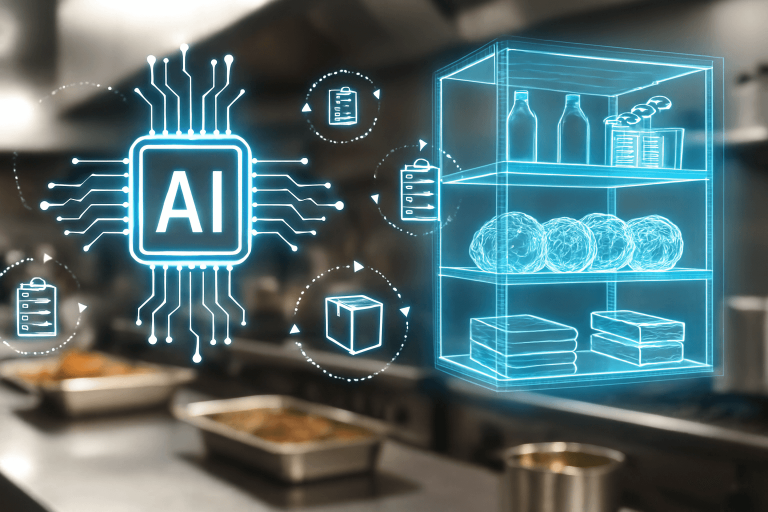
To overcome these challenges, restaurants (and other food businesses) should rely on the latest technologies, including Artificial Intelligence (AI), Machine Learning (ML), and the Internet of Things (IoT).

restaurant technology - latest technologies

Technology can help restaurants:

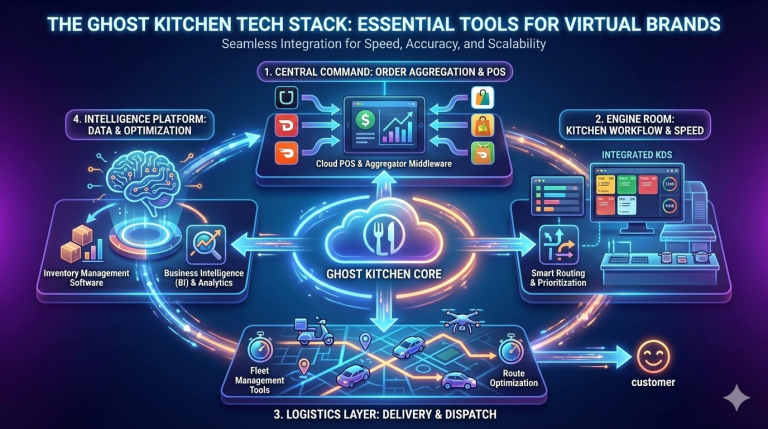
  • Optimize operations. When restaurants implement digital solutions, it helps improve all elements of their operations, including scheduling, ordering, and reservations, as well as back-end systems for kitchen and inventory management. Integrated tech systems help improve efficiency, accuracy, transparency, productivity, and other critical success metrics. As a result, restaurants can drive key performance metrics (KPIs), such as customer satisfaction, loyalty, retention, and referrals.
  • Elevate their quality and compliance management programs. Restaurants must prioritize safety, quality and compliance every day – no matter what. Tech solutions are exponentially better than antiquated manual systems for this effort. Utilize digital systems for continuous monitoring and improvement of quality control in restaurants. Quality management software allows brands to maintain compliance with health and safety regulations, manage supplier relationships, and ensure consistent quality across multiple locations. Leverage fully featured software options, which offer audit management and compliance tracking capabilities to maximize the safety of your food, guests, and business.
  • Maximize compliance. Restaurants need to do more than just put safety and quality protocols in place – they must also ensure compliance across all shifts, and all locations. Modern audit management and compliance tracking features ensure adherence to health and safety standards. Fully featured platforms also assist in managing supplier quality, which is critical, given the necessary focus on safety, quality, compliance, sustainability and ethical sourcing.
  • Manage ongoing staff issues. Being short-staffed can jeopardize restaurants’ safety and quality efforts. Harried employees working a chaotic dinner shift may skip steps in your safety protocols because they believe they’re “too busy” to wash their hands often, check foods’ temperatures regularly, or properly disinfect surfaces or equipment throughout their shift. Tech solutions can help boost efficiency and productivity so your restaurant can do more, even with fewer employees. Additionally, offering innovative tech tools to make employees’ jobs easier can be an attractive incentive to attract and retain staff.
  • Give the people what they want. Whether your customers want healthier menu items, more sustainable takeout packaging, online ordering, an improved guest experience, ethical sourcing, or all of the above, leverage tech tools to meet their demands – and exceed their expectations. Tech tools can help personalize service, recommend meals based on guests’ purchase history, improve sustainability efforts, and much more. As a result, your brand can enhance guests’ experiences and keep them coming back for more.
  • Boost sustainability efforts. Did you know that 82% of consumers want brands to support sustainable practices and 84% of customers would avoid a company with poor environmental practices? As more consumers demand sustainability – and more brands recognize that it’s the right way to do business – many restaurants are prioritizing eco-friendly practices. Increasingly, food businesses are relying on tech tools to help them reduce waste (and related spending), find more efficient delivery routes to reduce emissions, and improve sustainability in other ways, as well.
  • Enhance the customer experience. Restaurants – and other hospitality businesses – are learning that tech tools can dramatically enhance the customer experience. From digital menus and online ordering systems to AI-driven kitchen automation, technology is revolutionizing the dining experience and boosting customer service innovation. AI-powered tools have also become instrumental in responding to customers’ comments, questions, and inquiries promptly and accurately, boosting the customer experience and freeing up employees to focus on other customer-facing tasks.
restaurant technology - robotics

Tech tools have evolved from “nice to have” to essential for today’s restaurants, and are critical in helping restaurants adapt to today’s most pressing challenges. For instance, innovative technologies are instrumental in helping restaurants and other food brands enhance their safety and quality programs. Using quality management systems, restaurants can identify and resolve any risks, improve compliance, and maintain operational excellence.

Today’s innovative technologies help restaurants optimize operations, improve sustainability efforts, deliver exceptional customer experiences, and set themselves apart from the competition. These solutions will help restaurants remain relevant, profitable, and competitive in this increasingly crowded marketplace.

U.S. restaurant industry expected to pass $1 trillion for the first time

0

The National Restaurant Association is forecasting a record $1.1 trillion in sales in 2024 and the addition of 15.7 million jobs.

The National Restaurant Association released its annual State of the Industry report today with the sales forecast as its top headline; the association expects to exceed $1.1 trillion in 2024. Should this forecast play out, it will mark the first time sales from the nation’s second-largest private industry will tip into the trillions.

Last year, the foodservice industry forecast was $997 billion, while the pre-pandemic forecast from 2019 was about $863 billion, illustrating a staggering growth trajectory throughout the past four years despite a global black swan event. Of course, much of these sales have been driven largely by pricing; menu prices peaked at an 8.8% year-over-year increase in March 2023, but have since started to cool a bit and were 5.2% higher in December.

Still, demand for restaurants has also proven to be quite high, particularly among younger consumers. Fifty-two percent – including 67% of millennials and 63% of Gen Z adults – say ordering takeout from a restaurant is an “essential part of their lifestyle,” meaning pricing isn’t the only driver here. Notably, the trillion-dollar breakthrough is a cause for optimism given that the industry remains much smaller than it was in 2019. According to Technomic Ignite data, there were just over 631,500 restaurants in 2023 versus just over 703,000 in 2019.

“Looking at the operating environment for the upcoming year, it is one where there is an overall moderation in industry growth, but the milestone of passing $1 trillion is truly astounding when you consider that is over $3 billion a day on average and $125 million an hour,” Hudson Riehle, SVP of the association’s research and knowledge group, said during a recent interview. “As decades have passed and consumers continue to shift their food spending toward away-from-home solutions, the industry continues to not only garner consumer support but also increase in its economic size and importance.”

Riehle points to data showing that the restaurant industry comprised 25% of the family food dollar in 1955. By 2010, that rose to 49% and Kalinowski Equity Research estimates that share-of-spend for restaurants was at nearly 56% in December 2023.  

Workforce

restaurant workforce

In addition to hitting record-high sales this year, the association is expected to employ a record-high 15.7 million people and with more room to grow. Forty-five percent of restaurant operators report that they need more employees to meet consumer demand and a majority (70%) have job openings they say are hard to fill. The association expects the industry to add 150,000 jobs per year on average for the next eight years, with total staffing levels reaching 16.9 million by 2032.

“The industry has become an area of training and development for the national workforce. This latest research shows that over three out of five adults have worked in the restaurant industry and that is even higher for younger cohorts,” Riehle said. “As a result of that, and in tandem with the demographic changes which have occurred as the decades have progressed, younger consumers place a higher priority on spending at restaurants and deem them more essential than other generations.”

Investment priority? Technology

restaurant tech

As these younger consumers prioritize restaurant experiences more, the industry’s operating model has shifted. Though off-premises became a necessity during Covid, the channel continues to grow because of how these cohorts use restaurants, whether via delivery, drive-thru, carryout or curbside. As such, technology has become critical and will be a top investment priority for operators big and small in 2024; 60% of operators plan to make technology investments this year, versus 48% in 2023.

“It is evolutionary, not revolutionary. For those younger cohorts, their expectations are higher. It doesn’t mean all restaurant concepts have to incorporate technology into their operations to remain viable. It means, looking at younger cohorts and how they use restaurants differently, operators that are seeking to grow are obviously more focused on meeting the needs of those younger consumers through technology,” Riehle said.

What they especially want is the ability to order and pay quickly and seamlessly, he said. They also like the ability to tap into a loyalty program to earn stronger value opportunities not available to non-loyalty members. Seven in 10 adults said they look for a daily special or discount, and the association’s data suggests consumers prefer using a loyalty or rewards program facilitated through a mobile app.

For operators, Riehle makes a point to note their priority isn’t to deploy technology that replaces workers, but rather to augment what those workers are doing, especially as labor shortages remain. Nearly half (47%) of operators say the use of technology and automation will help with those shortages.

“There is still a sizeable number of job vacancies,” he said. “The logical extension is that more resources are invested in how labor is onboarded and deployed. Operators have made it clear they’re augmenting the workforce versus automating. This is still the service industry.”

All told, Riehle is optimistic about this state of the industry, acknowledging a moderating year ahead but solid and consistent growth in the long term.

“Even after four years of the pandemic, (restaurant spending) is over 50% again. The typical American consumer has made it quite clear in terms of their standard of living as to how they want to spend their money. They want to prioritize restaurant spending,” he said. “The typical consumer over the upcoming decade will continue to allocate a great portion of their spending to restaurant meal, snack, and beverage solutions.”

Protests Are an American Tradition. But Why at Restaurants?

A recent demonstration outside a Philadelphia falafel spot was just the latest in a history of boycotts and conflicts.

George Recine, a Boston advertising executive, knew exactly where to eat lunch last week during a business trip to Philadelphia.

“What better place to stop by than Goldie?’” he said.

Mr. Recine, 45, had read reports about a protest there a few days earlier that Pennsylvania’s governor and the White House had condemned as antisemitic. A crowd carrying Palestinian flags had gathered in front of the popular falafel restaurant, co-owned by an Israeli-born chef, and chanted, “Goldie, Goldie, you can’t hide, we charge you with genocide.”

All Mr. Recine knew was that the owners had donated restaurant proceeds to an Israeli medical nonprofit organization that has supplied that nation’s troops with toiletries and gear in the Israel-Hamas war. He showed up to buy a falafel as a statement. He didn’t think an American restaurant serving Israeli food should be a target.

A man with a beard is speaking in front of the restaurant Goldie in Philadelphia.
George Racine, an advertising executive from Boston, stopped at Goldie for lunch to show his support for the restaurant. Credit…Kriston Jae Bethel for The New York Times

Like the protesters, Mr. Recine was participating in a longstanding American practice: If you want to ignite social change or protest a war — or even just air an opinion — do it at a restaurant.

Why? Unlike many other businesses, restaurants often proclaim their nationality, ethnicity and sometimes the owners’ political views. And at a time when Americans of differing political tribes often stay in their own corners, a restaurant can serve as a de facto town square.

“Food is very accessible and has a very low barrier to entry, so the restaurant becomes a proxy for whatever your feelings are,” said Johanna Mendelson Forman, a professor at American University who teaches a course called Conflict Cuisines that examines the nexus of food and war.

Food in America, she said, has always been political.

During World War I, many Americans refused to patronize German restaurants or beer gardens, an import that had proliferated in the late 1800s. (New York City had more than 800 at one point.) Drinking beer was such an expression of German identity that to do so was portrayed as unpatriotic.

A vintage photo from the World War I era shows a parade protesting a restaurant with a sign in the window that says “The Kaiser’s restaurant.”
During World War I, many Americans pushed back against restaurants like this one that were perceived to be pro-German. Credit…U.S. National Archives and Records Administration

Nearly a century later, French fries served as another barometer of American patriotism in 2003 when France opposed the U.S. military plan to invade Iraq. Restaurant owners poured French wine into the gutter and renamed French fries freedom fries.

After Russia invaded Ukraine in February 2022, dozens of people waited in the bitter cold to eat pierogies and borscht at the 70-year-old Ukrainian restaurant Veselka in the East Village of New York. The Russian Tea Room, founded in 1927 by members of the Russian Imperial Ballet who were escaping communism, lost business to a boycott. Members of the staff were harassed online.

Ruth Reichl, the food writer and former New York Times restaurant critic, said that in an increasingly fractured society, restaurants and the people who run them function as a sort of family — with many of the flash points that one might see among relatives.

“Restaurants are the heart of the community,” she said. “In moments like this they become a place where our deepest emotions play out.”

Restaurant-centered political action can be both ineffectual and short-lived. Americans seem to love French fries more than ever, and the crowds at Ukrainian restaurants have thinned.

But world events can have a lasting effect on businesses. In the days following the 9/11 attacks, restaurants serving Middle Eastern food were attacked and closed.

Chinese restaurants emptied out at the start of the pandemic, when little was known about Covid’s origins and President Donald J. Trump fueled anti-Chinese sentiment by calling it the Wuhan virus or the “kung flu.”

Grace Young, the cookbook author and culinary historian, ate at Wo Hop, the second-oldest restaurant in Manhattan’s Chinatown, the day before the city lockdown began. The manager told her that 70 percent of the neighborhood’s restaurant owners had already decided they couldn’t go on without customers and closed.

An empty Chinese restaurant with a glass storefront and tables draped in pink tablecloths with black chairs.
When Covid hit, many Chinese restaurants, like this one on Canal Street in Manhattan’s Chinatown, lost nearly all their business. Credit…Ashley Gilbertson for The New York Times

“It was a really heartbreaking situation,” she said. “What happened to Chinatown is people just didn’t discriminate against the restaurants. They discriminated against every business in Chinatown.”

Many restaurants never reopened, and business in Chinatown hasn’t returned to pre-Covid levels, she said.

Because restaurants are one of America’s most accessible cultural products, they have been barometers not only for social change but for cultural understanding. Food becomes a vehicle for public acceptance of political ideas.

Americans skeptical of both the communist Chinese government and Chinese food beyond chop suey watched President Richard Nixon eat Peking duck and steamed chicken with coconut during his visit to China in 1972. The trip stabilized a precarious diplomatic relationship, and the cuisine took off in the United States.

Wyche Fowler, a former U.S. senator and ambassador to Saudi Arabia who also happens to like good food, was fond of saying that you could always tell where the latest global conflict was taking place by looking at the list of new restaurant openings in Washington. Indeed, restaurants serving the food of an immigrant’s homeland serve as both a point of entry into the American economy and a place to gather.

Restaurants have been the locus for civil rights battles. In 1960, four Black college students sat down at a Greensboro, N.C., lunch counter reserved for white people. They were working under the simple notion that anyone should be able to order a cup of coffee anywhere.

When they were asked to leave, they stayed. For six months, they and other protesters who joined in endured racial slurs and food dumped on their heads. The action inspired other sit-ins and helped fuel a powerful new chapter in battle to desegregate the South.

In 1960, civil-rights protesters braved verbal and physical abuse by taking seats forbidden to Black customers at a Woolworth store in Greensboro, N.C.Credit…Bettmann / Getty Images

More recently, chefs themselves have actively brought politics into their restaurants. That’s in part why marchers decided to protest at Goldie, one of several restaurants co-owned by Michael Solomonov, whose sales on Oct. 12 were donated to the Israeli nonprofit. (In a letter to the staff obtained by The Philadelphia Inquirer, Mr. Solomonov said he was unaware that the Israeli organization was providing the army with ambulances and medical supplies.)

In November, support for Israel also caused a deep public rift between the staff and the self-identified Zionist owner of an Upper East Side coffee shop that drew international attention.

Not all the chefs’ political involvement is as controversial. In 2012, the James Beard Foundation began its Chef Bootcamp for Policy and Change to train hundreds of chefs to influence national and local food politics.

José Andrés created World Central Kitchen in 2010 to mobilize local chefs to help feed people in disaster zones. When the Ukraine war began, the organization decided it would also begin helping in active war zones which now includes Israel and Gaza.

Feeding people is feeding people, regardless of the contours of any conflict, Dr. Mendelson Forman said.

“There is less politics in their motivation than humanitarianism,” she said. “Isn’t it human to want to support those who have been victims and need to be cared for?”

Jon Hurdle contributed reporting from Philadelphia.

What the Past Tells Us About What’s to Come for Restaurants in 2024

0

Adaptability will be key in 2024.

We’re heading into a new year, and while that brings celebrations, new beginnings, and moments for reflection, it’s important to anticipate that challenges may not be far behind. The quick-service restaurant industry is no stranger to adversity. But to really predict any potential challenges or growth opportunities in 2024, it’s best to look at the last few years leading to this point.

COVID-19’s Impact on the Quick-Service Industry

No industry was left untouched by the pandemic. Every company, no matter what sector they were in, had to pivot their strategy to keep their doors open. The National Restaurant Association estimated that approximately 100,000 permanently closed during the pandemic. For restaurants, this meant a massive shift to online ordering, carry out, delivery and taking care of the guests ever changing needs. Overnight, customers were forced through government policy, to eat food off premise as dining-in was either limited or eliminated.    

More 2024 predictions

The Restaurant Lessons We Learned in 2023

What’s the Big Restaurant Tech Trend Nobody is Talking About Yet?

Fast-Food Trends for 2024: The Age of Automation and Customer Experience

Third-party delivery apps like Uber Eats, DoorDash, Grubhub, and Postmates soared in popularity, with consumers and restaurants both taking advantage of contactless delivery. Brands that had developed an app prior to 2020 saw increased usage across their client base. For example, Chipotle went into 2020 with less than 10 million app users. By October of 2021, they had more than 24.5 million members—learning them a 40 percent increase in only a year.

Mobile ordering, due to its convenient nature, is here to stay. A recent study showed that 71 percent of consumers had recently ordered food through a mobile app. Most of the respondents cited that convenience was the main factor influencing their purchase.

Industry Growth is on the Horizon

Even with dining room shutdowns, reliance on takeout and delivery, and a slow return to on-premise dining, the global quick-service industry has been able to bounce back and is now poised for growth in the coming years. In 2023, the worldwide quick-service restaurant market was valued at $7.981 billion. From now until 2031, it’s projected to grow at a compound annual growth rate of 8.88%, reaching an estimated value of $13.297 billion by the end of the forecast period.

However, even with strong growth projections, an industry can still face obstacles. The pandemic changed the landscape of many businesses. While it’s no longer considered a public health emergency by the CDC, many of the behaviors people adopted during COVID-19 have become mainstays of normal life.

Potential Challenges Quick-Serves May Face

Difficulties such as hiring and unprecedented inflation can make generating a strong return on investment tougher than the past.

Labor shortages and rising wages: while the labor market has improved the past six to twelve months, the industry is likely to face ongoing challenges in both recruiting and retaining employees. This has been exacerbated by workers continuing to seek higher wages.

Higher interest rates: Securing loans will likely be more difficult for small businesses. Due to the Federal Reserve’s interest rate hikes over the last couple of years and the collapse of three large banks—Silicon Valley Bank, Signature Bank, and First Republic Bank—lenders are all tightening their purse strings. New or expanding businesses may struggle to secure loans in 2024 without the contribution of sufficient capital by the investors.

Rising inflation costs: In recent years, the industry has grappled with rising inflation impacting both food and service costs. Although inflation has eased somewhat for goods, the service sector continues to bear the brunt of high inflation expenses. Additionally, the cost of constructing new restaurants has seen a notable increase compared to the past two years in particular.

Consumer spending habits: Consumers have suffered the most from astronomical inflation costs. In fact, a recent survey revealed that restaurants and bars were the second nonessential category to see a drop in sales. Of the respondents, 62% admitted to spending less on meals out.

Health and sustainability concerns: Consumers are becoming increasingly more health-conscious and environmentally aware. In fact, nearly 80 percent of U.S. consumers take into consideration a brand or product’s sustainability practices when making purchasing decisions.

Anticipated Growth Opportunities for Quick-Service Restaurants

Even though consumerism has transformed, change can bring about new opportunities when fully embraced by restaurant operators and brands.

Technology integration: Considering how important technology was to restaurant survival during the pandemic, it would only make sense for quick-service restaurants to continue integrating new tech into their operations. Penn Station East Coast Subs, for example, has recently committed significant resources to technological advancements—all of which will be unveiled in the coming year.

Menu innovation: To keep up with consumer demand, quick-service restaurants need to look at offering healthier, sustainable, and diverse food options to attract a broader customer base.  This includes limited time offers to keep both current guests engaged and attract new customer. 

Space redesign: With mobile ordering and delivery remaining popular in the post-pandemic world, quick-serves may want to look at reworking their restaurant space to better accommodate takeout orders—thus reducing dine-in space.

Strong branding: Consumers want to engage with a brand. Strong marketing isn’t just a well put together ad campaign anymore. Participating in conversations on social media is becoming more important. Brands need to have more than just a name, they need personality, too.

Sustainability: Adopting eco-friendly practices can not only reduce operational costs but also appeal to environmentally conscious consumers.

Strategies for Quick-Service Operators and Investors

It’s unlikely that any quick-service restaurant owner can immediately seize all of the opportunities listed above. Picking one or two things to focus on in the new year is a great strategy. Look at what it is that you’re excelling at. Do you have a strong social media presence? Are you regularly incorporating new menu items to suit consumer trends? If not, these could be good areas to start making changes.

Adaptability will be key in 2024. As trends and consumer demands evolve over the next 12 months, the businesses who show flexibility will see lasting success.