
Hiring someone new for your restaurant team? Congrats! But before you pop the champagne (or pour that celebratory espresso), let’s talk about what happens after the offer letter lands. Because onboarding isn’t just a formality – it’s your secret weapon for building a confident, loyal, high-performing team.
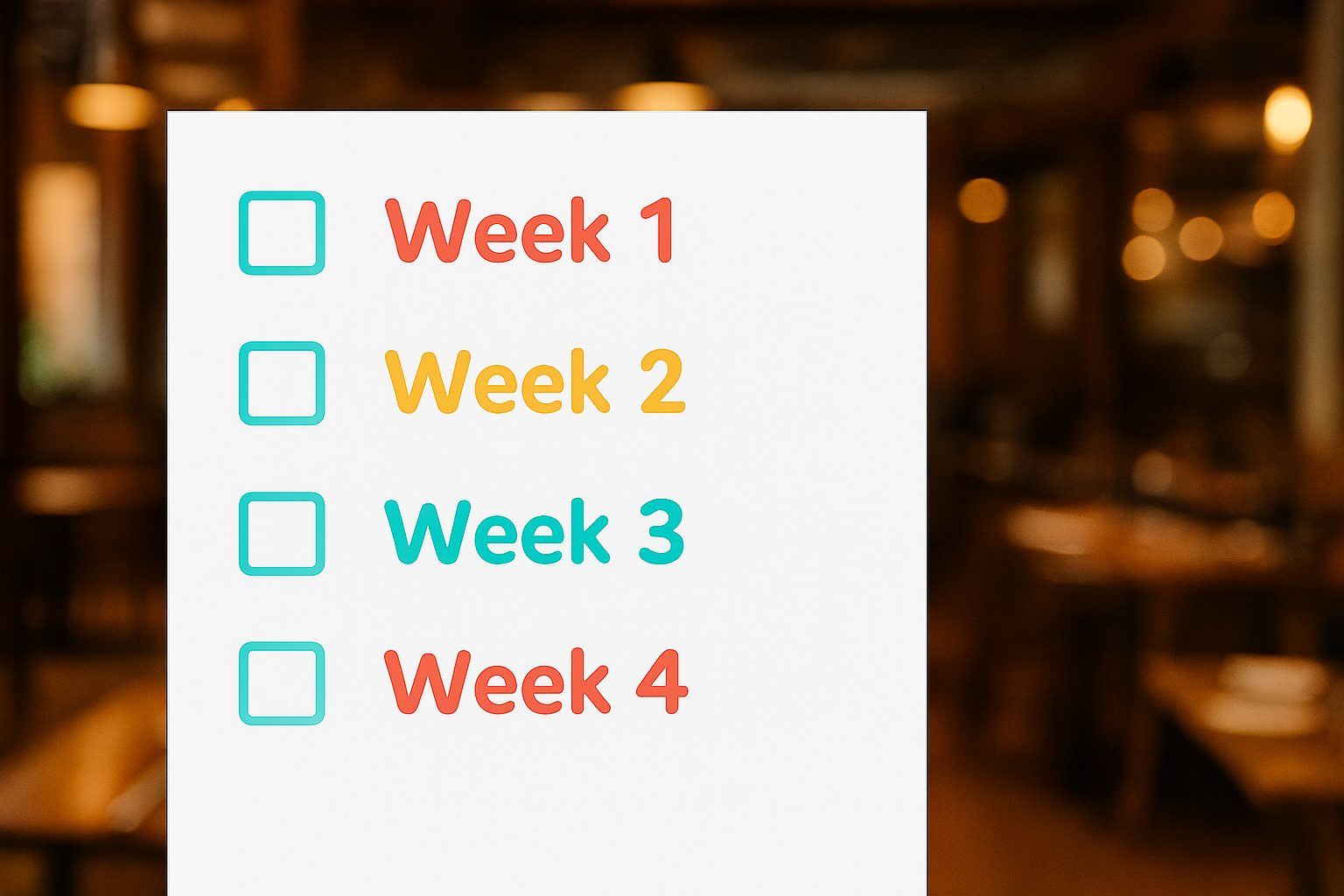
In an industry where turnover can feel like a revolving door, a thoughtful onboarding process can make all the difference. So let’s break it down: here’s your friendly, no-fluff 30-day onboarding checklist to help new hires feel supported, integrated and ready to shine.
Before Day One: Paperwork, Prep & Warm Welcomes
Before your new hire walks through the door, make sure the foundation is solid.
1. Send a welcome email: Include their start date, shift schedule, dress code and who they’ll report to. Bonus points for a warm note from the GM or chef—it sets the tone.
2. Complete paperwork digitally (if possible): Tax forms, emergency contacts and employment agreements should be squared away. If you’re still doing this manually, consider prepping a neat folder with everything they’ll need.
3. Prep their uniform & name tag: Nothing says “we’re ready for you” like having their gear waiting. It’s a small gesture that makes a big impact.
4. Assign a Mentor or Buddy: Choose someone who embodies your restaurant’s vibe and values. This person will be their go-to for questions, guidance and moral support.
5. Share Your Culture Guide: Whether it’s a printed handbook or a one-pager with your mission, values and service philosophy, give them something that says, “Here’s who we are.”
Week 1: Orientation, Training & Culture Immersion
The first week is all about setting expectations, building confidence and making them feel like part of the family.
Day 1: Orientation & tour
- Walk them through the space: kitchen, storage, break room, restrooms and exits.
- Introduce them to the team – front and back of house.
- Review safety procedures and emergency protocols.
Day 2–3: Shadowing & SOPs
- Let them shadow their mentor during a full shift.
- Walk through standard operating procedures (SOPs) for opening, closing and service flow.
- Review hygiene, food safety and customer interaction basics.
Day 4–5: Hands-on practice
- Start with low-pressure tasks: polishing cutlery, setting tables, prepping garnishes.
- Gradually introduce service responsibilities with supervision.
- Encourage questions and celebrate small wins.
End of week check-in
- Sit down for a casual chat: What’s going well? What’s confusing?
- Reaffirm their strengths and offer gentle feedback.
Week 2: Skill Building & Guest Experience
Now that they’ve got their bearings, it’s time to deepen their skills and build confidence.
Day 6–10: Menu mastery & role play
- Teach them the menu – ingredients, allergens, pairings and upsell opportunities.
- Use role play to simulate guest interactions, tricky scenarios and service recovery.
Day 11–12: Cross-training
- Let them spend time in another role (e.g., host, runner, expo) to understand the full service ecosystem.
- This builds empathy and flexibility.
Day 13–14: Real shifts with support
- Schedule them for real shifts with their mentor nearby.
- Encourage feedback from teammates and guests.
End of week check-in
- Review performance and progress.
- Set goals for the next week (e.g., handle a full section, upsell a special, manage a rush).
Week 3: Autonomy & Accountability
By now, they should be finding their rhythm. This week is about trust, independence and refining their craft.
Day 15–17: Solo shifts (with backup)
- Let them run their station independently, but keep a mentor or manager nearby.
- Observe their time management, guest rapport and teamwork.
Day 18–19: Feedback loop
- Ask for their self-assessment: What’s working? What’s tough?
- Offer constructive feedback and highlight growth.
Day 20–21: Culture check
- Revisit your restaurant’s values.
- Ask how they’re connecting with the team and the mission.
For a global perspective on onboarding and retention, Restaurant India’s Checklist is a great read.
Week 4: Performance Milestones & Long-Term Integration
The final stretch! This week is about celebrating progress and setting the stage for long-term success.
Day 22–25: Performance review
- Use a simple rubric: punctuality, attitude, guest feedback, task mastery.
- Invite input from peers and mentors.
Day 26–27: Career path chat
- Ask about their goals: Do they want to learn bartending? Move into management?
- Share growth opportunities and training options.
Day 28–29: Team integration
- Include them in team meetings, menu tastings or planning sessions.
- Encourage them to contribute ideas or feedback.
Day 30: Celebration & next steps
- Acknowledge their 30-day milestone, whether it’s a shoutout, a treat or a handwritten note.
- Confirm their schedule, responsibilities and next training module.
Final Thoughts: Onboarding Is Culture in Action
A great onboarding process isn’t just about training, it’s about belonging. When new hires feel seen, supported and set up for success, they’re more likely to stay, grow and thrive.
So whether you’re running a cozy café or a bustling multi-location brand, this 30-day checklist can help you build a team that’s not just competent, but confident, connected and committed.