
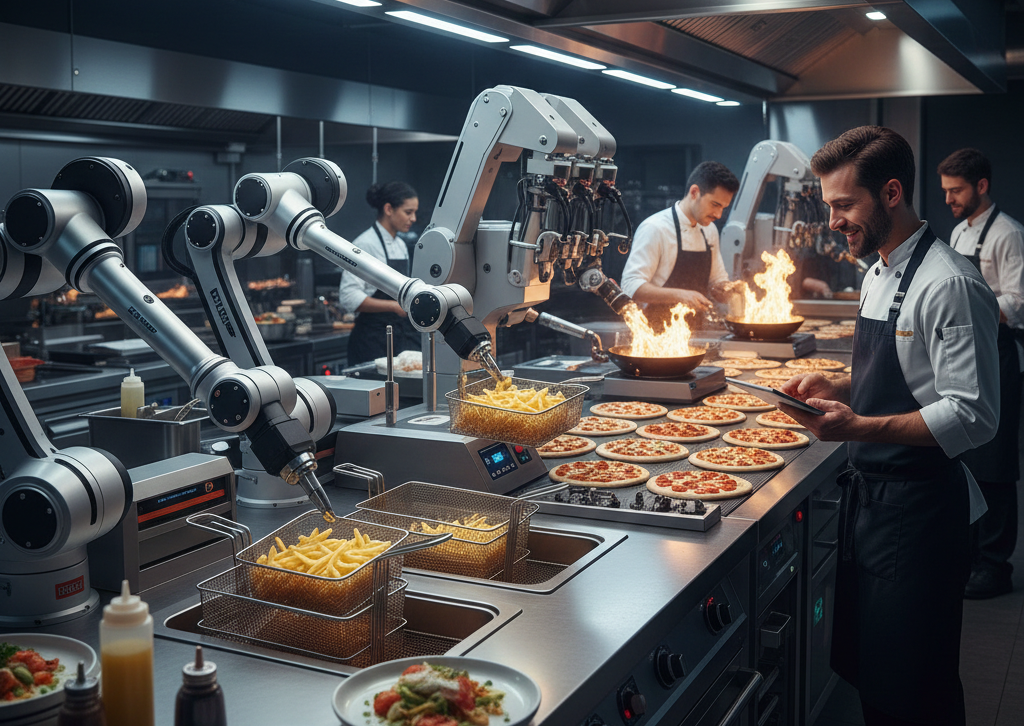
Let’s be honest: nobody dreams of standing in front of a 375°F deep fryer for eight hours straight, dropping baskets of fries until their skin feels like a glazed donut. It’s hot, it’s repetitive and, in today’s labor market, it’s becoming increasingly hard to find people willing to do it.
Enter the era of the ‘Cobot’ (collaborative robot). In 2026, we’ve moved past the fear of a robot takeover. Instead, savvy restaurant operators are bringing in automated help to handle the high-heat, high-danger and high-boredom tasks that cause your best staff to burn out. These aren’t just gadgets; they are the new line assistants that never call in sick and produce the exact same result every single time.
The ‘Flippy’ Revolution: Robots That Actually Work
The biggest shift in restaurant robotics is the move from experimental prototypes to plug-and-play kitchen assistants. We aren’t talking about humanoid robots walking around with whisks; we’re talking about specialized arms and smart dispensers integrated directly into your existing line.
- The automated fry station: Systems like Miso Robotics’ Flippy have paved the way. These units can identify food types, drop baskets and shake them for the perfect crispiness, allowing your human cook to focus on seasoning and plating.
- Pizza assembly bots: Companies like Picnic are helping high-volume shops assemble hundreds of pizzas per hour with zero sauce or cheese waste.
- Wok & stir-fry masters: In many fast-casual Asian concepts, automated woks now handle the heavy lifting of tossing and heat control, ensuring the “wok hei” flavor is consistent across every single location.
What National Restaurant News observed back in 2023, is still relevant today: the goal is “task automation,” not “job replacement.” By automating the repetitive steps, you’re allowing your culinary team to focus on flavor development and guest interaction.
Why Managers Are Swiping Right on Automation
If you’re managing a kitchen, you know that consistency is the holy grail. A robot doesn’t get distracted by a text message or forget to pull the fries because the printer is screaming with orders.
But the benefits go deeper than just a perfect French fry:
- Safety first: Kitchens are dangerous. Automation handles the tasks involving boiling oil, sharp blades and heavy lifting, significantly reducing workers’ comp claims and kitchen injuries.
- Labor realignment: Instead of struggling to find four line cooks, you can operate with two high-level ‘expeditors’ who oversee the automated stations and ensure the final garnish is perfect.
- Waste Control: Robots are precise. They don’t heavy-hand the pepperoni or accidentally drop a handful of shrimp on the floor. In a high-volume environment, the savings on food waste can often pay for the robot’s monthly subscription in under a year.
Restaurants that implement specialized automation see a 20% increase in sales, 15% decrease in labor costs and a 10% increase in customer satisfaction.
The Snag: Is It Right for Your Kitchen?
Before you go out and buy a robotic arm, you need to look at your menu. Robotics thrive on high-volume, low-complexity tasks. If you’re a fine-dining establishment where every plate is a unique piece of art, a robot probably won’t help you much.
However, if you have a “bottleneck” station – the place where orders always pile up because the task is slow and tedious – that is your prime candidate for automation.
Implementation: The Snap-Action Plan
You don’t need a total kitchen remodel to start. Here is how most independent operators are dipping their toes into the robotic pool:
- Start with the “dirty” work: Look for automated dishwashing assists or floor-scrubbing bots that run after hours.
- Automated beverage dispensers: If your bar gets slammed, an automated pouring system can handle the draft beers and soda while your bartender focuses on high-margin cocktails.
- Salad and bowl builders: Compact, refrigerated “vending” kitchens can prep base bowls, leaving only the “finishing touches” for your staff.
The snappy bottom line: Robotics on the line isn’t about building a cold, mechanical kitchen. It’s about taking the grind out of the industry so your people can actually enjoy being chefs again. When the machines handle the heat, your team can focus on the heart.