
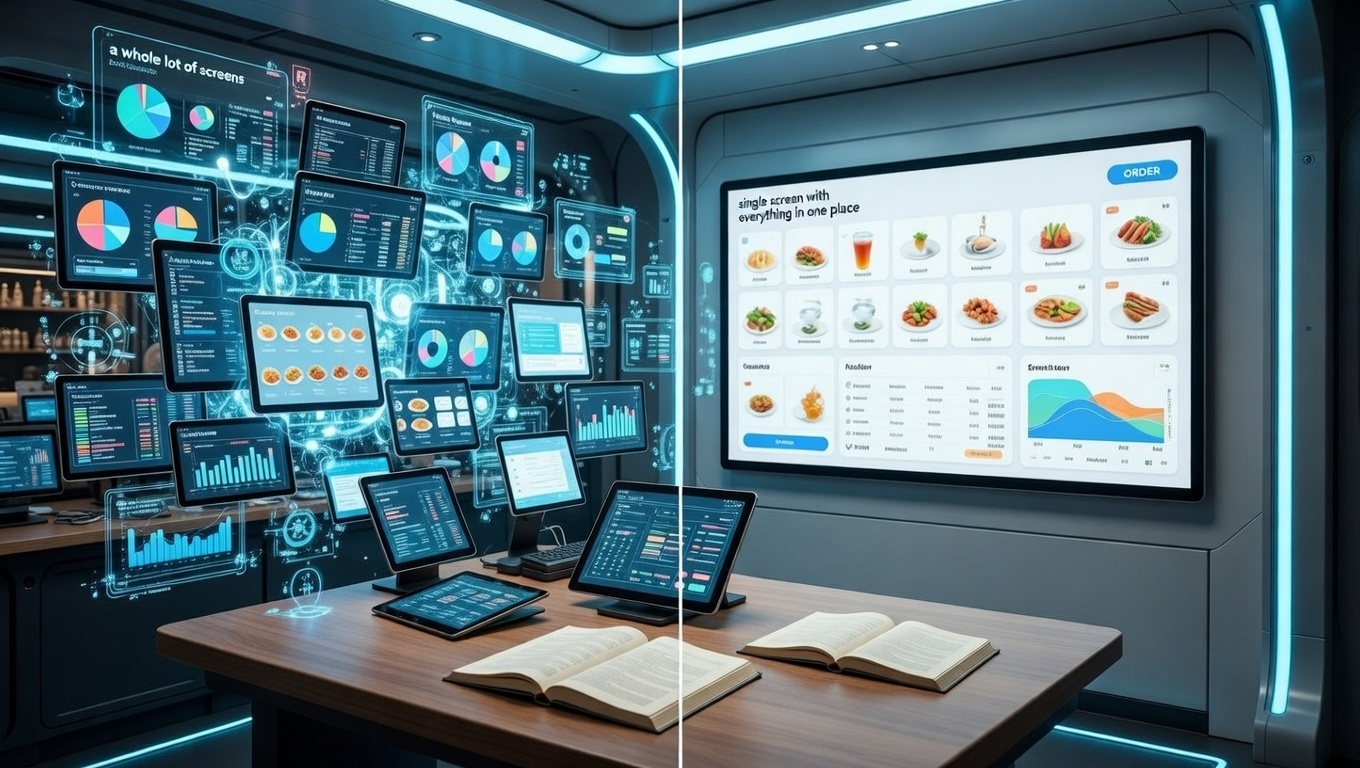
Walk into almost any busy restaurant kitchen over the past few years and you’d see it: a row of glowing tablets lined up like soldiers, each one pinging with orders from a different delivery app. Uber Eats, DoorDash, Grubhub, your own website, maybe even a kiosk in the lobby. Staff had to juggle them all, swiping, syncing and sometimes retyping orders into the POS. It was chaos. Operators started calling it tablet hell and for good reason.
But here’s the good news: the industry is finally waking up to the cure. It’s called unified commerce and it’s all about consolidating those fragmented systems into one single pane of glass. Instead of bouncing between five devices, your team sees everything – delivery, dine-in, online and kitchen tickets – on one screen. Imagine the relief.
Why Tablet Hell Was Burning Everyone Out
Operational complexity has quietly become the number one cause of staff burnout. Think about it:
- Order duplication: A burger ordered via DoorDash had to be manually keyed into the POS, while the same burger ordered in-house was already there. Double work, double chance of error.
- Menu mismatches: Updating prices or specials meant logging into multiple platforms. Forget one and customers got confused or, worse yet, angry.
- Kitchen chaos: With orders coming from different devices, cooks had to check multiple screens. That’s not just inefficient; it’s stressful.
One operator described it as “playing whack-a-mole with orders.” Staff weren’t burning out because of long hours alone, they were burning out because of friction. Every extra click was another straw on the camel’s back.
The Single-Pane-of-Glass Solution
So what does unified commerce look like in practice? Picture this:
- A customer orders a pizza on your website.
- Another orders the same pizza through Uber Eats.
- A third walks in and orders at the counter.
Instead of three different systems, all three orders flow into one POS dashboard. The kitchen sees them on a single KDS screen, tickets are timed together and the front-of-house can track progress without toggling between apps. It’s like switching from a messy desk covered in sticky notes to a clean planner with everything in one place.
IBM describes the “single pane of glass” concept as a centralized dashboard that aggregates multiple data points into one intelligible view – a single source of truth for operations. For restaurants, that means fewer mistakes, faster service and a calmer team.
Real-World Example: From Chaos to Calm
Take a mid-sized burger joint in Chicago. Before adopting unified commerce, they had six tablets lined up by the register. Staff had to check each one constantly and the kitchen was drowning in mismatched tickets. After switching to a single-pane POS, they cut order-entry time by 40%. Staff reported feeling less stressed and turnover dropped. Customers noticed too: orders were faster and mistakes plummeted.
It’s not just anecdotal. A recent guide on unified commerce for restaurants notes that fragmented systems slow down operations and create confusion, while consolidation streamlines everything.
Why 2026 Is the Year of Consolidation
The timing couldn’t be better. Delivery apps aren’t going away and customers expect omnichannel ordering. But operators are realizing that more platforms don’t have to mean more headaches. Vendors are racing to offer integrated POS solutions that handle:
- Third-party delivery integration
- In-house ordering (counter, kiosk, mobile)
- Kitchen display systems
- Inventory and menu management
The result? A single flow from customer to kitchen to cashier. Less juggling, more serving.
Staff Burnout: The Hidden Cost
Let’s be honest: turnover is expensive. Training new staff takes time and losing experienced employees hurts service quality. Burnout from operational complexity is a silent killer. When staff spend more time managing devices than engaging with guests, morale tanks. Unified commerce isn’t just a tech upgrade, it’s a people strategy. By reducing friction, you’re giving your team the gift of focus.
A Warm Word to Operators
If you’re a restaurant operator or manager, here’s the takeaway: consolidation is the solution in 2026. Don’t settle for tablet hell. Ask your POS vendor about single-pane-of-glass integrations. Look for systems that bring delivery, dine-in and kitchen together. Your staff will thank you, your customers will notice and your bottom line will reflect it.
Think of it like moving from a cluttered kitchen drawer to a neatly organized toolkit. Everything you need, right where you expect it. That’s unified commerce. And it’s not just about technology; it’s about creating a calmer, more human workplace.
Final Thought
Restaurants thrive on rhythm: orders flowing, dishes plated, guests served. Tablet hell disrupted that rhythm. Unified commerce restores it. In 2026, the smartest operators aren’t adding more devices, they’re consolidating. Because when everything flows through one pane of glass, everyone – from the line cook to the manager – can finally breathe easier.