
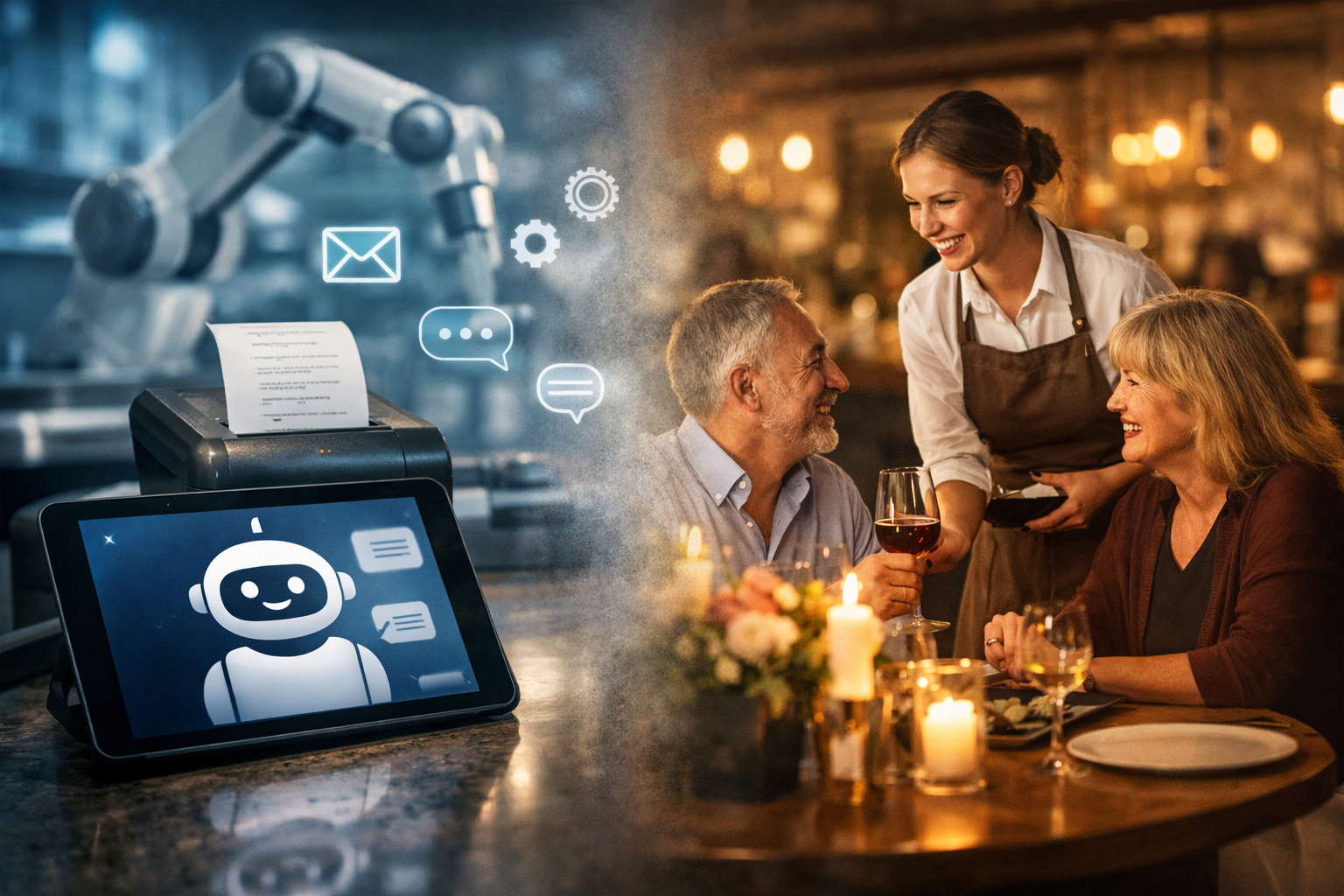
In the restaurant industry, technology has become a trusted ally. Automated SMS tools confirm reservations, AI chatbots answer FAQs, and digital platforms keep guests updated on their orders. For operators, this efficiency is a lifeline, especially in an era of labor shortages and rising guest expectations. But here’s the catch: hospitality is built on warmth, empathy and human connection. Over-automation risks stripping the “hospitality” out of hospitality. The challenge for managers today is not whether to automate, but how to balance automation with authenticity.
The Rise of Digital Guest Communication
Restaurants have embraced automation for good reason. Automated systems reduce wait times, eliminate repetitive tasks and ensure consistency. A guest booking a table online expects an instant confirmation, not a delayed phone call. Similarly, order updates via SMS reassure customers that their food is on the way. These tools are now standard and guests appreciate the convenience.
Yet, convenience alone doesn’t build loyalty. A guest might receive a perfectly timed text about their order, but if every interaction feels robotic, the brand risks becoming faceless. Hospitality thrives on personality and personality doesn’t come pre-programmed.
Where Automation Shines
Automation is best suited for transactional communication. Reservation confirmations, waitlist updates and delivery notifications are all areas where speed and accuracy matter most. For example, Domino’s “Pizza Tracker” became iconic because it automated updates in a way that felt engaging and fun. Guests didn’t need a human to tell them their pizza was in the oven, they just wanted reassurance that the process was moving along.
Similarly, AI-powered chatbots can handle FAQs like “What are your hours?” or “Do you offer gluten-free options?” These are straightforward queries where automation saves staff time and reduces friction for guests. In fact, a recent Hospitality Technology article highlights how AI chatbots are helping restaurants manage high volumes of inquiries without sacrificing accuracy.
Where Authenticity Matters
The human touch becomes essential when emotions enter the equation. Consider a guest who had a poor dining experience and reaches out with a complaint. An automated response — “We’re sorry for the inconvenience” — will only deepen frustration. What they need is empathy, acknowledgment and a genuine effort to make things right. That requires a human voice.
Another example: special occasions. When a guest notes that a reservation is for an anniversary or birthday, automation can handle the logistics, but the celebration itself must feel personal. A warm greeting from staff, a complimentary dessert or even a handwritten note transforms a routine dinner into a memorable experience. Technology can flag the occasion, but humans deliver the magic.
Blending Efficiency with Personality
The sweet spot lies in combining automation with brand voice. Automated messages don’t have to sound sterile. They can be crafted to reflect the restaurant’s personality — whether playful, elegant or family-friendly. For instance, instead of “Your table is ready,” a restaurant might send: “We’ve set the table and can’t wait to welcome you!” That small tweak makes automation feel more human.
Brands like Starbucks have mastered this balance. Their mobile app automates ordering and payment, but the in-store experience remains centered on baristas who greet customers by name. The automation handles efficiency, while the staff delivers authenticity. AI in hospitality should enhance – not replace – the human touch and Starbucks is a prime example of this principle in action.
Drawing the Line
So where should operators draw the line? A useful blueprint is this: automate the predictable, humanize the unpredictable. If the task is repetitive and transactional, automation is your friend. If the interaction involves emotion, nuance or brand storytelling, keep it human.
Take reservations as an example. Automation can handle confirmations and reminders, but if a guest calls to request a special seating arrangement for accessibility, that deserves a human response. Similarly, automated upselling (“Would you like fries with that?”) works fine in a chatbot, but personalized recommendations (“You loved our seasonal pasta last time, want to try the new version?”) are best delivered by staff who know the guest.
Why It Matters Now
The urgency of this balance is clear. Guests are increasingly wary of faceless automation. AI tools are spreading rapidly. Operators risk alienating customers if they lean too heavily on them. In a competitive market, authenticity is a differentiator. Restaurants that blend efficiency with empathy will stand out.
Moreover, the industry’s labor challenges make automation tempting, but it should never be seen as a replacement for human hospitality. Instead, automation should free staff from routine tasks so they can focus on what they do best: creating memorable guest experiences.
Conclusion
Automation is here to stay and rightly so. It makes restaurants more efficient, consistent and scalable. But hospitality is not just about speed, it’s about connection. The blueprint for success is clear: let automation handle the logistics and let humans deliver the heart. By finding this sweet spot, operators can ensure that technology enhances rather than erodes the essence of hospitality.
In the end, guests don’t remember the text that confirmed their reservation. They remember how they felt when they walked through the door. And that feeling — the warmth, the welcome, the authenticity — is something no algorithm can replicate.