
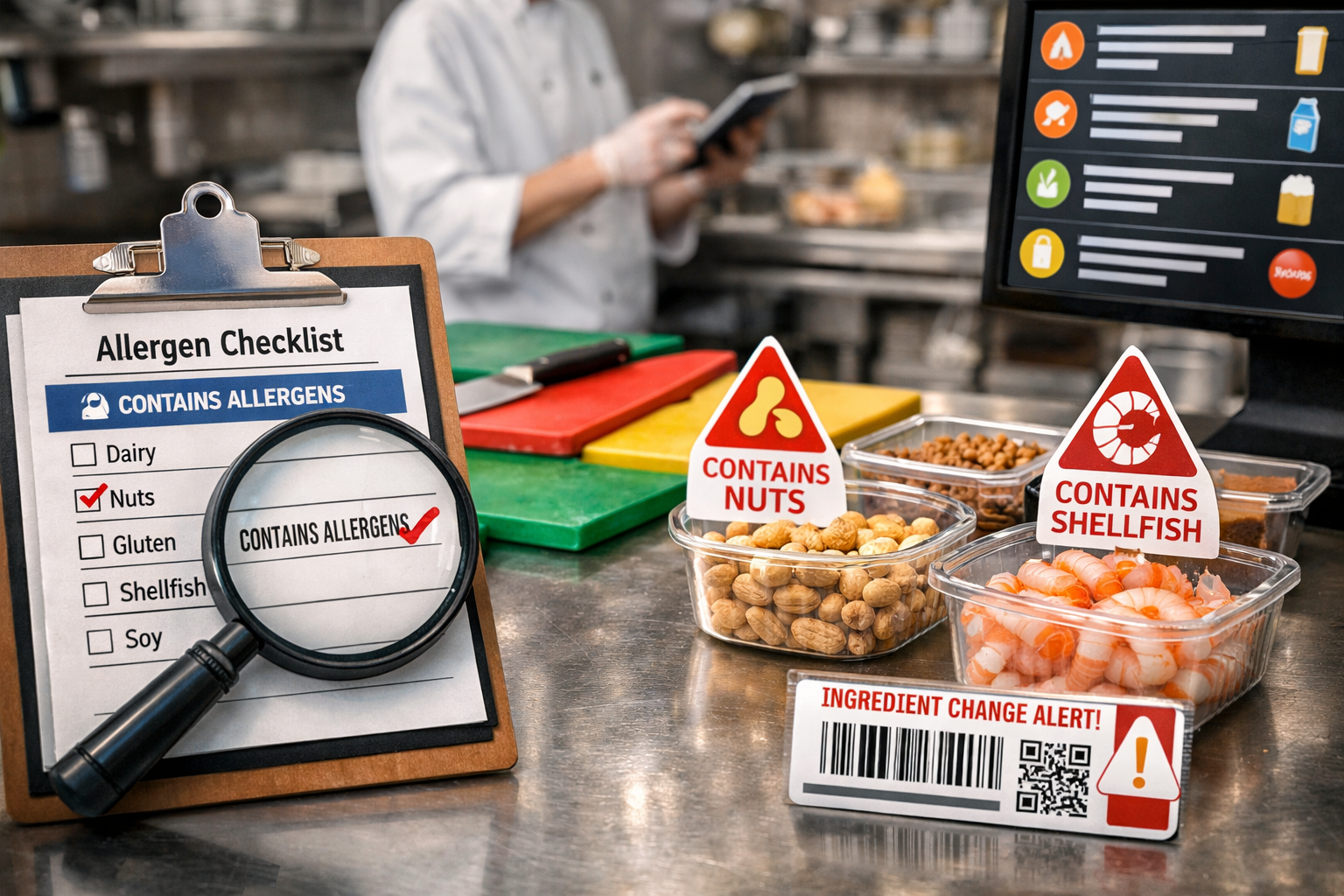
Restaurant operators face rising legal and reputational risks from allergen mislabeling and cross-contact. With food allergies increasing and FDA scrutiny intensifying, managers must adopt systematic allergen tracking and substitution protocols to protect guests and stay compliant.
Why Transparency Matters Now
- Food allergies affect millions worldwide: even trace amounts can trigger severe reactions.
- Regulatory pressure is mounting: FDA menu labeling rules require clear disclosure of allergens and nutrition information for chain restaurants with 20+ locations.
- Operational reality: Ingredient substitutions due to supply chain disruptions are common, but every swap must be tracked and communicated to avoid liability.
Core Operational Challenges
- Last-minute supplier changes: Managers must ensure new ingredients are vetted for allergen content before hitting the line.
- Cross-contact risks: Shared fryers, utensils and prep stations remain the most common points of failure.
- Labeling accuracy: Outdated menus or digital boards can mislead guests if substitutions aren’t updated in real time.
Best Practices for Chefs and Managers
1. Ingredient verification
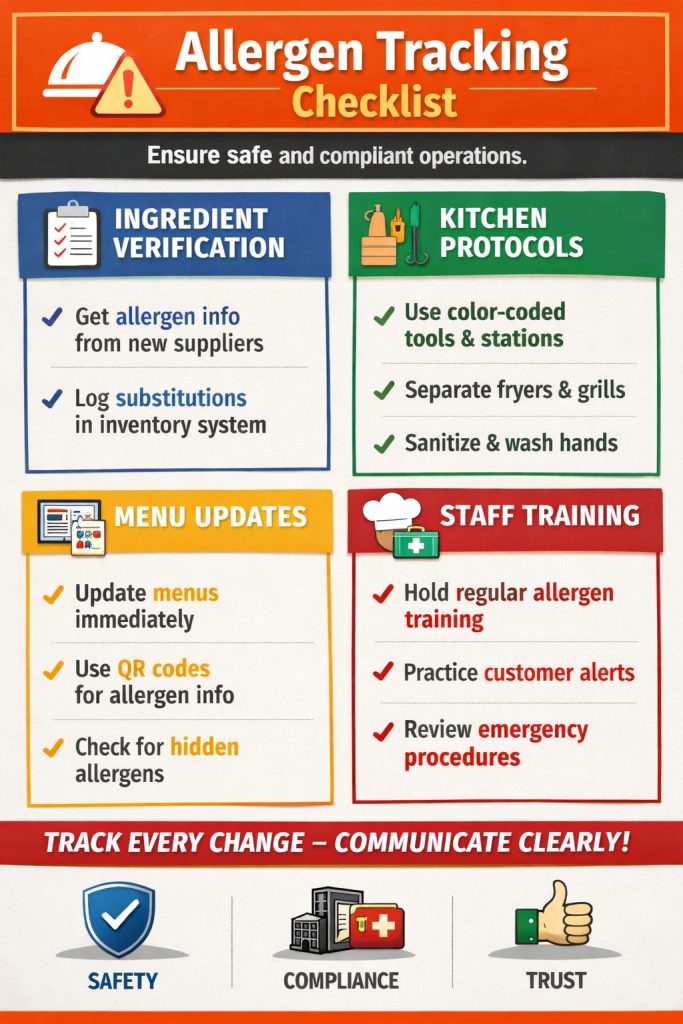
- Collect allergen data from suppliers immediately upon substitution. Require written allergen declarations.
- Integrate supplier data into inventory systems so substitutions trigger automatic allergen alerts.
2. Kitchen protocols
- Dedicated prep areas and color-coded tools (e.g., red for meat, green for vegetables) reduce cross-contact risks.
- Separate fryers and grills for allergen-free items.
- Handwashing and sanitization after handling allergen-containing foods must be made mandatory.
3. Menu transparency
- Update menus instantly when substitutions occur. QR-code linked allergen charts can provide real-time updates to guests.
- AI-powered allergen detection tools can flag hidden allergens in sauces or condiments and translate allergen info across languages.
4. Staff training
- Regular refresher sessions on allergen awareness and cross-contact prevention must be held.
- Roleplay customer conversations to ensure servers communicate substitutions clearly.
- Emergency response protocols for allergic reactions must be drilled into every team member.
Compliance and Liability
- FDA rules mandate disclosure of calorie and nutrition information, but allergen transparency is equally critical for safety and compliance.
- Failure to declare allergens can result in product withdrawal, fines and reputational damage.
- Audit-ready reporting systems help managers demonstrate compliance during inspections.
Actionable Guidelines
- Build allergen tracking into daily operations: treat substitutions as compliance events, not just inventory changes.
- Leverage technology: dashboards, QR codes and AI allergen detection reduce human error.
- Communicate relentlessly: update menus, train staff and ensure guests are informed at every touchpoint.
Final Word
For modern restaurant operators, allergen management is no longer optional, it’s a core operational discipline. By embedding transparency into supplier checks, kitchen protocols and menu communication, managers can protect guests, safeguard their brand and stay ahead of regulatory scrutiny.