
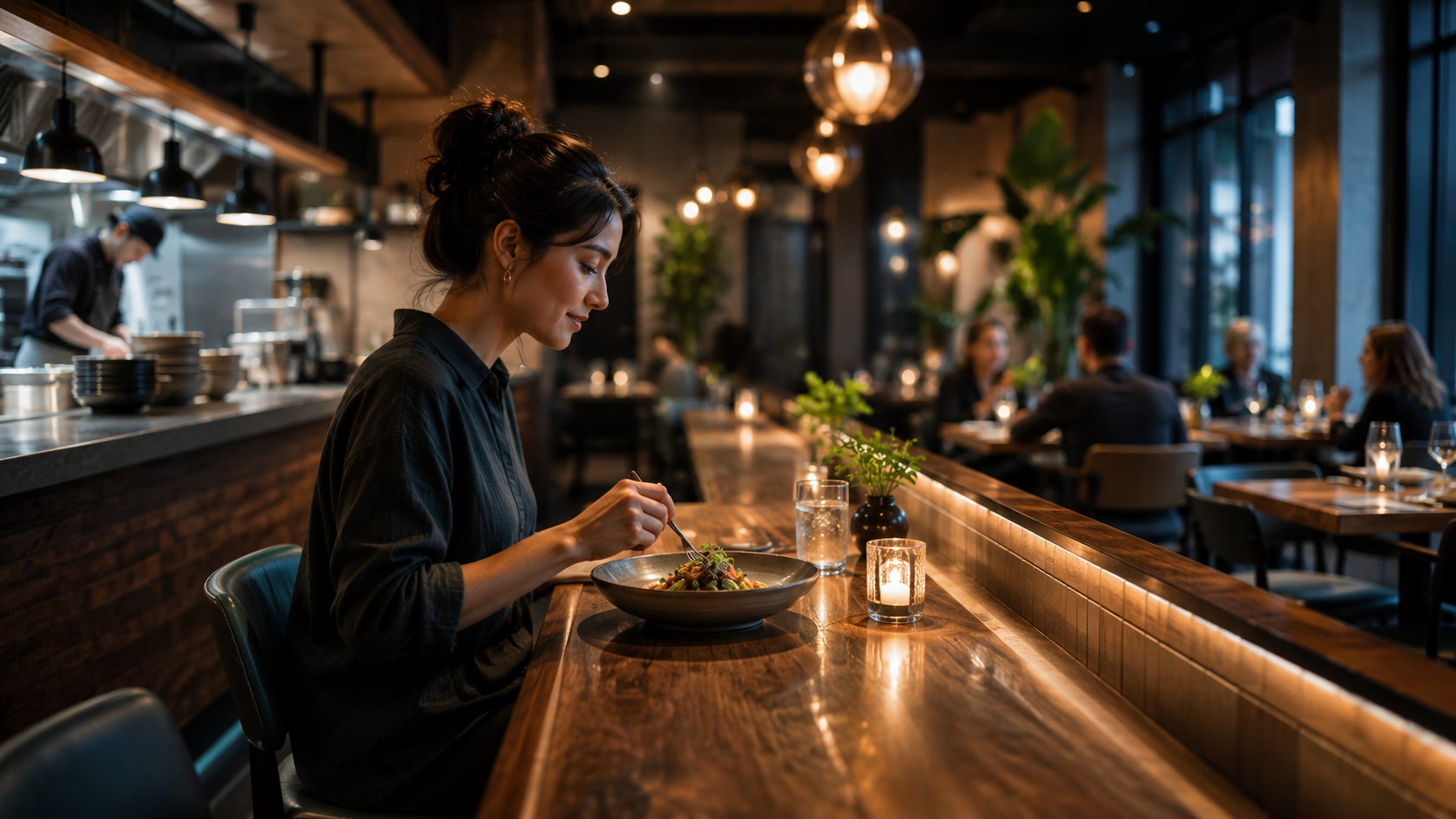
Once upon a time, walking into a restaurant and uttering the phrase, “Table for one, please,” felt like a minor social confession. Hosts would offer a look of polite pity and the individual guest would inevitably be escorted to a drafty table right next to the kitchen door or the restrooms.
Thankfully, those days are officially in the rearview mirror.
We are living in the golden era of the “solo dining economy”. Driven by a massive demographic shift toward single-person households and a cultural embrace of proactive self-care, eating alone has transformed from an awkward fallback option into a premium lifestyle choice.
If you are a restaurant operator or manager who still views single covers as a low-margin inconvenience, it is time to look at the data. Far from being a drag on your bottom line, solo diners are actually financial rockstars. Solo diners spend a staggering 48% more per person than patrons eating in groups. They also turn tables twice as fast, with 65% finishing their meals in under 40 minutes.
The math is simple: faster turns plus higher per-capita spend equals an operations manager’s dream. But to cash in on this lucrative market, you have to design spaces and service workflows that actively honor the individual guest.
Architectural Alchemy: Erasing the “Spotlight Effect”
The biggest hurdle for a solo diner isn’t the food; it’s the “spotlight effect” — that nagging, anxious sensation that everyone in the room is staring at them and wondering why they don’t have friends. Good restaurant design can completely neutralize this anxiety.
Your secret weapon? Flexible architectural layouts. Progressive operators are moving away from traditional grid-like dining room layouts in favor of intentional “single-friendly zones”.
- The power counter: Don’t just relegate solo diners to a standard bar where they have to dodge loud sports fans or bartenders slinging rounds of shots. Build deep, comfortable dining counters facing an open kitchen or an exterior window line. Individual guests love watching line cooks work; it provides built-in visual entertainment without the pressure of conversation.
- The high-end communal table: When designed correctly — with built-in charging ports, premium task lighting and subtle divider accents — a large communal table feels like a stylish hotel lobby rather than a school cafeteria. It gives guests the choice to either isolate or interact.
- Booths for one: Take a page out of the East Asian dining playbook. Deep, cozy, architectural nooks designed explicitly for single or dual covers give solo diners a sense of absolute privacy and luxury.
Menu Engineering for the Party of One
Traditional menus are structurally biased against solo diners. If your concept relies heavily on giant family-style platters, massive structural shareables or large-format bottles of wine, you are accidentally alienating individual guests who want to sample your menu without leaving with three pounds of leftovers.
To optimize for the single patron, focus on absolute menu modularity. This means leaning into a robust small-plates program or offering “half-portion” options for your flagship entrees.
The upsell advantage: Solo diners don’t have to compromise with a group, making them incredibly receptive to curated tasting menus “for one”, flight-style beverage pairings and rapid dessert upsells.
Furthermore, as outlined in the McKinsey & Company 2026 Restaurant Consumer Sentiment Report, modern diners are increasingly looking for highly personalized, value-driven flexibility when they choose to spend money away from home. Creating customized, single-serving premium pathways satisfies this consumer desire while giving your kitchen an excellent opportunity to protect ingredient margins.
Service Choreography: The Art of Reading the Room
Serving a solo diner requires a highly refined level of emotional intelligence from your front-of-house staff. The goal is to make the guest feel completely taken care of without crossing the line into overbearing intrusion.
Train your service team to execute a three-step solo service protocol:
- Acknowledge with warmth, not surprise: Never say, “Just one tonight?” when greeting a single guest. Drop the word “just” entirely. A simple, welcoming, “Table for one? Fantastic, right this way,” immediately validates their choice and sets a confident, upscale tone.
- Read the tech cues: Pay close attention to how the guest interacts with their space. If they have a book open or are actively answering emails on their phone, they are using their meal as personal “me-time”. Keep service points fast, efficient and quiet.
- Engage the explorers: If the guest is looking around, interacting with the open kitchen or asking detailed questions about the wine list, they are likely there for the culinary experience itself. Instruct your servers to match that energy by offering details on preparation techniques, ingredient sourcing or chef favorites.
The Takeaway
The solo dining explosion isn’t a temporary fad; it is a permanent structural shift in consumer behavior. The modern individual guest has plenty of disposable income, zero fear of eating alone and a massive desire for genuine hospitality.
By intentionally tweaking your floor plan, modifying your menu formatting and training your service team to respect the single cover, you transform what used to be a low-priority table into one of the most reliable, high-turning and highly profitable engines in your entire restaurant.