
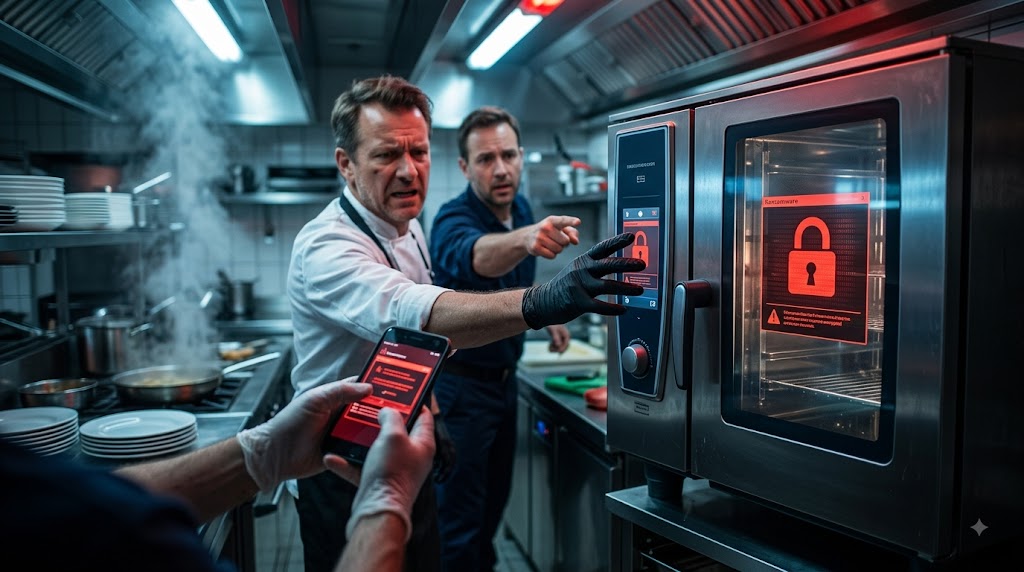
For decades, the kitchen was an analog sanctuary. Appliances were purely mechanical tools built from stainless steel, heating elements and compression coils. Today, the modern kitchen, whether in a high-volume commercial facility or a high-end smart home, is an interconnected web of digital devices. Smart combi-ovens receive recipes over Wi-Fi, commercial refrigeration systems monitor temperatures in real time and automated coffee machines order their own restocks.
However, this rapid digital transformation has introduced a dangerous, overlooked threat vector: ransomware. Cybercriminals no longer need to breach a corporate firewall through a phishing email when they can walk straight through an unpatched smart oven on your network. The threat is real, immediate and growing rapidly. If you manage a connected kitchen, treating your appliances as simple tools rather than network-connected computers is a gamble you can no longer afford to take.
The Architecture of a Kitchen Cyber Attack
Ransomware works by encrypting critical files or locking down system functionality until a victim pays a ransom to regain control. When applied to Internet of Things (IoT) hardware, attackers do not just hold data hostage, they hijack physical operations.
Most connected kitchen devices run lightweight operating systems with minimal built-in defensive tools. Manufacturers often prioritize features and low production costs over cybersecurity hardening, leaving devices with weak default passwords, unencrypted communication protocols and unpatched software bugs.
These overlooked endpoint devices provide cybercriminals with an unmonitored backdoor into broader networks. Once an attacker gains initial entry through a vulnerable appliance, they execute root commands to disable the device or use it as a launching pad to traverse the entire network, locking up point-of-sale systems, financial databases and administrative servers.
Real-World Risk: Beyond Data Encrypting
The physical nature of kitchen equipment amplifies the stakes of a ransomware attack far beyond typical IT disruptions. When a laptop is infected with malware, work pauses. When a kitchen is hit with ransomware, health and safety, inventory and physical property are immediately compromised.
Consider the operational impact of targeted kitchen ransomware scenarios:
- Inventory destruction: An attacker remotely overrides temperature setpoints on connected walk-in freezers, altering internal climate logs and warming the units. Thousands of dollars in perishable food spoil overnight, creating severe health code liabilities and massive financial loss.
- Operational gridlock: High-tech commercial ovens and automated espresso systems are remotely locked, displaying a ransom screen demanding cryptocurrency payment. During a peak dinner rush or morning service, kitchen operations grind to a complete halt.
- Physical hazards: Bad actors alter thermal thresholds on heating elements or disable safety cut-off switches, creating genuine fire hazards or permanent hardware damage.
While operators embrace smart kitchen IoT appliances to cut energy bills, they often overlook the severe security liabilities that come with introducing dozens of new IP addresses to the back-of-house network.
In a report examining cybersecurity risks in connected kitchen equipment, industry experts highlight that legacy “shadow devices” — older connected appliances that remain on the Wi-Fi network long after their smart features are forgotten — are among the most dangerous entry points for threat actors.
Why Kitchen Appliances Are Primary Targets
Cybercriminals target connected kitchen equipment for three strategic reasons:
- High impact, low friction: Kitchen operations cannot tolerate extended downtime. Attackers know that a restaurant or hotel facing $10,000 in hourly downtime during a weekend rush is far more likely to pay a quick ransom than a standard business that can afford to wait days for IT remediation.
- The “set it and forget it” mindset: While IT teams routinely patch desktop operating systems and server firewalls, kitchen appliances are rarely updated after installation. Many run firmware containing vulnerabilities that have been publicly documented for years.
- Broad network access: In many facilities, smart appliances share the exact same Wi-Fi network as point-of-sale terminals, guest Wi-Fi and corporate payroll computers.
Failing to isolate IoT devices means a single compromised appliance risks the safety, privacy and infrastructure of the entire property.
Immediate Action Plan: How to Secure Your Kitchen
Protecting your facility or smart home from kitchen ransomware requires an aggressive, multi-layered defense strategy. Hope is not a security plan. You must take the following steps immediately to harden your connected equipment against intrusion:
- Segment your network (VLAN Isolation): Never place smart appliances on the same network as your primary business operations, guest access or financial databases. Create a dedicated, isolated Virtual Local Area Network (VLAN) strictly for IoT hardware so a compromised oven cannot reach your core systems.
- Implement zero trust architecture: Adopt a “trust no device, verify every connection” policy. Inspect and authenticate every inbound and outbound data transmission passing through your appliances.
- Change default credentials immediately: Never leave factory-default usernames and passwords intact on any connected device. Enforce strong, unique, high-entropy passwords for every piece of kitchen equipment.
- Audit and audit again: Conduct a full inventory of every device connected to your Wi-Fi. Identify legacy appliances, smart thermometers or discarded hubs, and immediately disconnect any device that no longer receives active security updates from its manufacturer.
- Enforce patch management: Establish a mandatory routine for checking and applying manufacturer firmware updates. Demand that equipment vendors provide clear, long-term software security support commitments before purchasing new connected hardware.
Protect Your Operations Before It Is Too Late
The convenience of a smart, automated kitchen is undeniable, but it must not come at the expense of operational security. Ransomware actors are actively scanning networks for unpatched, exposed IoT hardware every second of the day.
Treat every connected appliance as a potential doorway into your business. Audit your network today, isolate your devices and close the back door before a cybercriminal locks you out of your own kitchen.