
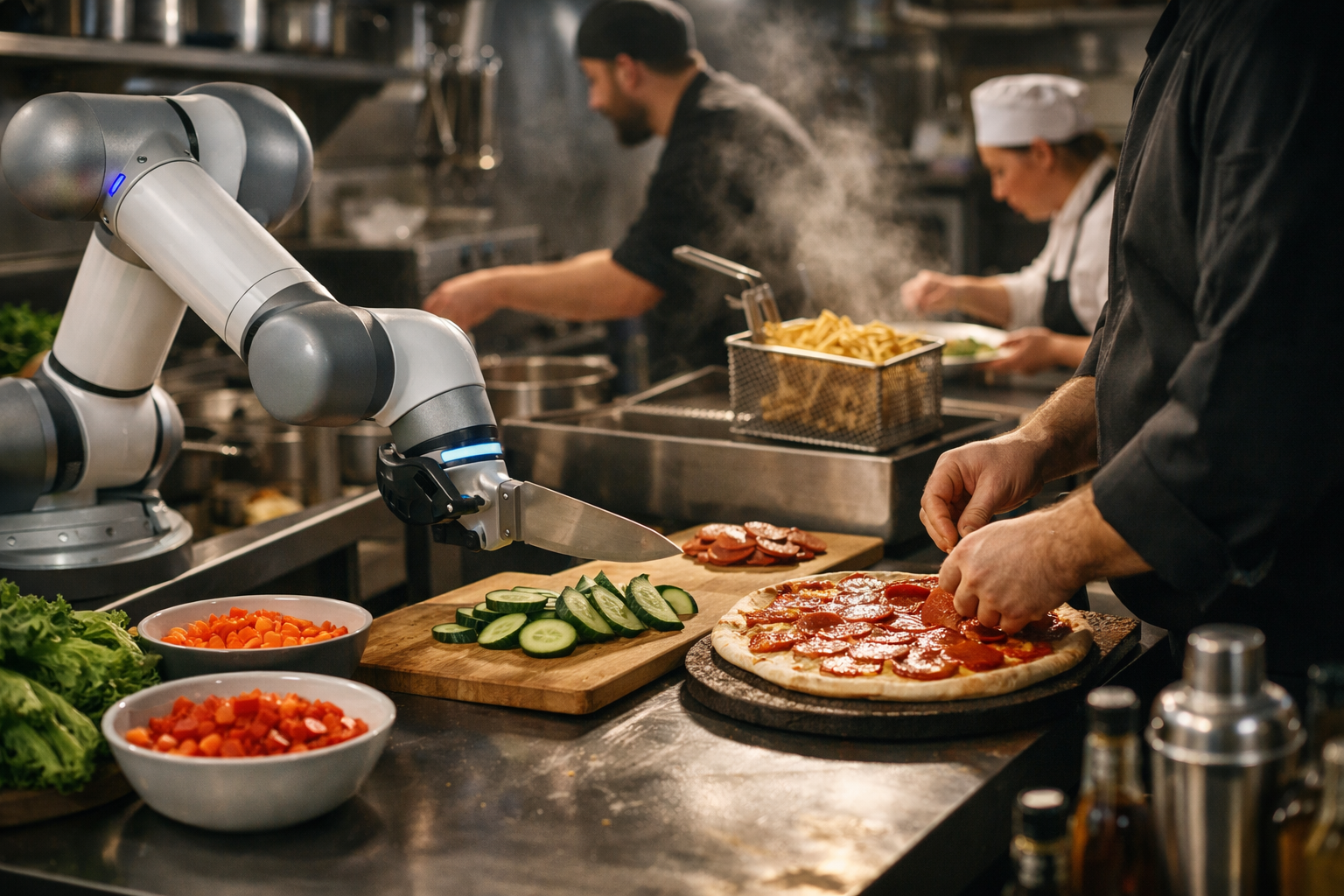
If you run a restaurant, you know the drill: chopping vegetables, frying batches of wings or topping dozens of pizzas can eat up hours of staff time. These tasks are essential but often repetitive, physically demanding and hard to staff consistently. Enter cobots — collaborative robots designed to work alongside humans, not replace them.
What Exactly Is a Cobot?
Unlike fully autonomous robots, cobots are programmable robotic arms that handle specific kitchen tasks. Think of them as reliable sous-chefs who never tire of slicing onions or ladling sauce. They’re built to be safe around people, with sensors and controls that prevent accidents, making them ideal for busy kitchens.
Why Operators Are Paying Attention
- Labor shortages: With staffing challenges across the industry, cobots help fill gaps without compromising service.
- Consistency: Robots don’t get tired or distracted, so every fry basket or pizza topping comes out the same.
- Safety: Cobots reduce repetitive strain injuries from chopping, lifting or stirring.
- Efficiency: Staff can redirect their energy toward plating, customer interaction and quality control.
A recent kitchen robots guide highlights how automated equipment is already helping operators streamline workflows and improve food consistency. The food automation market size reached USD 14.92 billion in 2025 and is projected to grow at a CAGR of 7.5% from USD 16.04 billion in 2026 to nearly USD 30.75 billion by 2035.
Real-World Applications
- Vegetable prep: Automated arms can chop, dice and slice with precision.
- Frying: Cobots can lower baskets, monitor cook times and lift food safely.
- Pizza topping: Robots can spread sauce, sprinkle cheese and add toppings evenly.
- Beverage mixing: Some cobots are even branching into bar service, shaking cocktails with flair.
The Human Touch Still Matters
Here’s the key: cobots aren’t plating dishes with artistry or designing menus. That’s still the chef’s domain. Instead, they handle the grunt work so your team can focus on flavor, presentation and hospitality. Customers don’t come for a robot-made burger; they come for the experience your staff creates.
Getting Started
For operators curious about cobots, the best approach is gradual:
- Identify pain points — where staff spend the most time on repetitive tasks.
- Pilot one cobot — start small, maybe with a pizza station or fryer.
- Train staff — show them how cobots complement their work, not replace it.
- Measure ROI — track savings in labor hours, consistency and reduced waste.
Looking Ahead
Cobots are not a fad, they’re part of a broader shift toward smart kitchens. As AI and robotics converge, expect more integration with inventory systems, order tracking and food safety monitoring. The future kitchen will be a hybrid: humans leading the creative charge, cobots handling the heavy lifting.
Bottom line: Cobots aren’t here to steal chefs’ jobs — they’re here to make kitchens more efficient, safer and better equipped to deliver consistent quality. For restaurant operators, they’re a smart investment in both staff well-being and customer satisfaction.