
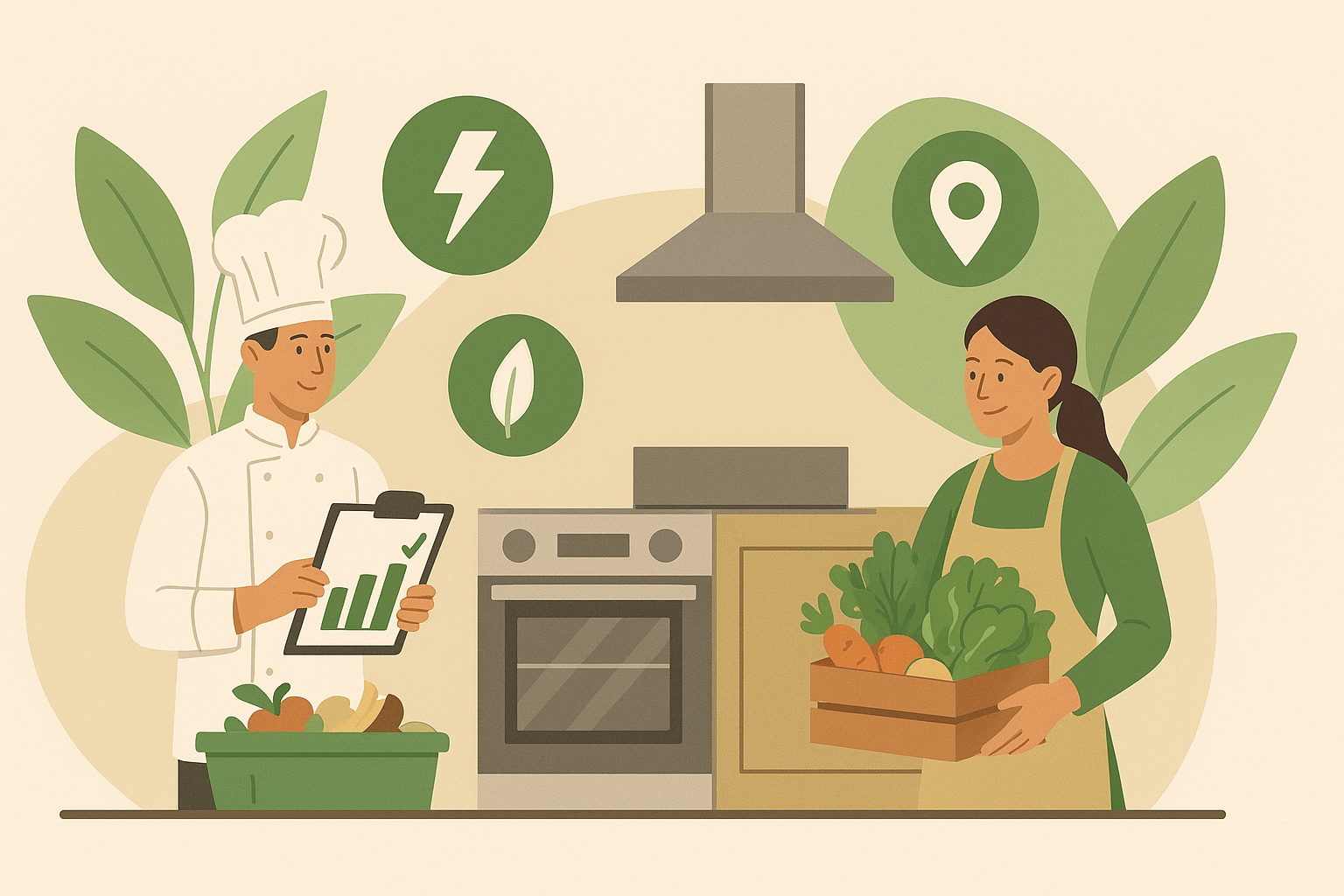
We often hear “eco-friendly packaging” as the sustainability hallmark in foodservice. But by 2025, restaurant operators who want to lead (not just follow) need to take a broader view. Packaging is just one piece of the puzzle. The real gains come when you pair it with clever waste tracking, energy-smart kitchens and local sourcing that builds resilience and community value.
Here’s how you can take your sustainability efforts deeper, in ways that also boost your bottom line, reduce risk and deepen customer loyalty.
1. Food Waste Tracking: Visibility as Leverage
Packaging is a visible environmental touchpoint, but food wasted inside the kitchen is hidden money (and carbon) slipping through your fingers. A lot of modern sustainability gains happen when that waste is tracked, analyzed, and acted upon.
Why tracking matters now
In many restaurant operations, food waste amounts to 5–15% of total food purchases. With no data, it’s almost impossible to know where your biggest “leaks” are—trim, spoilage, plate waste or overproduction. The technology shift of 2025 is giving operators that visibility in real time.
What’s new in 2025
AI-driven systems—some combining scales, cameras, optical sorting, and machine learning—can automatically detect, classify, and weigh discarded food during prep or at the pass. A PubMed study in the HORECA sector (hotels, restaurants, cafes) reported meaningful reductions in waste after deploying such systems.
How to start
- Pick a module (prep, pass, plate) and deploy the tracking in one station first.
- Train your team: most of the value comes from what staff do with the data.
- Review waste “hot spots” weekly, set reduction goals and reward progress.
- Integrate it with inventory and menu planning systems so waste insights feed upstream decisions.
2. Energy-Efficient Kitchen Infrastructure: Doing More With Less
Once you’ve got a grip on waste, the next frontier is energy—the electricity, gas, chillers and HVAC units that hum nonstop behind your dining room walls. Upgrades here are sustainability in everyday action.
Why it matters
Commercial kitchens are energy-intensive environments. Inefficient equipment wastes fuel and emits more carbon. In tight-margin foodservice, energy bills are not trivial. Over time, the ROI for efficient appliances, smart controls and systems integration can be compelling.
What’s trending now
- Energy Star–rated appliances are considered baseline, not luxury.
- Smart cooking equipment (ovens, combi units, induction, low-flow steamers) can dynamically adjust power usage based on load.
- Integrated energy management systems (EMS) take data from HVAC, refrigeration, lighting, kitchen gear and orchestrate power use (e.g. cycling non-critical loads, shifting usage to off-peak).
- LED lighting, efficient ventilation hoods (variable-speed exhaust fans), better insulation and heat recovery are all “low hanging fruit” upgrades.
A practical rollout path
- Audit first: Use energy meters to benchmark your biggest energy draws.
- Phase replacement: Start with low-hanging, high-impact items, e.g., ENERGY STAR refrigerators, smart ovens, efficient water heaters.
- Install EMS: Let your equipment “talk” with each other.
- Train staff: Energy savings often slip if operators don’t follow best practices (shutting doors, calibrating burners, preventive maintenance).
- Track and publicize results: Use energy-savings data in your sustainability reporting or marketing.
In short: go beyond “better bulbs” and aim for a holistic, intelligent kitchen.
3. Locally Sourced Supply Chains: Resilience, Freshness & Carbon Savings
When most people say “sustainable restaurant,” they picture recycled takeout containers or compost bins. But the real leverage is in your upstream decisions: what you buy and from whom.
Why local sourcing is strategic in 2025
- Carbon & emissions reduction: Shorter transport, reduced refrigeration, fewer cross-border logistics all lower your footprint.
- Transparency and trust: Diners increasingly ask “Where did my food come from?” A local or regional chain is often easier to trace and tell than a global import pipeline.
- Supply resilience: When global supply chains are volatile (weather, geopolitics, pandemics), having robust local partners gives you backup.
- Community and brand strength Sourcing from local farms or small producers builds ties in your community. It gives you stories you can tell, creating a brand that feels grounded.
Implementation tip
- Segment your menu: Don’t try to make everything local at once; start with produce, herbs, greens or a few “local specials.”
- Build farmer/producer relationships: Visit the farms, know their methods. Co-develop forecasting and delivery rhythms.
- Collaborate with co-ops or local distributors: You may not have scale, but a local aggregation hub helps reduce cost and logistics friction.
- Be flexible with seasonality: Accept that some ingredients won’t always be local; make it part of your menu design.
- Tell the story: Educate servers, highlight suppliers, show photos or maps in your menus or on your website.
One inspiring case: a restaurant in Mexico City sources from chinampa (floating) farms in Xochimilco, and creatively turns scraps into sauces and beverages—operating essentially bin-free.
4. Pulling It All Together: The Integrated Sustainability Ecosystem
None of these levers—waste tracking, energy efficiency, local sourcing—works well in isolation. In 2025, the most forward-thinking restaurant operators think in ecosystems. Here’s how to tie the pieces:
- Closed-loop metrics: Combine waste data + energy data + procurement data into dashboards. You’ll see how buying “too much” local produce that spoils means energy and waste losses.
- Cross-functional teams: Sustainability is no longer just operations or marketing. Get chefs, procurement, facilities and even front-of-house aligned on common goals.
- Continuous iteration: Use your waste-tracking system to detect new patterns, then tweak procurement, menu mix or operations.
- Marketing and brand value: Real, measured sustainability isn’t greenwashing. Publishing real data (e.g. “we reduced kitchen waste 30% in six months”) strengthens reputation with eco-conscious diners.
- Leverage partnerships: Collaborate with local composters, energy providers, community-supported agriculture (CSAs) or clean-tech vendors to expand your impact beyond your four walls.
A Few Words of Encouragement (and Realism)
Switching from “just composting and green packaging” to a truly integrated sustainability program is ambitious. But small, consistent steps compound fast. Here are some tips to help you stay motivated and on track:
- Start with pilot projects (one kitchen station, one menu item, one energy zone). Early wins build momentum.
- Engage your team — regular sharing of data, competitions or recognition for waste-reduction champions.
- Be transparent with guests — they love a good behind-the-scenes story.
- Reinvest savings into further upgrades. A portion of energy or food cost savings can fund the next round.
- Don’t wait for perfection. Even 10–20% reduction in waste or energy is meaningful — and paves the way to deeper gains.
In 2025, “sustainability” needs to be more than packaging labels or biodegradable wrappers. It needs to be part of your operations DNA — smart, measured and continuously improving. When you succeed, you lower costs, mitigate risks and build the kind of restaurant brand that resonates with customers and communities.