
If you’ve been in the restaurant game for a while, you will remember the “good old days” of loyalty. You know the ones: the stack of slightly greasy paper punch cards tucked behind the counter or the plastic keychain tags that always seemed to go missing right when the customer wanted their free appetizer.
Back then, “loyalty” was purely transactional. You buy ten, you get one. Simple? Yes. Effective? To a point. But in 2026, the game has changed entirely. We’re no longer just asking customers to come back; we’re using data to predict exactly when they’ll be hungry, what they’ll want to eat and even which booth they’d prefer to sit in.
Welcome to the CDP Revolution. If that sounds like tech-heavy jargon, don’t worry, we’re going to break it down into plain English. Grab a coffee and let’s talk about how you can turn your guest data into your most powerful secret ingredient.
What on Earth is a CDP, Anyway?
Before we dive into the fun stuff, let’s clear the air. CDP stands for Customer Data Platform. Think of it as the “brain” of your restaurant.
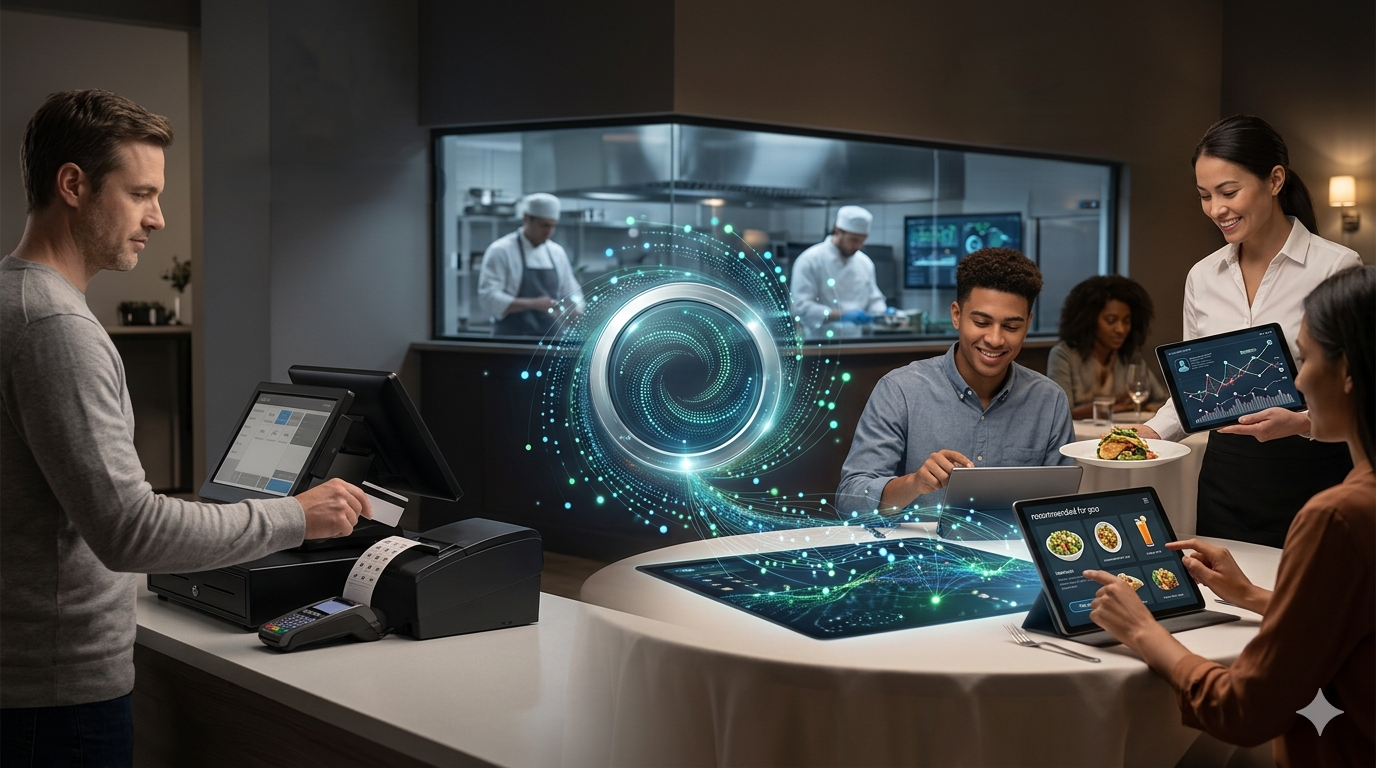
Most of us have data scattered all over the place. You’ve got your POS (Point of Sale) system tracking sales, your reservation app tracking tables, your WiFi portal capturing emails, and maybe a separate online ordering platform. The problem? None of these systems usually talk to each other. Your POS knows someone bought a Spicy Tuna Roll, but your reservation system doesn’t know that that same person is the one who always asks for a quiet corner table on Thursday nights.
A CDP acts as a central hub. It pulls all those ‘silos’ of information together to create a single, unified profile for every single guest. Instead of just seeing a credit card number, you see ‘Sarah,’ a regular who visits twice a month, prefers plant-based options and always opens your emails on Tuesday mornings.
According to recent restaurant marketing trends for 2026, this move toward unified data is no longer a luxury, it’s the standard for staying culturally relevant and competitive.
From “Punch Cards” to “Predictive Personalization”
So, why does this matter to you? Because ‘Basic Loyalty’ is reactive, while ‘Predictive Personalization’ is proactive.
Imagine Sarah (our plant-based regular) hasn’t visited in three weeks. In the old days, you might send a mass “We Miss You!” coupon to everyone on your email list. Sarah gets a coupon for a free burger. But Sarah doesn’t eat meat. She ignores the email and you’ve wasted a marketing touchpoint.
With a CDP, the system ‘notices’ Sarah’s absence automatically. Because it knows she’s a vegetarian, it sends her a personalized message: “Hey Sarah, we’ve missed you! We just added a new Roasted Cauliflower Steak to the menu. Come try it on us this week!” See the difference? You aren’t just shouting into the void; you’re having a conversation. That’s the power of AI-driven personalization in 2026, where systems can autonomously identify these revenue opportunities 24/7 without you having to lift a finger.
The Three Pillars of the CDP Revolution
To really win with this technology, you need to focus on three things: unification, prediction and action.
1. Unification: The 360-Degree View
Your first step is getting all your tech to play nice. When your POS, loyalty app and even your guest WiFi are synced, you start to see patterns you never noticed before. You might realize that your ‘High Spenders’ actually visit less frequently than your ‘Happy Hour Regulars’, but their lifetime value is much higher. A CDP lets you see the whole forest, not just the trees.
2. Prediction: Knowing the ‘Why’ Before the ‘What’
This is where the revolution part comes in. Modern CDPs use machine learning to forecast behavior. They can flag ‘Churn Risk’ – guests who are showing signs they might not come back – before they actually stop visiting. For example, if a guest who usually visits every 10 days hasn’t been seen in 15, the system can trigger a ‘Win-Back’ offer automatically.
3. Action: Hyper-Targeted Marketing
This isn’t about sending more emails; it’s about sending better ones. Instead of one weekly newsletter, you might send five different versions. One for your ‘Saturday Night Date Leavers’, one for your ‘Weekday Lunch Hustlers’ and one for your ‘Delivery Only’ fans.
A Real-World Example: The ‘Rainy Day’ Win
Let’s look at how this plays out on the floor. Suppose you run a busy café. Your CDP sees that the weather forecast mentions a downpour this Tuesday. Usually, your lunch rush takes a 20% hit when it rains.
Instead of just crossing your fingers, your CDP identifies a segment of local office workers who typically order delivery on rainy days. On Tuesday morning, it automatically shoots them a text: “Going to be a wet one! Skip the soggy walk and get 15% off delivery today – your favorite Oat Milk Latte is waiting.”
You’ve just turned a slow, rainy day into a high-volume delivery shift, all because you had the data to predict a need and act on it.
Is Your Restaurant Ready for 2026?
We know what you’re thinking: “This sounds expensive and complicated.” A few years ago, you would have been right. But today, the tech has become much more accessible for independent operators and small chains alike.
The real cost isn’t the software; it’s the ‘silent cost’ of disconnected decisions. When you’re guessing what your customers want, you’re leaving money on the table. Whether it’s reducing food waste by better forecasting demand or increasing your table turnover through smarter scheduling, the benefits of analytics-driven management are undeniable.
Start Small, Think Big
You don’t have to build a NASA-level data center overnight. Start by looking at your current tech stack. Do your systems talk to each other? If not, that’s your first “to-do.” Look for platforms that prioritize integration.
The goal of the CDP Revolution isn’t to replace the human touch of hospitality; it’s to enhance it. When you know your guest’s name, their favorite drink and their dietary needs before they even walk through the door, you’re not just a restaurant – you’re a part of their life.