
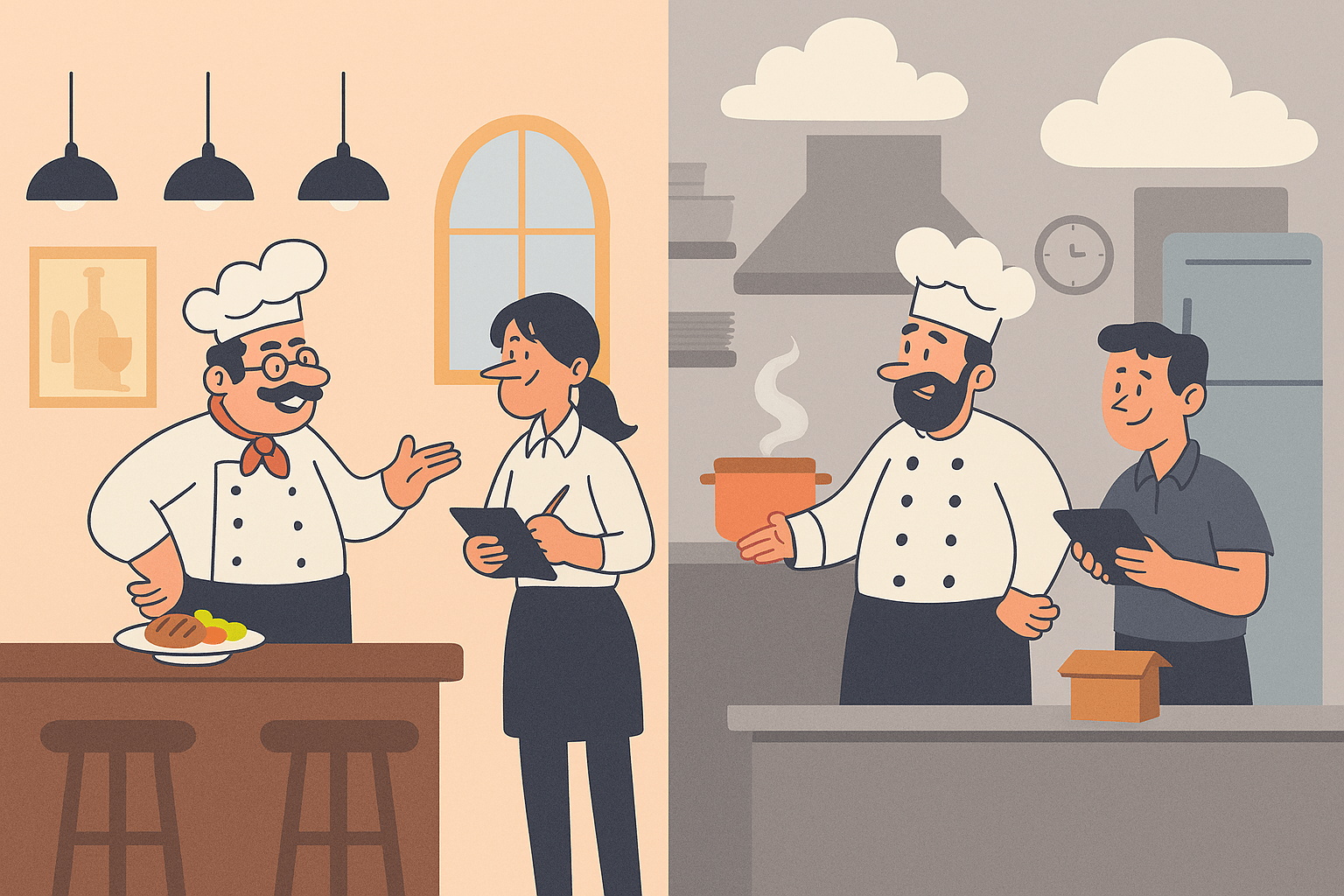
Picture this: you’re sitting across from a fellow restaurant operator over lunch, tossing around ideas for your next big move. Do you double down on your cozy brick-and-mortar spot or explore the sleek, delivery-driven world of ghost kitchens? It’s a question more and more restaurateurs are asking—and for good reason. The industry is evolving fast, and both models offer compelling advantages (and a few curveballs).
Let’s break it down—financials, operations, tech—and help you decide which path, or hybrid, might be the best fit for your business.
Financial Implications: Overhead vs. Opportunity
Let’s start with the dollars and cents. Traditional restaurants come with hefty upfront costs—think rent, décor, furniture, signage and staffing. You’re investing in ambiance, location and the full dine-in experience. That’s powerful, especially if your brand thrives on atmosphere and personal service.
Ghost kitchens, on the other hand, are leaner. No dining room, no front-of-house staff and often, no prime real estate. You’re paying for kitchen space, utilities and tech infrastructure. Ghost kitchens can reduce build-up costs by up to 75% and are 3-5 times faster and cheaper to launch, making them attractive for entrepreneurs testing new concepts or expanding delivery reach.
But here’s the catch: ghost kitchens rely heavily on third-party delivery platforms, which can eat into margins with fees ranging from 15% to 30%. Traditional restaurants may have higher fixed costs, but they retain more control over pricing and customer relationships.
Bottom line: Ghost kitchens offer lower overhead and faster scalability. Traditional restaurants offer richer margins and brand-building potential. Your choice depends on your goals—and your appetite for risk.
Operational Differences: Front-of-House vs. Fulfillment Focus
Running a traditional restaurant is a dance of logistics and hospitality. You’re managing reservations, walk-ins, table turns and the guest experience. It’s high-touch, high-pressure and deeply rewarding when done right.
Ghost kitchens flip the script. They’re fulfillment centers for food—focused on speed, consistency, and volume. Orders come in digitally, get prepped, packed and sent out. There’s no need for servers, hosts or bussers. You might even run multiple brands from the same kitchen, each targeting different demographics or cuisines.
This operational flexibility is a major draw. Ghost kitchens are a great way to test new menus or reach underserved delivery zones without opening a full-service location.
That said, ghost kitchens lack the human touch. There’s no face-to-face feedback, no ambiance and limited brand storytelling. If your concept relies on emotional connection or experiential dining, a ghost kitchen might feel… ghostly.
Bottom line: Traditional restaurants are built for hospitality. Ghost kitchens are built for efficiency. Choose based on your strengths—and your customer’s expectations.
The Role of Technology: Digital First vs. Digital Enhanced
Technology is the backbone of both models, but it plays out differently.
Ghost kitchens are digital-first. Everything—from ordering to fulfillment—is powered by tech. You’ll need robust POS systems, inventory management tools and integrations with delivery platforms. Data is king: you’ll track order trends, optimize prep times and tweak menus based on performance.
Traditional restaurants use tech to enhance the experience. QR code menus, mobile payments, reservation platforms and loyalty apps are now standard. But the core remains human-centered—tech supports the service, not replaces it.
Interestingly, hybrid models are emerging. Some brick-and-mortar restaurants now run ghost kitchen operations out of their existing kitchens during off-peak hours. Others use delivery-only brands to supplement dine-in revenue. This hybrid approach can maximize kitchen utilization and diversify income streams.
Bottom line: Ghost kitchens require a tech-first mindset. Traditional restaurants benefit from tech, but don’t depend on it. A hybrid model lets you play both sides.
So… Which Model Is Right for You?
Here’s a quick gut-check to help you decide:
- Go ghost if you’re launching a new concept, targeting delivery-first customers or want to scale quickly with minimal overhead.
- Stay traditional if your brand thrives on ambiance, personal service and in-person connection.
- Try hybrid if you have an existing kitchen and want to expand your reach without opening a new location.
Ultimately, it’s not about choosing sides—it’s about choosing strategy. The best operators are nimble, data-driven and customer-focused. Whether you’re plating up in a dining room or boxing meals in a ghost kitchen, success comes from knowing your audience and delivering consistently.