
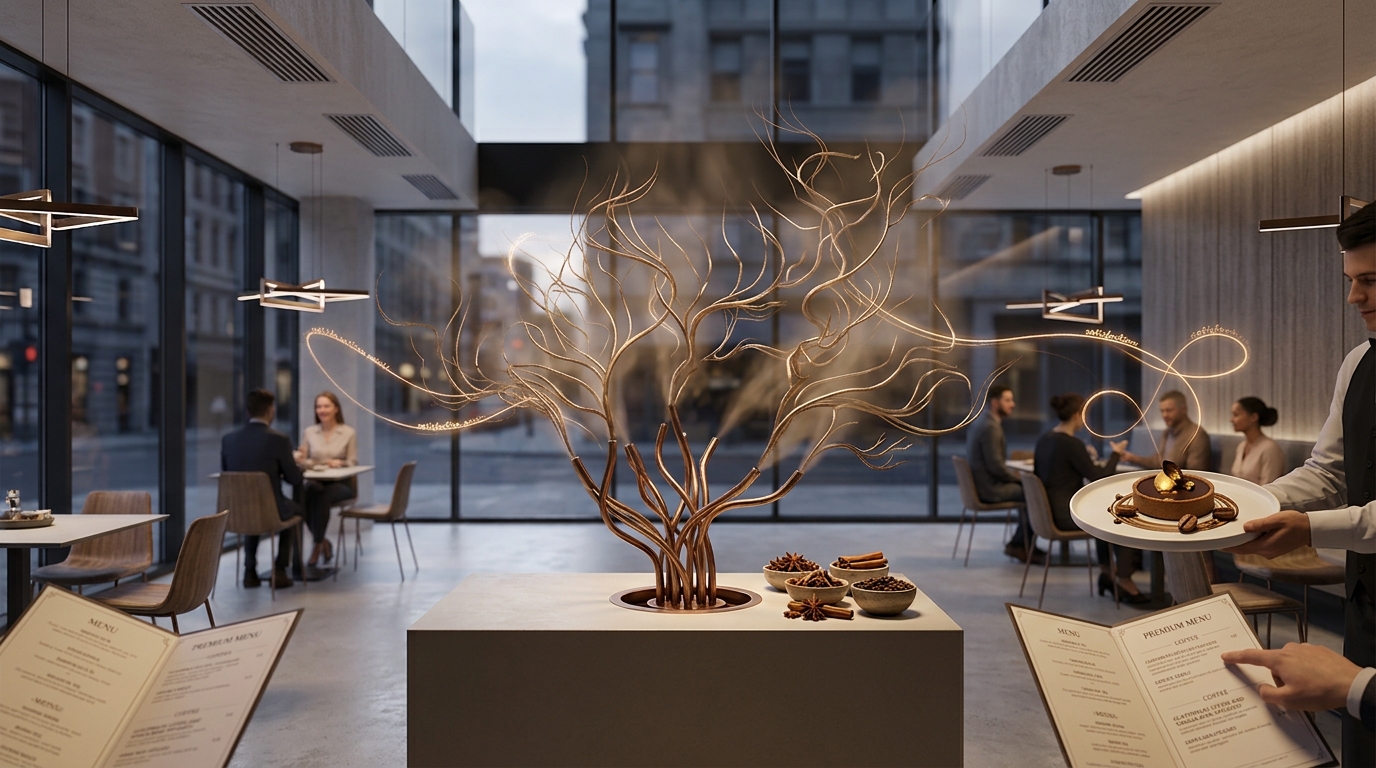
When a guest walks through the doors of your restaurant, their initial decision to settle in and indulge is driven by a sense that operates entirely below conscious thought. While operators dedicate relentless hours to perfection on the plate, lighting on the table and playlist tempos in the background, one of the most powerful psychological drivers of spending remains floating in mid-air. Ambient scent is no longer just a pleasant side effect of a sizzling pan or an open baker’s rack. It is a precise operational tool known as olfactory architecture, designed to shape guest behavior, extend dwell times and quietly nudge check averages upward.
The Science of Subconscious Appetite Priming
Unlike sight or sound, which travel through complex cognitive processing filters before triggering an emotional response, olfactory signals take a direct highway to the human brain. When a guest inhales a micro-diffused ambient scent, scent molecules bypass executive decision-making areas and land directly in the limbic system, the ancient neural center responsible for memory, emotion and instinct.
This direct connection explains why a subtle, ambient fragrance can bypass a guest’s rigid mental budget. When an atmosphere smells intentionally curated rather than sterile or overly masked by harsh chemical cleaners, guests instantly report higher perceptions of quality, hospitality and value. Scent is uniquely capable of firing instantaneous memory networks and emotional states, making it one of the most potent triggers available for influencing immediate consumer decisions. When guests feel comfortable and sensory-engaged, their resistance to premium add-ons, second cocktails and dessert menus drops significantly.
Strategic Scent Dispersion across the Dining Journey
To build an effective scent architecture, operators must view their floor plan as a series of sensory zones, each with a distinct psychological purpose. The goal is never to overwhelm the room with heavy, artificial perfume, which can destroy the delicate palate of a dish, but rather to use cold-air micro-nebulization to disperse ultra-subtle, natural scent profiles that complement each phase of the dining journey.
In the entryway and host stand, the objective is decompression and perception elevating. A crisp, grounding ambient fragrance featuring subtle notes of cedarwood, white tea or light citrus creates an immediate impression of cleanliness, luxury and calm. This initial sensory cue encourages guests to relax, put away their phones and prepare for an immersive dining experience.
As guests transition into the main bar and dining room, the olfactory strategy shifts toward appetite priming and dwell-time extension. In high-margin areas like the bar, gentle warm undertones such as vanilla, spiced amber or toasted cardamom naturally evoke feelings of comfort and indulgence. Industry evaluations published in the International Journal of Contemporary Hospitality Management demonstrate that when ambient scents are perfectly congruent with a brand’s physical environment and service level, guest satisfaction scores rise alongside a noticeable increase in return visits and spending.
Protecting the Palate through Micro-Nebulization
The biggest hesitation operators face when exploring olfactory architecture is the fear of interfering with the food itself. No guest wants their wood-fired steak to taste like lavender or their delicate sushi to be masked by heavy vanilla. This is where modern cold-air diffusion technology changes the game completely.
Unlike traditional aerosol sprays, candles or heat-based oil diffusers – which leave wet residues, inconsistent bursts of fragrance and synthetic chemical trails – commercial micro-nebulization transforms pure fragrance oils into dry, weightless micro-particles. These invisible particles remain suspended uniformly in the air current, moving smoothly through standard HVAC ductwork or discrete wall-mounted units without landing on cutlery, glassware or food.
Furthermore, leading operators manage their scent profiles dynamically across different dayparts. A morning brunch service might feature energized, subtle notes of roasted espresso bean and citrus zest to encourage turnover and fast ordering. By evening, the system automatically transitions to warmer, richer notes that encourage guests to linger through three courses. Strategically increasing guest dwell time through ambient sensory design yields direct, measurable returns in average check size and total per-table yield.
Mastering olfactory architecture is not about deceiving the guest; it is about completing the sensory promises your kitchen and design teams make every single day. By treating the air inside your dining room with the same creative rigor as your wine list or lighting design, you transform a plain room into an unforgettable, high-converting experience that keeps guests coming back for more.