
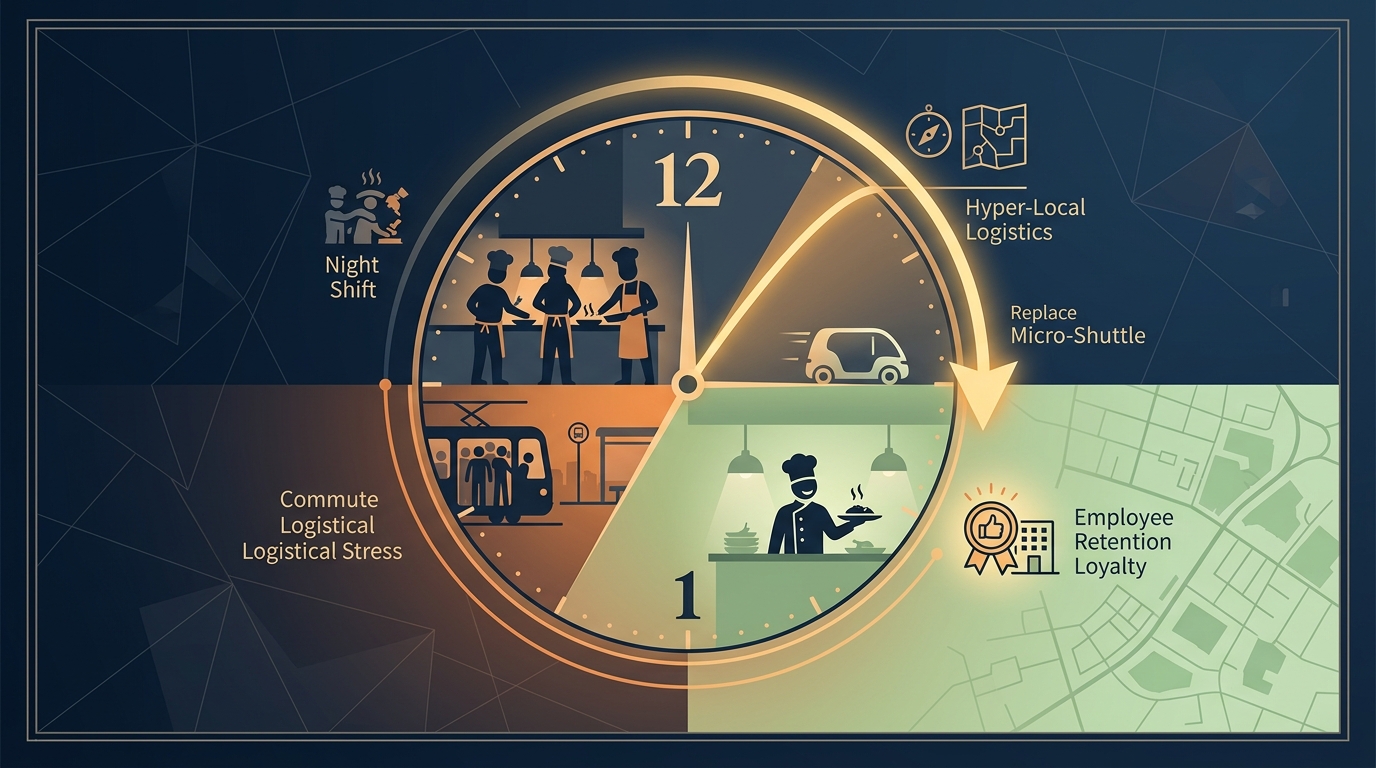
It is 12:45 AM on a Saturday night. The final sweep of the kitchen floor is complete, the stainless steel prep tables are gleaming and your closing Back-of-House (BOH) crew is finally clocking out after a grueling nine-hour shift.
Your line cook, Marcus, hangs up his apron and pulls out his phone to check the local transit app. The last bus for his route left at 12:30 AM. The night subway service runs on an agonizing 45-minute delay schedule. His only other choice is a peak-surge $38 rideshare home — which eats up nearly two full hours of his hard-earned shift wages.
So Marcus waits in the cold, gets home at 2:30 AM, sleeps fitfully and shows up exhausted for prep the next day. Three weeks later, he quietly turns in his notice for a prep cook job three blocks from his apartment that pays fifty cents less per hour, simply because he can walk home.
If you are running a high-volume restaurant, this scenario plays out constantly. When operators brainstorm ways to curb BOH turnover, the conversation usually centers on wage bumps, tip-pooling tweaks or new kitchen gear. But there is a silent retention killer lurking right outside your back door: the late-night commute bottleneck.
The Reality of Late-Night BOH Mobility
While Front-of-House (FOH) staff often walk away from a busy Friday night with cash tips in hand to cover a late ride, BOH team members work on fixed hourly wages. When public transit cuts back night schedules or shuts down entirely, your kitchen crew bears the financial and emotional brunt of getting home safely.
Recent workforce data from Black Box Intelligence shows that hourly restaurant turnover remains elevated, with replacing a single hourly employee costing operators thousands in direct recruitment, onboarding and lost productivity.
When you break down why cooks walk out the door, commute friction ranks surprisingly high. Late-night transit gaps lead directly to:
- Pre-shift anxiety: Line cooks worrying about missing the last bus instead of focusing on peak ticket service.
- Chronic late-night fatigue: Exhaustion compounding over months, driving BOH burnout and sudden call-outs.
- Safety concerns: Staff — particularly female BOH workers — feeling unsafe waiting alone at dimly lit bus stops after midnight.
As detailed in EHL Insights’ workforce study, respecting employee schedules and actively addressing their daily wellbeing is one of the single most effective ways to build a loyal, long-term team.
3 Hyper-Local Commute Fixes for Restaurant Managers
You do not need a municipal transit budget to solve this problem for your team. Progressive operators are turning to creative, hyper-local logistics to make sure their crew gets home safely and affordably.
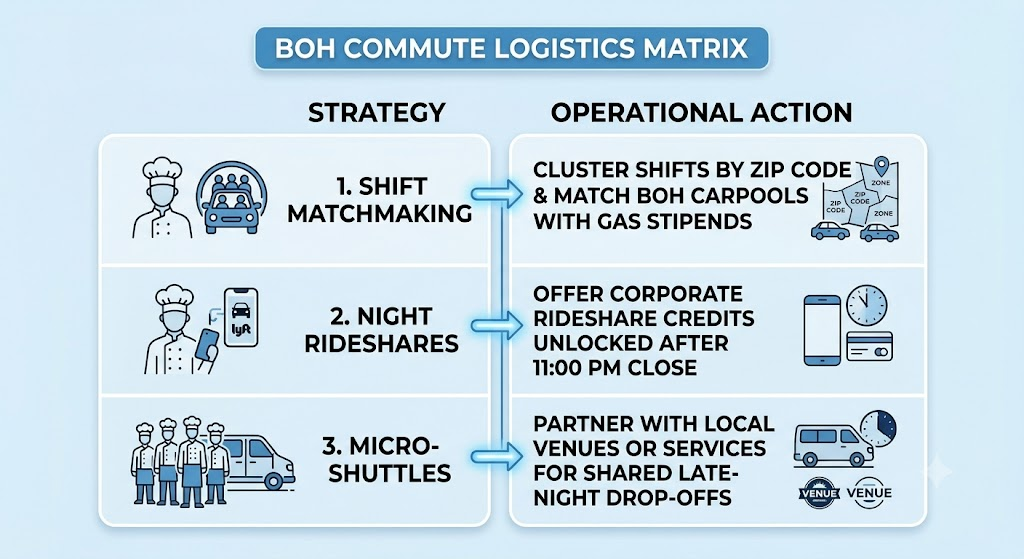
1. In-house “zip code matchmaking” and carpool perks
Start by mapping out where your BOH team actually lives. You will often discover that three or four cooks live in the same neighborhood or along the same geographic corridor.
Create a voluntary commute-matching board or group chat for your kitchen. If a senior cook with a car drives two dishwasher colleagues home after midnight, award the driver a weekly $30 “Gas & Toll” stipend or a prime parking spot behind the building. The restaurant spends $120 a month — a pittance compared to the cost of retraining a new dishwasher.
2. Targeted “post-11 PM” rideshare credit pools
Instead of providing blanket transportation allowances, set up a targeted corporate rideshare account (like Uber for Business or Lyft Pass) that activates strictly for shifts ending after 11:00 PM.
Managers can set strict geofenced parameters: the voucher only works if picked up within a two-block radius of the restaurant between 11:00 PM and 2:00 AM, capping the subsidy at $15 per ride. The cook covers the tip and remaining fare, making a safe, fast ride home completely affordable while keeping operator costs predictable.
3. Shared shift-shuttles & transit-aligned closing schedules
If your restaurant is located in a dense downtown corridor or entertainment district, talk to neighboring restaurant operators. Three independent spots on the same block can jointly split the cost of a private late-night shuttle van to drop off kitchen workers along major neighborhood hubs.
As highlighted in Zeelo’s guide on commute-driven retention, offering organized, shift-aligned shuttle transportation dramatically reduces absenteeism and boosts employee satisfaction among night-shift staff.
If a shuttle isn’t in the cards, adjust your closing prep schedule by just 15 minutes. If the last local train leaves at 12:20 AM, restructuring closing kitchen duties so your dishwasher can consistently walk out the door at 12:05 AM builds immense loyalty.
Loyalty Is Built After Clock-Out
It is easy to view an employee’s relationship with your restaurant as starting when they tie on their apron and ending the moment they clock out. But the operators who win the retention game in 2026 are the ones who look at the complete employee experience. When you take proactive steps to solve your team’s late-night ride home, you aren’t just managing logistics, you are sending a clear message: we value your safety, your time and your hard work.
And in a competitive labor market, that kind of support is worth its weight in gold.