
In the quest for restaurant profitability, managers track raw ingredient costs down to the cent. POS software yields granular reports on sales mix, while BOH inventory tools log every case of protein delivered to the loading dock.
Yet, a massive blind spot persists in the operational pipeline: the dish pit.
Traditional food waste management focuses primarily on BOH prep trim — potato skins, trim scraps and spoiled produce discarded during prep. However, as highlighted in ReFED’s Food Waste Causes & Impacts data, post-consumer waste — what guests leave behind on their plates — remains a major driver of operational inefficiency due to information gaps and unmeasured guest behavior.
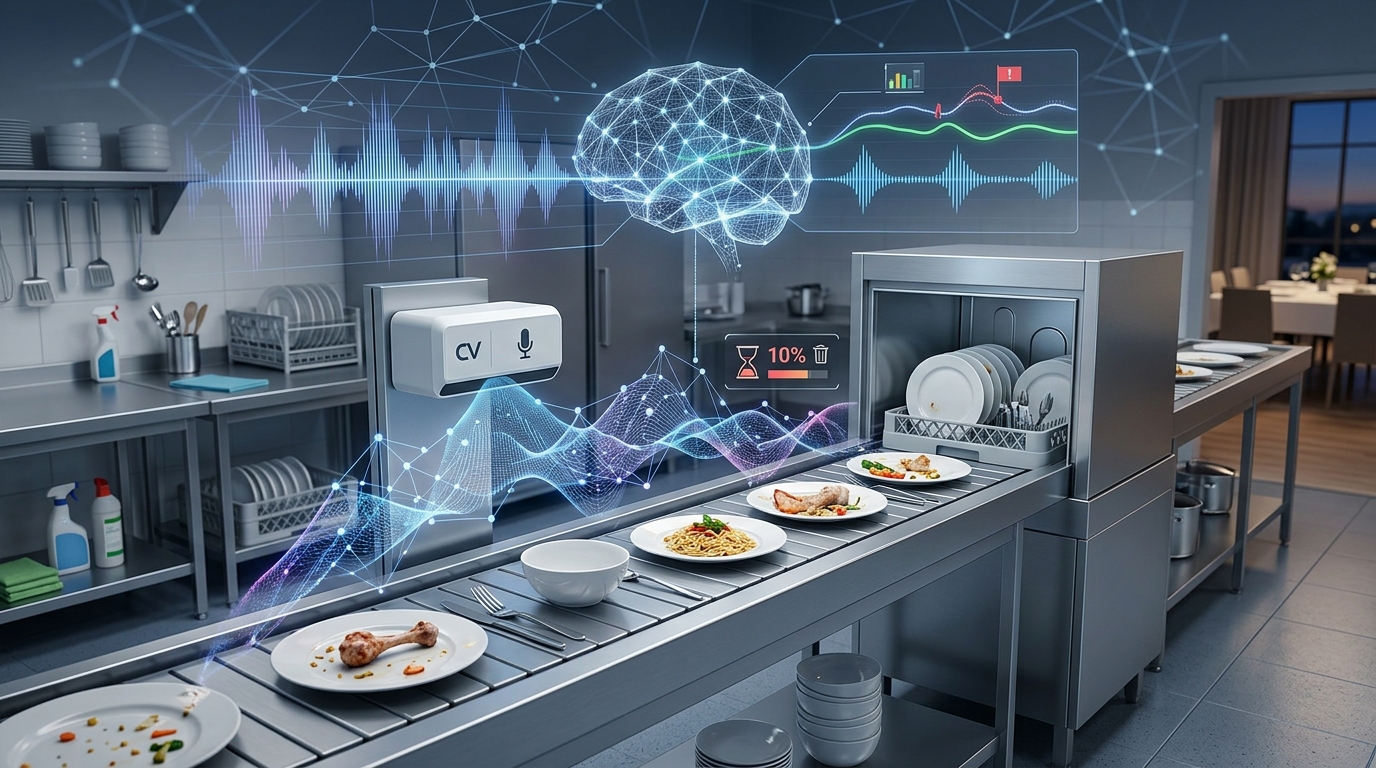
Historically, tracking plate waste meant paying dishwashers to manually log scraped food or hiring third-party consultants to conduct physical waste audits. Today, automated Dish Pit Computer Vision (CV) is eliminating that friction. By mounting specialized AI cameras above dishwashing drop-off stations, operators gain automated, real-time intelligence on what diners leave behind.
How Dish Pit Computer Vision Works
Dish pit computer vision systems operate passively in the background, requiring zero manual input from dishwashers or bus staff.
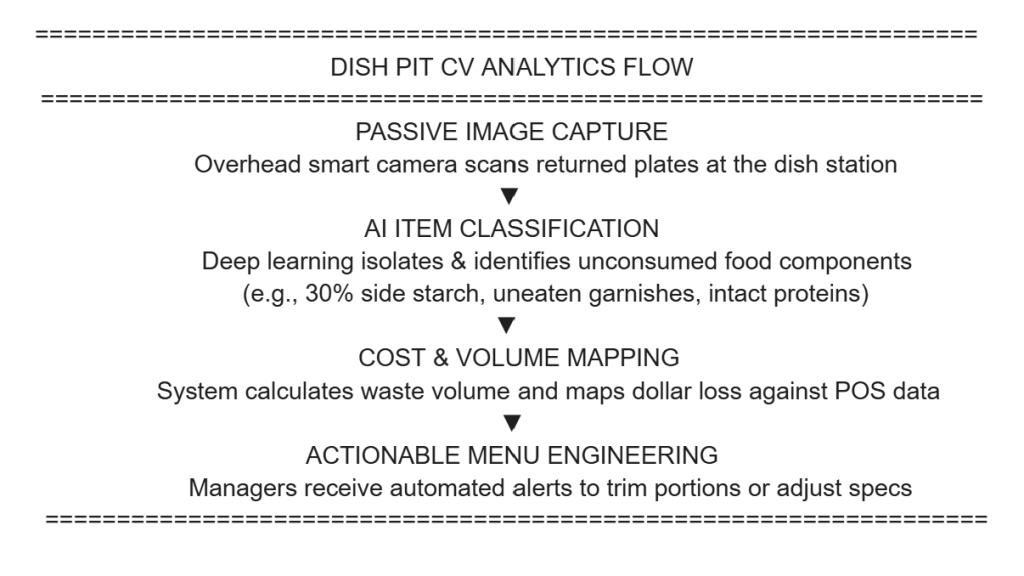
When bus staff set returned plates on the dish counter or conveyor line, an overhead smart camera captures a high-resolution image. Using advanced object detection algorithms like YOLOv11, the vision model segments the plate area, isolates the leftover food items and calculates the precise volume of discarded food. Platforms leveraging AI-enabled plate waste tracking, instantly process this visual data to identify exact ingredient waste — distinguishing between side dishes, garnishes and primary proteins. The platform cross-references this visual data with your POS sales logs and recipe cost cards, transforming garbage into actionable menu data.
Converting Plate Waste into Menu Engineering Strategy
For kitchen managers and culinary directors, plate waste analytics convert subjective observations (“It feels like people leave a lot of rice”) into hard data (“Our wild rice pilaf has a 34% trash-rate across dinner shifts”).
Here is how operators use these insights to protect food margins:
1. Precision portion trimming
If computer vision reveals that 70% of guests leave a quarter of their French fries behind on the signature burger plate, kitchen managers can immediately reduce the standard side portion from 8 ounces to 6 ounces. The guest experience remains uncompromised — since diners were discarding the excess anyway — while fry inventory consumption drops by 25% overnight.
2. Identifying recipe and execution errors
When a specific dish consistently returns to the dish pit half-uneaten, the problem isn’t portion size — it’s execution. If visual analytics reveal a sudden spike in leftover pork loin on Thursday nights, managers can investigate BOH line execution. Was the meat overcooked? Was a sauce reformulated? Rather than waiting for negative online reviews, computer vision acts as an early warning system for quality control.
3. Eliminating high-cost “plate fillers” and garnishes
Parsley sprigs, decorative kale, extra ramekins of house sauce and side starches often end up straight in the trash bin. Automated smart bin systems capture objective image logs of every discarded item above the waste bin. When operators visually see that hundreds of dollars in house-made aioli or decorative microgreens go unconsumed weekly, they can streamline plating guidelines to cut unnecessary prep labor and ingredient costs.
The Operational ROI of Plate-Level AI
Adopting computer vision in the dish pit provides clear financial and operational advantages over legacy audit methods:
- Zero workflow disruption: Kitchen staff do not need to push buttons, weigh bins or manually log items. The camera captures data passively in real time, preserving dish pit speed during peak volume shifts.
- Objective data: Removes subjective guesswork between kitchen staff and front-of-house managers regarding guest feedback.
- Immediate payback: According to global hospitality metrics analyzed by Winnow Vision’s food waste platform, commercial kitchens utilizing automated AI food recognition typically reduce food purchasing costs by 3% to 8% within months of deployment.
Implementation: Deploying AI in the Dish Pit
To successfully deploy dish pit computer vision without causing operational friction, follow this practical checklist:
- Optimize lighting and placement: Position the camera unit directly above the primary dish-scraping table, ensuring uniform lighting that is free from steam or heavy shadows.
- Integrate with POS data: Ensure your CV platform syncs with your point-of-sale system so waste logs automatically map to specific shift times, dayparts and menu categories.
- Review weekly, act bi-weekly: Avoid overreacting to single-shift outliers. Use weekly data digests to spot multi-week trends before adjusting standard recipe specs or prep sheets.
Stop Scrape-Loss from Sinking Profits
In an era of rising ingredient prices and tight labor margins, treating plate waste as an inevitable operational loss is no longer sustainable.
Dish pit computer vision gives managers complete visibility into what happens after the plate leaves the pass. By turning post-consumer food loss into clear, actionable data, restaurant operators can optimize portion sizes, refine recipes and protect their bottom line, one plate at a time.