
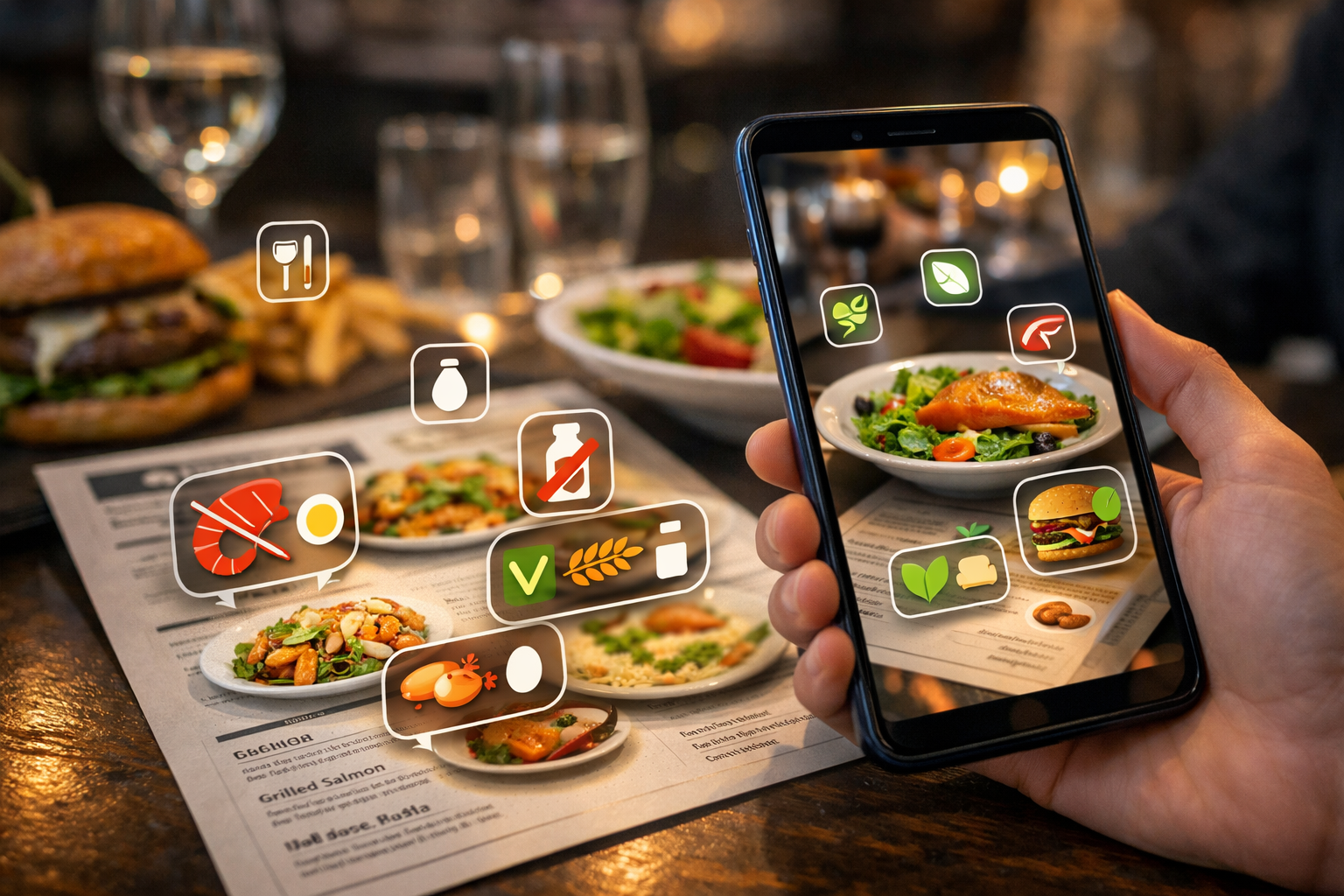
Static menus once defined the dining experience, but today’s guests expect more than a list of dishes and prices. With rising awareness around allergens, dietary restrictions and lifestyle choices, diners want transparency at their fingertips without the awkward back-and-forth with staff. Enter Augmented Reality (AR) overlays for digital menus: a technology that lets guests scan a QR code, point their camera at the menu and instantly filter or highlight dishes based on their unique needs. For operators, this isn’t just a novelty, it’s a powerful way to build trust, streamline service and cultivate loyalty among health-conscious customers.
Why Static Menus Are No Longer Enough
- Health-conscious diners increasingly demand clarity on allergens, ingredients and lifestyle compatibility (vegan, halal, keto, etc.).
- Traditional menus rely on footnotes or staff explanations, which are error-prone and inconsistent.
- Augmented Reality (AR) overlays allow guests to scan a QR code, point their camera at the menu and instantly filter or highlight dishes based on their needs.
How AR-Enabled Allergen & Transparency Overlays Work
- QR code scan: Guests scan a code on the menu or table.
- Camera overlay: The menu appears in AR, with allergen icons and filters layered over each dish.
- Customization: Diners can hide unsafe dishes (e.g., “no shellfish”) or highlight lifestyle-compatible meals (e.g., “vegan-friendly”).
- Real-time updates: Changes in recipes or suppliers automatically update across all menus.
Case Studies & Real-World Examples
- Wahaca (UK) launched a WebAR menu where diners see 3D dish walkthroughs, ingredient details and allergen info directly in their browser.
- Bareburger (USA) used Snapchat Lens Studio to let customers view AR burgers with ingredient breakdowns, enhancing allergen transparency.
- Makvali Digital Menus integrate allergen tagging and filters, ensuring compliance with EU and US regulations while building trust with diners.
Compliance & Accessibility Benefits
- Legal requirements: EU mandates disclosure of 14 allergens; California requires 9 from July 2026.
- Accessibility: AR menus can integrate WCAG-compliant features like readable fonts, color contrast and screen reader support.
- Privacy: Best practice is to process allergen filtering on the diner’s device, avoiding storage of sensitive health data.
Business Impact
- Higher order intent: Restaurants using AR menus report up to 23% uplift in order intent.
- Brand loyalty: Guests with allergies or dietary restrictions become repeat customers when they feel safe and understood.
- Operational efficiency: Servers spend less time answering allergen questions, reducing service bottlenecks.
Implementation Tips for Operators
- Start with WebAR: No app download required; guests scan and view directly in their browser.
- Standardize allergen icons: Pair icons with text for clarity across cultures.
- Leverage AI tagging: Platforms like Foodini use AI to automatically detect allergens from ingredient lists, reducing human error.
- Measure impact: Track engagement, order value and satisfaction to evaluate ROI.
Key Takeaways
- Static menus are obsolete in a world of rising allergen awareness and lifestyle-driven dining.
- AR-enabled overlays make allergen and lifestyle transparency seamless, interactive and compliant.
- Operators who adopt AR menus gain competitive advantage through higher order values, fewer errors and stronger guest loyalty.
Final Serving
AR-enabled allergen and transparency overlays are not just a tech novelty, they are a compliance safeguard, a guest loyalty driver and a revenue booster. For restaurant operators, the time to adopt is now.