About GrubHub Investigation You Need To Know

A New York City council member wants an antitrust investigation into GrubHub. The news, reported by the New York Post, comes after another report that the platform created tens of thousands of fake websites for restaurants in order to drive up commissions. In addition, New York’s Liquor Authority is working on new rules that will eat away at the ability of services like GrubHub to charge upwards of ten percent for online ordering and delivery.

Mark Gjonaj, who heads the city council’s Committee on Small Business, wants New York Attorney Letitia James to open the investigation. In a letter dated July 2, he says that it might be time for James to look at the terms of the 2013 settlement agreement that allowed GrubHub to acquire then-competitor Seamless. Gjonaj went on to say that he does “believe that GrubHub’s outsized market share and heavy-handed tactics could lead to artificially reduced competition,” resulting in higher commissions paid by small businesses.

In June, as the Post reports, an antitrust lawyer testified that GrubHub controls as much as 69 percent of the online-ordering market. GrubHub responded to the paper’s questions with a statement, denying any competition-reducing conduct and arguing “we face intense competition in New York City and throughout the country.”

Why Behind The Design of Restaurants Succeeds?

It was nearly two decades ago when Food Trends was founded by a European father-daughter team. Having grown up hosting friends and family around the dinner table, it was inevitable that they dreamed of starting a business doing what they knew best. What began as a vision of a family business has now expanded onto its third generation and is proud to be Certified Woman Owned & Operated.

Whether it is an intimate dinner or conference for over 2,000 participants, Food Trends Executive Management team is now led by son David Moskowicz. Food Trends offers menu design, staffing, rentals, venue, décor, and fresh ingredients from local vendors. The company’s growth led to a need to expand its food prep capacity so Moskowicz set his sights on finding the right facility to support that growth.

Here’s the Total Food Service inside look at the approach of the Economy Restaurant Supply design team as it helps expand one of Manhattan’s best caterers.


David Moskowicz, President, Food Trends, NYC

Michael Konzelman, Partner, Economy Paper and
Restaurant Supply, Clif
ton, NJ


David Moskowicz’s Approach:

Business has been booming for our Manhattan-based catering so much so that we needed an entirely new facility to be able to support our ongoing growth. Over the past two decades the company we have become is a premier catering provider in New York City. We are so proud of what we have built and the relationships that we have created with our customers. It really started with my mother’s vision. But the goal for our company is to get to the next level to be on the same page as high-end catering names like Abigail Kirsch and Neuman’s Kitchen.

When I got my degree in accounting and finance, at Lehigh University, I went to work in banking. After graduation I was never supposed to work in the family business, despite lending a hand and learning the ins and outs at a very young age. After a year, I knew that I could take many of those skills I had untried in college and bring them to our family business. My Mom had a handle on the menus and the quality of our food.

So I saw an opportunity with complimentary skills to create an entirely new automated inventory system that would enable us to grow. It has taken almost three years to find the right software and then to load our extensive inventory of SKU’s into the system.

At the same time, we had to begin to balance the ability to grow and the cost of locating that infrastructure. With a five story building in Manhattan, we maximized every single inch that we had. That included installing shelving that suspended from the ceilings and a table or shelf in every inch of workable space. We wanted to keep the entire production facility in New York, but it just didn’t make sense.

So clearly in order to balance growth and maintain quality, we began looking outside of the City. We found the perfect space in Little Ferry, New Jersey. In addition to the expansion of food production capacity, the addition of the Little Ferry facility has given us the opportunity to step back and enhance our customer’s experience.

The experience I’m trying to create in New Jersey, is one that’s ‘a one-stop shop’. Let’s say you’re a bride, we want to be able to manage the entire event creation process.

We want to first educate them on not only food, but on venues, entertainment and flowers. That would include providing different price ranges and options without overloading them.

So when we began working with Michael Konzelman and Economy, we showed him the 5,000 square feet of raw space and shared our vision. What we like about Mike and Economy is that they sell a solution where he’ll sketch out what he thinks is a great solution for a kitchen, taking into consideration your input. This includes multiple menu price ranges in which we offer several different standardized items that can also be customized with anything including special requests.

We got on the same page very quickly. Mike knew that our goal was consistency. He took the time to look at what we had done in Manhattan and then created a plan to build on that. His approach was to accomplish that with the right mix of technology. So he helped us select ovens, fryers, ranges, and griddles that make prep work easier and consistently.

Mike suggested a game changer for us: the use of Rational Combi ovens to enable us to standardize cooking times and more. We also needed two large ranges so that we maintained our flexibility.

I can’t say enough about how Mike and the Economy team created the right flow within such a large kitchen space. Our goal was to create a facility that eliminated walking. Because when you have such a large kitchen, you don’t want people walking back and forth. So the goal was to create stations for the culinary and prep team that maximized productivity and consistency.

We are thrilled with the new Little Ferry kitchen. With the New Jersey facility now up and running, we are ready to add new business in both New York and New Jersey. Most importantly, we now have a production facility that will lock in the excellent service we are known for. So whether it’s an intimate dinner or conference for more than 2,000 participants, we can accomplish our goal of treating each client as if they are “family.”

Food Trends Catering Economy Paper

Michael Konzelman’s Approach:

Food Trends has a unique challenge that we wish for all of our customers. They have built a wildly successful business in Manhattan. The result of the growth is that they simply needed more space to expand kitchen production capacity to be able to keep up with the demand. They had heard that Economy had built a number of catering kitchens in New Jersey.

They made the decision that in order to be able to grow the business, they would need to leave Manhattan. David and his team chose New Jersey for its access to the City. They had heard that Economy had built a number of catering kitchens in New Jersey. So that’s what brought us together. From the work we have done at venues in New Jersey, we have extensive experience in building and expanding bulk cooking kitchen facilities. Over the last 87 years, Economy has touched most of the best venues operating today.

Our approach to giving them the firepower they needed was to create a kitchen based around the very highest quality equipment. There’s simply too much at stake on a daily basis. So our strategy was based around a flow that includes the use of Rational combi ovens. There’s a reason why Rational just shipped their 10,000th unit, it works great. We’ve been with them from the very beginning. I know when we spec that oven that we can build a menu and the Rational unit will consistently deliver a high-quality product. So, we have utilized six stacks of the Rational combis to handle the demand.

The key to using this technology is understanding that it’s all about moisture. The very same moisture that combi cooking and re-therming delivers both consistent flavor and savings. You simply can’t reheat product, it dries out food. It’s not uncommon with the prep of steamship roast to generate savings of an additional two full roasts from every ten that a caterer is preparing. You do the math over a year of functions and it adds up.

The next step was to build out extensive counter and rack space so that we could quick chill product coming out of the ovens. This enabled the prep team to easily wrap and package product.

As we looked at Food Trends menu, we could see that a key component was high volume frying. David joined Economy at the NRA show in Chicago last year to look at everything available. We both agreed that the Ultrafryer was the perfect solution for the new facility. He loved the Ultrafryer technology that tells the team when it is time to change oil and to clean the unit. It’s clearly head and shoulders above any technology on the market today.

The next step in getting this right was the selection of the right walk-in boxes to support such a large production facility. So again, as we shopped the shows, we found new technology from Master-Bilt. They now build a box that features the ability to minimize the down time on the defrosting of their coils. The master controller creates a reverse cycle that is very energy efficient. We utilized four of those Master Bilt walk-ins with 50’ x 20’ footprints to give us the redundancy we needed.

One of our focuses as we look at moving this amount of food back into Manhattan is food safety. So, we are utilizing Cambro’s line of Camcarts to move everything safely to Food Trend’s customers. They are fully insulated throughout to hold and transport food safely and they don’t require any electricity. Cambro fits our goal of maintaining the integrity of the food we are moving and the units don’t rust or corrode like metal carts.

We are proud of our ability to listen to the needs of our clients. They told us that donuts have become a trendy feature for many of their client’s events. We showed them how the purchase of a Belshaw donut unit could create amazing donuts and pay for itself in a very short window. Look we know in the marketplace today that customers can buy equipment in many places. But the little things like buying a simple donut machine that has the potential to pay for the entire kitchen can make a difference.

David is one of the real visionaries that we have come across. So, the key to building this facility was to give him a design that could serve his needs now and have the capacity to grow with his creative vision.

The team at Economy takes the time to listen to the customer and bring their 87 years of experience together to design and build the facility tailored to that customers’ needs.

Number of Reasons You Should (Do) Employee Influence For Business

Does your business have an employee advocacy program in place to help amplify your digital marketing efforts?

Really, you only need to think about your own social media behaviors in this regard. Are you more likely to stop and read a post from a brand, or someone you know who works for that company?

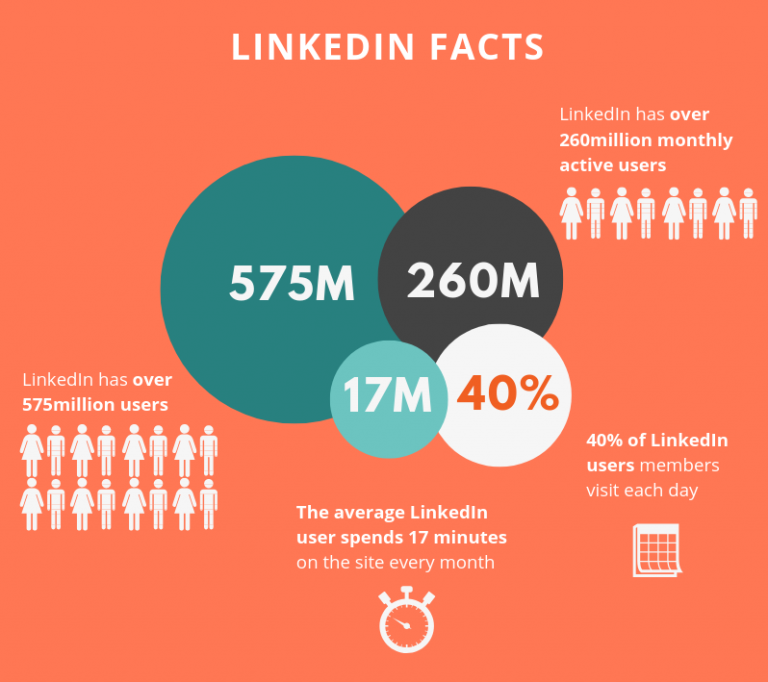
Underlining this, the team from DSMN8 have put together the below collection of stats and insights which highlight the benefits of employee advocacy for boosting your digital marketing efforts. 

Again, if you’ve not considered the potential of an employee advocacy program, maybe these stats will prompt a re-think.

(Note: LinkedIn’s most recent stats show that it now has more than 600 million members which does not directly equate to active users).

Why Ignoring demand for Online Ordering and POS Will Cost You Time and Sales

In today’s shifting restaurant scene, it takes more than great food, fantastic service and a cool atmosphere to gain an edge — you also need to have the right technology to keep up with changing customer preferences. Restaurants increasingly see the value in boosting the customer experience by using the latest point-of-sale (POS) technology as a hub for online ordering, mobile payments, digital receipts and loyalty programs.

That’s the message food service and restaurant industry professionals delivered recently through a TD Bank survey at the International Restaurant & Food Service Show of New York. Just more than half of respondents (52%) predict online ordering will have the biggest impact on payments in their industry over the next two years, yet 57% say they don’t currently offer it.

Younger, tech-dependent patrons increasingly expect dining establishments to use POS technology to make ordering and food delivery faster and the overall experience more enjoyable. Meanwhile, more restaurant owners and managers believe POS solutions will help them improve customer loyalty, increase sales revenues and stay competitive.

Establishments that forego this technology — or adopt piecemeal solutions that offer sub-standard or disconnected features — run the risk of falling behind competitors and losing customers. Fortunately, resources are available to help them find the best POS technology solutions for their businesses.

Technology-savvy customers have high expectations

Millennial and Gen-Z consumers, fast becoming the driving force behind restaurant revenues according to a recent National Restaurant Association report, are accustomed to accessing things they want and need quickly, and usually on their phones (but not via a phone call). Consequently, they’ll seek out shopping, entertainment and dining options that provide these benefits through seamless online ordering and payment technology, making premium POS solutions a necessity.

For restaurants, that means outfitting themselves with the kind of POS solutions that offer features that are most in demand. Almost three-quarters of survey respondents (74%) identify mobile payment acceptance as the POS feature with which they’re most familiar. In addition, mobile payments rank as the most appealing feature of POS systems, 66% of respondents say, followed by digital receipts (52%) and loyalty programs (36%).

Providing the solutions

Running loyalty and rewards programs are an easy way to create repeat customers. And technology can help make introducing these programs more palatable for restaurant owners.

Most of this year’s survey respondents (71%) say they do not offer any type of rewards or loyalty program, even though this year’s respondents identified it as the third most appealing POS feature. One year earlier more than half of those polled agreed rewards programs would help their businesses. Furthermore, fewer than half of survey respondents (49%) say they currently use a POS system that offers additional services such as data capture and payroll functionality.

Restaurants can turn to a merchant solutions provider to help them reconcile this dichotomy of customer demand and lack of supporting technology. Merchant solutions providers specialize in POS technology and can help businesses evaluate different products and features and decide what works best for them.

Your waiter will be with you shortly

When it comes to POS technology, merchant solutions providers offer a wealth of services and products that go beyond a card swipe and address the latest data and payments trends. Popular choices include app-based systems that work on multiple devices.

A tablet-based device, for instance, can be a good starting point for managing reservations, staff scheduling or rewards programs. Linking to a cloud-based system instead of relying on hardware makes this solution more adaptable to whatever technology comes next.

Getting more specific, POS solutions now come with a host of convenient features that restaurants should consider. Depending on their operation, restaurants should look for systems that let them:

  • Assign waitstaff and transfer orders between servers
  • Build a customized floor plan
  • Manage table turnover by monitoring open tables and seat guests more rapidly
  • Modify orders with detailed descriptors
  • Send orders to the kitchen as soon as they’re placed
  • Split bills to customers’ specifications
  • Offer guests credit, debit, contactless or mobile payment options
  • Launch promotional campaigns
  • Receive feedback directly
  • Offer and accept gift cards
  • Manage a full loyalty program

Today, leveraging emerging technologies to set up loyalty programs, online ordering capabilities and mobile payment solutions is fast becoming a necessity. These tools help restaurants meet customer expectations, particularly among younger patrons. Savvy restaurateurs should look to merchant solutions providers for a one-stop shop to help them stay abreast of these rapidly advancing industry trends.

Bringing restaurant leaders together

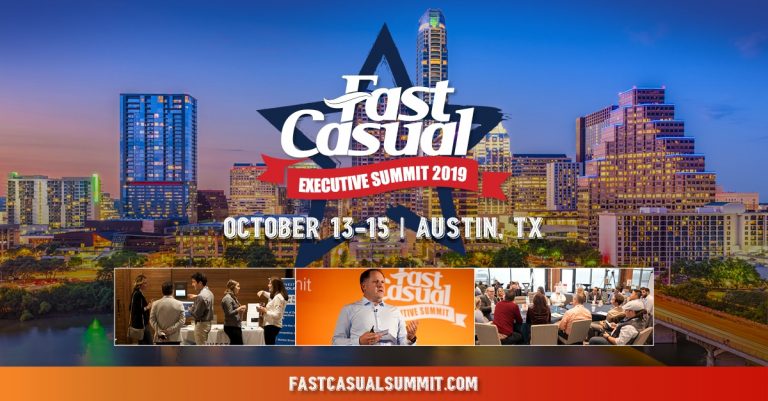
FAST CASUAL EXECUTIVE SUMMIT

October 13-15, 2019 | Austin, TX

ABOUT THE SUMMIT

Now in its 14th year, the Fast Casual Executive Summit is a unique opportunity for everyone involved. Much more than “just another trade show,” it’s a chance for restaurant executives to get together in a casual work setting and learn from one another. Interactive sessions delve deep into topics that are on the minds of restaurant leaders today, and the Summit’s format allows the collective wisdom “in the room” to be distilled into concrete, actionable ideas that attendees take home with them.

This exclusive event is reserved for top-level restaurant executives — leaders and innovators of the fast casual industry. We bring together an experienced group of restaurant professionals whose common interests and concerns are brought to the table for open discussion in a fun and relaxing environment.

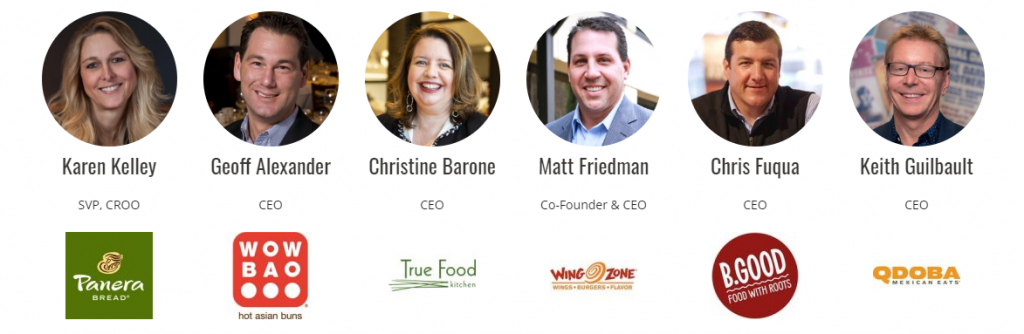
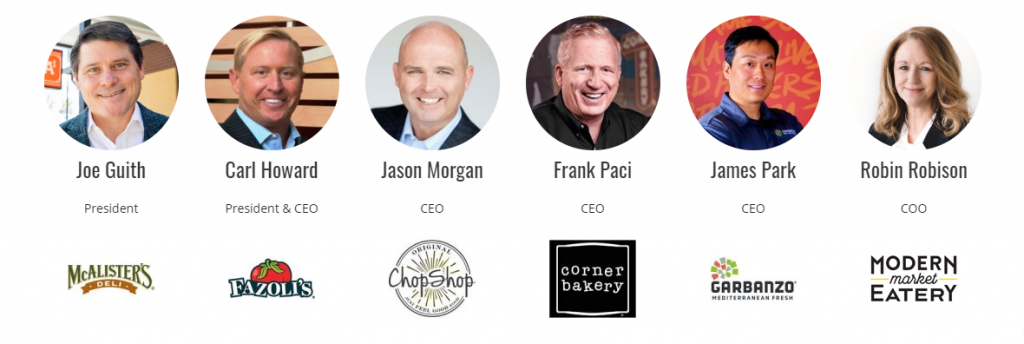
FEATURED SPEAKERS

AI’s power to simplify, magnify QSR digital marketing

For more than a decade, Fortune 500 companies have harnessed AI’s phenomenal power to increase the effectiveness and overall ease of implementation of their digital marketing initiatives. But for smaller entities, like many QSRs, this tool and its many manifestations has only been truly accessible in recent years. As a result, many QSR leaders still maintain a “hands-off approach” to the tool, considering AI to simply be one of those buzzwords or abstract concepts that has no real application in their business. 

But, whether AI’s perceived complexity or other unknowns are holding your brand back from taking a closer look at this tool, rest assured that it’s not as tough to grasp as it may seem and that by acquiring even a basic understanding of it, brands can soon find ways to put AI to use to elevate digital marketing efforts in ways that drive more diners in to rack more sales up. 

Toward that end, here are four ways QSRs can use AI for digital marketing:

 
Automated advertising

The world of digital marketing is complex and for a marketing manager overseeing hundreds of restaurants or a local owner running the day-to-day operations, there’s simply no time to do all the heavy lifting required to run the most effective campaign. Human analysis and optimization of digital marketing campaign, which should ideally occurs several times daily, are time-consuming and costly. 

But marketers are using AI and machine learning tools like those of my company to help automate advertising, so managers can focus on daily business functions instead of social media marketing campaigns and the budget allocations for them. In fact, since machine learning deploys 24/7 algorithmic-based optimization that work toward a QSR’s marketing objectives, a sizable competitive advantage is already established. For instance, one brand that we recently worked with to implement machine learning reported its usual seven-day turnaround for digital marketing creative was cut to just 107 seconds. 

Predictive customer behavior

New technology has hit the market that can predict what consumers will buy with an incredibly high level of accuracy by using data and deep learning, a subset of AI, to predict what consumers will do and how they’ll do it. The easiest way to think of this technology in action is when you log in to Netflix or Amazon and are served with suggested shows to watch or products to buy. 

If you’ve ever felt like these services “know” you, well, that’s AI at work. As technology continues to advance, brands will slowly get rid of the “customer profile” they’ve been using to market and instead hone in on each specific customer and his or her habits to better serve them and drive revenue. 

Ordering via voice search

With the growth of Amazon’s Alexa and Google Home, several national brands have incorporated voice-activated ordering. Domino’s was an early adopter in 2014 with the launch of its virtual, voice-ordering technology “Dom” and Wingstop partnered with Alexa in 2017 to make ordering easier. While voice-ordering is still in its infancy — bringing in only about $2 billion annually now, OC&C Strategy Consultants is quoted as saying that will jump to $40 billion in 2022.

Chatbots

If you’ve ever visited a website where a small chat function appears on your screen asking something simple like, “How can I help you today?” or if you’ve ever asked Siri where the nearest Dunkin’ is, you’ve interacted with a chatbot. Chatbots use AI systems that act as customer service representatives. Users interact with chatbots via voice or text, much as they would do with a human. 

Chatbot developers create scripts of potential customer scenarios, which are then programmed to create a software application. Chatbots can provide on-demand responses to common questions, which can save brands time and money and even lead to higher customer satisfaction. In fact, business solutions review platform, G2, said that by 2020, 85% of consumer interactions will be handled without a human.

What’s next?

The focus on AI has produced significant growth in the tech segment over the last five years, with computers now powerful enough to handle sophisticated models that can solve new and different approaches to problems. While no one knows what AI’s effect on our society will be in the long term, we can all agree it is and will be disruptive. With this in mind, brands that take advantage of its applications early on are well-positioned to get and stay ahead of the competition and earn market share.

Sonic provides a new way to ‘drink’ at the drive-in

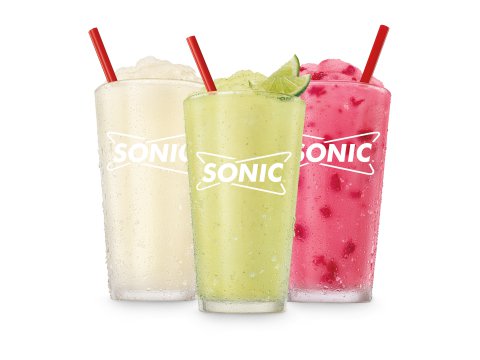
Drinking at the drive-in get a new interpretation at Sonic this summer, where the QSR is introducing a new trio of Mocktail Slushes, including Strawberry Daiquiri, Piña Colada and Reaper Spicy Margarita. In fact, they’ve even got a happy hour from 2 to 4 p.m. when they’re all available for half price, a news release said. 

Sonic considers the star of this particular alcohol-free show to be the Reaper Spicy Margarita, which it says is infused with “flavor” from one of the world’s hottest chili peppers, the renowned Carolina Reaper, which despite the ice surrounding it the brand promises will still set those who partake on fire. 

For the tamer — and maybe saner — the Strawberry Daiquiri combines strawberries and coconut flavor, while the Piña Colada goes full-on tropical with coconut and pineapple flavor — all, of course, slush-ified. 

“With Mocktail Slushes, we captured that summertime mocktail state of mind, combining tropical flavors with our icy, cold Slush so you can enjoy vacation vibes from the comfort of your car,” Sonic Vice President of Product Innovation and Development Scott Uehlein, said in the release. 

The LTO slushes are available now at the chain’s 3,600 locations, though the brand did not provide an end date for the items.

4 Key Clues To The Future Of Facebook’s Libra

It’s been a little over two weeks since we all got our first look at Libra and Calibra. No doubt there will be countless news stories to come, and opinions on why it will or will not fly. Here are the things I will be watching for over the coming months, things that I think provide a useful framework for understanding how Libra and Calibra’s future takes shape:

How many of the 28 Founding Association Members will pony up $10 million to remain members.

A point of enormous confusion in the press is what the 27 non-Facebook companies have agreed to do at this point. That agreement, as outlined in a Letter of Intent, is to show up at meetings to help shape Libra’s governance, charter and mission. That’s it. No money exchanges hands until those meetings have happened and everyone agrees to what “it” is. Among other things, that will depend on what it means to be an Association Member.

Whether being an Association Member requires an agreement to validate and process transactions on the Libra network.

The Facebook Libra whitepaper states that Association Members must agree to operate as validators on the network. For many regulated, compliant global players like Visa, Mastercard and PayPal, that could come as a big ask, particularly since it means saying yes to processing transactions that use the Libra cryptocurrency.

Given the regulators’ antipathy toward cryptocurrency, that could be problematic. Things could change if regulators give Libra the green light, but the light right now seems firmly stuck on red.

What isn’t helping – and I am sure that Facebook has had this same thought – is bitcoin’s surge post-Libra’s launch. If I were Facebook, I’m not sure I’d be thrilled to be positioned as the catalyst for bringing bitcoin and all of its big-time baggage back from the depths of demise. I’m not sure that many of the current players who’ve agreed to take a seat at the table like that much either.  For sure, it just muddies the context with which regulators may look at Libra.

So, the big development to watch here is whether there will be tiers of membership that allow members to listen, observe and vote if they don’t want to participate as part of the network from a processing standpoint. To most of these players, ten million bucks is chump change, and worth the investment in keeping close tabs on what’s going on.

Who the other 72 Association Founding Members will be.

Facebook has stated they will remain actively involved with Libra throughout the remainder of 2019 in order to recruit other Association Founding Members. The goal is to hit 100 – and their $1 billion threshold for funding Libra and creating a reserve for the Libra currency. (Ten million dollars times 100 members equals $1 billion.)

In theory, as I mentioned in my initial piece, creating an Association to govern Libra isn’t a nutty idea – it is the same structure and governance the card networks used to start and ignite their global networks.

But there are two big differences.

Visa and Mastercard didn’t, as part of the ask, require banks to do business using a fake currency. Further, all of the members had similar interests, operating principles, regulatory constructs and shared goals.

The only way Libra has a shot at becoming anything close to a global payments network is to make sure its membership checks that box, too, so the governance reflects the input of like-minded players. That seems like it could represent a massive challenge today, given that the network and the currency are comingled – and one can’t exist without the other.

If regulators can’t see past the red light of crypto, and membership requires transacting on the Facebook network, that is likely to keep global banks out. It will, however, attract the zillions of crypto enthusiasts and crypto payments gateways who now view Libra as a path to their own legitimacy. Having a disproportionate number of those folks at the table increases the risk that the Association and Libra will evolve into a rogue set of alt payments rails run by people who have been waiting a decade for this big break.  That would not be a good development for Libra.

Whether Libra can get past all of this in a relevant time frame.

For Libra to ignite, everything has to change, and for everyone: regulators, networks, banks, merchants, acquirers, consumers, businesses, governments. And in every single country on the planet. And all at once. I can’t think of anything that has ever tried to do this and succeeded, in a time frame that is relevant to anyone. Particularly when the only way to launch a new currency is to have central banks say yes and governments mandate its use.

Today, that is a material concern for Facebook and Libra. Time is an important currency, and given the pace of technology and the global scale that payments already enjoys, it poses more of a threat to Facebook than Libra does to those it hopes to serve, and disrupt.

Consumers and merchants have many other options and will continue to deepen those relationships. Banks and networks have their own traction, operating at scale globally, and with a focus on financial inclusion, in a compliant and regulated way, and without Facebook’s reputational and regulatory baggage. Regulators today have zero incentive to rush their decision about regulating crypto, not just Facebook’s Libra. And given their current attitude toward Facebook, they have no real incentive to cut the social network much of a break.

Time is an important currency for investors who, two years ago, were already impatient for Messenger’s monetization strategy, and were then told to be patient. For Libra and Calibra, their monetization strategy involves a potentially decades-long wait, laced with the uncertainty and expense of getting both off the ground and at scale. It’s hard to understand why, with Facebook’s many other issues, they decided on a payments monetization strategy that comes with so much controversy, so much complexity and has little chance of success when other viable options were available to them.

It’s more likely that Libra and Calibra will become Messenger’s monetization strategy, but for Facebook and about Facebook. The 2020 version of Facebook Credits, but using the magic elixir of blockchain crypto rails instead inside of their own ecosystem.

Even without an ignition strategy, that will likely end the very same way.

How Real-Time Payments Are Changing Businesses Pay Out Tips

From making restaurant reservations to ordering meals, a growing share of U.S. consumers are using smartphones as part of their dining experiences. In turn, restaurants are fast embracing mobile payments as they look to deliver on the speed and convenience their customers have come to expect.

As restaurants and QSR chains upgrade their payment systems to accept mobile and other forms of digital payments, they are also adopting instant payments for wages and tips paid to their workers.

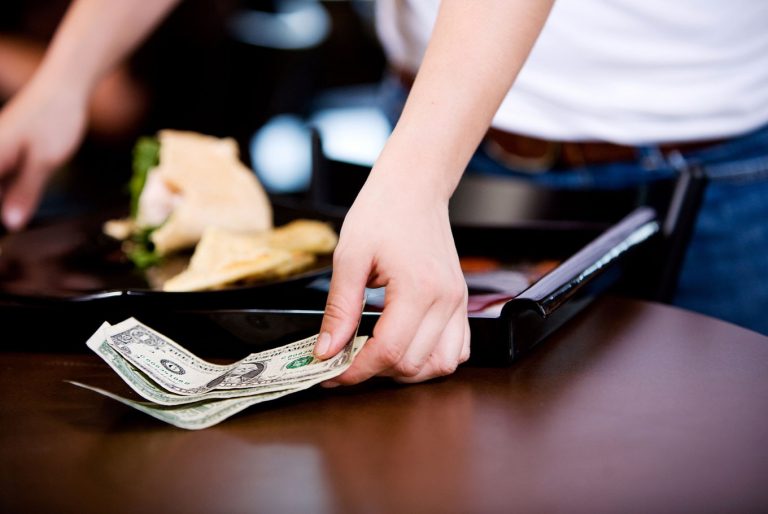
Tips and gratuities are vital to the approximately 2.5 million Americans working as restaurant servers. Most of these workers earn the bulk of their money in cash-based tips, which is becoming a problem as consumers increasingly go digital.

Restaurants are looking to solve this problem by embracing tools that not only allow consumers to use their phones to pay, but also tip their servers.

Instant Tipping in Restaurants and Beyond

Instant tip payouts are beneficial for restaurants, servers and diners alike. Restaurants equipped with the necessary tools can disburse real-time payments to staff, eliminating delays and the need to divvy up cash at the end of a shift. California-based startup Kickfin alerts servers when they receive money with text or email notifications, and wages are instantly pushed to whatever account a server chooses, including debit, credit or prepaid cards, as well as online wallets.

In the U.S., delivery apps like DoorDash and Postmates have looked to meet this need by providing digital tipping options on their apps, which suggest a 15 percent gratuity for orders. Ridesharing apps like Uber and Lyft have similar offerings. Tipping methods such as these are becoming more important to customers who are often unable to tip at restaurants when paying with cards or mobile.

Some restaurants in the U.K. are looking to provide better tipping experiences with apps like Gratuu. The mobile tipping app, which launched in 2014, enables users to tip individual servers or deposit money into a virtual tip jar by scanning a QR code or typing in a unique digital identification number. Gratuu currently charges a 3.5 percent fixed rate for every transaction. The company has seen use outside of restaurants by businesses such as hair salons, where consumers can often pay for haircuts digitally but must remember to carry cash to tip their stylists.

Many startups have noticed the demand for such services, as restaurants and salons are among many other businesses in which workers rely on tips. One such platform is mobile tipping app BRAVO, which allows users to search for and tip service workers from a variety of industries listed on the app. Transactions can be made without either party having to exchange personal information. One downfall is that the app takes a 2 percent fee for all transactions and tips made on its platform.

These apps, as well as more ubiquitous services like Venmo, are aiming to change how consumers approach paying and tipping. They provide services that cater to today’s digital consumers while also making it easy for service workers to receive payouts for their work.

Tipping and the Future of Payments

Consumers worldwide are using digital payments so frequently that withdrawing cash can almost be considered a chore. Workers who rely on tips are going to start expecting to receive their tips and wages in the same ways that consumers pay. Restaurants and other businesses in the service industry that want to remain competitive will need to follow consumer demand and innovate their payment experiences.

July 4 – O’Charley’s Special

July 4 means fireworks, great food and fun times with friends and family, and O’Charley’s is making the food part even easier with two deals available July 4-7:

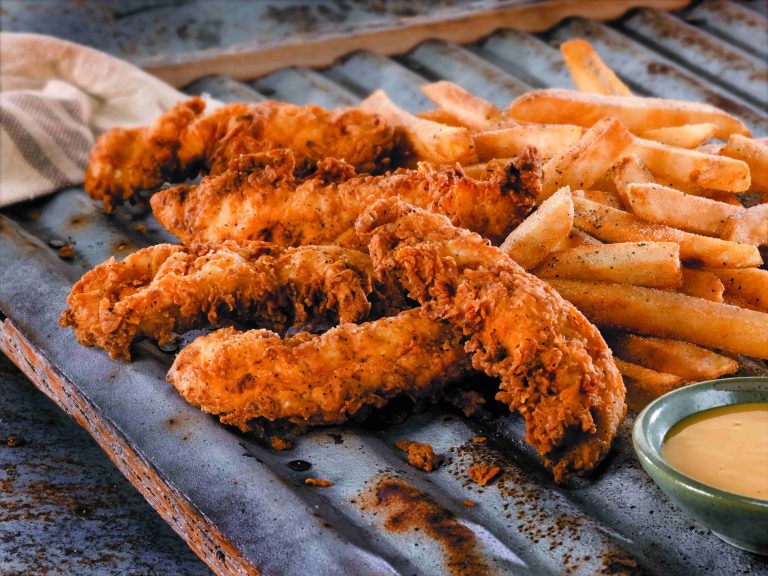
  • O’Charley’s Famous Chicken Tenders Family Dinner – 20 tenders, eight sides and three dipping sauces for only $25
  • Baby Back Ribs Picnic Pack – Four portions of tender ribs (BBQ or Nashville Hot), four sides and one whole pie for $40

O’Charley’s—known for its FREE Pie Wednesday—has also brought back its tender, flaky double-crust Peach Pie filled with sun-ripened freestone peaches for a limited time this summer. Guests can take a whole pie home to share (or not, we won’t judge) for $14.99. Apple pies are also available. (After all, what’s more American than apple pie?)