
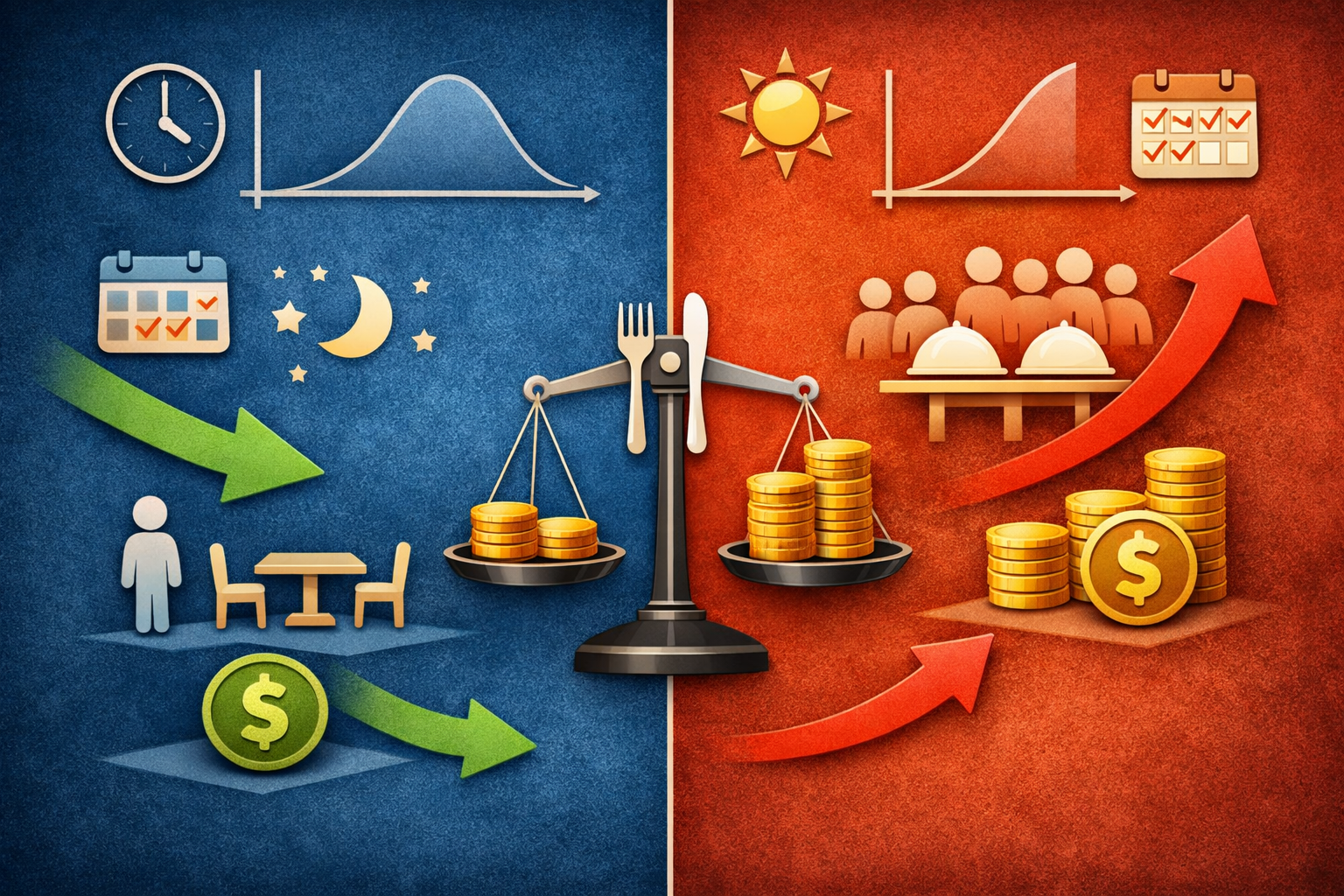
If you’ve spent any time in a hotel or booked a flight recently, you’ve experienced dynamic pricing firsthand. You know the drill: the seat that cost $200 on Tuesday is suddenly $450 on Friday because a holiday weekend is looming. For years, the restaurant industry watched from the sidelines, hesitant to touch a strategy that felt a bit too “corporate” for the world of hospitality.
But as we settle into 2026, the conversation has shifted. With labor costs, ingredient volatility, and energy bills reaching all-time highs, many operators are realizing that a static menu price — one that stays the same whether it’s a sleepy Tuesday at 3:00 PM or a slammed Saturday at 7:00 PM — might be a relic of the past.
The challenge? Implementing these changes without making your regulars feel like they’re being “surged” out of their favorite booth. Let’s look at how to navigate the world of dynamic pricing while keeping guest trust at the center of your plate.
What Dynamic Pricing Actually Looks Like in 2026
First, let’s clear up a common misconception: dynamic pricing isn’t just about raising prices when you’re busy. In fact, for many successful operators, it’s actually a tool to drive traffic during slow periods. According to the 2026 State of the Restaurant Industry report, the modern guest is more “intentional” than ever. They are willing to trade convenience for value. Dynamic pricing allows you to offer that trade-off.
Think of it as the “Happy Hour” model on steroids. Instead of just a blanket discount on rail drinks from 4-6 PM, a dynamic model uses your POS data to adjust specific menu items or delivery fees in real-time.
Pillar 1: Transparency is Your Best Friend
The fastest way to lose a customer’s trust is to make them feel like they’ve encountered a “hidden fee.” If a guest sits down and sees a burger for $15, but their check comes back at $18 because of a “peak hour surcharge,” you’ve likely lost that customer for life.
The secret to success is visibility. Digital menu boards and updated QR codes make this easy. If the price on the screen is the price they see, the “why” matters less than the “what.” Successful brands are even using this as a marketing win, highlighting “Off-Peak Savings” to encourage budget-conscious diners to visit during shoulder hours.
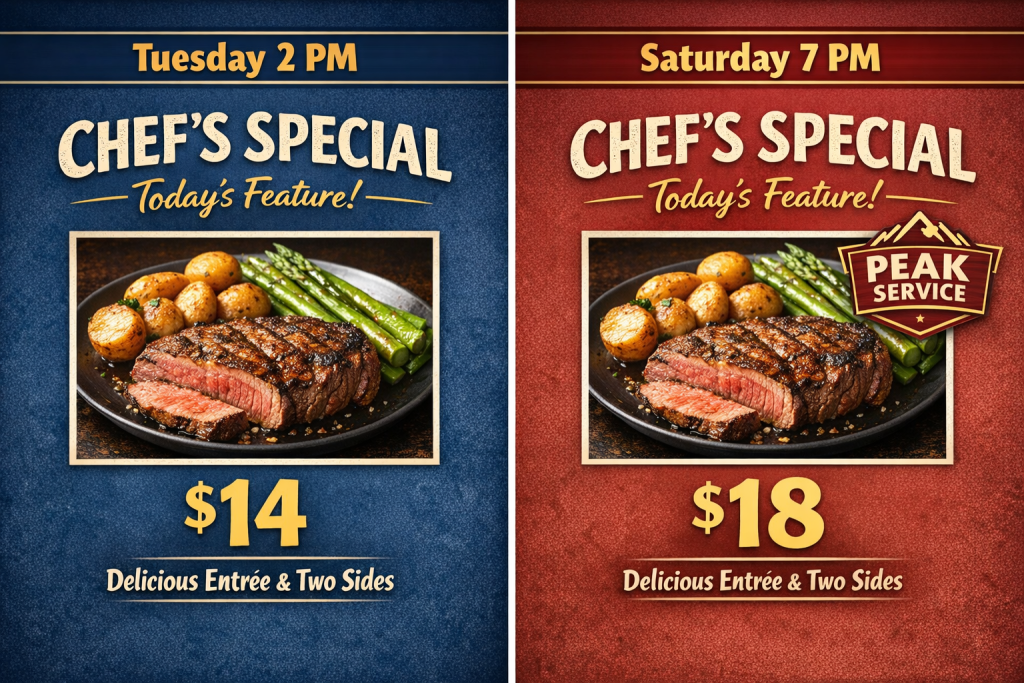
Transparency builds confidence. When you clearly show the factors influencing your pricing – like time of day or delivery demand – guests feel empowered by choice rather than victimized by an algorithm.
Pillar 2: Focus on “Choice,” Not “Penalty”
When you frame dynamic pricing correctly, you aren’t “penalizing” the Saturday night diner; you’re “rewarding” the Tuesday afternoon diner.
Examples of value-driven dynamic tactics:
- The “Early Bird” 2.0: Offer a 15% discount on all orders placed before 5:30 PM.
- The “Rainy Day” Special: Use IoT and weather data to automatically drop delivery fees or offer a “Soup & Sandwich” discount when the forecast turns sour.
- Inventory Clearing: If your CDP (Customer Data Platform) shows you have an excess of fresh sea bass on a Sunday night, the system can automatically lower the price to ensure you clear the inventory rather than wasting it.
This approach aligns with the shift toward value-based dining in 2026, where diners are trading down from high-cost delivery to more affordable pickup or off-peak options.
Pillar 3: Use Technology as the “Governor”
You don’t have to sit at your computer manually changing prices every hour. Modern POS systems and third-party delivery integrations now have “guardrails” you can set.
For instance, you can tell your system: “Never raise the price of my ‘Plow Horse’ items (high volume, low margin) by more than 10%, but feel free to discount them by up to 20% if lunch traffic drops below X covers.”
By using AI-driven tools, you ensure that the price fluctuations remain within a “reasonable” range. This prevents the “Taylor Swift effect,” where prices spiral so high they cause a PR nightmare. Most guests understand a $1 or $2 difference for the convenience of peak dining; they will not understand a 50% jump.
The Human Element: Training Your Team
Even with the best tech, your front-of-house staff is your frontline for trust. If a guest notices a price difference and asks about it, your server shouldn’t say, “I don’t know, the computer just does that.”
Train your team to explain the value:
“We’ve actually moved to a flexible pricing model so we can keep our lunch prices as low as possible for our regulars! During our busiest weekend hours, there’s a small peak-hour adjustment that helps us maintain our staffing levels and quality, but if you join us on a Tuesday, you’ll find some great deals.”
Conclusion: Balancing the Bottom Line with the Guest Experience
Dynamic pricing isn’t a “set it and forget it” strategy. It requires constant monitoring of your guest feedback and your sales data. In 2026, the most successful restaurants aren’t the ones with the highest prices; they’re the ones that use data to create the most flexible experiences.
When you offer your guests the choice between a premium-priced peak experience and a value-driven off-peak visit, you aren’t just optimizing your revenue. You’re building a sustainable business model that can weather any economic storm.