
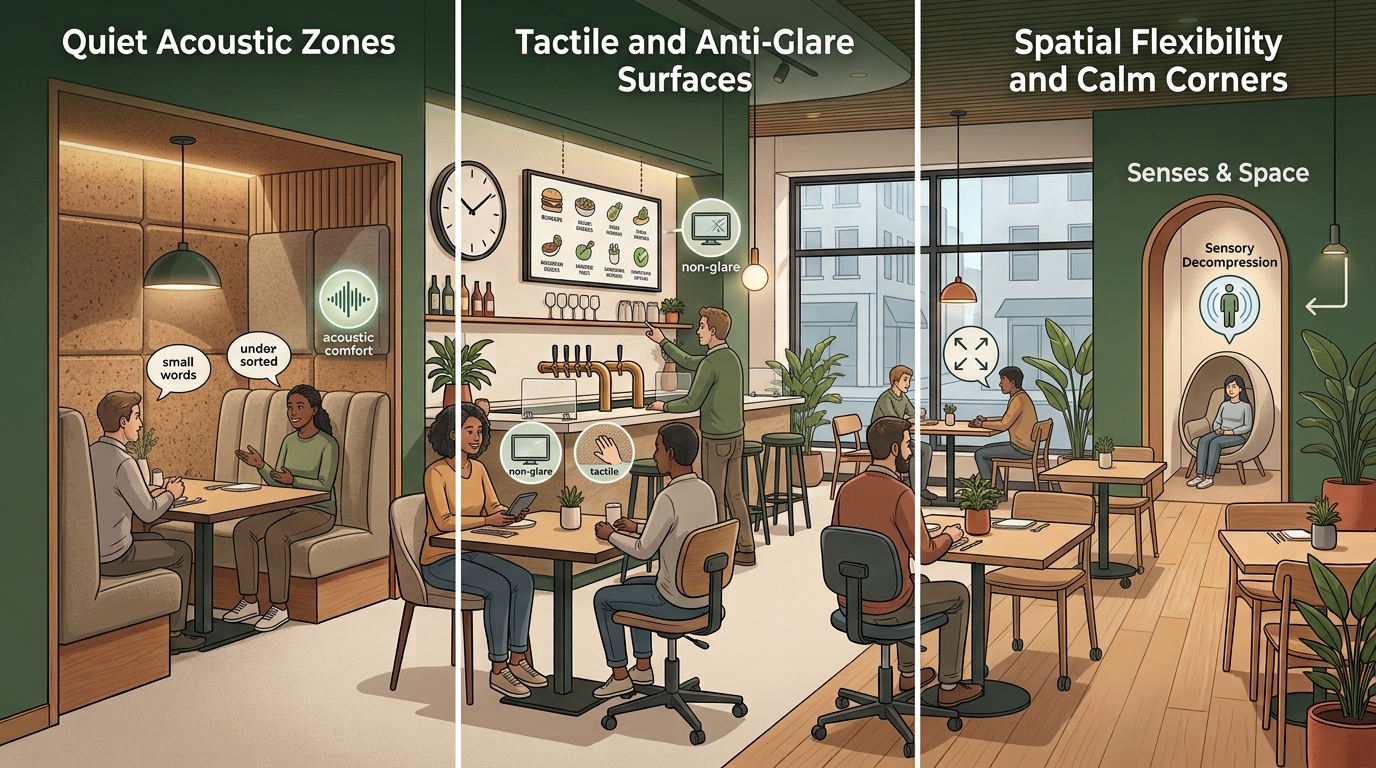
For many people, going out to dinner is a simple pleasure, a chance to relax, catch up with friends and enjoy a great meal. But for neurodivergent individuals, including those with autism, ADHD, sensory processing sensitivity or PTSD, stepping into a restaurant can sometimes feel like stepping straight into a wall of overwhelming sensation. The sharp clatter of silverware on hard porcelain, buzzing fluorescent bulbs, echoing laughter and tight seating arrangements can quickly turn what should be a peaceful evening into an exhausting exercise in sensory management.
Designing spaces with sensory comfort in mind isn’t about transforming your dining room into a quiet library or stripping away your concept’s unique energy. Rather, conducting a neurodivergent restaurant audit is about creating intentional pockets of calm, offering gentle choices and ensuring that every single guest feels welcomed, grounded and understood the moment they step through your doors.
Understanding the Sensory Landscape
To design a more inclusive space, it helps to step back and observe your restaurant through a multi-sensory lens. Think of a sensory audit as a walk-through from the guest’s perspective, paying close attention to four main environmental triggers:
- Acoustics: Hard industrial surfaces like polished concrete floors and exposed brick walls tend to reflect sound continuously, causing noise levels to compound quickly during peak hours.
- Lighting: Bright, direct overhead lighting or flickering fluorescent fixtures can cause eye strain, physical headaches and heightened nervous system arousal.
- Spatial layout: Tables packed closely together can feel claustrophobic and make guests feel exposed or hyper-aware of surrounding movement.
- Predictability: Surprises in menu descriptions, unclear pathfinding to restrooms or sudden loud noises from open kitchen pass-throughs can elevate underlying stress levels.
By softening these key areas, you build a space that feels naturally inviting to sensitive nervous systems while simultaneously improving comfort for everyone in the room.
Gentle Design Tweaks for Sensory Comfort
Creating a sensory-friendly dining room doesn’t require a full structural renovation. In fact, many of the most impactful adjustments are surprisingly simple and cost-effective.
1. Soften the sonic environment
Noise is often the single largest hurdle for neurodivergent diners. According to research on Autism-Friendly Acoustic Design Solutions, small acoustic modifications can dramatically lower ambient anxiety for guests and staff alike. Consider integrating felt acoustic panels under table tops, hanging decorative sound-absorbing ceiling baffles or placing soft upholstery and plush banquettes along high-traffic walls to absorb stray echoes.
2. Ditch the glare for warm, adjustable lighting
Lighting sets the emotional tone of your space. Ditching cool-toned bulbs in favor of warm, dimmable LED fixtures (around 2,700K) creates an immediate sense of warmth and ease. Placing small, adjustable table lamps or soft candles allows guests to control their immediate visual space without affecting the broader room ambiance.
3. Offer clear information before arrival
Uncertainty often breeds anxiety. As highlighted in KultureCity’s sensory accessibility standards, providing detailed visual guides and clear online menus allows guests to plan their visit in advance with confidence. Publishing photos of your seating areas, outlining your quietest dining hours and clearly marking menu allergens on your website gives neurodivergent guests peace of mind before they even make a reservation.
Training Your Team with Compassion
Physical design fixes lay a fantastic foundation, but human warmth and genuine understanding complete the experience. Hospitality training rooted in sensory awareness empowers your service staff to recognize guest cues and respond with quiet empathy.
Thoughtful Service Adjustments
| Common Trigger | Supportive Service Response |
| High ambient noise | Seating at a corner or booth edge |
| Visual overstimulation | Dimming table-level lighting |
| Menu overwhelm | Offering clear, concise descriptions |
When service staff are trained to honor small guest requests without judgment — such as lowering background music near a table, providing a quiet corner booth away from the main kitchen door or allowing extra time to order — it transforms a standard meal into an extraordinary refuge.
A Better Dining Room for Everyone
Designing for neurodiversity is not a niche concession; it is simply great, compassionate hospitality. When you lower harsh reverberation, warm up glare-heavy lighting and provide predictable, gentle service, you aren’t just helping neurodivergent diners, you are creating a richer, far more restorative atmosphere for every guest who walks through your door.