
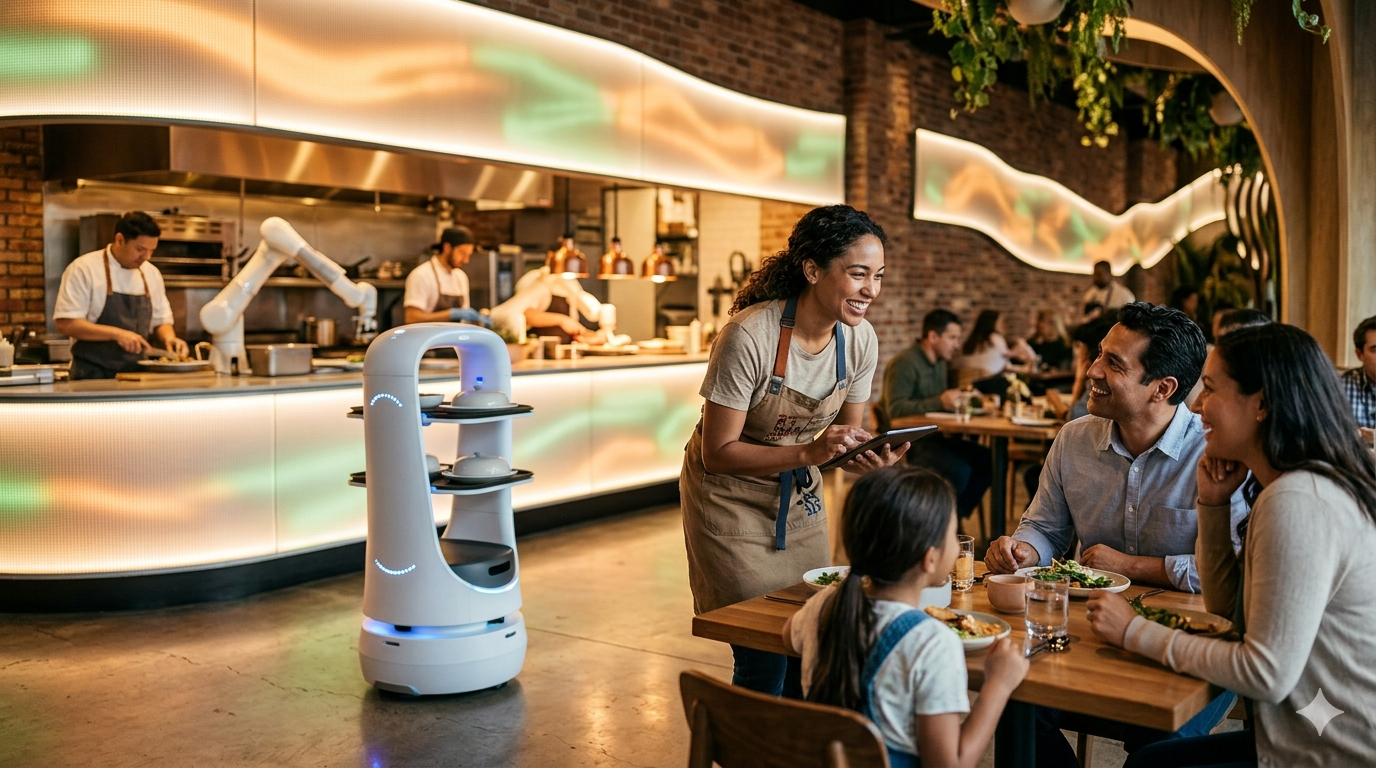
The restaurant industry is no longer just “talking” about automation, it is living it. From robotic food runners navigating busy dining rooms to AI-driven predictive ordering systems in the back of house, technology has become the silent partner every operator needs to survive rising labor costs and shifting guest expectations.
However, as we lean further into the “service now” era, a dangerous pitfall emerges: alienation. When technology is implemented solely for efficiency, it can strip away the soul of a restaurant, leaving guests feeling like they are dining in a vending machine rather than a community hub.
The challenge for today’s managers isn’t just “how do I automate?” but “how do I automate without losing the human touch?” The answer lies in shifting our perspective: automation shouldn’t replace the human experience; it should curate it.
The Shift: From Task-Makers to Experience-Makers
Traditionally, a server’s value was measured by their ability to run plates and refill water — tasks that are physically demanding but emotionally neutral. Today, robotics can handle the heavy lifting.
When a robot takes over the 15,000 steps a server takes during a shift, that server is no longer exhausted by the logistics of the floor. This is where the rethinking of training begins. Managers must pivot their training programs from technical execution (how to carry a tray) to emotional intelligence (how to read a table’s mood).
A server freed from the kitchen-to-table sprint has the time to:
- Discuss the origin of a specific ingredient.
- Notice a guest’s subtle dissatisfaction before they even speak.
- Offer personalized recommendations based on the “story” of the menu.
According to a recent report on hospitality tech trends in 2026, the rise of AI and robotics is actually a leap toward intelligent, effortless and memorable hospitality, provided the staff is empowered to use their newfound time for high-value human interaction.
Cultivating a Tech-Forward Culture
Automation can breed fear among staff. If your team thinks the new kiosk is there to take their job, their service will become defensive and cold — the exact opposite of hospitality.
To avoid this, operators must build a culture where technology is seen as an assistant, not a replacement. This starts with transparency. Involve your staff in the rollout. Let them name the robots. Show them how the automated kitchen display systems reduce the “shouting matches” during a Friday night rush.
Actionable Step: Redefine your KPIs. Instead of measuring “table turnover speed” alone, start measuring “guest engagement scores.” When your team sees that their value is tied to how they make people feel rather than how fast they move, the “alienation” factor disappears.
The Guest Experience: Frictionless vs. Faceless
There is a fine line between a frictionless experience and a faceless one. Guests love the convenience of QR code payments and AI-driven reservations because it puts them in control. But they still crave the “theatre” of dining out.
| Type of Interaction | Best for Automation | Best for Humans |
| Logistics | Order entry, payments, food transport | Problem-solving, apologizing for errors |
| Information | Hours of operation, allergen lists | Wine pairings, “Chef’s favorite” stories |
| Environment | Lighting/temperature control, music levels | Setting the mood, welcoming regulars |
As noted by Bar & Restaurant News, while AI helps with speed and pattern recognition, it lacks emotional context. A robot can deliver a steak perfectly, but it cannot celebrate an anniversary with the guest or handle a complex complaint with empathy.
Why You Must Act Now
The “wait and see” approach to automation is no longer viable. With 2026’s economic pressures, efficiency is a requirement. However, the restaurants that will thrive are those that use automation to double down on humanity.
If you automate without rethinking your service model, you risk becoming a commodity, a place people go to eat, but not a place they go to experience.
Your Action Plan for the Next 30 Days:
- Audit the “robot work”: Identify the three most repetitive, low-value tasks your staff performs (e.g., bussing, water refills, order entry).
- Invest in “human training”: Reallocate 20% of your training budget to soft skills — empathy, storytelling and active listening.
- Audit the tech-guest journey: Walk through your restaurant as a guest. At which point does the tech feel cold? Insert a human “check-in” point immediately following an automated interaction.
The Bottom Line
Automation is the engine, but hospitality is the fuel. By offloading the “drudge work” to machines, you aren’t just saving money, you are liberating your staff to be what they were always meant to be: the heartbeat of your restaurant.
Don’t just buy a robot; build a better stage for your humans to perform on. Your guests — and your bottom line — will thank you.