
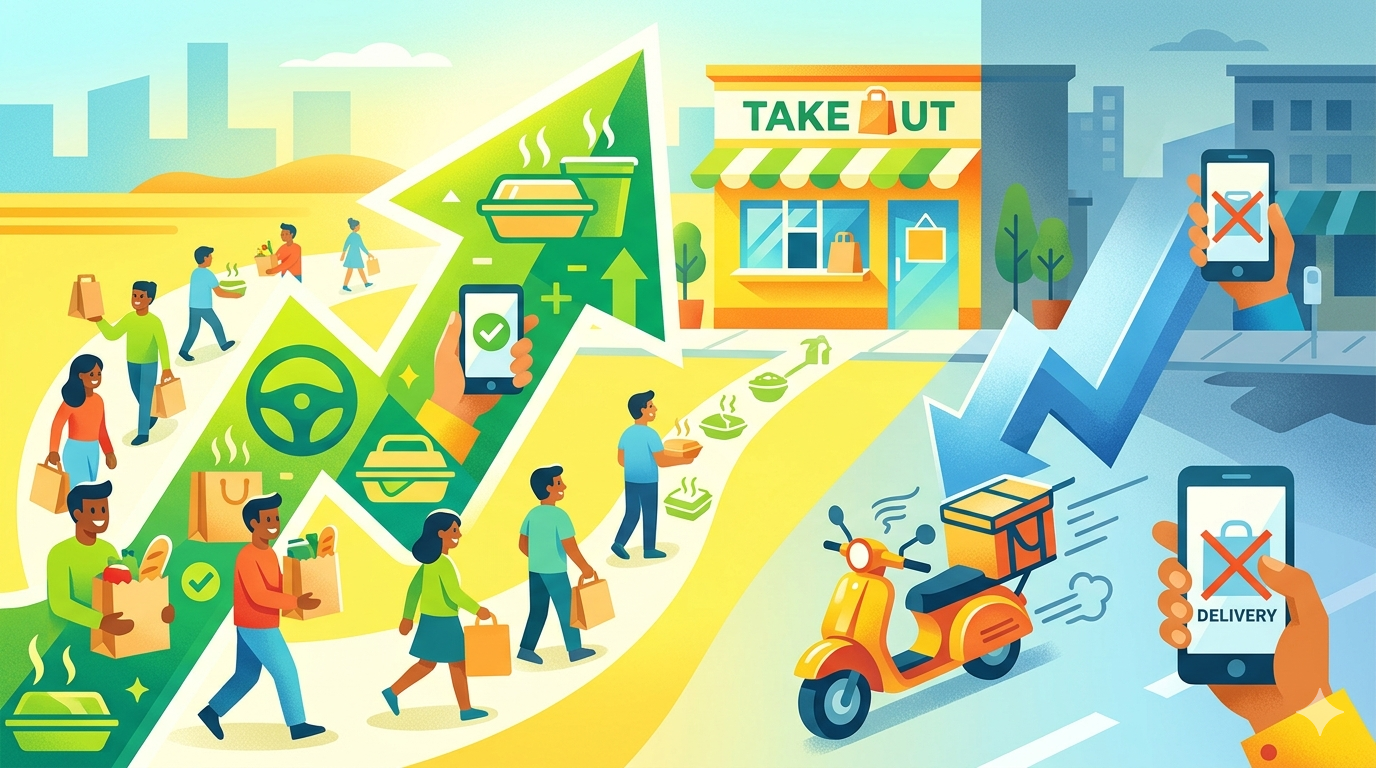
As inflationary pressures squeeze both restaurant margins and consumer wallets, the “Pickup Economy” has emerged as the dominant force in off-premise strategy. For operators, the transition from a delivery-first mindset to a pickup-centric model is a necessary evolution for profitability.
For the last five years, third-party delivery was the industry’s primary lifeline. However, in 2024 and 2025, that trend is reversing. While delivery growth has plateaued due to rising service fees and driver shortages, pickup is seeing a massive resurgence. According to the National Restaurant Association’s Off-Premises Trends 2025, nearly half of all adults now pick up takeout at least once a week, citing cost and speed as their primary motivators.
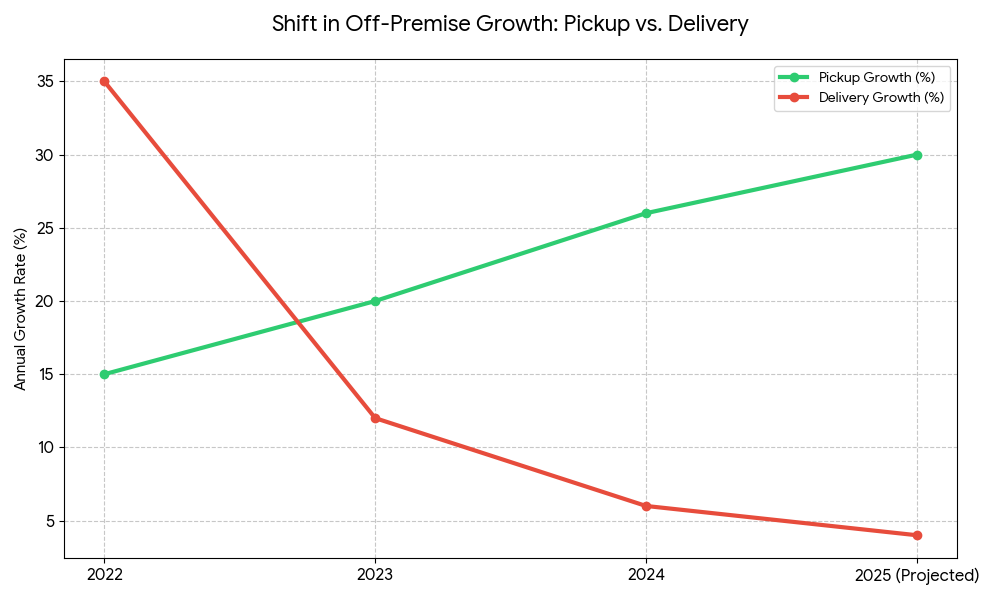
has maintained a steady upward trajectory.
The Cost of “Convenience”
The primary driver behind this shift is simple economics. In an era of sustained inflation, consumers are becoming increasingly sensitive to the “delivery tax” — the cumulative cost of service fees, small order surcharges and tips. These fees can easily inflate a meal’s price by 30% to 50%.
Data from QSR Web reveal that “Buy Online, Pick Up In-Store” (BOPIS) is growing at four times the rate of delivery. For a family of four, the $15–$20 saved by driving to the restaurant is a compelling value proposition. For the operator, the benefit is even more stark: higher margins without the 20-30% third-party commission.
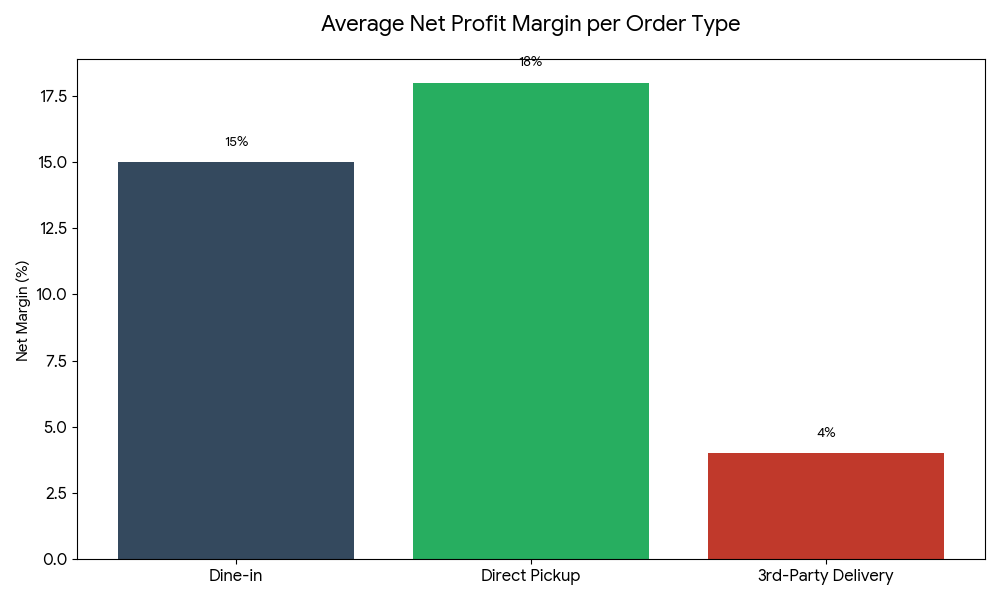
as they avoid high third-party commissions.
Operational Advantages of Pickup
From a management perspective, pickup offers several strategic advantages over delivery:
- Margin protection: Cutting out aggregator commissions allows restaurants to retain the full value of the transaction.
- Quality control: The “last mile” is handled by the customer, ensuring the food reaches its destination faster and in better condition than if it were sitting in a delivery driver’s car for 20 minutes.
- Data ownership: Native pickup apps allow brands to capture guest data and drive loyalty, whereas third-party delivery apps often hide customer identities.
Rethinking Real Estate and Workflow
Forward-thinking chains are already redesigning their physical footprints to prioritize the pickup guest. We are seeing a move away from massive dining rooms toward smaller, digital-first units. As reported by Nation’s Restaurant News, operators are increasingly downsizing dining areas to make room for dedicated pickup windows and mobile order shelves.
Strategic Note: If your pickup station requires a guest to wait in the same line as walk-in customers, you are losing the convenience battle. Efficient operators are moving toward heated lockers and geofenced arrival alerts to ensure 60-second handoffs.
Conclusion: The Path Forward
The “Pickup Economy” is not a rejection of convenience; it is a recalibration of it. Customers are willing to provide the transportation if the restaurant provides the value and efficiency. The winner of the next decade won’t be the restaurant that delivers the most, but the one that makes pickup the easiest choice for the consumer.