
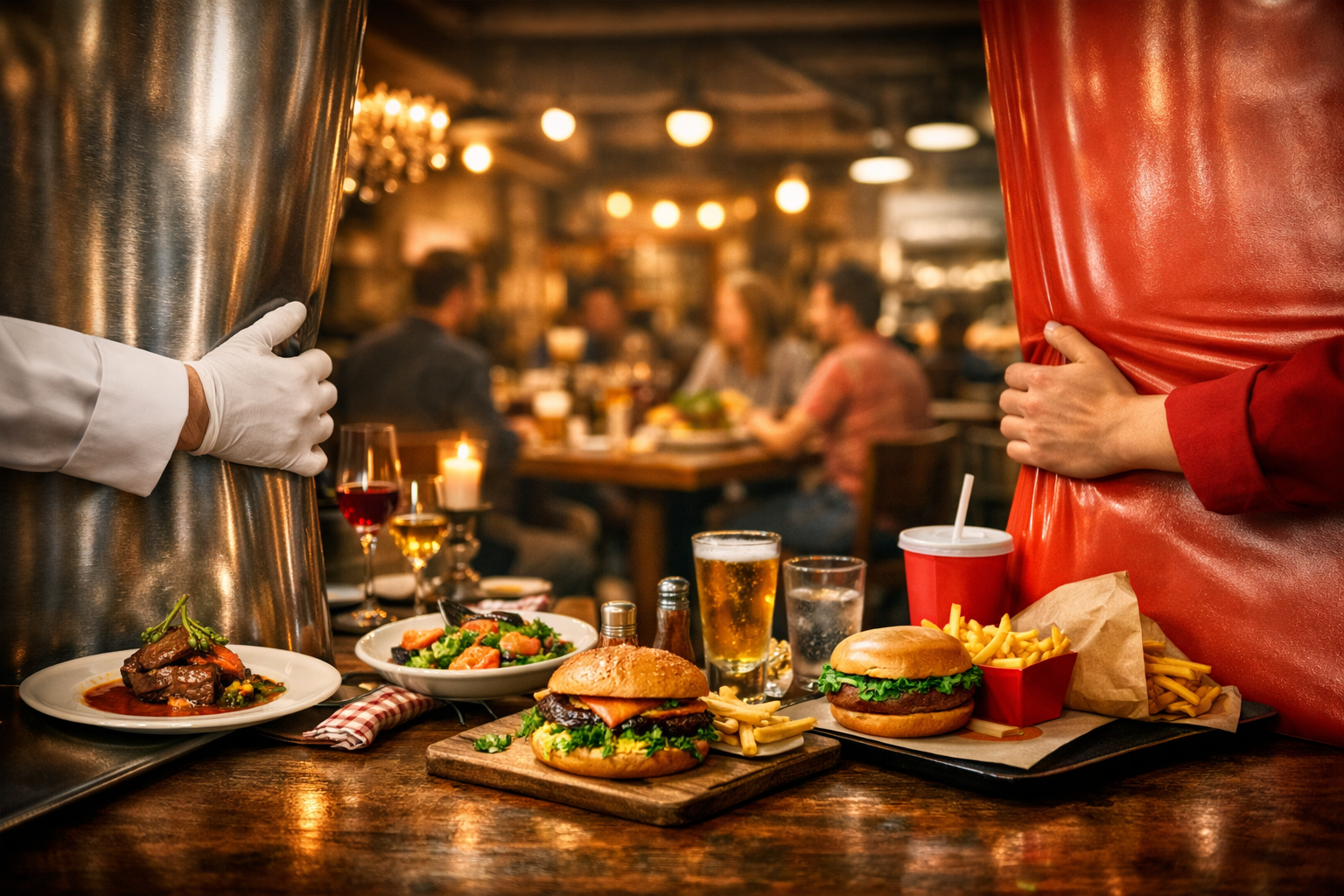
Mid-tier restaurants are being squeezed harder than ever in 2026: premium dining thrives on exclusivity and experience, while budget chains win on price and convenience. The “middle” is disappearing, forcing operators to reinvent with sharper value propositions, leaner formats and stronger guest experiences.
The Polarized Market Landscape
- Premium dining: Guests are willing to pay for curated experiences, storytelling menus and immersive hospitality.
- Budget/QSR chains: Inflation-conscious consumers flock to affordable, consistent options.
- Mid-tier restaurants: Struggle because they’re neither cheap enough nor special enough. Rising food costs, rent and labor make it harder to compete without a clear identity.
Recent industry surveys highlight that sales volume and food cost inflation are top challenges for operators, with many reporting inconsistent traffic and shifting consumer behavior. Experts also note that smaller, more efficient formats and disciplined tech investments are becoming survival strategies.
Why the Middle Is Shrinking
- Consumer behavior shift: Dining out is less habitual, more deliberate. Guests want either a bargain or a treat. Mid-tier “average” experiences feel unjustified.
- Cost pressures: Inflation, tariffs and supply chain volatility hit mid-range operators hardest: they lack the scale of QSRs and the margins of fine dining.
- Experience gap: Guests expect consistency and care. Mediocrity is punished quickly in reviews and repeat traffic.
Reinvention Strategies for Mid-Tier Operators
1. Sharpen value without discounting
Offer smaller portions, lunch specials or bundled meals that feel like a deal without eroding margins.
Example: A casual Italian bistro introducing a “family-style weekday lunch” at a fixed price. Guests perceive value, but the operator controls costs.
2. Compete on experience
Elevate service and ambiance to feel more premium.
Example: A mid-range steakhouse adding tableside elements (like carving or cocktail theatrics) to differentiate from budget competitors.
3. Leaner formats
Explore smaller footprints or hybrid models (takeout + dine-in).
Example: A mid-tier Asian concept opening compact “express kitchens” in urban centers, reducing rent while maintaining brand presence.
4. Technology with purpose
Use digital ordering, loyalty apps and inventory AI — but only where they simplify operations.
Example: A mid-range café using AI-driven menu engineering to highlight profitable items and reduce waste.
Practical Advice for Operators
- Audit your positioning: Are you closer to premium or budget? Pick a lane and lean into it.
- Invest in storytelling: Guests want to feel connected. Highlight sourcing, chef philosophy or community ties.
- Protect margins: Strengthen supplier relationships, refine inventory and avoid deep discounts.
- Train staff for consistency: Hospitality that feels genuine — not scripted — is now a differentiator.
Mid-tier restaurants can survive, but only by reinventing themselves as either value-driven specialists or experience-focused destinations. Sitting in the middle without a clear identity is no longer sustainable.