
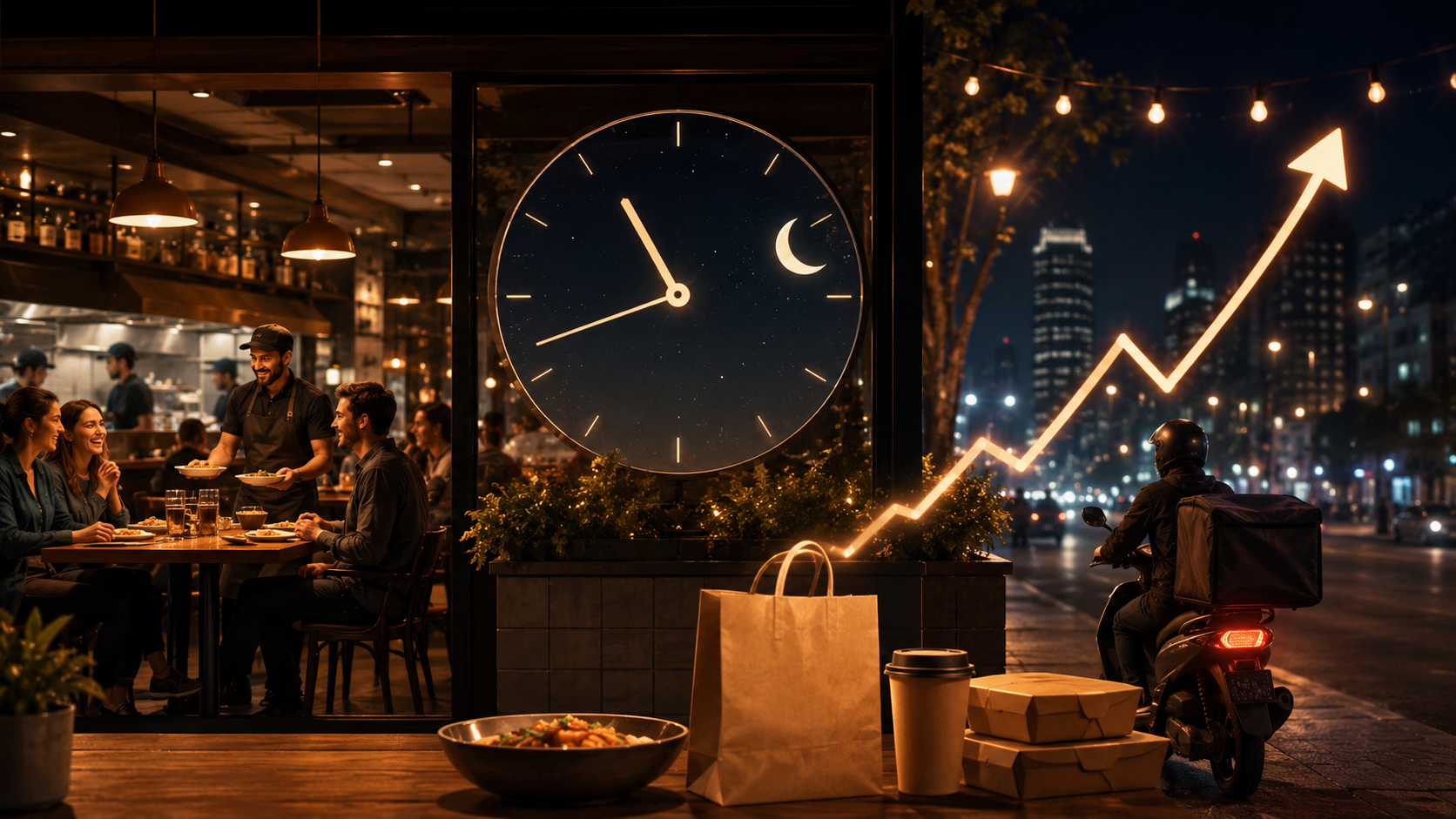
For a while, late-night dining felt like a fading tradition. Shorter hours, staffing challenges and shifting habits pushed many restaurants to close earlier than they used to. But that trend is reversing and fast.
Late-night dining is quietly making a comeback and not just in big cities. From casual eateries to quick-service brands, operators are rediscovering the value of staying open longer. What’s changed isn’t just timing. It’s the role late-night service plays in the overall business.
Today, those extra hours aren’t an afterthought. They’re becoming a strategic growth window.
A Different Kind of Customer
The late-night guest isn’t the same as your lunchtime crowd and that’s exactly why this opportunity is so interesting. After-hours diners tend to be more spontaneous. They’re less tied to routine and more open to impulse decisions, whether it’s a post-work bite, a social outing or a quick meal after an event.
Recent insights show that consumers — especially younger demographics — are increasingly seeking flexible dining times that fit their lifestyles, not traditional meal slots. That shift is expanding the demand curve beyond breakfast, lunch and dinner.
In practical terms, it means your “day” doesn’t really end at 9 p.m. anymore. There’s still appetite out there — literally and figuratively.
Why Late-Night Is Working Again
A few years ago, extending hours often felt like a gamble. Labor was tight, foot traffic was unpredictable and margins were thin. Now, the equation looks different.
Part of the change comes down to urban mobility and lifestyle patterns. More people are working flexible hours, socializing later and relying on dining as a key part of their evening plans. In some markets, late-night traffic is growing faster than traditional dayparts, driven by entertainment, nightlife and 24/7 digital culture.
There’s also a financial angle. Restaurants are looking for ways to generate more revenue without expanding physical space. Extending operating hours is one of the few ways to do that using existing infrastructure. What used to feel like extra effort is now being viewed as unused potential.
It’s Not Just About Staying Open Longer
Here’s where some operators get it wrong: late-night success isn’t simply about flipping the “open” sign for a few extra hours.
The most successful restaurants treat late-night as its own mini-concept within the business. The menu, the pace and even the atmosphere often shift to match the mood of the time.
Think about how different a restaurant feels at 11:30 p.m. compared to 7:00 p.m. Guests are usually more relaxed, less rushed and often looking for something comforting or indulgent. This is where simplified menus tend to perform well — items that are quick to execute but still satisfying.
Some brands are leaning into this by offering late-night exclusives or limited menus designed specifically for after-hours demand. It keeps operations manageable while giving customers a reason to show up.
Technology is also playing a role here. With digital ordering and delivery platforms extending well into the night, restaurants can capture demand even when dine-in traffic fluctuates. In fact, off-premise channels are helping sustain late-night growth by making it easier for customers to order from wherever they are.
The combination of in-person and digital demand is what makes late-night more viable now than it was before.
The Operational Balancing Act
Of course, none of this works without the right operational setup. Staffing remains one of the biggest considerations. Late-night shifts can be harder to fill and energy levels naturally dip after a full day of service.
That’s why many operators are rethinking how they structure these hours. Instead of running a full team, they’re working with leaner crews, tighter menus and more streamlined processes. The goal isn’t to replicate the dinner rush — it’s to create a version of service that fits the time of day.
Safety, consistency and service quality all need to be factored in. But when managed well, late-night shifts can actually become more predictable than expected, especially with the help of data and forecasting tools.
A Window That Rewards Experimentation
One of the underrated advantages of late-night service is flexibility. Because expectations are different, operators have more room to test ideas.
New menu items, limited-time offers, or even entirely new formats can be introduced during these hours without disrupting the core business. It’s a low-risk way to experiment and learn what resonates.
Some restaurants have used late-night service to build a distinct identity, something that sets them apart from competitors who still close early. Over time, that identity can become a powerful draw, especially among younger, socially active customers.
The Bottom Line
Late-night dining is no longer just a niche. It’s becoming a meaningful part of the restaurant revenue mix, driven by changing lifestyles, evolving customer expectations and smarter operations.
For operators, the opportunity isn’t just about adding hours. It’s about rethinking how those hours work.
Handled thoughtfully, late-night service can unlock new revenue, attract a different kind of guest and make better use of existing resources. And in an industry where margins are always under pressure, that kind of opportunity is hard to ignore.
The lights don’t have to go out early anymore. In many cases, they shouldn’t.