
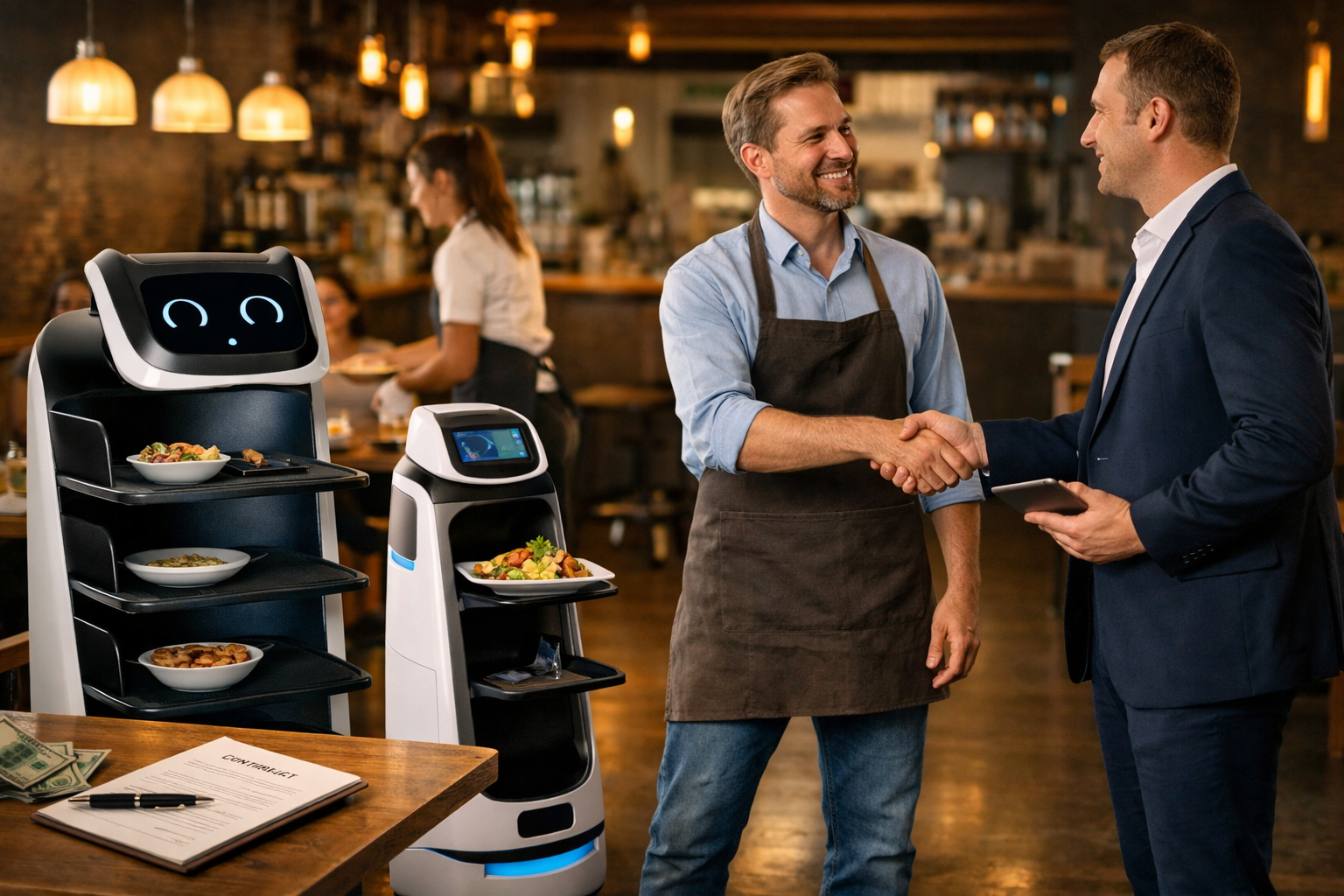
For years, the promise of robotics in restaurants was tempered by a harsh reality: the upfront capital costs were simply too high. Independent operators and mid-sized chains couldn’t justify spending six figures on server robots or autonomous delivery units, even if the long-term efficiency gains were clear. That barrier has now been dismantled by a new model — Robotics-as-a-Service (RaaS) — where robots are leased like software, on a month-to-month basis.
This shift is more than financial convenience; it’s a structural change in how restaurants can deploy automation. By lowering the entry threshold, RaaS allows operators to experiment, scale and measure ROI without betting the farm.
Why RaaS Is Changing the Game
Traditionally, robotics investments were treated like kitchen overhauls — massive capital expenditures depreciated over years. That model excluded most independent operators. Leasing flips the equation: instead of a $50,000 robot purchase, restaurants can pay a few thousand dollars per month, often bundled with maintenance, software updates and support.
This subscription-style approach mirrors the SaaS revolution in software. Just as cloud platforms democratized enterprise tools, RaaS is democratizing automation.Robots are increasingly being deployed to support staff in food running, bussing and even drink preparation, with leasing models making adoption feasible for smaller operators.
Operational ROI in Front-of-House Configurations
The most compelling case for RaaS lies in front-of-house operations. Server robots can:
- Handle repetitive strain tasks: carrying trays, bussing tables and running food during peak hours.
- Reduce staff burnout: freeing human servers to focus on hospitality rather than logistics.
- Smooth peak rushes: robots don’t tire and their consistency helps stabilize service quality.
Consider a mid-sized casual dining restaurant with 12 servers. During weekend rushes, staff often log double shifts, leading to turnover and fatigue. Leasing two server robots at $2,000/month each can offset the workload equivalent of three human runners. That’s not about replacing staff, it’s about protecting them from burnout and reallocating their energy to customer engagement.
The ROI calculation becomes straightforward: if turnover costs average $3,500 per employee (recruitment, training, lost productivity), preventing just two resignations per year covers the leasing expense.
Case Examples
- Casual Dining Chains: Operators in the U.S. have begun piloting robots from companies like Bear Robotics and Pudu Robotics. These units deliver food, bus tables and even sing birthday songs. Leasing allows chains to test them in select locations before rolling out system-wide.
- Independent Operators: A single-location bistro can lease one robot to cover peak dinner service. If the robot reduces overtime hours by 20% monthly, the savings compound quickly.
The flexibility of RaaS means operators can scale up or down depending on seasonal demand, much like adjusting staff schedules.
Protecting Human Capital
The narrative around robotics often defaults to “replacement”. But in restaurants, the reality is more nuanced. Staff shortages, rising wages and the physical toll of service work have created an environment where robots are not substitutes but supplements.
By leasing robots, operators can:
- Reduce overtime costs without cutting staff hours.
- Improve retention by signaling investment in employee well-being.
- Enhance guest experience by keeping human staff focused on hospitality.
This is particularly relevant in markets where labor shortages are acute. RaaS is being adopted across industries, with restaurants leading the charge due to their unique labor challenges.
The Strategic Angle for Operators
For restaurant managers and owners, the decision to lease robots should be framed not as a tech experiment but as a workforce strategy. Key considerations include:
- Peak-hour relief: Robots shine when demand spikes.
- Cost predictability: Monthly leasing stabilizes budgets compared to unpredictable turnover costs.
- Scalability: Operators can add or remove units as business needs shift.
- Brand differentiation: Guests increasingly view robotic service as a novelty that enhances the dining experience.
Looking Ahead
The RaaS model is still evolving, but its trajectory is clear. As leasing costs decline and robot capabilities expand, adoption will accelerate. For mid-sized operators, this is the moment to explore robotics — not as a futuristic gimmick, but as a practical solution to labor strain and operational inefficiency.
The shift from capital expenditure to subscription service has already transformed software, cloud infrastructure and even kitchen equipment. Now, it’s reshaping the dining room. For restaurant operators, the question is no longer whether robotics will fit into their business; it’s how quickly they can integrate them to protect staff, delight guests and stabilize operations.