
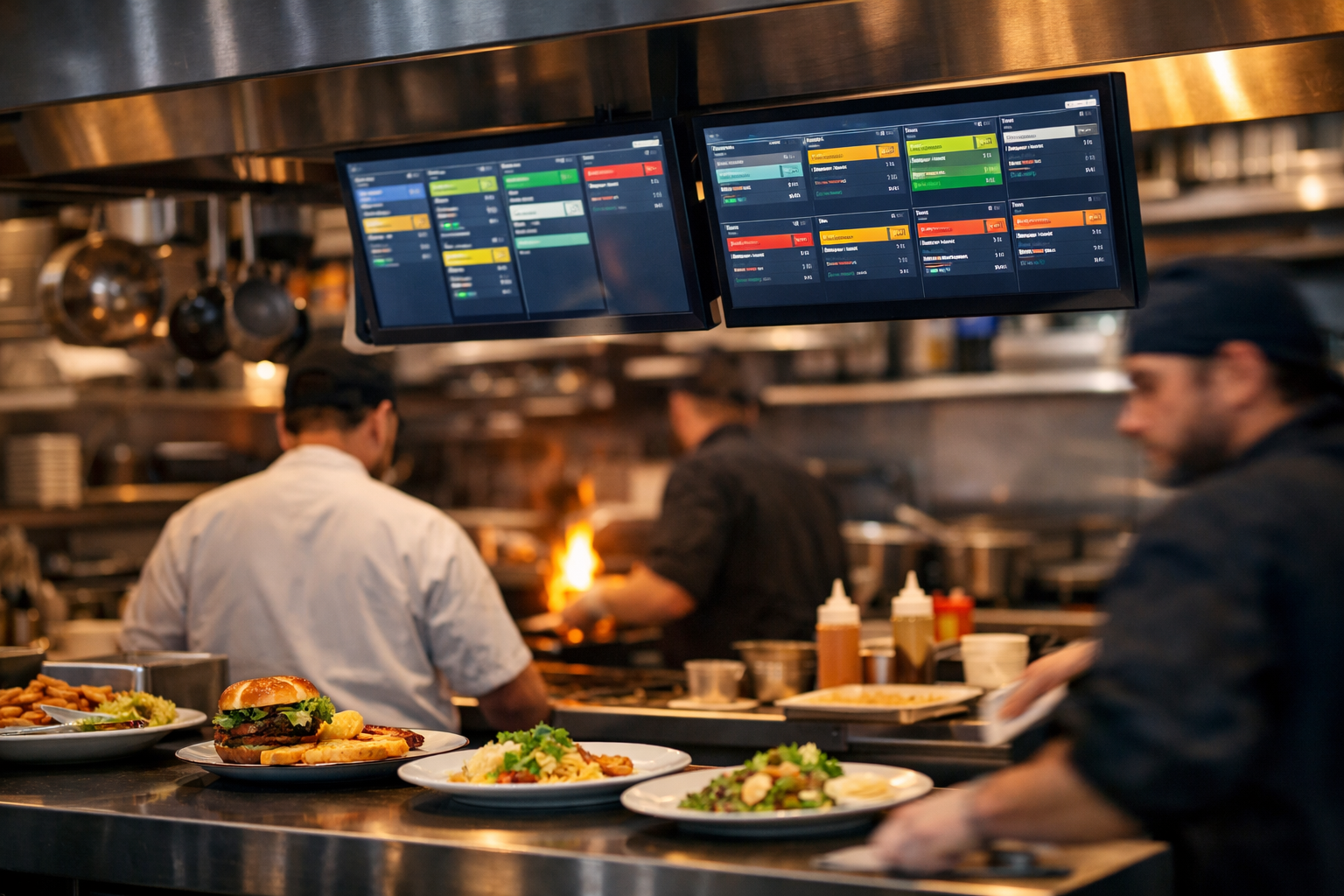
For decades, paper tickets defined the rhythm of restaurant kitchens. Orders were scribbled, printed, clipped and shuffled across the pass. But paper has always been vulnerable: tickets get lost, handwriting is misread, printers jam and verbal clarifications slow down service. In today’s high-volume, high-expectation environment, those inefficiencies are no longer tolerable.
Digital kitchen systems — often referred to as Kitchen Display Systems (KDS) — replace paper with screen-based order management. Orders flow directly from the POS or online platforms to large, visible displays in the kitchen. Chefs see everything in real time, organized by prep time, table or priority. This eliminates ambiguity and ensures every dish is tracked from start to finish. As noted by WedrestaurantStore, KDS “removes the need for paper tickets, which can easily get lost or misread in a fast-paced kitchen environment.”
Efficiency and Accuracy at Scale
The operational benefits are immediate. Digital kitchens reduce errors by up to 75%, cut service times by 30–40%, and eliminate paper waste. For managers, this translates into fewer remakes, lower costs and higher customer satisfaction.
Consider the impact during peak service: instead of juggling slips of paper, staff can sort, hold or prioritize orders with a tap. Real-time updates mean modifications or cancellations appear instantly, preventing costly mistakes. Some systems even allow chefs to set timers, peg courses and recall completed orders for review.
Accuracy is not just about avoiding errors, it’s about consistency. Digital displays ensure that every order is presented clearly, with special instructions highlighted. This reduces stress for staff and improves morale, as communication between front and back of house becomes seamless.
Integration and Investment
For operators, the question is not whether to adopt digital kitchens, but how. The best systems integrate directly with existing POS platforms, online ordering tools and handheld devices. This means the investment is less about hardware and more about aligning workflows.
The return on investment is typically seen within months. Savings come from reduced paper and printer costs, fewer remakes and optimized labor allocation.
Environmental benefits also matter. Eliminating paper tickets reduces waste and aligns with sustainability goals, which increasingly influence customer perception and brand reputation.
The Future of the Digital Kitchen
The rise of the digital kitchen is part of a broader trend: restaurants becoming data-driven, tech-enabled operations. Screen-based systems are not just about order management; they are the foundation for analytics, predictive prep and even AI-driven optimization.
Imagine kitchens where prep times are tracked automatically, bottlenecks identified instantly and menu adjustments suggested based on real-time performance. This is where digital kitchens are heading. For managers, embracing this shift is about future-proofing operations against rising customer expectations and competitive pressures.
In short: the paper ticket era is ending. Screen-based digital kitchens are not just a technological upgrade, they are a strategic necessity for operators who want to deliver faster, more accurate, and more sustainable service.