
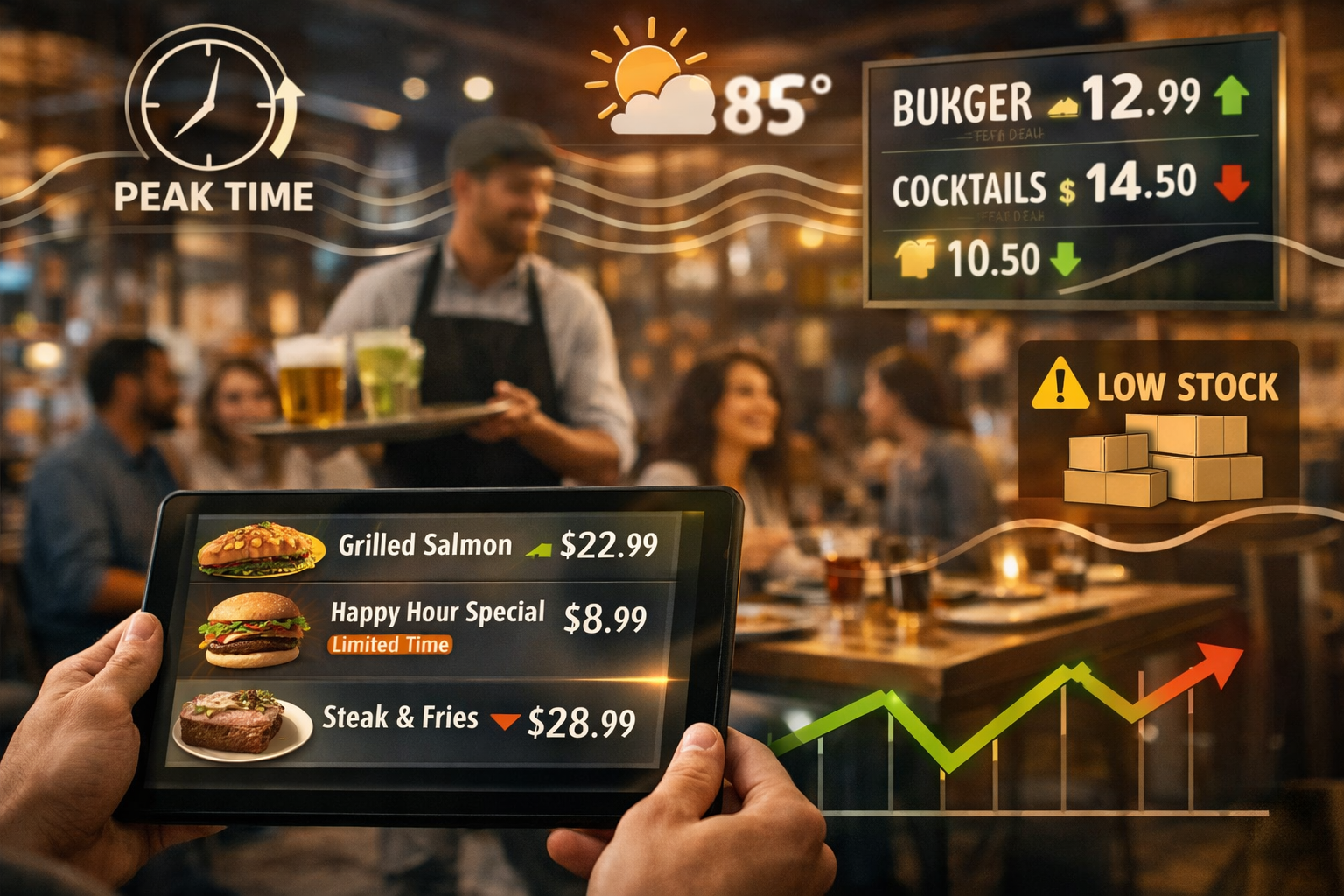
Dynamic pricing is no longer just for airlines and rideshare apps. Restaurants are adopting AI-driven menu adjustments to protect margins in today’s volatile economy. The key is to implement it transparently, using factors like peak hours, weather and inventory levels, so guests feel they’re getting value rather than being gouged.
Why Dynamic Pricing Matters Now
- Volatile economy: Rising labor and food costs make static menus risky.
- Thin margins: Restaurants often operate on 3–9% profit margins; every pricing decision counts.
- Consumer expectations: Diners are used to digital transparency and personalized offers.
Static menus can’t flex with real-time conditions. Dynamic pricing allows restaurants to raise prices slightly during peak demand and offer discounts during slow periods, balancing profitability and guest satisfaction.
How Dynamic Pricing Works in Restaurants
- Peak hours: Lunch rush or weekend evenings can carry a premium.
- Weather: Hot days may increase demand for cold beverages or ice cream.
- Inventory levels: Items with limited stock can be priced higher, surplus items discounted to reduce waste.
- Technology: AI-powered pricing platforms integrate with POS systems to adjust prices automatically.
Practical Steps for Implementation
1. Start with guardrails
- Set price boundaries (e.g., ±15% from base price) to avoid shocking guests. Example: Ordrpro’s AI model updates every 15 minutes but caps swings to keep changes subtle.
2. Use digital menus
- QR code menus or apps make real-time updates seamless.
- Digital menus also allow you to explain why prices shift (e.g., “Today’s catch is limited, priced accordingly”).
3. Communicate value
- Highlight off-peak discounts to show guests they benefit too.
- Use loyalty apps to personalize offers rather than blanket surcharges.
4. Train staff
- Equip servers with talking points: “We offer lower prices during quieter hours to encourage visits.”
- Staff transparency reduces guest suspicion.
Avoiding Consumer Backlash
Studies show that transparent communication is the key to guest acceptance of dynamic pricing, with research from Emerald Insight confirming that fairness perceptions drive satisfaction. Guests don’t perceive it as unfair if they understand the rationale and see benefits during off-peak times.
Tips to prevent backlash:
- Explain clearly: Add notes like “Happy Hour pricing — discounts during off-peak times.”
- Reward loyalty: Offer personalized deals via apps.
- Avoid surprises: Never let guests discover price changes only at checkout.
Case Study Examples
| Dog Haus (California, Quick Service) | High-End Restaurant Chain (U.S. Market) | |
| Background | Dog Haus, a fast-casual chain, tested dynamic pricing through its virtual brands. | A U.S.-based fine-dining chain faced declining foot traffic and shrinking margins. |
| Implementation | Partnered with Sauce Pricing and Juicer to adjust menu prices based on demand, time of day, and online vs. in-store sales. | Adopted a dynamic pricing strategy supported by consulting frameworks, integrating real-time analytics into menu pricing and upgrading digital infrastructure. |
| Results | Achieved 10-15X ROI from dynamic pricing, boosted online sales and reduced waste. | Reversed revenue decline, improved customer loyalty and reduced inefficiencies by aligning menu costs with demand. |
| Key Insight | Guests accepted price changes because they were already familiar with dynamic pricing in rideshare and delivery apps. | High-end diners responded positively when dynamic pricing was framed as part of a personalized, experiential dining model. |
Key Takeaways for Managers
- Dynamic pricing is a tool, not a trick. Use it to balance demand, reduce waste and protect margins.
- Transparency is non-negotiable. Guests accept price changes when they see fairness and value.
- Start small. Pilot with one category (e.g., beverages) before rolling out across the menu.