
Restaurant marketing has always evolved with the way people search. First, it was printed directories. Then came websites, Google Search, Google Maps and online reviews. Now another shift is happening and it could be even bigger.
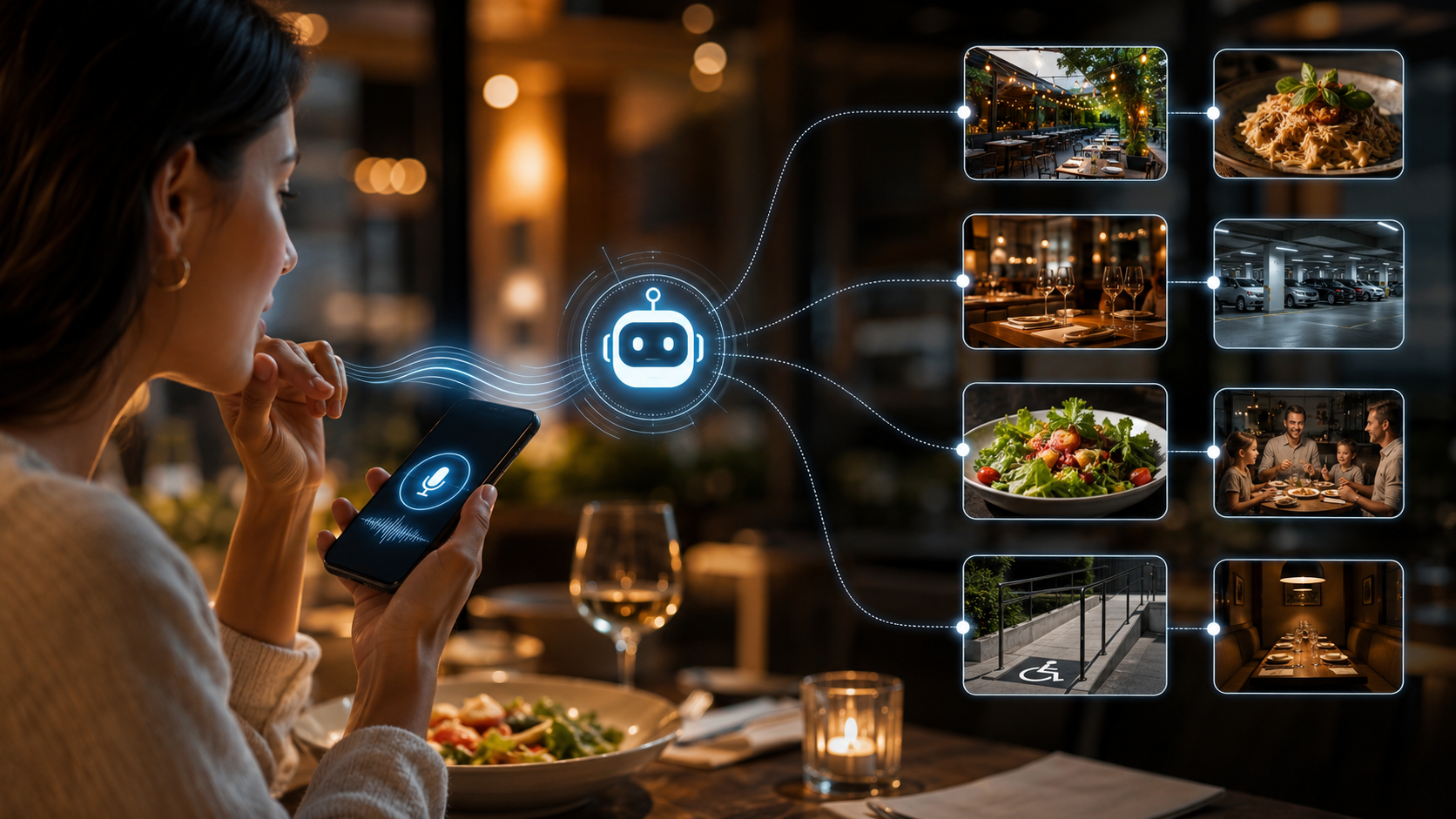
More diners are skipping the traditional search box altogether. Instead of typing “Italian restaurant near me,” they’re asking conversational AI assistants questions like, “Where can I find a dog-friendly Italian restaurant with outdoor seating that’s open after 10 p.m. and has vegan pasta options?”
That’s a completely different type of search.
These AI-powered discovery engines aren’t simply matching keywords anymore. They’re trying to understand intent, compare options and recommend restaurants that satisfy a long list of requirements — all within seconds.
For restaurant operators, this creates both an opportunity and a risk. If your website only speaks to humans, AI has to guess what you offer. If your website speaks clearly to machines through structured data, your restaurant becomes much easier to recommend.
Why Structured Data Suddenly Matters More
Structured data isn’t new. SEO professionals have been talking about schema markup for years, largely because it helps search engines understand websites.
Today, the stakes are much higher.
Modern AI systems don’t just look for restaurant names and menu pages. They look for facts. They want to know:
- What cuisine do you serve?
- Do you take reservations?
- Are there gluten-free options?
- Is parking available?
- Can you accommodate large groups?
- Are you open right now?
- Do you have outdoor seating?
- Is your menu updated?
If those answers are buried inside paragraphs, PDFs or images, AI has to work harder to interpret them.
Structured data removes the guesswork by presenting information in a machine-readable format.
The Scheme.org Restaurant vocabulary provides standardized properties that allow restaurants to describe menus, reservation availability, opening hours, facilities, pricing and much more in a consistent format that machines can understand.
Think Beyond Google
Many restaurant owners still think schema markup is only about improving Google rankings. That mindset is becoming outdated.
Large language models, AI assistants, recommendation engines and conversational search platforms all benefit from well-structured information because it reduces ambiguity.
Imagine two competing restaurants.
Restaurant A has a beautiful website full of photos and marketing copy.
Restaurant B has slightly less polished content but provides structured information that clearly identifies:
- Dietary options
- Live reservation availability
- Seating capacity
- Accessibility features
- Parking
- Business hours
- Cuisine type
- Menu items
- Delivery options
When someone asks an AI assistant for “a family-friendly Mexican restaurant with wheelchair access and free parking,” which restaurant is easier to recommend? Probably Restaurant B. Machines reward clarity.
Your Website Should Behave Like a Database
One mistake many restaurant websites make is treating every page like a digital brochure.
Instead, operators should think of their website as a living database. Every important detail should be structured, updated and easy for machines to interpret. That includes:
- Current opening hours
- Holiday schedules
- Menu changes
- Reservation availability
- Table capacity
- Dietary tags
- Happy hour times
- Delivery zones
- Special events
- Amenities
The more structured your information becomes, the easier it is for AI systems to match your restaurant with increasingly detailed customer requests.
Live Data Is Becoming a Competitive Advantage
A growing number of AI-powered dining tools don’t just want static information. They want live information.
Imagine someone asking: “Can I book a table for six within the next hour at a seafood restaurant with outdoor seating?” That answer requires more than a website. It depends on integrations with reservation systems, booking platforms and APIs that expose live availability.
Restaurants that connect these systems and expose structured data have a significant advantage because AI can recommend them with greater confidence. Static websites simply cannot compete with real-time information.
Don’t Forget the Small Details
Many operators spend thousands of dollars photographing food while overlooking details that influence customer decisions.
AI notices those details. For example:
- High chairs available
- EV charging
- Free Wi-Fi
- Pet-friendly patios
- Private dining rooms
- Noise levels
- Wheelchair accessibility
- Parking validation
- Kids’ menus
These may seem like minor features, but they’re often exactly what customers ask conversational AI systems to find.
If your restaurant never identifies these features in structured data, they may never become part of the recommendation.
Keep Your Data Consistent Everywhere
Structured data doesn’t exist in isolation. Consistency across your digital footprint matters. Your website, reservation platform, Google Business Profile, menu provider, social channels and delivery platforms should all agree on key information.
Conflicting opening hours or outdated menus create uncertainty. Machines don’t like uncertainty. Neither do diners. Keeping business information synchronized improves both customer experience and machine confidence.
Structured Data Is Only as Good as Its Accuracy
Adding schema markup isn’t a one-time project.
Restaurants evolve constantly. Menus change. Hours change. Seasonal promotions appear. Parking arrangements change. Holiday schedules shift.
Every change should be reflected in the structured data behind your website. Otherwise, AI may confidently recommend information that is no longer correct. That’s far worse than not being recommended at all.
Google’s own documentation explains that structured data works best when it accurately reflects the visible content on the page and is maintained over time rather than treated as a set-and-forget feature. You can learn more in Google’s guide, Introduction to Structured Data Markup.
This Isn’t Just an SEO Project
The biggest mistake restaurant operators can make is handing structured data to their marketing agency and forgetting about it.
This is an operational issue. Marketing owns the messaging. Operations own the facts. IT manages integrations. Reservation platforms provide availability. Menu systems provide inventory.
All of these pieces now contribute to how AI understands your business.
Restaurants that treat structured data as part of everyday operations — not just technical SEO — will be better positioned as AI-powered discovery continues to grow.
The New Digital Front Door
The restaurant industry has always competed for visibility. The platforms have changed, but the goal remains the same: be found when people are ready to eat.
Today, visibility increasingly depends on whether machines can understand your restaurant without guessing.
Structured data won’t replace great food, memorable service or glowing reviews. Those will always matter. But in an era where AI is becoming the first stop for dining recommendations, structured data is quickly becoming the bridge between your restaurant and your next customer.
The next generation of diners may never type your restaurant’s name into a search engine. Instead, they’ll simply describe what they want and trust an AI assistant to do the rest.
When that moment comes, the restaurants that have invested in clean, accurate, structured data won’t just appear in the conversation; they’ll be the ones leading it.