
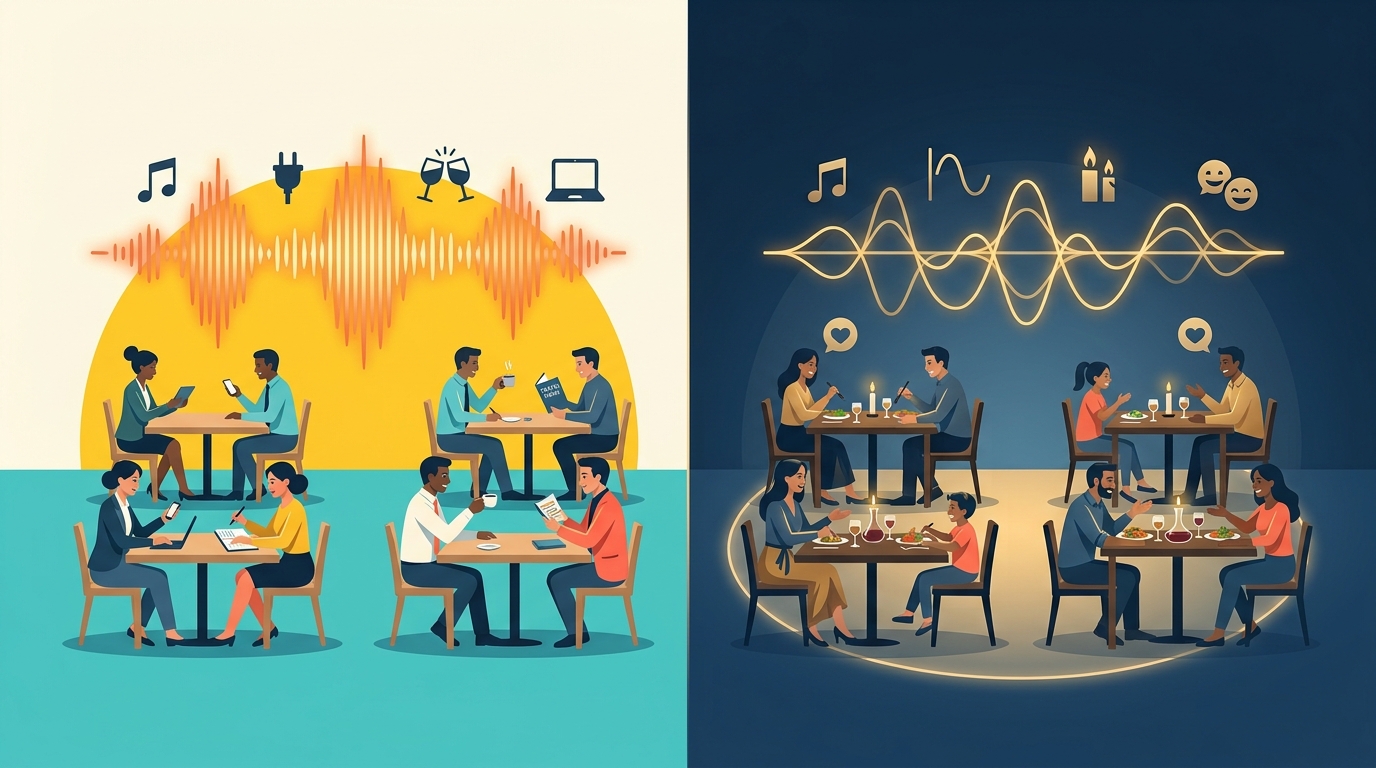
We have all walked into a restaurant where the energy just feels right. You sit down, start chatting with your dining partner, order a cocktail and, before you know it, two hours have flown by. You’ve enjoyed an appetizer, a steak, a second glass of wine and somehow found room for espresso and dessert.
Now, think about the alternative: a dining room so boisterous and echoing that you are practically yelling across the table, or one so dead-silent you feel like you are taking an exam in a library. In both cases, vocal fatigue or awkwardness sets in early. You eat quickly, skip dessert and ask for the check.
What felt like a difference in “vibe” was actually acoustic psycho-physics at work.
Acoustic psycho-physics explores how human brains physically and emotionally respond to sound levels, frequencies and music tempo. When restaurant operators intentionally engineer their soundscapes, they don’t just reduce background noise, they shape guest behavior, comfortably extend dining duration and noticeably increase spend-per-head on high-margin items like drinks and desserts.
The Lombard Effect: Why Loud Dining Rooms Kill Dessert Sales
To understand how sound shapes dining behavior, start with a natural physiological reaction called the Lombard Effect. This is the subconscious tendency for human beings to speak louder when surrounded by background noise so they can hear themselves talk.
When hard surfaces — like concrete floors, exposed brick and metal furniture — bounce sound back into a room, guests start speaking louder. Their neighbors then raise their voices to compensate. The room enters a noise feedback loop.
According to acoustic research on the Lombard Effect, once background noise crosses 57 decibels (dB), a guest’s vocal effort doubles, leading to rapid fatigue. Research continuously shows that patrons’ willingness to spend time and money drops significantly as background noise crosses uncomfortable thresholds.
When guests experience acoustic fatigue, they miss out on the relaxed “lingering” phase of dinner. That lingering phase is precisely where high-margin add-ons— like an after-dinner digestif or a shared slice of cake — are sold.
The Rhythm of Spending: Tempo, Frequency and Order Value
Sound isn’t just about controlling volume; it’s about rhythm and frequency. The human nervous system naturally synchronizes with surrounding auditory cues.
1. Music tempo controls pacing
Studies on dining duration reveal that playing slow-tempo background music can increase guest dining duration by up to 25% compared to fast-tempo music.
- Slow tempo (60–80 BPM): Signals to the brain that there is no rush. Guests sip drinks slower, browse menus more thoroughly and naturally order extra courses.
- Fast tempo (120+ BPM): Increases heart rate and dining speed. This is ideal for a high-volume lunch spot looking to turn tables quickly, but detrimental to a fine-dining evening shift focused on high average checks.
2. Frequencies influence flavor and perception
Sound even changes how we perceive taste and value. Research highlights how lower, warmer acoustic tones elevate the perception of richness in food and drinks, whereas harsh, high-frequency clatter (like plate clinking) creates micro-stress. Furthermore, academic research on how background music affects consumer perception demonstrates that well-curated, harmonious auditory environments gently influence menu choices, encouraging diners toward premium food and beverage selections.
Three Low-Cost Acoustic Interventions for Restaurant Managers
You don’t need a multi-million-dollar renovation to engineer a great acoustic environment. Managers can implement simple, high-impact fixes to balance their dining room’s soundscape today:
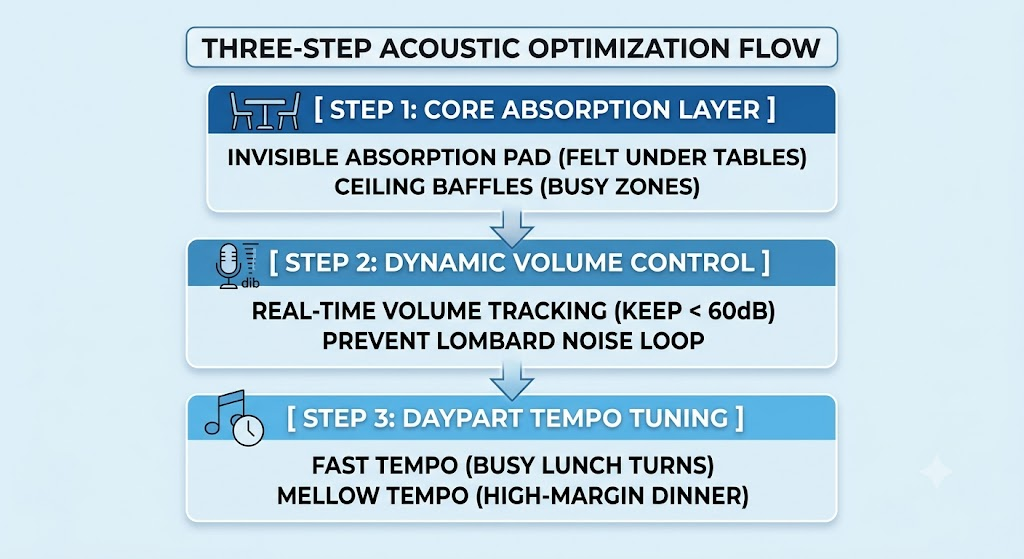
1. Under-table absorption padding
Hard dining tables bounce speech sound waves directly up toward bare ceilings. An easy, hidden trick is attaching high-density acoustic felt or acoustic foam panels underneath your dining tables. It remains completely invisible to guests while quietly absorbing mid-frequency vocal bounce.
2. Zoning and multi-speaker balancing
Playing music from two massive speakers at the back of the room forces you to crank the volume, blasting guests sitting nearby just so people across the room can hear it. Instead, install multiple smaller, distributed architectural speakers running at lower volumes. This creates an even sound blanket without harsh volume spikes.
3. Daypart your playlists by BPM
Treat your sound system like a seasonal menu. Create shift-specific playlists mapped out by Beats Per Minute (BPM):
- Lunch rush (100–120 BPM): Keep energy high and turn tables naturally.
- Early dinner (80–90 BPM): Transition to warm, welcoming rhythms as families and after-work crowds enter.
- Late dinner (60–75 BPM): Slow the pace right down. Create a cozy, unhurried atmosphere that invites that extra glass of wine or dessert order.
Turn Up the Margin
Restaurant design often prioritizes what guests see and taste, while overlooking what they hear. Yet, the auditory ecosystem is silently steering how comfortable your guests feel, how long they stay and how much they spend.
By treating sound as a core operational strategy rather than an afterthought, managers can create a dining room that feels effortlessly welcoming – and keeps the register ringing.
What acoustic adjustments have you made in your space and how did your guests respond?