The 2026 U.S. Boba Industry Report: Scaling the Modern Tea Shop

Strategic Insights for Owners & Operators 

The U.S. boba industry has officially entered its “Golden Era” of maturity. As of 2026, the domestic market is valued at approximately $2.66 billion, maintaining a robust CAGR of 8.4% (Research Nester). However, the sector faces an “Efficiency Gap”: while demand is at an all-time high, shops relying on manual order-taking and legacy inventory systems are seeing profit margins eroded by 35%+ labor costs and significant ingredient waste.

This report highlights that the top 10% of profitable shops have pivoted to a digital-first model. By integrating self-service kiosks and branded mobile apps, these operators are increasing average transaction values (ATV) by 50% and reducing front-of-house labor requirements by 35%, effectively future-proofing their businesses against a volatile labor market.

Industry Report: Generational Dining Habits 2026

The Strategic Divide: Personalization, Automation and the Value Reset

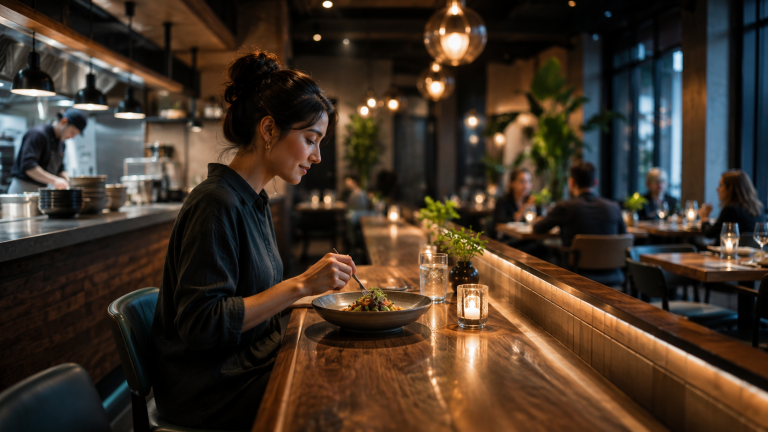
The U.S. restaurant industry has moved past pandemic recovery and into a new phase defined by fractured consumer demands. The monolithic approach to service is obsolete. While technology has become the operational backbone for the industry, consumer acceptance of that technology varies wildly by age.

By the end of 2025, the U.S. restaurant industry was well on track to reach the projected $1.5 trillion in annual sales, driven by a “value reset” where consumers prioritize experiences over pure pricing (Restaurant Accounting Services, 2025). However, this growth is non-linear across demographics. While 67% of Gen Z and 64% of Millennials now view takeout as a lifestyle essential, older generations are returning to dining rooms with a heightened demand for “SuperHuman Hospitality” – the seamless blend of AI-driven efficiency and traditional human touch (SevenRooms, 2025). 

This report analyzes the distinct dining behaviors of Gen Z, Millennials, Gen X and Boomers in 2026. Drawing on data from leading industry analysts, we provide actionable insights for operators to tailor their tech stacks, service models and menus to maximize capture rate across diverse demographics. The key takeaway for 2026 is “intentional friction”: knowing exactly when to deploy automation for speed (Gen Z) and when to inject human interaction for connection (Boomers).

Cobots in the Kitchen: How Collaborative Robots Are Solving the Prep Gap

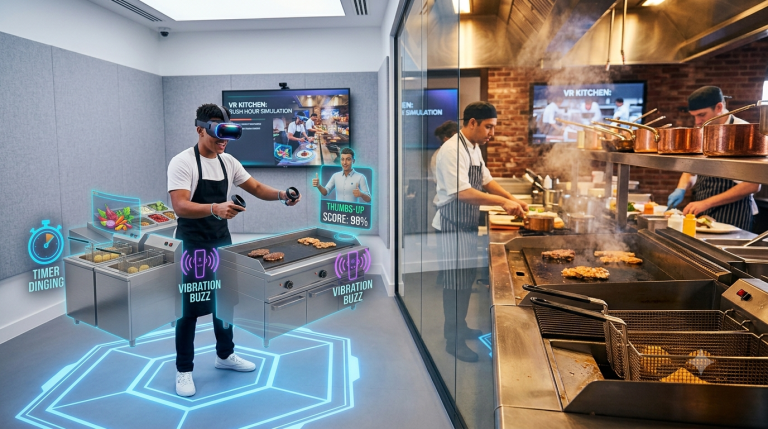
If you run a restaurant, you know the drill: chopping vegetables, frying batches of wings or topping dozens of pizzas can eat up hours of staff time. These tasks are essential but often repetitive, physically demanding and hard to staff consistently. Enter cobots — collaborative robots designed to work alongside humans, not replace them.

What Exactly Is a Cobot?

Unlike fully autonomous robots, cobots are programmable robotic arms that handle specific kitchen tasks. Think of them as reliable sous-chefs who never tire of slicing onions or ladling sauce. They’re built to be safe around people, with sensors and controls that prevent accidents, making them ideal for busy kitchens.

Why Operators Are Paying Attention

  • Labor shortages: With staffing challenges across the industry, cobots help fill gaps without compromising service.
  • Consistency: Robots don’t get tired or distracted, so every fry basket or pizza topping comes out the same.
  • Safety: Cobots reduce repetitive strain injuries from chopping, lifting or stirring.
  • Efficiency: Staff can redirect their energy toward plating, customer interaction and quality control.

A recent kitchen robots guide highlights how automated equipment is already helping operators streamline workflows and improve food consistency. The food automation market size reached USD 14.92 billion in 2025 and is projected to grow at a CAGR of 7.5% from USD 16.04 billion in 2026 to nearly USD 30.75 billion by 2035.

Real-World Applications

  • Vegetable prep: Automated arms can chop, dice and slice with precision.
  • Frying: Cobots can lower baskets, monitor cook times and lift food safely.
  • Pizza topping: Robots can spread sauce, sprinkle cheese and add toppings evenly.
  • Beverage mixing: Some cobots are even branching into bar service, shaking cocktails with flair.

The Human Touch Still Matters

Here’s the key: cobots aren’t plating dishes with artistry or designing menus. That’s still the chef’s domain. Instead, they handle the grunt work so your team can focus on flavor, presentation and hospitality. Customers don’t come for a robot-made burger; they come for the experience your staff creates.

Getting Started

For operators curious about cobots, the best approach is gradual:

  1. Identify pain points — where staff spend the most time on repetitive tasks.
  2. Pilot one cobot — start small, maybe with a pizza station or fryer.
  3. Train staff — show them how cobots complement their work, not replace it.
  4. Measure ROI — track savings in labor hours, consistency and reduced waste.

Looking Ahead

Cobots are not a fad, they’re part of a broader shift toward smart kitchens. As AI and robotics converge, expect more integration with inventory systems, order tracking and food safety monitoring. The future kitchen will be a hybrid: humans leading the creative charge, cobots handling the heavy lifting.

Bottom line: Cobots aren’t here to steal chefs’ jobs — they’re here to make kitchens more efficient, safer and better equipped to deliver consistent quality. For restaurant operators, they’re a smart investment in both staff well-being and customer satisfaction.

Conversational AI 2.0: Solving the “Uncanny Valley” in Drive-Thru and Phone Orders

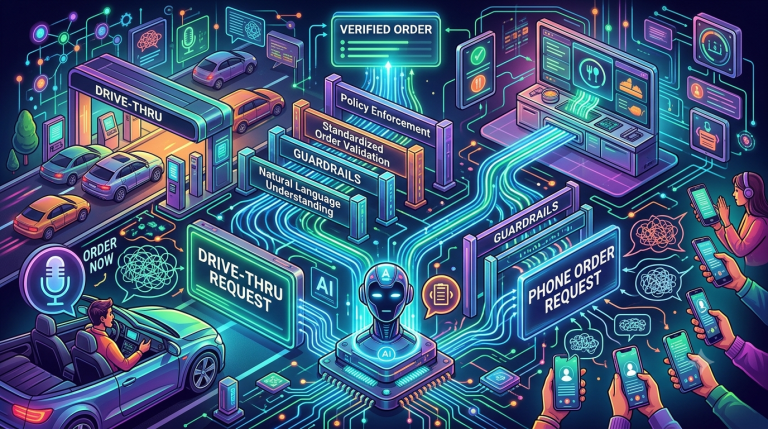
Drive-thru and phone ordering have long been the backbone of quick-service restaurants (QSRs) in the U.S. But as labor shortages persist and customer expectations rise, many operators are turning to conversational AI to streamline service. The challenge? Making AI voices sound natural enough to avoid the dreaded “uncanny valley” – that unsettling feeling customers get when a machine sounds almost human, but not quite.

Conversational AI 2.0 is tackling this head-on, offering restaurant owners a way to deliver faster, friendlier and more reliable service without sacrificing the human touch.

Understanding the Uncanny Valley

The “uncanny valley” is a concept from robotics and psychology describing the discomfort people feel when technology mimics human behavior imperfectly. In restaurants, this often shows up when customers interact with robotic-sounding AI systems at the drive-thru or over the phone.

Instead of feeling helped, customers may feel uneasy or even frustrated. For restaurant operators, this is more than a minor annoyance, it can directly impact brand perception and repeat business.

Why Conversational AI 2.0 Matters

1. Customer expectations have changed

Today’s guests expect speed, accuracy and warmth in every interaction. A clunky or monotone AI voice can make customers feel dismissed, even if the order is technically correct.

2. Labor shortages and rising costs

Staffing challenges remain one of the biggest hurdles for restaurants. Conversational AI can reduce workload by handling routine orders, upsells and greetings, freeing staff to focus on food prep and hospitality.

3. Consistency across locations

Unlike human staff, AI systems don’t get tired or distracted. They deliver consistent service quality across multiple locations, ensuring brand standards are met every time.

Real-World Examples

  • Burger King’s “Patty” AI assistant is being piloted in hundreds of U.S. restaurants. Patty listens to drive-thru conversations, coaching staff on politeness and consistency, while also helping automate orders.
  • Hi Auto’s conversational AI is designed specifically for noisy drive-thru environments. Franchise owners report “amazing accuracy” and improved upselling opportunities.
  • Yum Brands (Taco Bell, Pizza Hut, KFC) are rolling out voice AI in hundreds of locations, cutting ordering time by 25% while handling 90% of orders automatically.

These examples show that conversational AI is no longer experimental. It’s becoming a mainstream solution for QSRs.

How AI Is Solving the Uncanny Valley

1. Natural Language Processing (NLP)

Advanced NLP allows AI systems to understand intent, tone and context. This means they can respond in ways that feel conversational rather than scripted.

2. Voice personalization

AI voices are now customizable to match brand personality, whether warm and friendly or efficient and professional. This reduces the robotic feel and aligns with brand identity.

3. Emotion recognition

Some systems can detect frustration or confusion in a customer’s tone and adjust responses accordingly, creating a more empathetic interaction.

4. Continuous Learning

AI systems improve over time, learning from customer interactions to refine accuracy and tone. This ensures the technology gets better the longer it is in use.

Benefits for Restaurant Owners

  • Reduced wait times: Faster order-taking means shorter lines and happier customers.
  • Higher accuracy: AI reduces misheard orders, especially in noisy drive-thru environments.
  • Upselling opportunities: AI can consistently suggest sides, drinks or promotions without sounding pushy.
  • Scalability: Once deployed, AI can be rolled out across multiple locations with minimal training.
  • Labor efficiency: Staff can focus on food quality and hospitality while AI handles repetitive tasks.

Risks and Considerations

  • Customer acceptance: Some guests may still prefer human interaction. Offering a “human fallback” option is essential.
  • Integration costs: Upfront investment in AI systems can be significant, though long-term savings often outweigh costs.
  • Data privacy: Restaurants must ensure customer data is handled securely and transparently.
  • Technology reliability: AI systems must be tested thoroughly to avoid glitches during peak hours.

Action Steps for Restaurant Managers

  1. Pilot AI in one location before scaling across your chain.
  2. Train staff to work alongside AI – AI should complement, not replace, human hospitality.
  3. Monitor customer feedback to ensure the AI voice feels natural and welcoming.
  4. Choose vendors carefully. Look for providers with proven success in QSR environments.
  5. Stay updated on trends. AI technology evolves quickly; staying informed helps you remain competitive.

Conclusion

Conversational AI 2.0 is no longer about replacing humans, it’s about enhancing the customer experience. By solving the uncanny valley problem, restaurants can deliver service that feels natural, efficient and brand-aligned. For U.S. restaurant owners, this technology represents not just a cost-saving tool, but a competitive advantage in a market where customer experience is everything.

Hyper-Local Sourcing in the Age of Supply Chain Volatility

If you’ve managed a kitchen or a dining floor over the last few years, you’ve likely developed a sixth sense for “the call.” You know the one – it’s your broadline distributor calling at 6:00 AM to tell you that the romaine is out, the chicken thighs are stuck in a port three states away and the price of cooking oil has just jumped another 15%.

In the high-pressure world of 2026, global supply chains feel less like a well-oiled machine and more like a game of Jenga. One hiccup in international logistics or a climate event on the other side of the country can tumble your entire menu for the weekend.

But there is a silver lining. To combat this volatility, more restaurant managers are looking closer to home – literally. Welcome to the era of hyper-local sourcing. We’re talking about more than just “farm-to-table”; we’re talking about a strategic shift toward micro-supply chains that live within 50 miles of your front door.

Why “Hyper-Local” is No Longer Just a Marketing Buzzword

Historically, sourcing locally was seen as a luxury or a “boutique” choice, something for the high-end bistro with a chalkboard menu. It was often more expensive and took more time to coordinate.

However, in 2026, the math has changed. While local prices might be slightly higher on paper, the reliability of a local partner is worth its weight in gold. When you source from a vertical farm three blocks away or a cooperative of local growers, you aren’t paying for transcontinental fuel surcharges or refrigerated trucking. You are paying for food that is resilient to global shocks.

According to The Real Economy Blog, hyper-local sourcing has moved from a “nice-to-have” to a “risk-mitigation” strategy. By shortening the distance between the soil and the plate, managers are effectively “insuring” their menus against the unpredictability of traditional logistics.

The Operational Shift: Managing the “Micro-Sourcing” Model

Let’s get real for a second: swapping one massive distributor for twelve small vendors sounds like an administrative nightmare for a busy manager. How do you handle twelve different invoices, delivery times and quality standards?

The answer lies in the micro-sourcing tech stack. Modern inventory management systems now allow for ‘local hub’ integrations. Instead of calling twelve farmers, many cities now have digital cooperatives where you can see the daily inventory of dozens of local producers in one dashboard.

The “Flexible Menu” Strategy

To make hyper-local work, your kitchen needs to be agile. If the local kale crop is delayed by a week due to rain, your menu needs to reflect that. Successful managers are moving away from rigid, 20-page laminated menus and toward digital boards or high-quality daily inserts.

Building the ‘Human’ Supply Chain

The most beautiful part of hyper-local sourcing isn’t just the produce, it’s the relationships. When you work with a local baker or a neighborhood urban farm, you aren’t just an account number. You are a partner.

When things get tough — like a sudden freeze or a spike in demand — a local partner will go the extra mile for you because your success is tied to theirs. They might deliver a crate of emergency eggs in their own car just to make sure your Sunday brunch isn’t a disaster. You don’t get that kind of neighborly support from a global conglomerate.

As highlighted by The National Restaurant Association’s What’s Hot 2026 Culinary Forecast, the story behind the food has become a primary driver for guest satisfaction. Guests in 2026 want to know that the honey in their dressing came from the hives on top of the library down the street. It fosters a sense of community that builds incredible guest loyalty.

The Hidden Cost Savings: Waste and Shelf Life

We often focus on the purchase price of local goods, but we forget to factor in the waste price.

Traditional produce often spends 7 to 10 days in transit before it reaches your walk-in. By the time it gets to you, its shelf life is already ticking down. Hyper-local produce is often harvested and delivered within 24 hours. That extra week of freshness translates directly to:

  • Lower spoilage: You aren’t throwing away “slimy” greens on Wednesday that you bought on Monday.
  • Better flavor: Because the produce is picked at peak ripeness (rather than being picked green to survive shipping), you need less salt, fat and sugar to make it taste amazing.
  • Smaller footprint: Your sustainability metrics improve automatically, which is a major win for the growing segment of eco-conscious diners.

In fact, many vertical farming companies are now partnering directly with restaurants to install on-site micro-gardens, removing the supply chain entirely!

How to Start Your Local Journey (Without Losing Your Mind)

You don’t have to fire your big distributor tomorrow. In fact, most successful ‘hyper-local restaurants still use broadliners for staples like flour, oil and dry goods.

  1. Start with “hero” ingredients: Pick three items — maybe your greens, your eggs and your bread. Find local masters for these and feature them prominently on your menu.
  2. Audit your neighbors: Use a Saturday morning to visit the local farmers’ market. Talk to the growers. Most are looking for stable, wholesale partnerships and will be thrilled to discuss a ‘restaurant-direct’ pricing model.
  3. Update your marketing: If you’re paying for local quality, tell people! Put the name of the farm on the menu. Tag them in your Instagram posts. Let your guests know they are supporting the local economy by eating at your table.

Conclusion

Hyper-local sourcing isn’t just a trend; it’s a return to the roots of hospitality. It’s about being a part of a neighborhood ecosystem that supports itself. In an age of supply chain volatility, looking closer to home isn’t just a “green” choice; it’s the smartest business move a restaurant manager can make.

By building a resilient, transparent and flavor-packed supply chain, you aren’t just feeding your guests; you’re nourishing your community and protecting your bottom line.

IoT-Driven Sustainability: Using Smart Sensors to Slash Utility Costs

In the fast-paced world of restaurant management, the “invisible” costs are often the ones that bite the hardest. We aren’t just talking about the price of avocados spiking or an unexpected labor shortage. We’re talking about the silent hum of walk-in compressors running 24/7, the slow drip of a leaky pipe behind the ice machine, and the HVAC system pumping air into an empty dining room at 3:00 AM.

Historically, utility bills were viewed as a fixed cost, a necessary evil of doing business. But as we navigate 2026, a technological shift is occurring. Sustainability has moved out of the marketing department and directly into the kitchen’s tech stack. By leveraging the Internet of Things (IoT), restaurant operators are transforming their back-of-house from a black hole of energy consumption into a streamlined, data-driven profit center.

The “Visibility Gap”: Why Your Monthly Bill is Too Late

The fundamental problem with traditional utility management is that it’s reactive. You receive a bill three weeks after the waste has occurred. If a freezer seal was compromised or a water valve was stuck open, you only find out when the financial damage is already done.

IoT sensors close this “visibility gap.” These small, wireless devices act as a nervous system for your restaurant, monitoring electricity, water and gas usage in real-time. According to recent data on smart monitoring trends, operators are now able to identify preventable waste that accounts for 25% to 40% of their total utility expenses.

1. Smart Refrigeration: Protecting Your Cold Chain and Your Cash

Refrigeration is the single largest energy consumer in most kitchens, often accounting for nearly half of a restaurant’s electric bill. It’s also the highest risk factor for food safety.

Beyond temperature logs

While manual temperature logs are a health department requirement, they are woefully inadequate for energy management. An IoT sensor doesn’t just record a number; it analyzes the “health” of the unit.

  • Compressor health: Is the motor running longer cycles than it did last month? This is often a sign of failing components or dirty coils.
  • Door events: Sensors can alert managers if a walk-in door hasn’t been closed properly or if it’s being opened too frequently during prep, allowing cold air to escape.
  • Predictive alerts: Before a unit fails and spoils $5,000 worth of Wagyu beef, the sensor detects the slight temperature climb, sending an alert to your phone.

Research highlights that IoT kitchen monitoring can prevent up to 96% of equipment failures by catching these anomalies hours or even days before a total breakdown occurs.

2. HVAC Optimization: Conditioning for People, Not Empty Space

Heating, Ventilation and Air Conditioning (HVAC) systems are the second-largest utility drain. In many restaurants, these systems are set to a fixed schedule that doesn’t account for the actual “pulse” of the restaurant.

Adaptive climate control

By integrating occupancy sensors and smart thermostats, the kitchen can “talk” to the HVAC. If the dining room is empty between 2:00 PM and 4:00 PM, the system can automatically adjust the set point. More importantly, smart kitchen hoods can now detect smoke and heat levels, ramping up fan speeds only when active cooking is happening, rather than running at full blast from open to close.

In a high-inflation environment, this level of precision is essential. Industry reports like the 2026 Restaurant Readiness Report show that over 60% of operators now view real-time visibility into equipment usage as a “must-have” to protect their margins.

3. Water Intelligence: Detecting the Invisible Leak

Water is often the most overlooked utility, yet it can cause the most catastrophic damage. A single major leak can lead to property damage averaging $89,000, not to mention forced closure and lost revenue.

IoT water flow sensors are placed strategically behind high-risk areas like dishwashers, ice machines and under sinks.

  • Micro-leak detection: These sensors can detect a “trickle” that is too small for a human to notice but adds up to hundreds of gallons over a month.
  • Automated shut-offs: Advanced systems can even shut off the main water valve automatically if a catastrophic burst is detected after hours, saving the kitchen floor from becoming a swimming pool.

The Strategic Payoff: Sustainability is Profitability

The “S” word – Sustainability – can sometimes feel like an expensive goal. But in the IoT era, being “green” is simply the byproduct of being a sharp operator. When you reduce your energy waste, you aren’t just lowering your carbon footprint, you are directly injecting that saved cash back into your EBITDA.

Implementation: Start Small

You don’t need to overhaul your entire kitchen overnight. Most successful operators follow a tiered approach:

  1. Tier 1: Install wireless sensors in walk-ins and freezers to prevent spoilage.
  2. Tier 2: Add water leak detectors in high-risk zones.
  3. Tier 3: Use smart plugs and sub-meters on high-draw appliances (like fryers and ovens) to identify “energy vampires” during off-hours.

Conclusion

The restaurants that thrive in 2026 will be those that treat their utilities with the same scrutiny as their food costs. IoT-driven sustainability offers a rare win-win: it protects your equipment, ensures food safety compliance and significantly slashes your overhead. In an industry where margins are famously thin, the data coming from your smart sensors might just be the most valuable ingredient in your kitchen.

Mental Health First Aid: Training Managers to Spot Burnout Before the “Walk-Out”

Picture this: it’s a Friday night rush, tickets are flying, the line is slammed and suddenly, one of your best servers drops their apron and walks out the door. No warning, no explanation, just burnout hitting its breaking point.

For restaurant managers, this scenario is all too familiar. Labor shortages may dominate headlines, but the real challenge often lies beneath the surface: the emotional strain of the job. That’s why the conversation has shifted from scheduling and staffing to emotional intelligence. Enter Mental Health First Aid, a management framework designed to help floor leaders spot the early signs of burnout, respond with empathy and implement “recharge” shifts that keep teams stable for the long haul.

This isn’t about turning managers into therapists. It’s about equipping them with practical tools to prevent the dreaded walk‑out, protect their staff’s well‑being and build a healthier, more resilient workforce.

Why Mental Health First Aid Matters in Restaurants

  • Labor challenges persist: Recruiting and retaining staff remains tough, but the solution isn’t just higher wages, it’s creating a supportive environment.
  • High stress industry: Long hours, unpredictable guests and physical demands make restaurant work one of the most burnout-prone professions.
  • Walk-outs hurt business: Losing staff mid-shift or mid-season disrupts service, damages morale and increases turnover costs.

Spotting Burnout Before It’s Too Late

Managers trained in Mental Health First Aid learn to recognize subtle signs of burnout:

  • Physical cues: Fatigue, slower movements, frequent headaches.
  • Emotional signals: Irritability, withdrawal or sudden mood swings.
  • Performance changes: Declining attention to detail, missed steps or disengagement.

For a deeper dive into common burnout symptoms in restaurants, check out this overview from KNOW Hospitality on preventing employee burnout.

The Framework: “Recognize, Respond, Refer”

Mental Health First Aid training emphasizes three steps:

  1. Recognize: Spot early signs of stress and burnout.
  2. Respond: Approach staff with empathy, listen actively and validate their feelings.
  3. Refer: Guide them toward professional resources or internal wellness programs if needed.

Courses like IIENSTITU’s Mental Health First Aid at Work provide managers with practical tools to build these skills. 

Recharge Shifts: A Practical Tool

Instead of waiting for staff to collapse under pressure, managers can schedule “recharge shifts” — shorter, lighter or wellness-focused shifts designed to give employees breathing room.

  • Examples: Assigning a veteran server to a slower section, giving a line cook a prep-only day or rotating staff into training shifts.
  • Benefits: Staff return refreshed, morale improves and turnover decreases.

Hospitality leaders are already experimenting with recharge days and wellness programs. For instance, Hotelier Magazine highlights how wellness initiatives are reshaping hospitality workplaces.

Encouraging a Culture of Care

  • Normalize conversations: Encourage staff to talk openly about stress.
  • Lead by example: Managers should model healthy behaviors – taking breaks, managing stress constructively.
  • Celebrate recharge: Frame lighter shifts as proactive wellness, not punishment or favoritism.

The Business Case

  • Retention: Staff who feel supported are more likely to stay long-term.
  • Performance: Reduced stress leads to fewer mistakes and better guest experiences.
  • Reputation: A restaurant known for caring about staff well-being attracts stronger talent.

Closing Thoughts: Start Small, Lead Big

Burnout doesn’t announce itself. It creeps in quietly until the walk‑out moment arrives. But with Mental Health First Aid training, managers can flip the script. By learning to recognize stress signals, respond with empathy and build recharge shifts into the schedule, you’re not just protecting your team, you’re investing in the long‑term stability of your restaurant.

The best part? You don’t have to overhaul everything overnight. Start small: pilot a recharge shift once a week, practice active listening during pre‑shift meetings, or take a Mental Health First Aid course to sharpen your skills. Each step builds momentum toward a healthier, more resilient workplace.

Your staff are the heartbeat of your restaurant. Show them you value their well‑being and they’ll repay you with loyalty, energy and the kind of service that keeps guests coming back. The walk‑out doesn’t have to be part of your story. Make the choice today to lead with care and watch your team thrive.

Navigating Dynamic Pricing: Maintaining Guest Trust While Optimizing Revenue

If you’ve spent any time in a hotel or booked a flight recently, you’ve experienced dynamic pricing firsthand. You know the drill: the seat that cost $200 on Tuesday is suddenly $450 on Friday because a holiday weekend is looming. For years, the restaurant industry watched from the sidelines, hesitant to touch a strategy that felt a bit too “corporate” for the world of hospitality.

But as we settle into 2026, the conversation has shifted. With labor costs, ingredient volatility, and energy bills reaching all-time highs, many operators are realizing that a static menu price — one that stays the same whether it’s a sleepy Tuesday at 3:00 PM or a slammed Saturday at 7:00 PM — might be a relic of the past.

The challenge? Implementing these changes without making your regulars feel like they’re being “surged” out of their favorite booth. Let’s look at how to navigate the world of dynamic pricing while keeping guest trust at the center of your plate.

What Dynamic Pricing Actually Looks Like in 2026

First, let’s clear up a common misconception: dynamic pricing isn’t just about raising prices when you’re busy. In fact, for many successful operators, it’s actually a tool to drive traffic during slow periods. According to the 2026 State of the Restaurant Industry report, the modern guest is more “intentional” than ever. They are willing to trade convenience for value. Dynamic pricing allows you to offer that trade-off.

Think of it as the “Happy Hour” model on steroids. Instead of just a blanket discount on rail drinks from 4-6 PM, a dynamic model uses your POS data to adjust specific menu items or delivery fees in real-time.

Pillar 1: Transparency is Your Best Friend

The fastest way to lose a customer’s trust is to make them feel like they’ve encountered a “hidden fee.” If a guest sits down and sees a burger for $15, but their check comes back at $18 because of a “peak hour surcharge,” you’ve likely lost that customer for life.

The secret to success is visibility. Digital menu boards and updated QR codes make this easy. If the price on the screen is the price they see, the “why” matters less than the “what.” Successful brands are even using this as a marketing win, highlighting “Off-Peak Savings” to encourage budget-conscious diners to visit during shoulder hours.

Transparency builds confidence. When you clearly show the factors influencing your pricing – like time of day or delivery demand – guests feel empowered by choice rather than victimized by an algorithm.

Pillar 2: Focus on “Choice,” Not “Penalty”

When you frame dynamic pricing correctly, you aren’t “penalizing” the Saturday night diner; you’re “rewarding” the Tuesday afternoon diner.

Examples of value-driven dynamic tactics:

  • The “Early Bird” 2.0: Offer a 15% discount on all orders placed before 5:30 PM.
  • The “Rainy Day” Special: Use IoT and weather data to automatically drop delivery fees or offer a “Soup & Sandwich” discount when the forecast turns sour.
  • Inventory Clearing: If your CDP (Customer Data Platform) shows you have an excess of fresh sea bass on a Sunday night, the system can automatically lower the price to ensure you clear the inventory rather than wasting it.

This approach aligns with the shift toward value-based dining in 2026, where diners are trading down from high-cost delivery to more affordable pickup or off-peak options.

Pillar 3: Use Technology as the “Governor”

You don’t have to sit at your computer manually changing prices every hour. Modern POS systems and third-party delivery integrations now have “guardrails” you can set.

For instance, you can tell your system: “Never raise the price of my ‘Plow Horse’ items (high volume, low margin) by more than 10%, but feel free to discount them by up to 20% if lunch traffic drops below X covers.”

By using AI-driven tools, you ensure that the price fluctuations remain within a “reasonable” range. This prevents the “Taylor Swift effect,” where prices spiral so high they cause a PR nightmare. Most guests understand a $1 or $2 difference for the convenience of peak dining; they will not understand a 50% jump.

The Human Element: Training Your Team

Even with the best tech, your front-of-house staff is your frontline for trust. If a guest notices a price difference and asks about it, your server shouldn’t say, “I don’t know, the computer just does that.”

Train your team to explain the value:

“We’ve actually moved to a flexible pricing model so we can keep our lunch prices as low as possible for our regulars! During our busiest weekend hours, there’s a small peak-hour adjustment that helps us maintain our staffing levels and quality, but if you join us on a Tuesday, you’ll find some great deals.”

Conclusion: Balancing the Bottom Line with the Guest Experience

Dynamic pricing isn’t a “set it and forget it” strategy. It requires constant monitoring of your guest feedback and your sales data. In 2026, the most successful restaurants aren’t the ones with the highest prices; they’re the ones that use data to create the most flexible experiences.

When you offer your guests the choice between a premium-priced peak experience and a value-driven off-peak visit, you aren’t just optimizing your revenue. You’re building a sustainable business model that can weather any economic storm.

The “Quiet Kitchen” Movement: Acoustic Design to Reduce BoH Stress and Turnover

Step into any busy restaurant kitchen and you’ll hear it before you see it: the relentless clatter of pans, the roar of exhaust fans, the whir of mixers and the constant chorus of shouted orders. It’s a soundtrack of energy and urgency, but it’s also a recipe for stress, miscommunication and even long‑term hearing damage.

That’s where the “Quiet Kitchen” movement comes in. Forward‑thinking operators are starting to treat acoustics as seriously as ventilation or workflow, using sound‑absorbing materials and quieter equipment to dial down the decibels. The goal isn’t to silence the kitchen; it’s to create a calmer, more focused environment where back‑of‑house teams can thrive. Less noise means clearer communication, lower stress and happier employees who are more likely to stick around.

In this blog, we’ll explore how acoustic design can transform your BoH from a noisy pressure cooker into a healthier, more sustainable workplace and why investing in a quieter kitchen could be one of the smartest operational decisions you make this year.

Why Noise Is More Than Just Annoying

  • Decibel overload: Commercial kitchens often exceed safe noise levels, leading to hearing loss over time.
  • Stress amplifier: Constant clanging, shouting and machine hum elevate cortisol levels, making already demanding jobs even tougher.
  • Communication breakdown: Misheard instructions can cause mistakes, wasted food and safety hazards.
  • Turnover trigger: A chaotic soundscape contributes to burnout, pushing valuable staff out the door.

What Is the “Quiet Kitchen” Movement?

The idea is simple: treat kitchen acoustics with the same care you give lighting, ventilation or workflow. By designing spaces that minimize noise, operators can create calmer environments where staff can focus, communicate and thrive.

Acoustic Design Strategies for BoH

1. Sound‑absorbing materials

  • Ceilings: Acoustic panels or baffles can absorb up to 60% of reflected sound.
  • Walls: Upholstered panels, timber slats or fabric coverings reduce echo.
  • Floors: Rubber mats or cork tiles soften footsteps and dropped pans.
    A practical overview of these solutions can be found in Resonics’ ‘The Complete Guide to Reducing Noise in Restaurants.’

2. Quieter equipment

  • Opt for low‑decibel dishwashers, exhaust fans and mixers. Manufacturers increasingly publish noise ratings and these are worth checking before purchase.
  • Regular maintenance prevents rattling, grinding and squealing that add unnecessary decibels.

3. Layout & zoning

  • Separate loud stations (dish pit, prep with blenders) from quieter zones.
  • Use soft partitions or booths to break up sound travel.
  • Position staff pathways away from echo‑prone walls.

Benefits Beyond Noise Reduction

  • Improved mental health: Staff report lower stress and better focus in acoustically treated kitchens.
  • Better communication: Orders and safety instructions are heard clearly, reducing mistakes.
  • Retention boost: A calmer environment makes BoH jobs more sustainable, cutting turnover costs.
  • Guest experience: Even though the focus is BoH, reduced noise often spills into FoH, improving dining ambiance.

Real‑World Inspiration

Restaurants that invest in acoustic design often see measurable improvements:

  • Lower turnover rates due to reduced stress.
  • Fewer accidents thanks to clearer communication.
  • Higher staff satisfaction scores in internal surveys.

For operators considering upgrades, check out How to Soundproof Open-Plan Kitchens for detailed guidance on what can be done and which material to use. 

The Business Case

  • ROI on retention: Reducing turnover saves thousands annually in recruitment and training.
  • Energy savings: Some acoustic materials double as insulation.
  • Brand differentiation: A reputation for caring about staff well‑being can attract top talent.

Final Thoughts

The “Quiet Kitchen” movement isn’t about silencing the energy of a restaurant; it’s about designing smarter spaces where the BoH team can thrive without shouting over the fryer. For operators, investing in acoustic design is more than a wellness perk; it’s a strategic move to improve efficiency, safety and staff retention.

The “Sober Curious” Profit Center: Engineering a High-Margin Non-Alcoholic Program

Let’s be honest: for decades, the “non-drinker” at the table was the restaurant’s smallest fan. They were the ones sticking to tap water or perhaps a dusty bottle of club soda with a lonely lime wedge. From a business perspective, they represented a “lost” seat – someone taking up space without contributing to those juicy high-margin beverage sales that keep the lights on.

But fast forward to 2026 and the script has been completely flipped. Whether it’s Gen Z leading the charge with a more mindful approach to consumption or the “Sober Curious” movement going mainstream among Millennials and Boomers, people are drinking less, but they aren’t looking for less of an experience.

If you’re still treating your non-alcoholic (NA) section as an afterthought, you’re leaving serious money on the table. It’s time to stop thinking about what’s missing from the glass and start thinking about the profit you can pour into it.

The Myth of the “Cheap” Non-Drinker

There is a lingering fear among operators that if people stop ordering $15 cocktails, the bottom line will crumble. However, the “Sober Curious” guest isn’t looking for a cheap night out; they are looking for a sophisticated drink that happens to be 0.0% ABV.

The beauty of a well-engineered NA program is the margin. While a premium gin or bourbon carries a heavy cost of goods sold (COGS), a house-made botanical syrup, a splash of high-quality verjus and a garnish of fresh herbs can often be produced for a fraction of the cost. When you price these “Zero-Proof” masterpieces at $10 or $12, your percentage margin often eclipses that of your standard bar menu.

According to Datassential, the number of people interested in low or non-alcoholic beverages is steadily on the rise. From non-alcoholic mind boosting beverages and tea-based mocktails, to hop tea and functional beverages, there’s a clear increase in drinks that are devoid of alcohol.  

Engineering the Zero-Proof Menu: Beyond the “Mocktail”

First things first: can we retire the word “mocktail”? It sounds like a “mockery” and your guests can tell. High-margin programs use terms like “Zero-Proof,” “Spirit-Free” or “Placebos”. To engineer a menu that commands a premium price, you need to focus on three elements: complexity, texture and ritual.

  • Complexity: Use ingredients that mimic the “bite” of alcohol. Think ginger, black pepper, chili or bitter elements like gentian root and grapefruit pith.
  • Texture: Alcohol has a specific mouthfeel. You can replicate this using seed-based milks, aquafaba for foam or tannins from over-steeped teas.
  • Ritual: This is the most important part. A $12 NA drink should come in a chilled coupe, a heavy rocks glass or a beautiful flute. It should be garnished with the same precision as your best Old Fashioned. People pay for the feeling of having a drink, not just the liquid.

Check out this guide on modern menu engineering to see how restaurants are strategically placing these high-margin NA options in the ‘sweet spots’ of their menus to drive higher check averages.

The “Sober Curious” Tech Stack: Inventory and Innovation

Managing a high-end NA program requires a bit more finesse than just ordering cases of Coke. You’re dealing with dealcoholized wines (which have a shorter shelf life once opened) and artisanal shrubs.

This is where your technology comes into play. Your inventory management system should be tracking these “functional” ingredients with the same rigor as your top-shelf scotch. Because many NA spirits are made via distillation and then “dealcoholized,” they can actually be more expensive to produce than standard spirits. You need real-time data to ensure your pricing reflects the cost of these premium inputs.Furthermore, using your customer data platform (CDP) can help you identify who your NA fans are. If your data shows a guest consistently orders the “Hibiscus & Pink Peppercorn Fizz,” your automated marketing can target them when you launch a new seasonal NA pairing dinner. Predictive analytics are helping operators anticipate the rise of health-focused dining trends, allowing them to pivot their inventory before the demand peaks.

Staff Training: The Art of the Suggestive Sell

Your servers are your best advocates. If a guest says, “I’m not drinking tonight,” a poorly trained server might say, “Oh, okay. Just water then?”

That is a $10 mistake. Instead, train your team to pivot: “We actually have an incredible Zero-Proof program. Our ‘Midnight Forest’ uses a dealcoholized red wine reduction with cedar smoke. It’s actually our most popular drink right now, regardless of the alcohol.”

Make sure your staff tastes the NA menu during line-up. They need to be able to describe the flavor profile (is it “bright and herbaceous” or “moody and spiced”?) just as they would a Napa Cab. When the staff treats the NA menu with respect, the guests will too.

Marketing the Mindful Experience

Don’t hide your NA drinks on the back page next to the hot tea. Feature them. If you have a cocktail of the month, have a “Placebo” of the month right next to it.

On social media, showcase your Zero-Proof drinks with the same high-production photography you use for your food. In 2026, the “aesthetic” of the drink is half the sale. A beautiful, garnish-heavy NA drink is highly “Instagrammable,” providing you with free marketing while signaling to the sober-curious community that they are welcome and valued in your space.

Final Thoughts: The Inclusive Bottom Line

At the end of the day, engineering a high-margin NA program is about hospitality. It’s about making sure that every person at the table, regardless of what’s in their glass, feels like they are part of the celebration.

By focusing on premium ingredients, sophisticated presentation and strategic pricing, you turn a “dead” seat into a profit center. You’re not just selling juice; you’re selling a sophisticated, inclusive experience that keeps people coming back, glass after (0.0%) glass.