
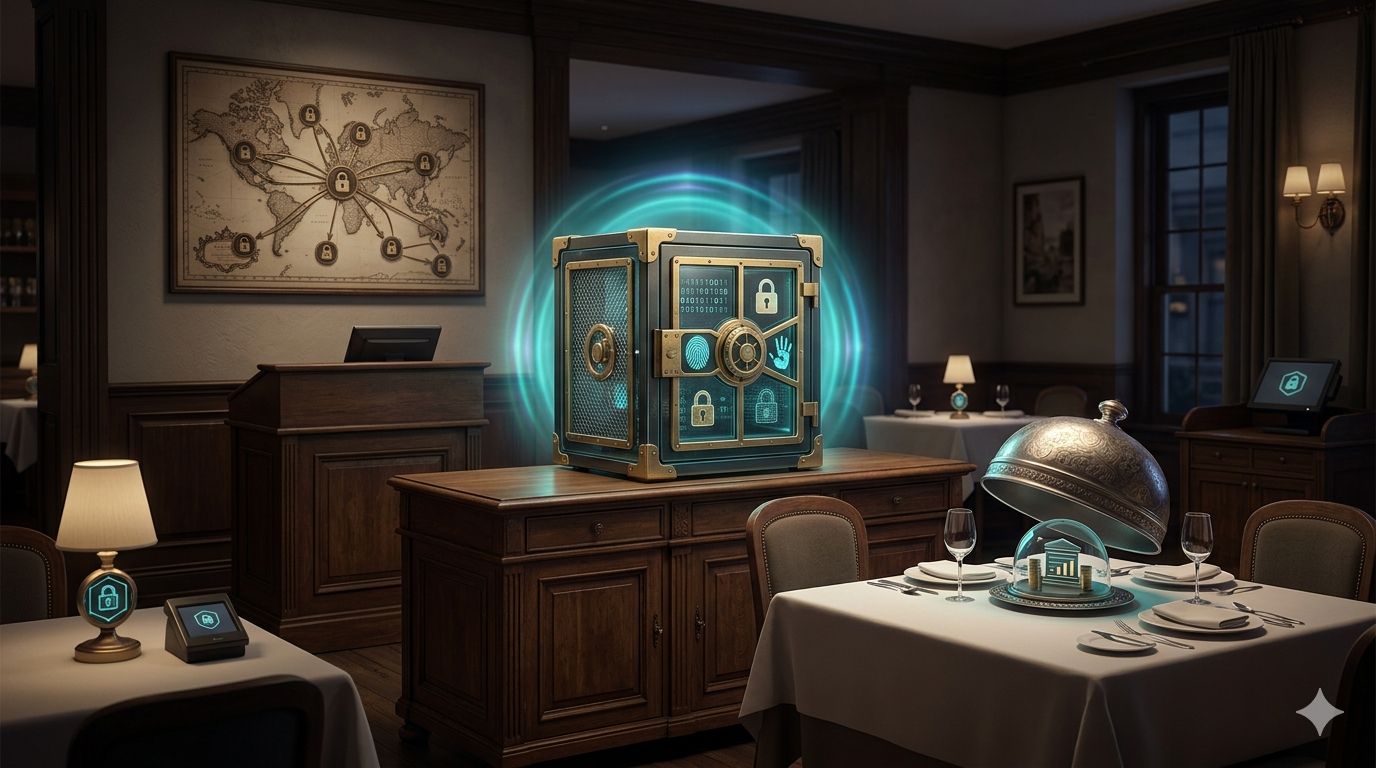
For decades, the security of an independent restaurant was measured by the strength of the deadbolt on the back door and the weight of the floor bolt on the office safe. But in 2026, the most valuable assets you own don’t sit in a cash drawer. They live in the cloud.
As independent operators have pivoted to first-party ordering apps, digital loyalty programs and Customer Data Platforms (CDPs) to escape the high commissions of third-party delivery, they have inadvertently turned themselves into “honey pots” for cybercriminals. You are no longer just a place that sells tacos or pasta; you are a data custodian holding the names, emails, birthdays and credit card tokens of thousands of local citizens.
If you think hackers only go after the “Big Macs” of the world, think again. Small-to-medium businesses (SMBs) are often preferred targets because their digital “windows” are frequently left unlocked.
The “Post-App” Vulnerability: A New Digital Perimeter
In the “Post-App” world, your restaurant’s digital footprint is scattered across multiple vendors: your Point of Sale (POS), your reservation platform, your email marketing tool and your handheld ordering tablets. Each one is a potential entry point.
Scenario: The “Trusted Vendor” Backdoor
Imagine a local bistro that uses a popular, third-party plugin to manage its digital gift cards. A hacker doesn’t attack the bistro directly; they find a vulnerability in the gift card plugin’s outdated code.
- The breach: The hacker gains access to the bistro’s integrated database.
- The result: Within hours, 5,000 guest profiles, including home addresses and dining preferences, are listed for sale on a dark-web forum. The bistro owner only finds out when guests start complaining about identity theft, leading to a PR nightmare that no amount of “free appetizer” coupons can fix.
According to a recent report by Verizon on Data Breach Investigations, systemic vulnerabilities in small business software remain a primary driver for cyberattacks. For the independent operator, the “perimeter” is no longer your four walls; it’s every login your staff uses.
The Three Pillars of the 2026 Independent Security Audit
You don’t need a six-figure IT department to protect your brand. You need a culture of digital hygiene.
1. Multi-Factor Authentication (MFA) is non-negotiable
If your manager uses the same password for the POS, the Instagram account and their personal email, you are one “phishing” text away from a total shutdown. MFA — where a code is sent to a physical device — stops 99% of bulk hacking attempts.
The scenario: A shift lead receives an email that looks exactly like an alert from your POS provider, claiming the system will be “wiped” unless they log in to verify the account. Because MFA is enabled, even after the lead enters the password on the fake site, the hacker is blocked because they don’t have the lead’s physical phone to enter the secondary code.
2. Segment your guest data
The principle of “Least Privilege” is your best friend. Does your dishwasher need access to your email marketing list? Does your floor manager need to see unmasked credit card digits?
The fix: Work with your CDP or POS provider to ensure data is encrypted and “tokenized”. This means that even if a hacker gets into your system, they only see strings of useless code (tokens) rather than actual credit card numbers.
3. The “IoT”(internet of things) trap
In 2026, everything is connected — your smart refrigerators, your sous-vide circulators, even your sound system. If these devices are on the same Wi-Fi network as your guest data and your POS, you have a major security gap.
The fix: Create a “Guest Wi-Fi”, a “Staff Wi-Fi” and a “Secure Business Wi-Fi”. Never let a smart toaster share a digital “room” with your financial records.
Ransomware: The 2026 Survival Plan
Ransomware — where a hacker locks your system and demands payment to release it — is the single biggest threat to independent operational continuity.
Scenario: the Saturday night lockout
At 6:00 PM on a sold-out Saturday, your KDS (Kitchen Display System) screens go black. A message appears: “Pay 2 Bitcoin or your data will be deleted.”
- Without a plan: You close for the night, lose $15,000 in revenue, and potentially pay a ransom that may or may not result in getting your data back.
- With a plan: You have an “Offline Survival Kit”. This includes a secondary, cloud-independent backup of your most recent guest orders and a manual “pen-and-paper” protocol that your staff has actually practiced.
As noted by the Cybersecurity & Infrastructure Security Agency (CISA), having an encrypted, off-site backup is the only way to ensure you don’t have to negotiate with criminals. For a restaurant, this means ensuring your POS provider offers a “cloud-contingency” mode that allows you to keep taking payments even if the main server is compromised.
Legal and Brand Liability: The Hidden Cost
Beyond the immediate loss of sales, the post-app world carries significant legal weight. Regulations like the CCPA (California Consumer Privacy Act) and similar laws emerging in 2026 across the U.S. mean that if you lose guest data due to “reasonable negligence”, you could face per-record fines that would bankrupt a small business.
More importantly, you lose trust. Hospitality is built on the feeling of safety. If a guest feels that dining at your restaurant resulted in their credit card being cloned, they won’t just stop coming to your restaurant; they will tell everyone they know.
Security is a Menu Item
In 2026, cybersecurity isn’t a “tech thing”, it’s a “hospitality thing”. Just as you wouldn’t serve a guest a dish from a dirty kitchen, you shouldn’t ask for their personal data on a “dirty” network.
By implementing MFA, segmenting your networks and vetting your app vendors for their security protocols, you aren’t just protecting your data. You are protecting the reputation you worked so hard to build.