
If you feel like you can’t open your inbox without seeing a “revolutionary AI solution” promising to save your kitchen, you aren’t alone. We are officially in the era of the ‘AI Shiny Object Syndrome’.
Every week, a new tool pops up: an AI phone bot to take reservations, a smart fryer that pings your phone or a scheduling app that claims to ‘predict the future.’ But here’s the secret we’re seeing at the top level of the industry in 2026: buying a bunch of AI tools doesn’t mean you have an AI-powered business.
In fact, if those tools don’t talk to each other, you might just be buying yourself a very expensive digital headache. Let’s talk about the difference between buying tools and building a true AI Capability.
The Tool Trap: Why More Isn’t Always Better
Imagine buying a state-of-the-art Italian pasta extruder, a high-tech Japanese rice cooker and a French sous-vide immersion circulator. They are all incredible tools. But if your staff only knows how to make burgers and your pantry is only stocked with buns and beef, those tools are just taking up counter space.
In tech terms, this is what happens when you buy a standalone AI tool for labor and a separate one for inventory. They function in silos.
The result: Your labor AI says you need 10 people on Friday night, but your inventory AI doesn’t know you’re out of the ‘Catch of the Day’. You end up overstaffed for a menu you can’t even serve.
According to a recent report by McKinsey on AI transformation, the companies seeing the most ROI are those that focus on the underlying data ecosystem rather than just the apps themselves.
What is an AI Capability?
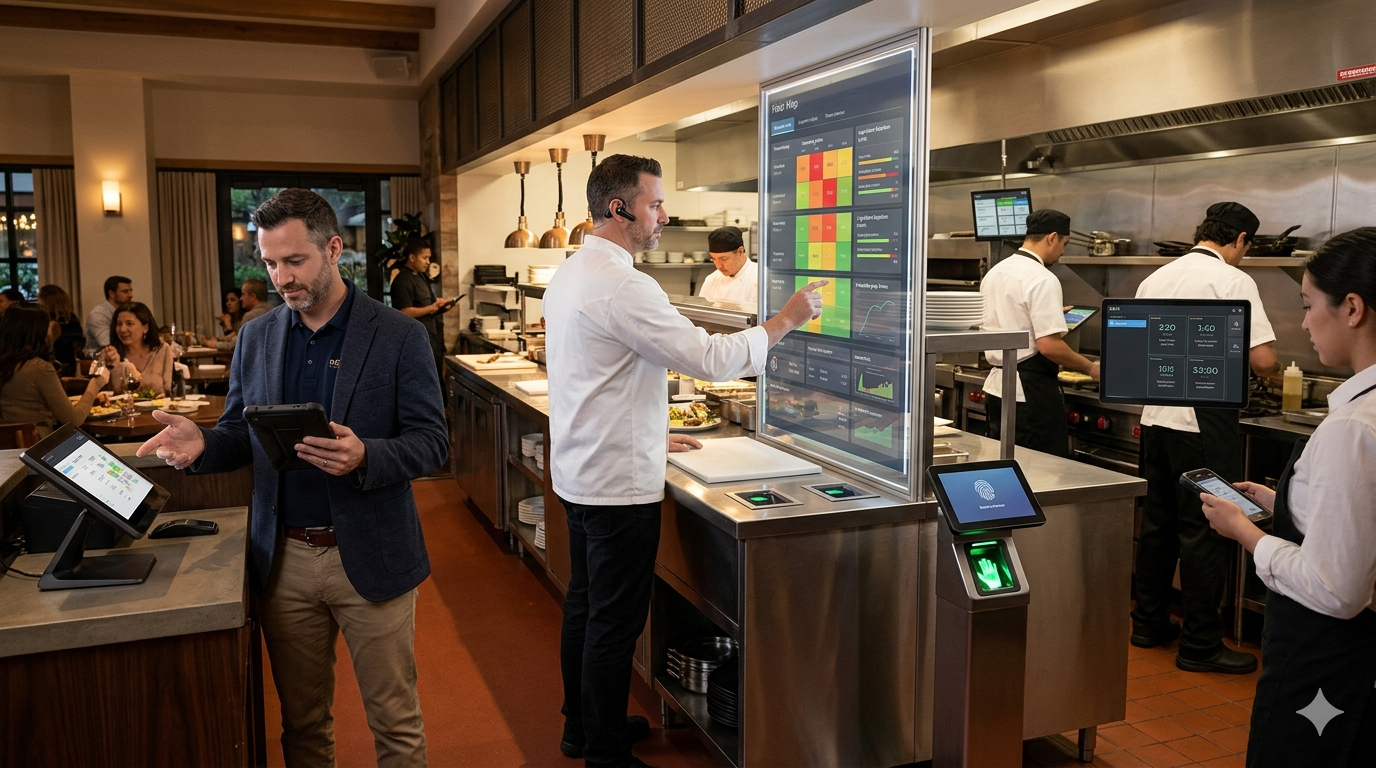
Building a ‘capability’ means creating a foundation where your data flows like a well-oiled line during a Saturday rush. It’s about making sure your Point of Sale (POS), your inventory and your staff schedules all share the same ‘brain’.
Example: The weather-driven prep list
Instead of just buying an AI prep-list tool, a restaurant with a ‘capability’ connects their local weather feed to their historical sales data.
- The tool approach: You check an app that says “Prep 50 gallons of soup.”
- The capability approach: The system sees a surprise rainstorm coming, checks your current fridge stock via smart sensors, notes that your prep cook is running late via the GPS-scheduling app, and automatically adjusts the digital prep sheet to prioritize the soup, while simultaneously firing a bulk order for more breadsticks.
How to Start Building Your ‘Brain’
You don’t need a Silicon Valley budget to do this. You just need to change your mindset from purchasing to integrating.
- Prioritize open APIs: When looking at new tech, ask: “Does this have an open API?” This is just tech-speak for “Does it play well with others?” If a tool can’t export data to your other systems, it’s a silo.
- Clean your data ‘kitchen’: AI is only as good as the info you feed it. If your menu items are entered differently in your delivery app than in your POS (e.g., “Cheeseburger” vs. “ChzBrgr”), the AI will get confused.
- Invest in people, not just software: You need someone — even a tech-savvy manager — who understands how these systems connect. As noted in this Harvard Business Review guide on AI adoption, the human element is what actually turns data into better hospitality.
The Bottom Line
AI should feel like an invisible sous-chef, not an extra chore on your to-do list. By focusing on how your tools work together, you’re not just following a trend; you’re building a smarter, more resilient business.