Why ghost kitchen pioneers want to say goodbye to the name

Omnichannel business, a focus on operations and reasonable growth timetables set the stage for ghost kitchens’ second act.

Ghost kitchens no longer reflect their flashy name, which denotes brands or food halls that diners could only access through delivery platforms. Many major companies in the space offer omnichannel touchpoints, rendering the term “ghost kitchen” misleading, Kitchen United CEO Atul Sood said. 

“I feel like it has been a misfortune to be branded as a ghost kitchen,” Sood said at a Restaurant Dive live event in September. “[Kitchen United is] not ghost kitchens, it’s something else. And in this food hall model, we need to serve consumers in multiple ways.”

The term ghost kitchen also carries some negative associations. For some consumers, the designation may be synonymous with issues around food safety and consistent service that have plagued some category operators. For restaurants, “ghost kitchen” may reflect the model’s failure to fulfill the spectacular business promises touted within the space during the COVID-19 pandemic. Companies in the segment pledged to open thousands of units, framed themselves as a lifeline for restaurants, and some even said the model was the future of fast food.

“What [was] to be a big accelerator of growth for the industry turned out to be a little bit of a false positive,” Sood said of the pandemic.

The delivery-only industry was in its nascent stages during the pandemic, but is now undergoing a process of normalization — meaning flawed concepts are changing their business models or failing — that sets the stage for broader adoption, said Rishi Nigam, CEO of virtual restaurant platform Franklin Junction.

Diners can now interact with formerly delivery-only concepts

Though Kitchen United was a ghost kitchen pioneer when it launched in 2017, Sood said its business model does not now, and never has strictly adhered to the classic definition of “ghost kitchen.” While some competitors were delivery-only, for example, Kitchen United always offered takeout kiosks for consumers. 

“We’re really not [a] ghost kitchen,” Sood said. “We have 18 sites; eight of those are inside Kroger grocery stores.” At those Kroger units, which are key to the company’s ongoing growth strategy, customers can see and interact with the on-site restaurant the way they do with other brands that operate in grocery stores, like Starbucks.

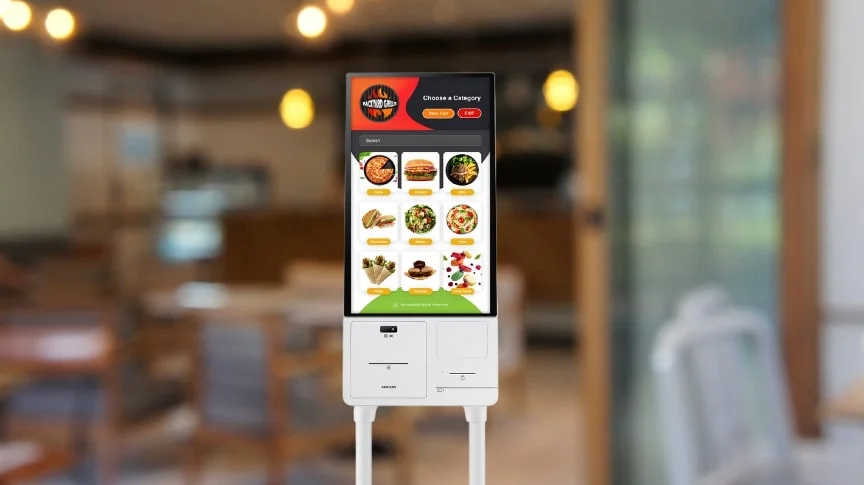
“In many of [our Kroger locations] you can look into the kitchen and see the food being prepared,” Sood said. And at other locations, customers can order directly from kiosks. That touchpoint sets Kitchen United apart from classic ghost kitchens, which are only accessible to customers through digital channels.

“We have always been customer-facing,” Sood said. “We realized sooner than many in the industry that you could not operate a restaurant effectively through delivery, you needed to have the other channels, takeout — which is essentially pickup — and catering.”

One thing that has helped some ghost kitchen companies survive the rapid changes in the business environment over the last few years, according to Nigam, is leadership with deep restaurant experience.

“It’s very important that you yourself have institutional knowledge of how those businesses work, how change is implemented, the problems that you’re going to run across, the solutions that you have to implement on the fly,” Nigam said. “And those are things that are very difficult for people that have not worked in the restaurant industry.”

In the future, the ghost kitchen and virtual brand companies that focus on good operations and steady growth, Nigam said, will outperform firms that focus entirely on rapid expansion.

“It’s very, very tempting to take big investor checks and try to scale super fast. But this is not an industry that rewards speed,” Nigam said. “Slow and steady is the way to win this industry.”
Ten Ways You Can Make Your Food and Beverage Business a Great Place to Work

0

Have you ever noticed how great service in restaurants and cafes can make your day? It’s all thanks to the fantastic employees who enjoy their work. When bosses in food and beverage places make their workers excited about their jobs, it can lead to happier customers.

Why Happy Workers Matter

Think of happy employees as the special ingredient that makes a food and beverage business successful. They work with a lot of energy and care, which makes customers love their meals and drinks even more. We’ve compiled a list of 10 ways to bring out the best in your employees. These recommendations are based on trends we’ve seen in the industry and the clients we support. While every business is different, these tips can help you bring out the best in your food and beverage company.

1. Create a Positive Work Vibe

When bosses make the workplace respectful, workers tend to feel happy. It’s about being kind, listening to each other, and saying “Great job.” These things help workers grow and feel proud of their work.

2. Explain What’s Expected

When workers understand their jobs and what they’re supposed to do, they can do even better. Setting clear goals and communicating them makes workers feel important and ready to give their best effort.

3. Always Be Teaching

As bosses teach workers new things, it can show that they truly care. Giving lessons about how to serve customers well, knowing the menu, and doing the job with skill makes workers feel valued and ready for bigger challenges.

4. Balance Work and Fun

When workers can do their jobs well and still have time for fun outside of work, they stay happy. Having time to relax and enjoy life helps them do an even better job.

5. Say ‘You’re Awesome’

When bosses say things like “You’re doing a great job” or give performance-based rewards such as money or gift cards, it can add to workers’ sense of pride and drive them to do even better. This boosts everyone’s spirits and makes people feel good about their work.

6. Focus on Teamwork and Good Times

When team members work together and have fun, they can become like friends. Doing activities together and working as a team can make workers like their jobs even more.

7. Give Workers a Say

If workers can make decisions and share their ideas, they feel like they’re part of something important. This excites them and helps them come up with cool new ideas for the job.

8. Listen to What Workers Think

Bosses should ask workers their thoughts about the job and how things can be improved. This shows that workers’ opinions matter and helps make the job even better.

9. Keep Workers Healthy

Bosses should make sure all workers, whether they work a lot or a little, get health benefits. This keeps workers happy, healthy, and ready to do amazing work.

10. Get Help from Those Who Know Best

Sometimes, the right idea is to seek out people who know a lot about these things to help. Professionals such as those who help with your health care plans can give ideas to make workers happy. They are likely a good place to start understanding macro trends in your workforce.

Food for Thought

Food and beverage businesses are most successful when workers are joyful and excited about their jobs. When bosses create a fun work vibe, teach workers what to do, and say “Awesome job,” everyone feels happy. We’ve only scratched the surface of how to make your workplace one people want to be a part of. 

The Future of Restaurant Hiring: Fixing a Broken System

0

Companies need to move beyond traditional practices and prioritize fairness and objectivity.

When it comes to hiring, speeding up the process is paramount.

Traditional hiring methods are broken for both candidates and companies, relying on outdated hiring decisions that are made almost exclusively from resumes. Focusing on what a person has done—not what they have the potential to do—creates blind spots and prevents businesses from hiring untapped talent. 

This type of “rearview recruiting” also frustrates candidates with a cold, manual, and opaque process that takes way too long, with little communication and no feedback.

In the recent HireVue Hiring Experience Report 2023, respondents overwhelmingly expressed discontent with the current hiring landscape. Points of frustration include a lack of feedback (40 percent), the constraint of resumes rather than assessments based on potential and skills (30 percent), the need for more streamlined processes (37 percent), and the prevalence of inaccurate job descriptions (31 percent).

Companies need to move beyond traditional practices and prioritize fairness and objectivity. By leveraging AI to evaluate candidates based on potential, skills, and interests, companies can replace guesswork with a nuanced understanding of each candidate.

When it comes to hiring, speeding up the process is paramount, but it has to be done effectively. An efficient screening and assessment process is crucial to identify the most qualified candidates quickly. Here are a few tactics that hiring managers can employ to optimize this process:

  • Utilize Automation: To achieve fast yet effective hiring, leverage applicant tracking systems (ATS) and other automation tools to streamline the screening and assessment process. These tools can help in sorting and filtering applications based on predefined criteria, such as skills and qualifications, saving valuable time for hiring managers.
  • Utilize Skills Assessments: Consider using online skill assessments and pre-employment evaluations for candidates efficiently and objectively. Assessments provide valuable insights into a candidate’s abilities, knowledge, and cultural fit, enabling hiring managers to make informed decisions more quickly.
  • Develop Clear Evaluation Criteria: Define clear evaluation criteria based on the job requirements and desired skills—this ensures consistency in the screening and assessment process and enables hiring managers to make fair and objective comparisons amongst candidates. By establishing a scoring rubric, hiring managers can quickly identify the top candidates who meet the predefined criteria. This structured approach mitigates biases and allows for a more systematic and efficient evaluation of a high volume of applicants.
  • Conduct Structured Interviews: Implement structured interview processes to assess candidates consistently and fairly. Start with realistic job previews, so candidates are clear about what the role entails. Next, develop a set of standardized interview questions that focus on specific competencies or skills relevant to the role. This helps compare candidates for the particular role and ensures that all candidates are evaluated based on the same criteria. Structured interviews help maintain consistency and reduce subjectivity, leading to more accurate assessments in high-volume recruiting.
  • Utilize Video Interviews: Consider using video or panel interviews with the help of a Video Interview Platform to save time and accommodate a larger number of candidates.

How Self-ordering Kiosks improve customer engagement

In today’s fast-paced world, the restaurant industry is a dynamic and ever-evolving sector, where staying relevant and keeping up with technological advancements is crucial. Among these advancements, Self-ordering kiosks stand out as a transformative technology. These are not mere order-taking machines; they represent a fundamental shift in how customers interact with your restaurant. They offer an unprecedented level of convenience and customization, drastically enhancing the customer experience. Understanding the impact of Self-ordering kiosks on customer engagement is vital for any restaurant owner. These kiosks are a bridge between modern technology and enhanced customer service, transforming the way customers view and interact with your restaurant.

The Role of Self-ordering Kiosks in Customer Engagement

Role of Self-ordering Kiosks in Customer Engagement - Applova

1. Interactive Customer Experience through Self-ordering Kiosks

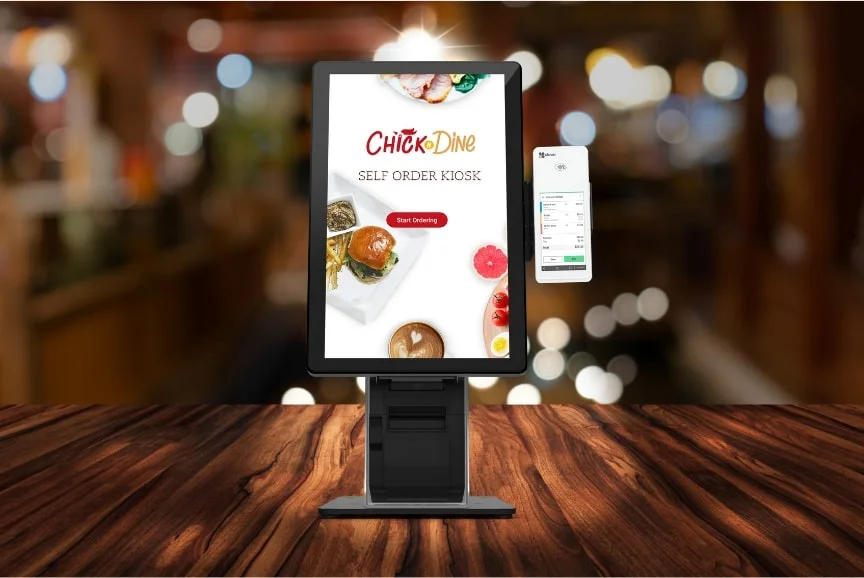
Self-ordering kiosks provide an interactive and engaging experience that captivates customers from the moment they walk in. These kiosks, with their intuitive touchscreens, offer a platform for customers to delve into your menu, discover daily specials, and customize orders to their exact preferences. This heightened level of interaction not only enhances the customer’s experience but also fosters a deeper connection with your restaurant. The ability to explore and interact with the menu without feeling pressured allows customers to make more informed choices, enhancing their satisfaction and engagement with your restaurant.

2. Personalization and Recommendation via Self-ordering Kiosks

One of the most significant advantages of self-ordering kiosks is their ability to offer personalized recommendations. By analyzing customer preferences and previous orders, these kiosks can suggest items that align with individual tastes, creating a more bespoke dining experience. This level of personalization is not just about suggesting popular or new items; it’s about creating a unique experience for each customer. Such tailored interactions can lead to increased customer satisfaction, repeat visits, and word-of-mouth recommendations, all of which are invaluable for the growth of your restaurant.

Must Read: How Much Revenue can a Self-serve Kiosk Generate for a Restaurant?

3. Reducing Perceived Wait Times

Long wait times can be a major deterrent for customers. Self-ordering  kiosks effectively address this issue by streamlining the ordering process. The direct ordering and payment capabilities of these kiosks significantly reduce the time customers spend waiting to place an order or make a payment, leading to a more efficient and pleasant dining experience. This efficiency not only enhances customer satisfaction but also increases the likelihood of repeat visits, fostering a loyal customer base.

4. Enhancing Customer Autonomy

In a world where customers value control and independence, Self-ordering kiosks offer an empowering solution. By allowing customers to take charge of their ordering process, these kiosks provide a sense of autonomy and freedom. This empowerment is particularly appealing to the modern diner, who appreciates the ability to customize their meal and make choices at their own pace. The kiosks’ user-friendly design ensures that customers of all ages and tech abilities can easily navigate the ordering process, further enhancing the inclusivity and appeal of your restaurant.

5. Gathering Feedback and Interaction

Self-ordering  kiosks also serve as an effective platform for gathering immediate customer feedback. By enabling customers to share their dining experiences and opinions directly through the kiosk, you can gain valuable insights into their preferences and areas for improvement. This direct line of communication not only helps in enhancing the quality of your service but also makes customers feel valued and heard. Such interactive feedback mechanisms can play a crucial role in building customer loyalty and trust.

How Self-ordering Kiosks Enhance Customer Engagement

Self-ordering Kiosks Enhance Customer Engagement - Applova

1. User-Friendly Design

The success of Self-ordering  kiosks heavily relies on their user-friendliness. A well-designed interface that is intuitive and easy to navigate can cater to a wide range of customers, including those who are not particularly tech-savvy. The design should be such that it guides the user through the ordering process smoothly, with clear instructions and visual cues. This consideration in design not only enhances the user experience but also ensures that all customers, regardless of their age or tech proficiency, can benefit from this technology.

2. Integrating Self-ordering Kiosks with Loyalty Programs

Integrating Self-ordering  kiosks with your restaurant’s loyalty programs can significantly boost customer engagement. These kiosks can be programmed to recognize returning customers, offer them personalized rewards, and remind them of their loyalty points. This integration not only incentivizes repeat visits but also creates a sense of belonging and appreciation among your customers. It’s an effective way to keep your customers engaged and invested in your restaurant.

3. Digital Menu Boards and Promotions

Self-ordering  kiosks double as digital menu boards, showcasing your dishes in an appealing and interactive manner. High-quality images, detailed descriptions, and the ability to highlight special promotions or new items make these kiosks an effective marketing tool. They offer customers an engaging way to explore your menu and encourage them to try new dishes, enhancing their dining experience.

Must Read: Self-Ordering Kiosk: A Worthy Investment for Your Restaurant?

4. Social Media Integration

In today’s digital age, social media plays a pivotal role in customer engagement. By integrating social media capabilities into your kiosk system, you provide customers with an opportunity to share their dining experiences or favorite dishes directly through the kiosk. This not only enhances their engagement but also serves as an effective promotional tool for your restaurant. User-generated content on social media platforms can attract new customers and build a stronger online presence for your restaurant.

Self-serve kiosks are more than a nod to technological advancement; they are a gateway to a new realm of customer engagement. They transform the dining experience by providing interactive, personalized, and efficient service. As the expectations of customers continue to evolve, integrating Self-ordering  kiosks is not merely an operational decision, but a strategic move to enhance customer engagement and drive business success. For restaurant owners, embracing this technology means not just keeping pace with industry trends, but leading the way in customer satisfaction and restaurant innovation.

Ordering Channels and Preferences Have Shifted: How Restaurants Can Win The Customer

Surging prices have been top of mind for consumers for two years and counting, leaving restaurant leaders questioning how inflation might influence diners’ behavior and overall spending habits, including their usage of digital ordering and third-party delivery apps– both of which gained momentum during the pandemic. 

While restaurants might have expected to see a bigger shift back to in-person transactions as a result of customers looking to cut costs, there simply hasn’t been a dramatic change in behavior. 

Instead, two recent research reports, The State of Third-Party Delivery and The Biggest Consumer Insights Trends of 2023 (So Far), shed light on how delivery has become a preferred dining option for many consumers and an important part of the omnichannel restaurant customer journey that brands can’t afford to overlook. As part of these studies, Medallia Market Research analyzed the credit and debit transactions of more than five million U.S. consumers and conducted multiple market research surveys of more than 2,000 participants to gain consumer insights related to third-party ordering and inflation. These findings reveal how delivery apps are shaping dining experiences and loyalty, which could prompt a need for restaurant owners to pivot their strategies. 

Delivery Apps Have Become a Critical Channel for Customer Acquisition

About one in four consumers — 27 percent of Gen Zers and 21 percent of all other generations — say their preferred restaurant experience is ordering delivery from third-party apps like DoorDash and UberEats or from restaurants directly via their phone, website or app. In fact, Gen Z consumers specifically prefer delivery over dining in person (only 24 percent say in-person dining is their #1 choice). 

Even though most consumers say they’ve become more price sensitive than they were a year ago and that inflation has caused them to re-think how often they use delivery services, there’s been a significant amount of stickiness and habit building around delivery.

Third-party ordering has remained steady over the past year and has maintained the tremendous growth it first experienced during the pandemic. When looking at DoorDash data in particular, both transaction volume and average check size are up year over year. 

These trends signal that delivery habits and platforms are here to stay as customers seek convenience, a factor that most consumers say is more important today than it was a year ago. This preference will likely persist and potentially grow over time as Gen Zers become a much bigger part of the total market. With these shifts in mind, restaurants can benefit from developing a comprehensive omnichannel strategy that’s inclusive of delivery apps as research, discovery and acquisition vehicles. This is especially true when taking into consideration that only about half of consumers say they know where they want to order from when using delivery services, while 42 percent say they browse through the options available in delivery platforms before deciding where to order from. 

The delivery experience is a new and evolving part of the customer journey, one that restaurant brands need to better understand. This can be done by collecting customer feedback via surveys, conducting social listening and analyzing other customer signals from interactions customers have across owned and third-party touchpoints along the omnichannel journey. This may include visit patterns, customer service interactions, loyalty membership program data and marketing campaign engagement data. Market research can also shed light on what’s happening when customers are dining with the competition.

Delivery Apps Are Influencing Customer Experience and Loyalty

For some diners, delivery platforms may shape the entire customer experience. In fact, roughly one in five consumers may not make the jump from delivery to dining in person — 18 percent of consumers say the restaurant they most recently ordered from online is one they’ve never visited in person. In these instances, as well as for customers who switch back and forth between in-person dining, delivery and to-go orders, it’s important for restaurants to understand the impact on customer satisfaction and evaluate whether the delivery experience is in line with the full experience the restaurant typically provides. 

Most consumers (57 percent) say they prefer ordering food directly from restaurants via their phone, website or app compared to third-party platforms (28 percent). Given the fact that first-party ordering appears to be correlated with higher customer satisfaction, this preference makes sense. Consumers say it’s easier to order and that food freshness and temperatures are better when ordering with restaurants directly. 

As more brands realize the full potential of third-party ordering apps as acquisition tools, then the next priority should be to encourage customers who first try out the restaurant via a delivery platform to place their next orders with the brand directly via their owned, first-party channels. This could be in person at one of the brand’s locations, online or over the phone, to enhance the customer experience, boost customer satisfaction and ultimately drive repeat business. 

For some restaurants, not offering delivery directly may be one of the biggest obstacles preventing third-party customers from converting into first-party customers (in fact, this is the #1 reason customers cite for not selecting first-party ordering). However, even those restaurants that offer delivery might be losing customers to third-party platforms because of other issues, such as a lack of customer awareness about delivery offerings, less competitive promotions compared to those available on third-party apps as well as inconvenient challenges that hinder customers from placing or getting in touch about orders. These factors are other top reasons consumers cite for not selecting first-party ordering. 

Overcoming these barriers can help restaurants secure more wallet share for deliveries, but restaurants must actively educate customers on the benefits of ordering directly with their business and sweeten the deal with special offers exclusive only for first-party orders. 

Customers say they’re more likely to select first-party delivery if they see lower menu prices and fewer fees, can earn loyalty rewards, experience faster delivery and if they receive a promotion or coupon in their delivery bag that can be used directly with the restaurant. This comes as individuals are adapting to inflation by conducting more price research, and 45 percent of consumers say they’re comparing the cost of ordering via third-parties versus with restaurants directly. As a result, the time is ripe for restaurants to educate customers about the potential to save and earn perks. 

While restaurants work to optimize their first-party delivery offerings, personalization, convenience and flexibility are additional key elements of the equation. Consumers say some of the top factors that elevate the delivery experience include being alerted when and where the food arrives (and even getting a picture of where the order has been left); receiving condiments, napkins and utensils by default; getting to choose how the food is delivered (i.e. left at the door or handed off); receiving restaurant coupons/menus for future orders; and being able to schedule a delivery for a future moment in time.

For some diners, delivery platforms are the start of their customer journey. For others, for whom delivery is the preferred way to indulge in a restaurant meal, delivery may make up their end-to-end lifetime experience. As Gen Z grows in importance as a customer base, delivery will become a more permanent part of the omnichannel restaurant experience.

Implementing the strategies presented here can empower brands to optimize the evolving omnichannel restaurant customer experience and convert more third-party delivery customers into first-party customers. 

The Most Popular Item on the Menu: Personalization

At the end of the day, meeting sales objectives relies on meeting customer needs

In a world full of changes, the familiarity of fast casual restaurants comforts buyers because they know exactly what to expect. The golden arches, a fun paper crown, a girl with red pigtails—they’re popular because they’re consistent. Consistency in the fast-causal space is still relevant today, but it’s taken on a new form as technology becomes integrated into day-to-day operations. Now, customers want consistency through personalized experiences.

Personalization is a top priority for consumers and heavily dictates whether they continue to buy from brands. Today, 91 percent of customers are more likely to shop with brands that recognize, remember, and provide them with relevant offers and recommendations. While tailored customer experiences are a must-have for consumers, there’s a disconnect between customer need and business execution. This stems from marketing challenges: 63 percent of marketing executives struggle to provide tailored experiences to customers. So, what’s the catch? How can businesses master the art of personalization to meet sales goals? Technology is a great place to start.

Customization with Self-Order Kiosks

There’s nothing better than ordering—and eating—a go-to meal at a restaurant. The icing on the cake—or the ketchup on the fries—is when customers get that meal quickly and easily. Self-order kiosks are the special sauce to making this a reality.

Self-order kiosks let customers order at their own pace. With more autonomous ordering practices, customers don’t feel rushed to quickly communicate their orders with front-of-house staff. This takes the pressure off customers, boosts customer experience, and typically results in larger orders.

Self-order kiosks use facial recognition software (for those who choose to opt-in) to remember customers’ past orders and immediately let them purchase those orders again. Integrated with payment software, these kiosks can also remember customers’ payment information to reduce touchpoints and time spent ordering.

Beyond uptime, remembering customer orders and preferences also has financial gains for consumers. Customer recognition lets restaurants implement rewards programs, which give customers perks, like a free meal or discount after a certain number of visits. Unique offers based on visiting patterns incentivize customers to continue to purchase from the same restaurants. For example, seven out of 10 Americans consider loyalty programs a leading factor in securing their continued patronage of their favorite brands.

Improving Drive Thru Experiences with Digital Signage

Like self-order kiosks, digital signage is a must-have for improving the customer experience. With digital signage software, staff can update digital menu boards in real time to alert customers of new offerings, items that are sold out, or special deals. So long are the days of frustrating chalk boards or “sold out” stickers. Plus, menus can automatically switch from breakfast to lunch to dinner, unlike static menu boards which need to be physically swapped out throughout the day, rain or shine.  

In quick service restaurants, keeping digital menu boards up to date is crucial and becomes even more important with drive-thrus. Customers in the drive thru rely on the accuracy of digital menu boards to make their purchasing decisions. However, something most can relate to is the frustration of pulling up to the order window only to be told an item of choice is sold out. This puts pressure on customers to quickly come up with new orders, with the added challenge of no longer being able to see the menu board. This can result in a poor customer experience, a lost revenue opportunity, and a missed chance at securing a repeat customer. With digital signage software, staff can update menu boards based on stock to ensure customers get their desired meal from pull up to pull away. It also lets teams spotlight new meals and deals that customers might not have known about, encouraging them to add on to their cart.

We’re also seeing the rising importance of digital menu boards as consumers demand information beyond just the price of an item. Many customers now make eating decisions based on information like calories, ingredients, and other nutritional considerations. Leaving customers guessing isn’t the answer. Whether health-conscious, allergic to or intolerant of certain ingredients, customers can more quickly and confidently order.

The Importance of Data Collection & Analytics

No matter the type of technology used in quick service restaurants, integrating data collection and analysis software is a must. For tools like self-order kiosks, data collection informs managers of top-selling products, typical meal sizes, and purchasing patterns. This helps determine which products are poised for upselling or what meals need to be promoted further. Software can also analyze purchasing patterns to decipher peak business hours and foot traffic. This helps managers develop employee schedules and be strategic with where and when they use personnel to minimize potential wait times and produce positive customer experiences.

At the end of the day, meeting sales objectives relies on meeting customer needs. By giving customers more personalized experiences through self-order kiosks, digital signage, and data analytics software, restaurants can easily boost yields to achieve financial demands, while meeting the needs of today’s consumers.

James (Jay) Burdette is the senior director of the Enterprise Process Innovation Center at Panasonic Connect North America. Panasonic Connect is a B2B company offering device hardware, software, and professional services for the connected enterprise. James has near 20 years of experience working within the QSR, TSR, fuel and convenience, and retail industries, leading customers to significant business growth. Jay is a forward-thinking business strategist who is motivated by solving unique customer challenges. He strives to foster a collaborative environment within his teams that leads to true partnership. In his spare time, Jay is an avid motorcycle rider and has a passion for Harley Davidsons, having taken numerous interstate and cross-country rides with his family and friends.

The American restaurant consumer: resilient yet selective

Q3 earnings were mixed as the consumer became more bifurcated, and guidance remains a challenge.

Now that most public companies have reported Q3 results, we have a stronger pulse on the state of the restaurant consumer amid a continuously uncertain backdrop.

Or do we?

As we’ve been reporting for about a year now, the state of the consumer has been puzzling, even for the savviest economists. We started to see some trade down activity happening in the fourth quarter of last year, but it didn’t grow much beyond a ripple as industry sales and traffic remained steady and, in some instances, strong. That began to change in Q3, when pricing fatigue finally set in, leading to sharp traffic erosion. The restaurant industry hasn’t been the only sector impacted by relentlessly high inflation; retail has also taken a pretty big hit. That said, consumers have continued to show their willingness to spend at restaurants and elsewhere, and the U.S. gross domestic product grew at a staggering rate of nearly 5% last quarter.

This inconsistency was front and center during Q3 calls, in which BJ’s Restaurants CEO Greg Levin, noted, “We’re all trying to decipher different things.” Or, as Darden Restaurants’ CFO Raj Vennam summed up, “There’s been mixed data on the consumer.”

In other words, things remain puzzling, and guidance is, therefore, hard to come by. What we know now is consumers are more discretionary. Except for high income consumers in some – but not all – instances.

“Consumers continue to be resilient but more selective,” according to Darden CEO Rick Cardenas. Cardenas’ casual dining peer John Peyton, CEO of Dine Brands, also said guests have become more selective about where they choose to spend their money, adding that it’s a “price sensitive environment.” However, sales remain steady. In any normal environment, this wouldn’t add up so tidily, but this is no normal environment. Peyton believes that works in his company’s – and the industry’s – favor.

“We believe eating out continues to be an occasion guests value,” he said.

Notably, “eating out” doesn’t necessarily mean sit down service. Just take a look at the strong results from Chipotle or Starbucks, for instance.

“It’s clear we’re navigating the uncertain economies and markets around the world. Customer demand for us remains strong. We’re not really seeing any change in the sentiment in our customer base at this time,” Starbucks CEO Laxman Narasimhan said during his company’s call.

Not every report was so rosy, and we witnessed plenty of sales and transaction declines. Of course, this industry isn’t homogenous, and one explanation is an increasingly bifurcated consumer and how that impacts certain brands differently. As the Washington Post reported recently, wealthier consumers are still spending a lot, while lower-income consumers are pulling back. Starbucks and Chipotle tend to attract higher income consumers. Potbelly is another example, as CEO Bob Wright noted during his company’s positive report.

“Our consumer seems to be hanging in there really well. They’ve got the income to support it. The most revised numbers suggest the consumer in this $75,000-plus range has not been impacted by pricing we’ve taken to offset inflation,” Wright said.

Brinker CEO Kevin Hochman added that his company continues to see spending across all households, but higher income households have grown wallet share faster, which provides more insulation.

“Look at the brands that have reversed some of that discounting trend and went to more of an everyday low-price strategy or everyday value strategy. You typically see the guests move to more middle income and higher income and, over time, you become a little less reliant on deep discounting because those guests, that doesn’t matter as much to them,” he said. “To have a more affluent customer base is always going to give you a little bit more insurance than one that’s not and I think we’re seeing that a little bit now.”

Wendy’s corroborated the $75,000 income as being sort of that threshold of impact.

“If you look at the consumer, it’s really a tale of two sides. The over $75,000 consumer tends to be healthy. We continue to see traffic growth in that segment,” CEO Todd Penegor said. “Under $75,000 consumers are a little more stressed. As you go down the income core, it gets even more stressed. We are seeing some trade down from mid-scale casual and sit down into QSR, but also some trade out of the category from lower-income consumers out of QSR and into food at home.”

Food at home may also be where McDonald’s lower-income consumers have shifted. CEO Chris Kempczinski acknowledged some “traffic slippage” with this cohort. As this trade-in-and-out environment becomes more defined, food at home could very well become a bigger competitive target, especially if brands maintain elevated pricing levels. This could be a sweet spot for the fast casual segment, as Wingstop CEO Michael Skipworth noted.

“In Q3, we saw a slight uptick in frequency with that low-income consumer and at the same time, we’re seeing that higher-income consumer potentially pull back on dining out occasions and dining at home more,” he said. “And we’re winning on those occasions as well … We’re acquiring more new guests than ever.”

There are anomalies all over the place and an example here is with Dine Brands, whose core consumer at a $50,000 to $75,000 income level hasn’t made “any significant changes,” according to Peyton. That said, check management is happening, with appetizer and alcohol mix a bit lower than in previous quarters, as reported by several casual dining chains.

What does any of this mean? That we’ll continue to scratch our heads at the unusual trends manifesting from a consumer set changed by a once-in-a-lifetime global health crisis, and that guidance will continue to be very hard to come by.

It’s worth noting that with all of these attempts to decipher the undecipherable, the past two quarters of earnings have spotlighted another theme – “normalization.” Things are normalizing after an unprecedented three years of shutdowns, labor shortages, supply chain pressures, inflation, etc. As such normalization applies to Q3, that means slower-than-usual seasonality because of back to school and other factors. This means, despite all of the uncertainty, Q4 could provide more reasons for optimism, and we may already be seeing that. Consider Bloomin’ Brands, which experienced same-store sales and transaction declines in Q3. CEO David Deno attributed his company’s softness in September to seasonality and remains optimistic about normalized seasonality coming into play in Q4.

“We feel good about November and December,” he said. “We think the consumer is in a decent spot.”

Square Q3 Restaurant Industry Report: Post-Pandemic Dining Traffic Stabilizes in American Downtowns

Thanksgiving Meal Calculator gives consumers key data for holiday dinner decisions
New insights shed light on downtown recovery and restaurant worker wages

OAKLAND, Calif.–(BUSINESS WIRE)–Today, Square released the latest edition of its quarterly Restaurant Industry Report, which uses data across Square’s food and beverage sellers to examine dining trends and shifts in both consumer spending and restaurant wages.

This Thanksgiving, consider ordering out

As restaurants continue expanding their offerings to include meal kits, branded merchandise, and more, some eateries are now offering prix fixe Thanksgiving meals to bring consumers the luxury of choice and convenience.

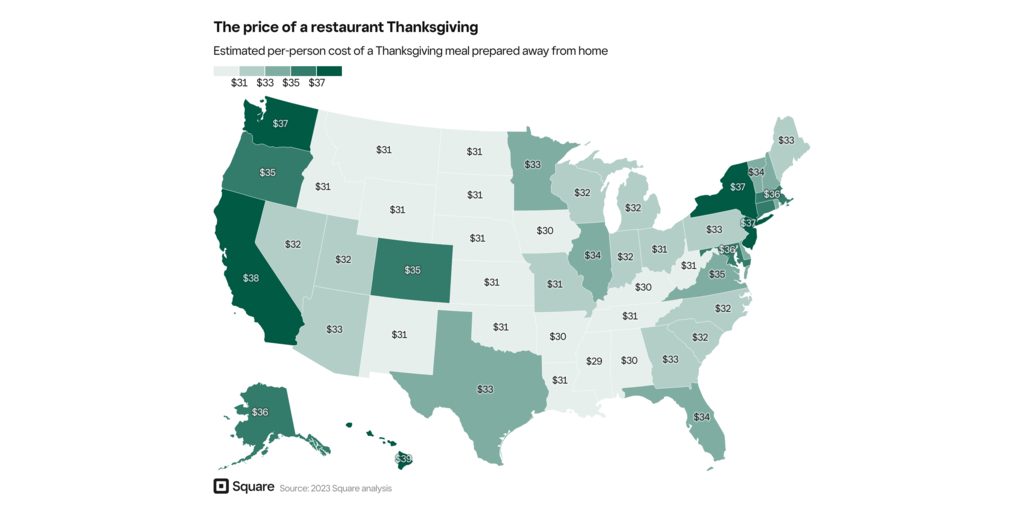
Hosting and cooking Thanksgiving can be quite the feat. As consumers begin planning for their Thanksgiving dinners, Square has created a Thanksgiving Meal calculator that enables consumers to estimate the cost of a take-out Thanksgiving meal from local restaurants. Nationwide, a hearty meal would cost $34 per person on average.

Dining out plateaus post-pandemic in America’s downtowns, but some cities thrive

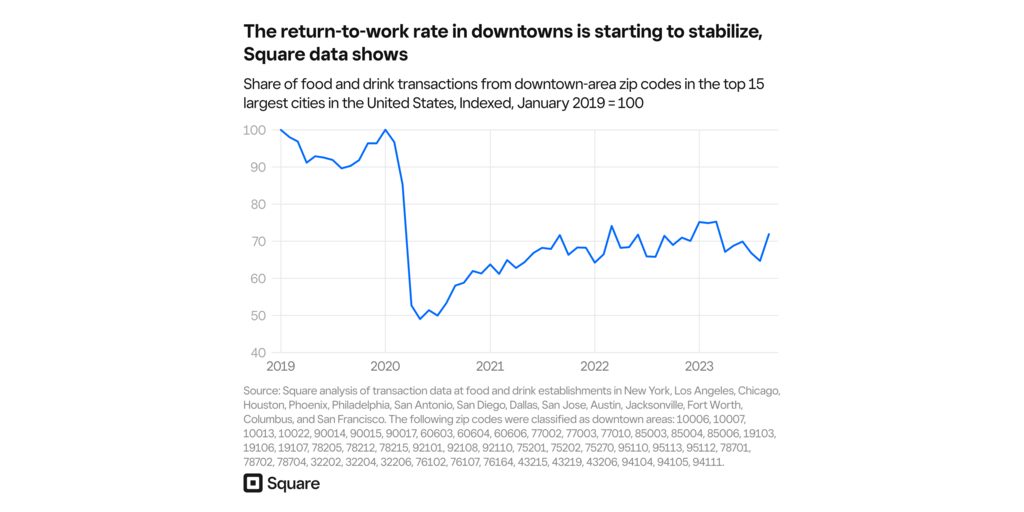
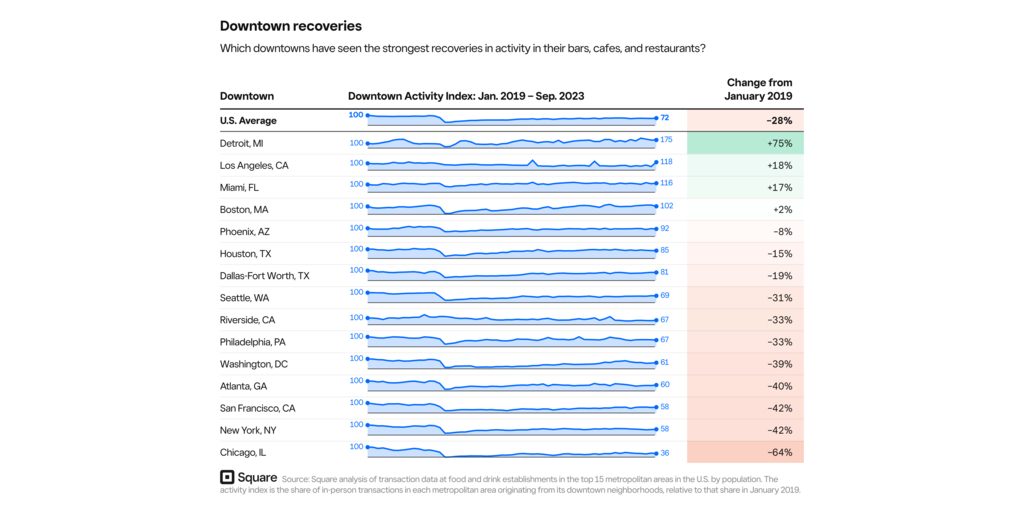
As many consumers continue working from home at least part time, demand at restaurants in downtown areas is stabilizing. Square analyzed the hourly share of card-present transactions at food and drink establishments in the United States from 2019 through September 2023. Compared to January 2019, downtown neighborhoods in American cities appear to have flatlined at roughly 72% of their pre-pandemic activity as of the end of September 2023.

While dining and going out has not fully returned to pre-pandemic levels across all cities, a few downtowns nationwide are thriving. When looking at the top 15 metropolitan areas in the country, Detroit has seen major growth in food and beverage transactions with a 75% increase since 2019, followed by Los Angeles and Miami (increasing 18% and 17%, respectively). Other cities that are at or nearly back to 2019 levels of dining activity include Boston (up 2%) and Phoenix (down 8%).

“While dining trends are normalizing, restaurants in cities that are experiencing spikes or slumps can take advantage of technology to help handle increased orders or drive more traffic,” said Ming-Tai Huh, General Manager of Square for Restaurants. “For restaurants that fill up at lunchtime or right after work, consider using handhelds for line-busting or an easy-to-use KDS to get orders out faster, and for those that are seeing a slow-down, lean into automated marketing tools to attract the crowds.”

To continue bringing in guests and create repeat customers, restaurants can harness marketing and loyalty tools. With Square Marketing, restaurants can easily promote new menu items, events, or deals, and they can also take advantage of automated campaigns to welcome new customers, bring back lapsed customers, send birthday promotions, and more. With Square Loyalty, restaurants can drive repeat guests through fully integrated and easy-to-enroll loyalty programs that provide operators with real-time visibility into customer activity and sales impact.

Restaurant wages are up, but their growth is slowing

Last month, Square introduced the Square Payroll Index, a new economic indicator that measures compensation of service workers in the food and drink and retail sectors in the United States using data from Square Payroll. With this tool, you can see how base wages and total earnings (including tips and overtime) have changed since 2017, and business owners can better understand if the wages they offer are competitive in their market.

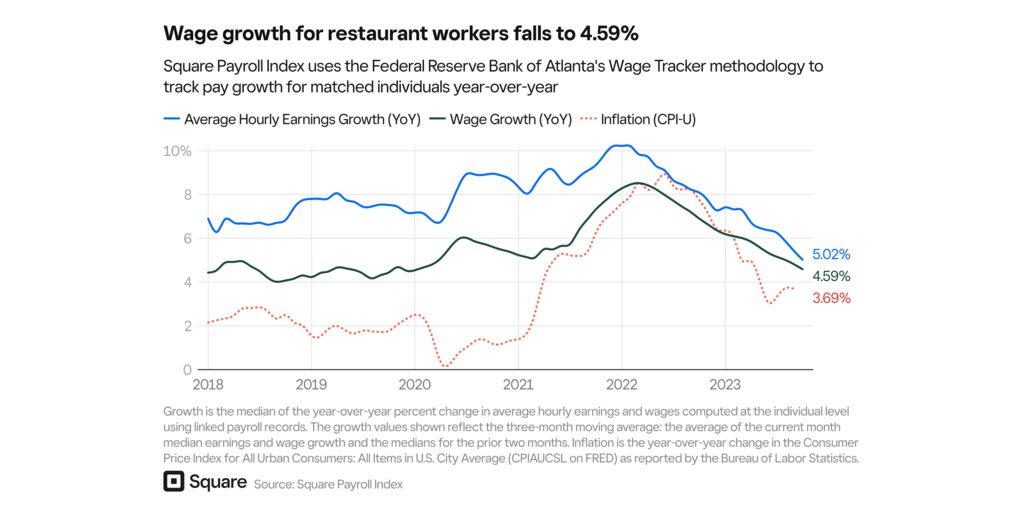
Amid the pandemic, restaurants faced major labor shortages – and in turn, had to quickly raise their base wages to attract the workers they needed to keep their businesses running. Wage growth for restaurant workers peaked in March 2022 at 8.52% when workers were making, on average, $12.80 per hour in base wages and $16.42 per hour in overall earnings.

A year and a half later, though, wage growth has slowed – while front- and back-of-house staff are making an average of $13.80 per hour in base wages and $17.67 per hour overall, wages are now growing at 4.59% and overall earnings at 5.02%.

Despite wage growth slowing for restaurant workers nationwide, some metropolitan areas are seeing above-average earnings growth – CincinnatiLas Vegas, and Jacksonville saw year-over-year growth of 8.53%, 7.66%, and 6.46%, respectively, as of October 2023.

Restaurants lean into subscriptions for recurring revenue

Over the past few years, restaurateurs have faced challenges from inflation to economic uncertainty, and they are now finding increasingly innovative ways to adapt and strengthen their businesses through additional revenue streams. One way food and beverage sellers have diversified their offerings is through subscriptions for memberships, such as a monthly wine club or a quarterly shipment of fresh jams and sauces.

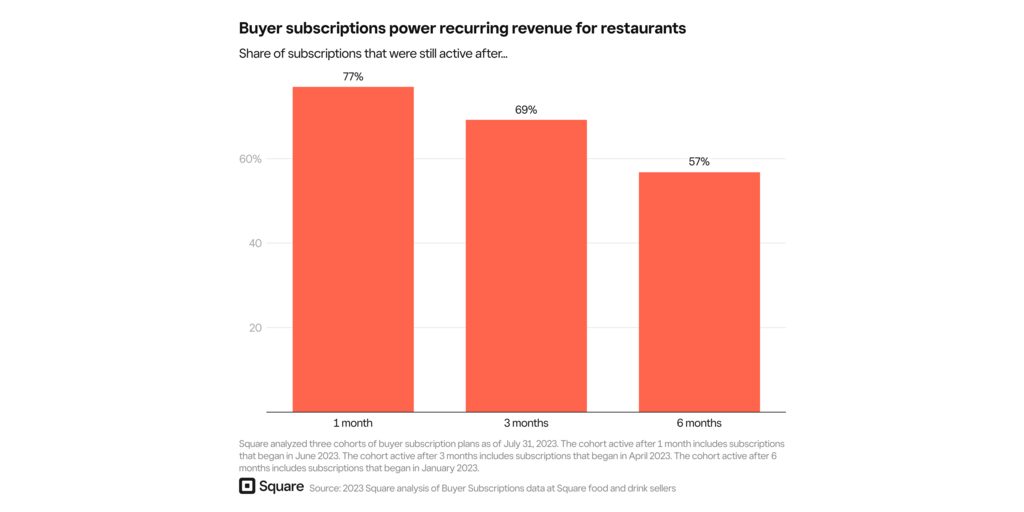
As of August 1, 2023, Square observed 54% growth YoY in food and drink sellers with active buyer subscriptions. What’s more, 57% of the subscriptions that consumers purchased from food and drink sellers were still active after 6 months, according to a cohort analysis of Square sellers using Subscriptions.

Using technology like Square Subscriptions, sellers are able to engage and bring back customers while also automating recurring payments. With a clear consumer appetite for these sorts of offerings, food and beverage businesses are able to easily take advantage of this reliable revenue stream.

About Square

Square makes commerce and financial services easy and accessible with its integrated ecosystem of commerce solutions. Square offers purpose-built software to run complex restaurant, retail, and professional services operations, versatile e-commerce tools, embedded financial services and banking products, buy now, pay later functionality through Afterpay, staff management and payroll capabilities, and much more – all of which work together to save sellers time and effort. Millions of sellers across the globe trust Square to power their business and help them thrive in the economy. For more information, visit www.squareup.com.

$1 million earmarked to support Black-owned food businesses in the U.S

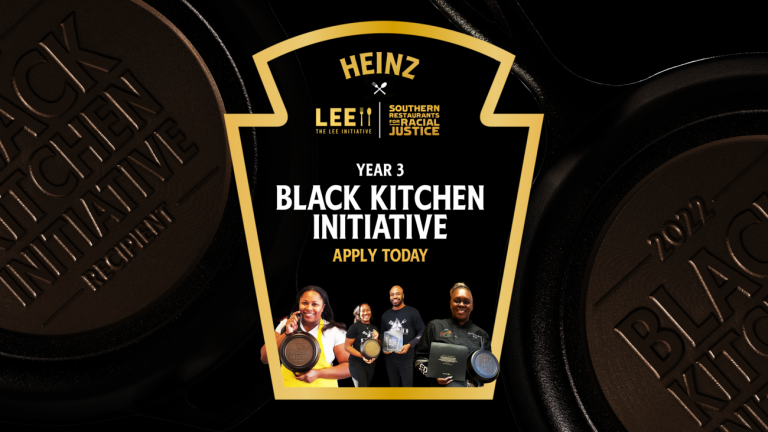
In partnership with The LEE Initiative, a nonprofit organization that creates and implements programs to address diversity and equality issues in the restaurant industry, along with Southern Restaurants for Racial Justice (SRRJ), a coalition of bakers, chefs, manufacturers, and restaurateurs that raises funds for Black communities in the South, Heinz recently announced the start of its Black Kitchen Initiative.

The renowned food brand, which has been in business for more than 150 years, recognizes the critical way that Black-owned food companies in America continually shape the nation’s culinary culture.

Megan Lang, director of Brand Communications at Heinz, said in a press release:

The Heinz Black Kitchen Initiative aims to celebrate and preserve the legacy of Black food culture by helping to break down barriers that keep Black voices and cooking out of America’s culinary space.

ADDITIONAL RESOURCES

The program celebrates the additional investment of $1 million in grants to Black food business entrepreneurs across the country, bringing the brand’s total contribution to $3 million over the past three years.

The grants seek to preserve and enhance the legacy of Black-owned food businesses by providing much-needed financial assistance.

“We’re proud to continue our partnership with The LEE Initiative and SRRJ. We’ve heard from past recipients just how impactful the grants have been in supporting their businesses across the country, and we are thrilled to provide another $1 million in grants in 2023,” added Lang.

FOSTERING BUSINESS SUCCESS

Highlighting how in 2023, Black restaurants, food spaces and chefs continue to face serious financial obstacles and inequity in access to capital, Heinz Black Kitchen Initiative grants help to foster long-term business success.

The association revealed the results of a recent report highlighting how 37% of African American small business owners had difficulty accessing new capital and financing, 14 percentage points higher than their non-African American peers.

“Through our partnership with Heinz and SRRJ, we’re elated to have the chance to uplift so many talented business owners across the country and to empower diverse entrepreneurs in the hospitality space,” noted Lindsey Ofcacek, co-founder and executive director of The LEE Initiative.

Report: Plant-Based Stuck in Neutral While Bowls are Accelerating

Today, Brandwatch published what it calls its latest “temperature check” of global food and beverage trends. The verdict: restaurant items in bowls are red-hot and rising. The plant-based segment, meanwhile, has cooled somewhat.

The report monitored 165 million global, public online conversations over the past year to note the latest F&B trends. Brandwatch took note of consumer opinions on topics like grocery delivery, the plant-based category, and consumer sentiment regarding restaurants.

“It’s interesting to see that the changes consumers were forced to make during the [COVID-19] pandemic still influence consumer behavior. For example, more consumers are now comfortable eating alone in restaurants,” Brandwatch researcher Michaela Vogl told The Food Institute.

Assessing the Plant-Based Space

Plant-based hype appears to be slowing. Online conversations regarding plant-based foods were down 7% over the past year, Brandwatch found.

Conversations about the plant-based segment, however, are more positive than negative. The report revealed that 62% of all sentiment-categorized mentions were positive, while 38% were negative.

Alt-meat is the most discussed topic in plant-based online conversations, the report revealed, followed by pizza and chocolate.

The topics that most concern consumers in conversations about plant-based protein are taste, ethics, and price, Brandwatch wrote. Interest in plant-based chocolate remains strong, with online conversations up 64 percent, the report noted, adding that the global vegan chocolate market is expected to grow from $575 million in 2022 to $1.2 billion in 2028.

Consumers are speaking most positively about plant-based milk options lately, Vogl said, noting: “Many of the headlines mention the availability of plant-based milk at coffee shops and restaurants. This is often highlighted as a positive feature or a must-have for customers. There are references to different types of non-dairy milk alternatives, including almond milk, oat milk, coconut milk, and soy milk.

The Food Institute Podcast · FI Fast Break News – July 12, 2022

“The plant-based food industry still has room to grow,” the Brandwatch researcher added. “A great indicator is that while the online conversation has fizzled out, the overall sentiment of plant-based discussions remains positive. As long as companies pay attention to and adapt to consumer preferences, behaviors and trends, growth is achievable.”

Bowled Over

As many fast-casual menus suggest these days, bowls have taken the restaurant world by storm. So much so, in fact, that Brandwatch declared bowls “the reigning champion of food trends.”

The appeal of bowls lies in their versatility and the fact they’re not limited to any cuisine or daypart. The trend has captivated consumers judging by the 800,000 mentions of the topic over the past year. Chains like Rush Bowls and Playa Bowls have seized upon the movement, selling bowls that feature superfoods like acai berries, as noted by QSR Magazine.

Coffee Fading Among Gen Zers

Coffee is the most talked about non-alcoholic beverage among baby boomers and Gen X, Brandwatch found, but it’s also the least-mentioned beverage among Gen Z.

One of the report’s most interesting findings, Vogl said, “is how different Gen Z drinking behaviors are compared to other generations. They don’t like traditional morning coffee; they want iced coffee from a coffee shop. They prefer energy drinks to stay energized, and they’re more conscious about drinking alcohol.” The researcher added:

“[Gen Zers’] consumer preferences are very different, and it will be interesting to see what trends they set in the coming years.”

Brandwatch’s report research also noted the following observations:

  • Mentions of dining-out fell 33% year over year in the 12 months prior to June
  • There has been a surge of conversations about high-protein products (+32% YoY)
  • Conversations about online grocery delivery were down 4%
  • The top food influencer on TikTok is Lookcatchu (edging out Notorious Foodie and Gordon Ramsay), while Betul Tunc is the top food influencer on Instagram