So you heard all about how self-ordering kiosks can work wonders for your restaurant and you decided to invest in them. Of course you want to start reaping rewards immediately, but acumen tells you that simply having a few kiosks scattered around your restaurant is not going to miraculously start giving you all those marvelous benefits that everyone is talking about. Then, how exactly can you maximize the potential of these devices? What steps should you take?
Thankfully, the answers to these questions are fairly straightforward. With these six dos and don’ts you can easily unleash the power of self-ordering kiosks:
Do’s of Self-Ordering Kiosks
Do keep kiosks where they are easily accessible: For kiosks to have an impact, they must be used. This means that they must be placed where customers can easily find them. While it may seem logical to place self-ordering kiosks at the entrance – after all, this means that the kiosks will be the first thing customers see when they walk in – this may not always be the best option. Think carefully about the layout of your restaurant and the flow of human traffic. Choose an area that is noticeable, convenient and relatively spacious. Remember that customers need some room to be able to use the kiosk comfortably.
Do use clear signage to direct your customers to the kiosks: No matter how prominent you may think your self-ordering kiosks are, you still need to use signs to alert your customers to their presence. Signage serves two main purposes. First, it informs your customers of the existence of self-ordering kiosks at your restaurant (this is extremely valuable when you launch the kiosks and for first-time guests). Secondly, it directs your customers to the kiosks, encouraging them to use the devices.
Do keep your software up-to-date: Providing a seamless customer experience is vital for the success of self-ordering kiosks and, in order to achieve this, you must ensure your software is updated regularly. Glitchy software could cause your restaurant to lose credibility, with the customers questioning the quality of not just the machines, but your products in general. Old technology can also annoy the more tech-savvy patrons creating the risk of losing their patronage.
Don’t of Self-ordering Kiosks
Don’t forget about your differently abled customers: Self-ordering kiosks must be inclusive so that customers with limited mobility can utilize them. Adjust the placement of at least some of the kiosks so that customers in wheelchairs can access them independently. Try to demarcate the space around so that there is minimal risk of other patrons getting in their way.
Don’t leave kiosks unattended: While this may seem to run contrary to the ‘self’ part of ‘ self-ordering kiosks ’ you must have a member of staff around to oversee kiosk usage. There will be occasions when some customers will need assistance – think about the elderly or the less IT-savvy. If someone is having difficulty placing an order or making payment and cannot get help, they may give up and walk out. Having a staff member on hand is not only helpful to customers, it also ensures that you do not lose any business.
Don’t overlook customer purchase statistics: Self-ordering kiosks are a goldmine of customer data. These statistics will give you an in-depth understanding of your restaurant’s performance, revealing vital information on highest selling dishes, time-based demand, customer requests, and popular pairings. With these details you can better organize your restaurant and create a more profitable menu. You will also be able to plan lucrative promotions and offers, bringing in more revenue.
How well your restaurant’s self-ordering kiosks will perform, is dependent on how you implement them. Stick to these dos and don’ts and you will soon begin to see why self-ordering kiosks are the marvels of a modern restaurant.
Wrapping up
It can be seen that to get the most out of your self-ordering kiosks, the placement of the device, signage used to draw the customers attention and having software that is up-to-date are just a few of the vital aspects that you need to look into. So what are you waiting for book a free demo and stay ahead of the competition
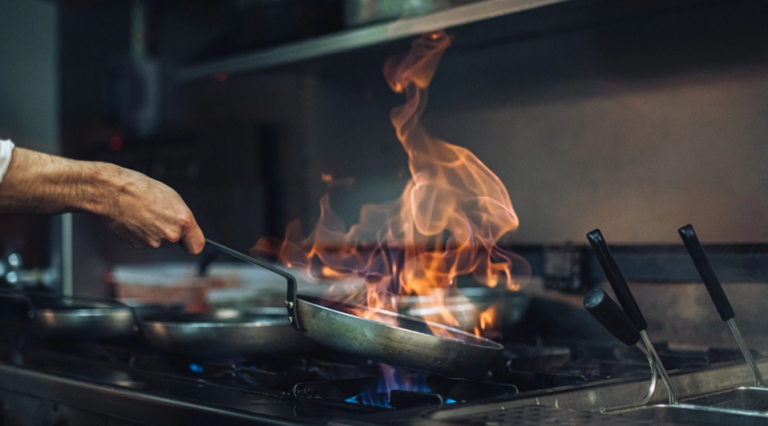
When chef Mike Lanham was building out his new tasting menu restaurant Anomaly SF, which opens in San Francisco’s Pacific Heights this week, one thing in particular was weighing on him—his gas stove.
“[I was concerned] not just [about] my health, but also the health of those that work with me,” he said.
Gas stoves, the cooktop of choice for restaurant kitchens and 40 percent of homes in the US, have recently been shown to emit harmful air pollutants that lead to respiratory problems, cardiovascular diseases, and even cancer. New reports from groups including the American Chemical Society and publications such as the International Journal of Environmental Research and Public Health blame the cooktop’s emissions—nitrogen dioxide, carbon monoxide, formaldehyde, and fine particulate matter—which are at unsafe levels outdoors, let alone indoors, according to standards set by the EPA and World Health Organization.
In response to the studies, federal lawmakers have asked the US Consumer Product Safety Commission to look into the issue. Later this year, the commission could set emission standards on the appliances, require them to be used with exhaust vents or warning labels, or ban the manufacture and import of gas stoves altogether. On the local level, communities such as Berkeley, California, have been concerned for years. The city voted in 2019 to ban natural gas hookups in new buildings, citing a desire to reduce greenhouse gas emissions.
Of course, after New York Governor Kathy Hochul backed a potential gas ban last week, the gears of the Republican backlash machine began turning, calling the suggestion “totalitarian” and more. We wanted to cut through all of that culture war noise and speak with chefs who have put both gas and electric cooktops to the test to see how they felt about cooking with either technology.
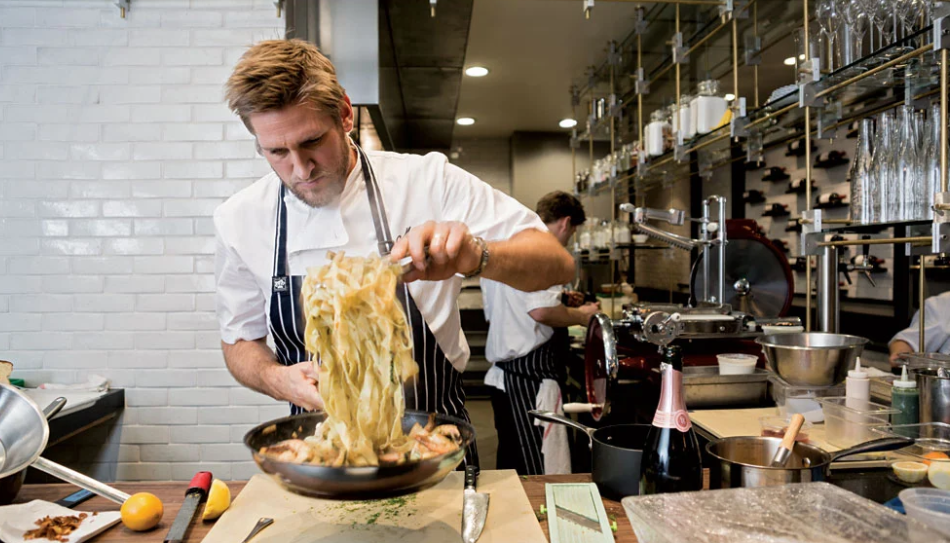
Curtis Stone uses a mix of gas, induction and live fire across his restaurants.
For restaurant kitchens, the alternative to gas stoves is induction cooktops, which run on electricity. Michelin three-star restaurants The French Laundry in Napa Valley and Alinea in Chicago have vowed to switch to energy-efficient electric. Chef Curtis Stone has used induction “exclusively” over the last few years at his LA restaurant Gwen, which also has a Michelin star.
“I love induction because of how precise it is as a cooking method,” Stone told Robb Report. “The cleanup is effortless and it keeps your kitchen cooler than a gas cooktop, while also being better for the environment.” Of course, there are open flames at Gwen, but that’s from the wood-fired grill you can see from the dining room.
Lanham, too, said he “badly” wanted to adopt induction stoves. A former competitive cyclist, he tries to nourish a healthy environment in his kitchen. But in the end, gas was the more “practical” option in his 34-seat space.
“[Induction stoves] look cool, they’re quiet, and they get hot incredibly fast,” he said. “Unfortunately, they also break easily and without warning, they’re hard to repair, they struggle with modulation in many, but not all, cases, and they tend to draw a great deal of power, so they blow fuses like it’s a design feature.”
Induction cooktops can offer more precision than gas ranges.
Other chefs polled by Robb Report said the same thing: Induction is fragile. In the fast-paced environment of a restaurant kitchen, pots and pans aren’t handled delicately. Induction cooktops, for the time being, may be best suited for the pastry line, where precise recipes and a light touch are expected.
At Stone’s Michelin one-star restaurant Maude in Beverly Hills, he uses a combination of induction and gas. The same is true of chef James Syhabout of Michelin two-star Commis in Oakland, California, where electric is primarily employed to make desserts.
Without federal regulations changing, it may be hard for chefs to unhook their gas stoves and invest in new electric ones. Some, who have cooked on live fire their entire careers, feel that using induction is almost too easy, too sterile. Working on traditional gas feels like more of an art, “like playing the drums on a French top,” in the words of one Michelin-starred Chicago chef.
But Lanham, who named his restaurant Anomaly SF for a reason, is game for deviating from the norm—at some point in the future.
“I care nothing for tradition or what anyone else thinks is cool, but electric stoves have a long way to go,” he said. “However, if the tech catches up, I would love to give electric stoves another try.”
What trends will take the food and beverage industry by storm in 2023? Have some been brewing for a while? Find out New Food’s predictions here…
2022 has been and gone and we have now entered another year. With a new year comes resolutions, a different number to remember when writing the date, and, of course, new food trends. But what will they be?
Last January, New Food’s Editor Joshua Minchin predicted various food trends for 2022. These included: indulgence continuing, home cooking remaining popular after the pandemic, few changes being made to CBD regulations, functional foods and personalised nutrition being in demand and, finally, that the low and no alcohol upwards trend would continue.
With overwhelmingly accurate predictions, our Editor must have looked into a crystal ball and foreseen home-cooking companies such as HelloFresh expanding globally and functional beverages appealing to consumers looking for sports enhancement and beauty remedies.
However, turning to the next 12 months, here are five predictions for the upcoming food and beverage trends that are so close you can almost taste them.
1. Sustainable food supremacy
Sustainably sourced foods are a hot topic for consumers. In fact, research by Economist Intelligence Unit (EIU) claimed that there was a 71 percent rise in popularity of searches for sustainable goods over the five years leading up to 2021.
Since then, research and technology company Glow carried out a study during 2022, revealing that one in four consumers in the UK have changed their food purchases, now opting for sustainable brands, thus suggesting consumer awareness surrounding sustainability is more acute.
Sustainable products now come in all shapes and sizes, tastes and textures. But there isn’t just a surplus of sustainable options to choose in the supermarket, there are also many eco-friendly packaging types.
The Freedonia Group found that nowadays, “food packaging sustainability is increasingly important to consumers”. In a study, it discovered that consumers considered jars, bottles, snack bags, and pouches made from bioplastics to be the most eco-friendly packaging options, while conventional plastics were ranked lowest in perceived eco-friendliness. Thus, with the mindset that plastic is “bad” and reusable is “good” for the environment, shoppers might be taking packaging into account when stood in the supermarket aisles.
What’s more, with apps now allowing consumers and food companies alike to track their sustainable footprint and brands such as Walkers making the switch to cardboard packaging to cutdown on plastic use, 2023 could be the year more people start making sustainable food choices.
However, New Food recently reported that the cost-of-living crisis is driving consumer purchasing rather than sustainability, suggesting that, for many shoppers, price is of greater concern than impact on the planet during a challenging economic time. In fact, for 71 percent of consumers, value for money was the influential factor impacting product or brand choice.
Thus, with various concerns to consider, it may not be full steam ahead for sustainable purchases as consumers could be forced to pick and choose when they are able to purchase sustainably according to whether can afford it.
2. American chains changing the fast-food game
New Food recently reported on the rise of American fast-food chains in the UK and this trend seems to be showing no signs of stopping, in fact, looking at DUNKIN’ Donuts alone, Alan O’Brien, International Field Marketing Manager at Inspire Brands, told New Food: “The plan over the next three to five years is to expand the DUNKIN’ footprint extensively.”
Wendy’s now has 13 restaurants in the UK and 5,901 in the US
Looking at the other fast-food brands that America has to offer, Restaurant Engine states that all eleven of the top chain restaurants worldwide are of American origin. Citing the leader as McDonalds, with a total of 40,031 restaurants worldwide, the report also notes the success of other quick-service outlets and coffee shops that are globally available including Subway, Burger King, Starbucks and KFC.
With such a variety of American fast-food chains now available all over the world will this year’s consumer favourite takeaway be all American, or could it be chain established a little closer to home?
3. Goodbye best-before dates
It almost feels like muscle memory: picking up a product and checking the label for the best-before date. But with numerous supermarkets in 2022 ditching best-before dates in order to allow consumers to make their own decisions and cut down on food waste, will all best-before dates be scrapped for good?
While its unlikely that you will never see a best-before date again, it is possible that more food and beverage companies will remove them from their product labels in a bid to limit food waste.
According to the United Nations (UN), around 14 percent of food produced globally is lost between harvest and retail. What’s more an estimated 17 percent of total global food production is wasted (which is comprised of separated into 11 percent in households, five percent in the food service and two percent in retail).
With more people on the planet to feed than ever, fruit and vegetables seemed to be the first food types subject to label alterations, with the likes of Sainsbury’s, Waitrose and M&S making changes to hundreds of fruit and vegetable product labels in 2022 alone.
With best-before dates becoming a thing of the past for some food products, the drive to reduce food waste may spur on further label alterations in 2023. Watch this space (and food labels).
4. Less plant-based, more farm-bred
Though the BBC reports that “Veganuary” was originally a challenge established by a UK non-profit organisation in 2014, the word now seems very familiar and normal.
According to Google Trends, in the last five years the term “vegan” was most searched between 29 December 2019 and 4 January 2020. Since then, though interest has fluctuated somewhat, the number of people searching “vegan” has decreased from January 2022 to January 2023.
What’s more, according to The Independent, Pret a Manger will be “closing the majority” of its vegetarian stores due to low demand. After first being born in 2016, Veggie Pret set up shop in numerous locations across the UK, serving a variety of vegan and vegetarian options to customers. However, as we enter 2023, only two stores will reportedly stay open.
Furthermore, international food and restaurant consultant Baum + Whiteman has predicted that there will be a decrease in the popularity of plant based foods. Delving deeper, it has revealed that supermarket sales of “faux” meat dropped about 10 percent by volume during 2022, while sales of the real meat continued rising.
According to Statista, global meat sales are expected to increase by 7.47 percent between 2023 and 2027
And Statista agrees with there being an incoming surge in popularity for farmed meat, forecasting that the worldwide meat industry worldwide will grow by 7.47 percent between 2023-2027.
However, with the US Food and Drug Administration (FDA) giving the green light to UPSIDE Foods’ cultured meat in November 2022 and research by GFI Europe showing that there is a growing awareness of cultivated meat in major markets, all hope may not be lost for alternative proteins.
So could it be out with the new and in with the old? Or perhaps the opposite? It’s up to consumers.
5. The rise of the own-label
Without sounding like a broken record, food inflation is on the rise. This means that consumers may be looking for cheaper alternatives in a bid to navigate the cost-of-living crisis.
Chris Elliott, Professor at Queens University Belfast, told New Food that he thinks “the movement from branded to own label purchasing is likely to continue” as, in his opinion, it is clear that “the economic crisis will go on for at least the first half of 2023”.
Research from Kantar shows that own-label range sales are at a record high, with sales reportedly rising by 7.3 percent in 2022, taking up 51.6 percent of the market compared with branded products.
However, Elliot explained that this food trend may not be a particularly good one, hoping instead that there will be “a growing interest in locally produced food that is minimally processed” and that “sales will pick up once again”.
With so many across the world struggling with food insecurity during a challenging economic time, own-label food, while not the only option available, does seem a tempting one. But, as mentioned earlier, with more consumers keen to make purchases with sustainability in mind, who knows what shelves might be empty due to increased demand in the coming year.
According to this report the organic foods & beverage industry has grown into a multibillion-dollar industry with distinct production, processing, distribution, and retail systems.
The global market is a home to organically produced food range of fruits & vegetables, meat, fish & poultry, dairy products, and frozen & processed products while the beverage segment includes a range of dairy alternative, coffee & tea, beer & wine among others. Growing adoption of organic food & beverages owing to associated health benefits and eco-friendly characteristics is to drive demand over the forecasted period.
The global market was valued at around USD 183 billion in 2021, which is anticipated to reach over USD 360 billion during the forecast period, registering a CAGR of more than 12% for 2022-2027.
The steady growth of the organic market has led to a proliferation of opportunities for farmers in developing regions. Higher prices, potentially higher profits, resource availability, and general compatibility with local cultivation systems make the expansion of organic production a particularly interesting prospect in regions like sub-Saharan Africa and India.
The organic food market has a high share of organic food compared to organic beverages, dominating the market with a share of over 90% in 2021. With the increase in awareness and easy availability, the organic beverage segment has gained more acceptances in the market and is projected to grow at more than 14% CAGR by 2027.
Increasing consumer needs towards organic food and beverages products are also helping the market players to position themselves in the global organic food and beverages market by launching a variety of innovative products. Regulatory authorities in different countries are taking initiatives towards setting standards and regulations for the promotion of safe and healthy organic foods and beverages.
The organic fruits and vegetable segment registered the highest market share in the year 2021. Factors such as the emergence of numerous local breweries and the increasing popularity of non-alcoholic organic beer among the younger population are promoting the sales of organic beer across the globe. However, due to the high cost, the segment is to remain the least contributing segment by the end of the forecasted period.
Currently, North America and Europe are the largest markets for organic food and beverages, owing to the influential presence of the target population in the region. By the end of 2027, it is expected that the Asia-Pacific region would witness significant growth.
The basic challenges faced by the global organic food and beverages market are in the form of high conversion cost from conventional farming to organic farming, supply shortage of organic food and beverages in major European and North American markets, non-uniform organic regulations across the globe, and high prices of organic food products. Consumers are switching to organic products as a difficult proposition, as organic food is more expensive than non-organic food.
Moreover, organic seeds are usually priced higher than conventional ones. With the establishment of exclusive diet centers, untapped geographical regions such as India, South Africa are offering a rising demand; the limited shelf life of organic foods poses limitations in the market. However, each factor would have its definite impact on the market during the forecast period.
COVID-19 Impacts:
The pandemic of COVID-19 has had a tremendous impact on the organic food and beverage market. As consumers grew aware of the importance of a strong immune system as a result of this uncertainty, their purchasing patterns altered, and they favored more organic and natural goods.
Despite having higher prices than non-organic products and the world GDP decline being the biggest in decades, organic food sales witnessed a spike in 2020. The growth rate of organic packaged foods and beverages was the highest among all health and wellness categories. Starting in 2020, consumers shifted their food purchasing and consumption habits during the period of COVID-19 when restaurants were closed and home cooking became the norm.
Major Companies considered in Report:
Amy’s Kitchen, Danone – WhiteWave Foods, Eden Foods, Inc., General Mills, Hain Celestial Group, Nature’s Path Foods, Inc., Organic Valley, SunOpta Inc., United Natural Foods, Inc, Whole Foods Market
5. Global Organic Food & Beverage Market Outlook 5.1. Market Size By Value 5.2. Market Share 5.2.1. By Region 5.2.2. By Country 5.2.3. By Company 5.2.4. By Type 5.2.5. By Product 5.2.5.1. By Organic Food Product 5.2.5.2. By Organic Beverage Product 5.2.6. By Sales Channel 5.3. Global Organic Fruits & Vegetables Market Outlook 5.4. Global Organic Meat, Fish & Poultry Market Outlook 5.5. Global Organic Dairy Products Market Outlook 5.6. Global Organic Frozen & Processed Food Market Outlook 5.7. Global Organic Non-Dairy Beverage Market Outlook 5.8. Global Organic Coffee & Tea Market Outlook 5.9. Global Organic Beer & Wine Beverage Market Outlook 5.10. Global Organic Food Policy Overview
6. North America Organic Food & Beverage Market Outlook
7. Europe Organic Food & Beverage Market Outlook
8. Asia-Pacific Organic Food & Beverage Market Outlook
9. South America Organic Food & Beverage Market Outlook
10. Middle East & Africa Organic Food & Beverage Market Outlook
11. Country Wise Organic Cultivation & Policy Overview
15. Company Profiles 15.1. Amy’s Kitchen 15.2. Danone – WhiteWave Foods 15.3. Eden Foods, Inc 15.4. General Mills 15.5. Hain Celestial Group 15.6. Nature’s Path Foods, Inc. 15.7. Organic Valley 15.8. SunOpta Inc. 15.9. United Natural Foods, Inc 15.10. Whole Foods Market
16. Company Overview 16.1. Alnatura Produktions 16.2. Aurora Organic Dairy 16.3. Clif Bar & Company 16.4. EDEKA Handelsgesellschaft Nord mhb 16.5. Hipp GmbH & Co Vertrieb KG 16.6. Newman’s Own
You are probably weary of hearing about soaring inflation and not having a proper solution to address your problems. Yet, it is a reality that no restaurateur can escape. While there seems to have been some reprieve in the second half of this year, with the annual inflation rate slowing for a fourth month to 7.7% in October, the figure is still pretty high. The rate of increase in food costs has also come down – 10.9% from the previous 11.2% – and yet the fact remains that prices are still going up. Despite the dip in the latest inflation percentages, Trading Economics cautions that, “Figures continue to point to strong inflationary pressures and a broad price increase across the economy.”
It is natural to be worried by the forecasts, after all, high inflation means higher costs. It is not practical to simply keep raising your prices to combat the effects of inflation. Regular price hikes are not looked upon kindly by customers. A Revenue Management Solutions report showed that, as early as March this year, 63% of diners complained that restaurant prices were too high. With customers being unhappy about having to fork out more each time they visit, you need to find other ways to navigate menu pricing. Here are five tips that will help you achieve that delicate balance between covering costs and keeping your customers happy.
Reduce the range of offeringsHaving a wide range of items on your menu was an effective pull factor for customers back in the day when things were not so pricey. Navigating menu pricing in the current context requires you to think about your spending on ingredients versus what you sell. By removing those items that are less in demand you can reduce food wastage leading to a huge saving. You can also order ingredients in bulk, bringing down your cost. The math is simple: with your expenses stabilized you can afford to keep your menu prices as is.
Serve lessThe two biggest contributors to food wastage in the US are supermarkets and restaurants. What this means is that you are probably serving way too much in each portion. Reducing portion sizes will help you navigate menu prices by controlling your expenditure. Don’t make it too drastic though – the last thing you need is for your customers to feel cheated. Play it safe and inform customers that you will be cutting down on quantity. If you word it well and offer a sound explanation, they are sure to understand.
Expand your supply chainA major force in driving inflation up has been supply chain disruptions. Within this context, the proverb, ‘ Don’t put all your eggs in one basket’ is extremely pertinent to the F&B sector. Maintaining reasonable menu prices requires reliable vendors. Build a network of suppliers so that you have options when vendors face difficulty or hike up their prices unreasonably. Having many suppliers also puts you in a stronger position to negotiate better rates.
Use cheaper ingredientsFood costs account for 35% of a restaurant’s total costs. Take a close look at what you pay for your ingredients and look for cheaper alternatives. Buying locally will save on transport, while buying in bulk is more economical. Seasonal ingredients also tend to be cheaper so consider adding specials into your menu. The goal is to control your spending so that you can keep your menu prices steady.
Capitalize on data analyticsUnderstanding the sales patterns of your restaurant is vital to navigating menu pricing. Check your data analytics and get a handle on what sells and what is overlooked. Look at the possibility of making a slight increment to the price of your bestsellers. Consider what you want to do with the less popular items – can you promote them or would it be better to simply scrap them? Find the most profitable items on your menu and then figure out how to push these. You can make your menu a lot more profitable by utilizing data analytics.
Given how expensive basics are these days, customers are trimming the extras and, sadly, dining out is one of the areas where they are tightening their purse strings. If you want your customers to keep coming back, you need to make sure that your food and drink are affordable. Try out the menu pricing strategies above and keep your restaurant on the path of profitability as you head into the new year.
The results from my recent survey are in and in this series of articles we’ll be talking about some of the findings. We now have a total of 142 respondents who shared their definitions of dynamic pricing, their thoughts on where dynamic pricing had the most potential, the potential challenges they foresaw and talked about the likelihood that dynamic pricing would be adopted in the industry.
In my last article, I talked about how the definition of dynamic pricing varies, but that in general dynamic pricing is all about prices varying based on demand.
OK, this is nice, but why would a restaurant adopt dynamic pricing? Given my experience in the hotel and other industries, I can think of many reasons, but decided to ask the survey respondents what they thought. Not surprisingly, the top reason (92 percent of respondents) was to increase revenue. But reasons No. 2 and No. 3 might surprise you. The second most chosen response (82 percent) was to spread demand to slower periods, while the third was to better manage capacity (70 percent). To me, this indicates a good understanding of the fact that dynamic pricing is NOT just about increasing prices during busy periods. Let’s dive in and talk about the these benefits.
Reason No. 1: Increase Revenue
The hotel and airline industries typically achieve 3–5 percent revenue gains with revenue management and dynamic pricing. Dolan and Simon, in their cross-industry study on pricing, found that a 1 percent increase in price led to a 12 percent increase in profit. If you can maintain your current sales volume, the profit potential is even higher.
Let’s take a look at the revenue gains that some of the pricing companies have been able to achieve. Koti Pizza has achieved 6 percent increase in revenue by using Priceff’s dynamic pricing for delivery. DynamEat, in their work with a multi-unit restaurant chain, was able to increase the margin for dinner by about 15 percent without reducing volume. Similarly, Piada was able to double delivery margins by using Sauce Pricing.
Given the experience of the airline, hotel, cruise line and multiple other industries, I am confident that appropriate use of dynamic pricing will lead to increased revenue and profit. Please note my use the term “appropriate.” Appropriate entails increasing profit without affecting customer satisfaction. As Carl Orsbourn of Juicer states, “ surge pricing is not the best way to describe how dynamic pricing can help restaurants. Setting guard-rails on upper and lower thresholds for prices is important so that the guest experience isn’t impacted negatively through the introduction of this functionality.”
Reasons No. 3 and 3: Use Price to Help Spread Demand
I’ve lumped reasons No. 2 (spread demand to slow periods) and 3 (better capacity management) together, since they are essentially the same thing. For example, as one respondent stated, “Dynamic pricing changes based on a range of factors selected by management to take advantage of high demand and also generate increased interest in low demand. This could relate to times of day, menu items, seating locations or more.” Similarly, another respondent said,“‘Pricing that fluctuates according to demand. Lower prices when demand is low. Higher pricing when demand is high.”
Restaurant demand varies wildly throughout the day and by day of week. At times, demand is so high that the kitchen can’t keep up. Rather than taking the risk of dissatisfying customers whose orders can’t be fulfilled in a timely fashion, some operators turn off (throttle) some of their distribution channels (i.e. online orders, takeout orders) to reduce demand to a manageable level. Throttling has become so widespread that it’s even offered by providers such as Olo, Toast, and QSR Automations.
Think about it. By throttling, we’re turning away customers who obviously want to patronize our business. As Orsbourn told me, “Most restaurants don’t know their optimal capacity. It is left to throttling switches which may not be as informed in their level setting as they should be. Even more concerning, is when throttling switches don’t get switched back on. There has to be a better way to curtail orders than to just switch off entire sales channels—we believe dynamic price changes are one such approach.”
I agree, as do the survey respondents, that this is an area where dynamic pricing can help with.
What can we do to get them to dine with us during slower periods? Isn’t that exactly what restaurants have been doing with happy hour and early bird specials for years? Dynamic pricing is just adding a twist to this—think of it as “happy hour on steroids.”
Happy hours and early bird specials work, but what about other slow periods; would dynamic pricing work? The answer is a resounding yes. For example, in a 2004 study, Alex Susskind and his colleagues found that 75 percent of customers were willing to switch to an off-peak demand if given an incentive to do so. The question then becomes one of what that incentive should be. That’s where dynamic pricing can help.
Another question that arises is whether dynamic pricing can actually help spread out demand. At Koti Pizza, a Harvard study has shown that they were able to reduce within-week demand variation by 10 percent while achieving a 6 percent revenue increase along with a 10 percent increase in transaction orders. Based on this, again, the answer is a resounding yes!
Avoiding Cannibalization
This sounds great, how can you make sure that you don’t cannibalize your business during busy periods?
One of the concerns that operators often have with dynamic pricing is whether offering lower prices to certain customers or at certain times will cause customers who would normally be willing to dine at full price to avail themselves of the discounts.
The hotel and airline industries have faced a similar issue and use rate fences to help distinguish which customers can get the lower prices. For example, with Marriott, customers have to either “do” something or ‘be’ something in order to get a lower rate. Examples of “doing” something might be things like booking for a slow night or opting for a non-refundable reservation. On the other hand, “being” something might include things like being a member of the loyalty program, being over 60 or working for a certain company. By using these rate fences, they have been able to effectively reduce cannibalization. Rate fences can not only help to reduce cannibalization, but can also answer the second fundamental pricing question: how should you determine which customers pay which price?
Restaurants can adopt a similar strategy. “Doing” something might be placing an order ahead of time or choosing to dine during a slow period. “Being” something could be being a member of the restaurant’s loyalty program or be using a targeted promotion.
Back to the Why?
So, why should restaurants adopt dynamic pricing? The survey respondents have spoken: one, so you can increase revenue and two, so you can better spread demand to your off-peak periods. By doing so, you will be able to increase revenue and profit for your restaurant.
What’s Coming
In the next article, I’ll be reviewing the ordering and revenue streams that respondents think have the most potential for dynamic pricing. After that, I’ll be analyzing the potential challenges facing operators, providing an overview of what people have tried and discussing the likelihood of the industry adopting dynamic pricing practices.
During the holidays, many people in the service industry hope customers are feeling a bit more generous.
News Center 7′s Gabrielle Enright went into the Miami Valley to find out if people are generous or grinches.
“A good tip can mean a lot,” Brittany Morgan has been a waitress at Nick’s Restaurant in Xenia for more than a decade. “I’ve got two little kids, seven and three.”
Morgan says she doesn’t expect a tip but hopes it happens. She admits she gets more money this time of year.
“They will definitely say I know it’s Christmas, and you’ve done a really great job. here’s an extra $10, $5. Anything is really appreciated.
Servers in the Miami Valley make $4.95 per hour, and taxes take a big bite out of it. She often only sees the cash she takes home that day.
“I get really excited when I have a really good day in here!”
When it comes to tipping, cash is king. That’s true in the restaurant industry and many others too.
Brent Johnson, one of the owners of Square One Salon and Spa, says his team works hard, especially around the holidays.
“Tips or gratuities are not expected, but they are always appreciated,” Johnson tells us.
He says if you can’t make your appointment, please call, so they can book someone else.
“Since most of our employees are on commission when you don’t show up, they don’t get a paycheck. That definitely affects their ability to take care of their families and the holiday season.”
So how much should you tip? According to Nerd Wallet, people should consider tipping 15 to 20 percent of their bill.
Give a dollar or two per drink to bartenders or 15 or 20 percent of your total bill.
You’re considered kind if you give someone who prepares your food or coffee a 10 to 15 percent tip.
15 percent tips are the standard for delivery drivers.
For beauticians and cosmetologists, a 15 to 20 percent tip is often considered the norm.
In 2022, after two years of working on the frontlines of the COVID-19 pandemic, workers across the country made clear that they’d had enough, and walked off the job. This year brought an unprecedented spike in strike activity across multiple industries, but from Starbucks to Chipotle to McDonald’s, nowhere was this surge of worker power on display more prominently than in the restaurant industry.
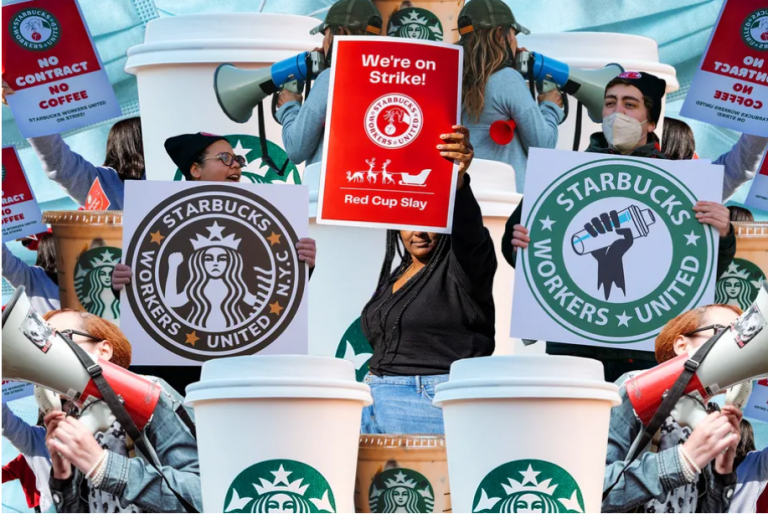
Perhaps the biggest labor story of 2022 is that of Starbucks Workers United, a Workers United affiliated union that has organized thousands of employees at more than 250 Starbucks locations across the country. Over the past year and a half, Starbucks workers at locations across the country, from California to Massachusetts, have gone on strike in 17 states. This summer, Boston-area Starbucks employees spent more than two months on the picket line, protesting a new policy that requires workers to have a minimum availability each week. (The strike ended, as the New York Times reports, a few days after Starbucks announced the policy would not apply to unionized stores.) Starting on October 26, workers at a Starbucks Reserve Roastery in New York City walked off the job, alleging that the company had refused to deal with a bedbug infestation at the cafe, along with complaints about mold in the ice machines. Starbucks initially denied those claims, but New York state inspectors found that there was, in fact, mold in the ice machine. The strike lasted for 46 days, ending only after the union says it secured a thorough bedbug inspection and remediation, improved health and safety training, and an “increased cadence of maintenance and cleaning” in the cafe. Eater reached out to Starbucks for comment on the strike, but the company did not respond to our request.
In the most high-profile Starbucks strike, November saw baristas at more than 110 locations announced they would walk off the job on Red Cup Day, a major sales day for the company. As workers picketed outside those locations, the union handed out its own version of the chain’s famed red cups, rebranding the day as the Red Cup Rebellion.
Wages and working conditions have been key sticking points in worker strikes. In the spring, workers at a Los Angeles McDonald’s location walked out in protest of hazardous working conditions; that same month, Dollar General employees in North Carolina went on strike over low wages. Thousands of fast-food workers in California went on strike in June to demand that legislators pass AB 257, a bill that would “establish higher minimum standards for wages, working hours and conditions” for workers across the industry. A group of not-yet-unionized Taco Bell employees in Kansas City walked off the job during the lunch rush in September, citing poor wages and workplace hazards. “We need a living wage, respect, safe working conditions, and a union,” read a sign taped to the restaurant’s window.
Also in September, 1,000 food workers at San Francisco International Airport went on strike, demanding higher wages and improved health insurance. Though it only lasted three days, the airport strike resulted in $5 hourly pay increases for unionized workers, along with fully paid health insurance for workers and their families. The California fast-food worker strike drummed up support for AB 257, and on September 5, California Gov. Gavin Newsom signed the bill into law. (Perhaps not surprisingly, the fast-food industry rushed to challenge the law. Now, California voters will decide whether or not the law, called the FAST Act, will remain in effect when they head to the ballot box in November 2024.)
This uptick in strike action is the culmination of nearly three intense years of organizing and labor action in the hospitality industry as workers came together to protest their working conditions at the height of the COVID-19 pandemic. “The pandemic put a lot of pressure on in-person service workers, and the conditions made them think more intensively about the jobs that they do,” NYU professor Andrew Ross told Eater back in April. “They realized, ‘Wow, I’m an essential worker, and essential workers should have essential rights.’”
Only time will tell whether or not these incredible gains in restaurant industry union momentum will continue, or if the movement will run out of steam as a potential recession looms on the horizon. What is clear, though, is that restaurant workers across the country are fed up with being treated poorly on the job, and are prepared to strike to secure the wages and benefits that they deserve.
Democratic Sens.Patty Murray (Washington), Sherrod Brown (Ohio) and Ben Cardin (Maryland) introduced a bill Thursday to offer payroll tax cuts to those restaurants that applied for but did not receive Restaurant Revitalization Fund grants, according to a press release from Murray’s office.
The payroll tax credit would allow eligible restaurants to receive a refund of up to $25,000 per quarter in 2023. Employers with 10 or fewer employees in Q3 2022 are limited to total of $25,000 for all four quarters. The cap is reduced by $2,500 for each staff member over 10.
In an Instagram post published Thursday afternoon, the Independent Restaurant Coalition celebrated the introduction of the bill, calling it “a pivotal moment for the restaurant and bar industry.”
Dive Insight:
Murray’s press release indicated that some in the Democratic Party feel the fight for an RRF refill is not over, despite that bill’s defeat in the Senate earlier this year.
“[The] Restaurant Revitalization Fund left too many behind. I believe we need to replenish the Fund and will keep pressing to do so. Until that happens, bills like the Restaurant Revitalization Tax Credit Act will help keep restaurants afloat,” Murray said in a statement.
Murray’s office estimated about 175,000 restaurants could apply for some sort of refund under the proposed tax credit scheme. Cardin, in the press release, said the tax credit was necessary to help restaurant operators repay debt, offset rising labor costs and manage supply challenges.
The IRC said it was reaching out to every member of Congress to seek their support for the tax credit bill. The IRC also highlighted the shortfall between the RRF’s first funds and the amount of sales wiped out by the COVID-19 pandemic.
“[Restaurants] lost over $280 billion in the first year of the pandemic alone and received a mere $28.6 billion in dedicated RRF relief,” the IRC said on its Instagram page.
According to the text of the bill, restaurants are eligible if they were open before the COVID-19 pandemic, applied for but did not receive RRF money, paid payroll taxes for pay periods covering at least two quarters of 2021, and pass a test of their gross receipts.
Restaurants that reported a drop in gross receipts of over 50% in either 2020 or 2021 compared to 2019 are eligible. Restaurants that saw an average drop in gross receipts of over 30% compared to 2019 during 2020 and 2021 also are eligible.
Restaurant managers are always looking for new ways to make the day-to-day process of running their business easier. One way to do this is by utilizing performance management techniques when evaluating staff to identify who is performing well, who may need some help and those who need letting go.
As a manager, hiring an employee doesn’t mean your job is over. Training must take place and periodically measuring their performance is critical in making sure the restaurant is running smoothly. Having worked as a business coach and consultant for over 30 years, I have helped many restaurateurs with multiple performance management techniques. Here are a few of the techniques managers should use when evaluating their team.
Setting Goals
Setting expectations is important when wanting to get the most out of staff members. When employees don’t understand the expectations of the manager, their performance can fall short. Give your team short and long-term goals. Check in with them at least once a week to make sure they are meeting those goals and offer feedback to help them reach the goals you have set.
While staff work towards their goals, managers need to monitor key performance indicators to follow their progress. Modern point-of-sale systems will generate analytics on each employee so you can create actionable insights. Typical insights for restaurant staff include customer satisfaction, number of tables served, turnover rate, and how many specials are being sold. When an employee is meeting and even exceeding goals, you can decide how to incentivize them.
Incentivizing Staff
Weekly evaluations provide staff with important feedback necessary in helping them become better at their jobs. When noticing an employee going above and beyond in their position, then it may be time to reward them for their hard work. Common incentives include bonuses, awards, pay raises and extra vacation time. It is up to the manager to determine the best incentives for their staff.
Creating a Performance-Based Culture
Having a performance-based culture at your restaurant will keep your team working at high levels because they know the better, they are performing the more likely they are to receive the incentives you have in place.
Install a performance dashboard in the break room where staff can see their performance and their colleague’s performance. This helps each team member see where they stand and where they need improving. As the manager it is your responsibility to update and review the dashboard on a weekly basis.
Having a performance-based culture at your restaurant will keep your team working at high levels.
Restaurant managers need to create categories for each position. For servers and front of house staff you should create categories such as turnover rates, customer satisfaction, number of tables served, and positive reviews. Kitchen staff need a separate system such as number of returned dishes, prep times, and how long it takes food to reach the pass. Having this chart on display creates accountability. When they look at the chart they can see where they need to improve, and this will help boost their performance.
Managers must also add themselves to the charts, so the team can see they are holding themselves accountable and are working to improve their work habits as well.
Restaurant Staff Monitoring
Installing the right point-of-sale system in your restaurant helps management evaluate staff members performance. Having the right software in place can help managers track turnover rates, sales, number of customers served and the overall efficiency of staff.
Maximizing the use of your point-of-sale system simplifies the management process for your restaurant and helps track opportunities where you can eliminate unnecessary costs.
Staff Inspiration
Managing the performance of your staff isn’t an annual event. You need to be motivating team members every day. Management must also lead by example. As a manager, maintaining high standards inspires your staff to perform their best. When you are working hard and living up to expectations staff members will take notice of the effort you are putting in and it will encourage them even when you don’t realize it.
All managers need to create a productive work environment. Work with employees to help them understand that when the individuals succeed, the overall team succeeds, and in turn the business succeeds.
Restaurant staff performance helps drive the business towards success. If the team is performing their tasks at a high level, then you can be sure your customers are happy and likely to return to the restaurant. Using performance enhancing techniques keeps the expectations of staff at optimal levels and provides management with better overall performance from the team which helps drive sales and customer service.