
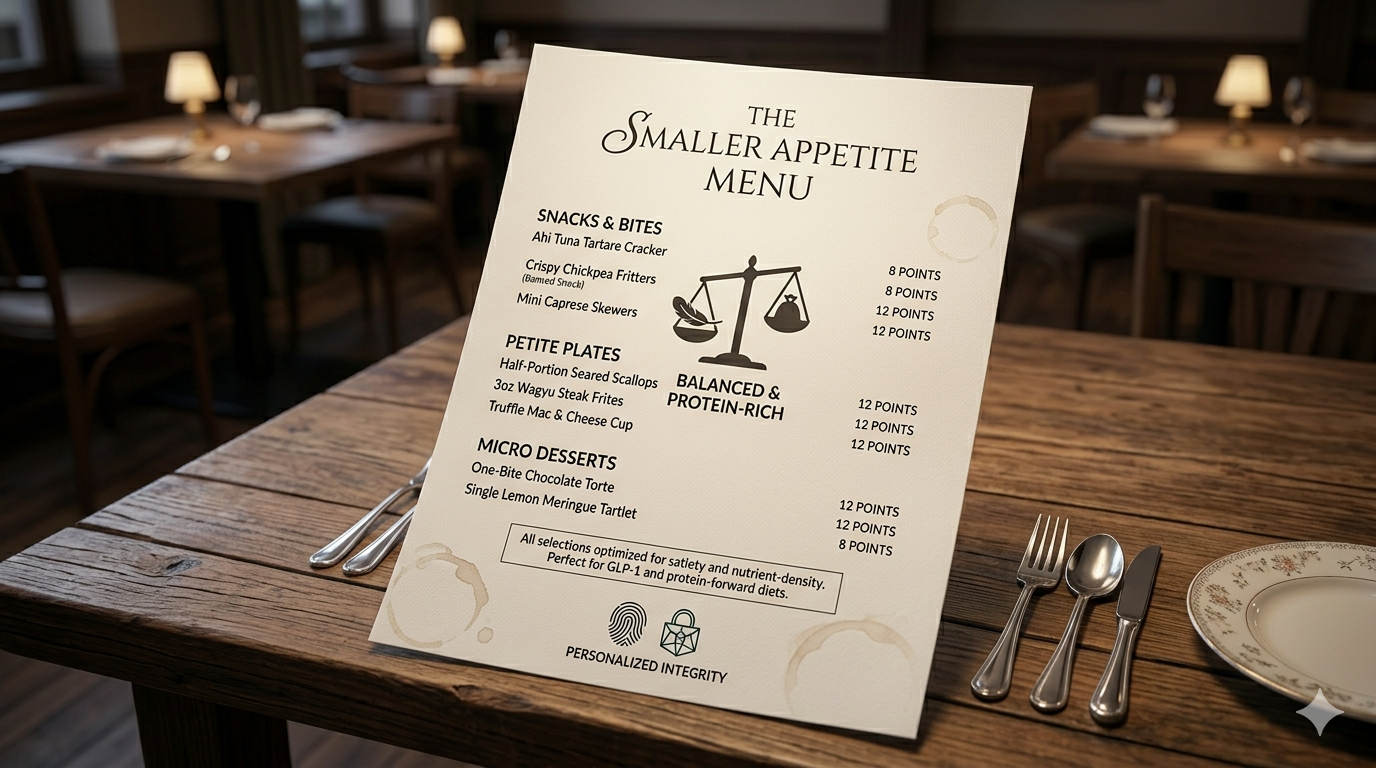
If you’re checking your P&L statements and noticing a dip in appetizer sales or seeing more half-eaten entrees returning to the dish pit, you’re already feeling the “Ozempic Effect” in your dining room. By 2026, it’s no longer a trend to watch – it’s a demographic shift that’s here to stay.
It’s natural to feel a bit of “margin anxiety.” For decades, the industry has relied on the math of volume: big portions justify big prices and high-calorie upsells drive the check average. But when a significant portion of your guest base is physically unable to finish a standard “Hungry Man” portion, the old playbook starts to cost you money in food waste and lost “veto votes”.
The good news? This isn’t the end of profitable dining; it’s the beginning of the “Efficiency Era”. This shift is actually an opportunity to trim the fat — literally and figuratively — from your menu. We’re moving away from “how much can I shove on this plate?” toward “how much value can I pack into every ounce?”
Let’s look at how you can pivot your operations to protect your bottom line while serving a guest who values quality over quantity.
The Shift: From Volume to Value
For years, the “value proposition” in casual dining was volume. If a plate was overflowing, the guest felt they got their money’s worth. However, for a guest on a GLP-1 medication, a mountain of fries isn’t a value, it’s a deterrent. These medications work by slowing gastric emptying and signaling to the brain that the body is full much sooner.
When these guests look at a massive, 1,500-calorie entree, they don’t see a meal; they see a waste of money and a physical impossibility.
The goal for 2026 is to pivot toward nutrient density and culinary precision. Think of it like moving from a sprawling buffet mindset to a curated tasting menu mindset. It’s about making sure that the limited space in your guest’s stomach is occupied by your highest-quality, most flavorful ingredients.
Strategy 1: The ‘Power-Half’ and Modular Pricing
The most immediate way to cater to this demographic without alienating your traditional “big eater” guest is through modularity. We’ve all seen “half-portions” on salad menus, but it’s time to bring that logic to the center of the plate.
Instead of just offering a full rack of ribs or a 12oz steak, introduce the “Petite Entree” section. But here is the trick: don’t just cut the price in half.
The pro move: If a full entree is $30, a “Petite” version (roughly 50-60% of the size) should be priced at $18-$20. Your labor and overhead remain similar, but the guest feels they are paying for a premium, manageable experience rather than “leftovers.”
This isn’t just speculation; it’s a necessary pivot. The ripple effect on grocery and restaurant spending is pushing brands to rethink packaging and portioning across the board.
Strategy 2: High-Margin Nutrient Density
When someone is eating less, they tend to become much more selective about what they eat. They want protein, they want fiber and they want vibrant flavors that “pop” since they aren’t eating enough to get a “food high” from sheer volume.
This is your chance to shine with high-quality ingredients that might have been too expensive to serve in massive portions.
- Seared scallops over micro-greens: low volume, high perceived value, excellent margins.
- Concentrated broths and reductions: Instead of a heavy cream sauce that fills a guest up instantly, use bone broths or bright citrus reductions that provide intense flavor without the bloat.
- The “snackification” of the menu: Increase your focus on “Small Plates” or “Shared Bites.” A table of four, where two people are on GLP-1s, might prefer ordering six appetizers to share rather than four heavy entrees. This actually increases the “per-bite” price and allows them to sample your range.
Strategy 3: Rethinking the Beverage Program
It isn’t just the food. GLP-1 medications often significantly reduce the craving for alcohol and sugary sodas. If your business model relies heavily on high-margin soda refills or sugary cocktails, it’s time for a refresh.
The “Smaller Appetite” guest is the perfect candidate for the “Premium Mocktail” or the “Low-ABV Spritz”. Use fresh botanicals, house-made shrubs and high-end bitters. These guests are willing to pay $12 for a sophisticated, non-alcoholic drink that feels like an “event” rather than $3 for a fountain cola.
The shift in caloric intake is predicted to have a lasting impact on the food sector, forcing a total re-evaluation of “junk food” and “sugary drink”. By offering sophisticated, health-conscious alternatives, you keep your beverage margins high while supporting your guests’ lifestyle changes.
Strategy 4: The Art of the ‘Tiny Treat’
Don’t delete the dessert menu! Just because someone is on a health journey doesn’t mean they don’t want a sweet finish. The “Giant Chocolate Cake” that serves four is becoming a relic.
Enter the “Two-Bite Finale.”
Think mini-tarts, a single high-end truffle or a 2oz espresso panna cotta. These are low-cost for you to produce, easy for the staff to sell (“It’s just a tiny taste to finish the meal!”), and they provide that psychological “click” of a completed dining experience without the physical discomfort of overeating.
Final Thoughts: Hospitality is About Listening
At the end of the day, hospitality is the art of making people feel seen and taken care of. If a guest asks for a modification because they can’t finish a standard portion, seeing a “Petite” option on the menu tells them, “We’ve already thought of you. You belong here.”
Redesigning your menu for the GLP-1 era isn’t about restriction; it’s about curation. It’s about proving that your kitchen’s talent isn’t measured by the pound, but by the punch of flavor and the quality of the experience.
When you embrace the “Smaller Appetite” revolution, you’ll find that your plates come back cleaner, your margins stay leaner and your guests leave feeling energized rather than exhausted.