
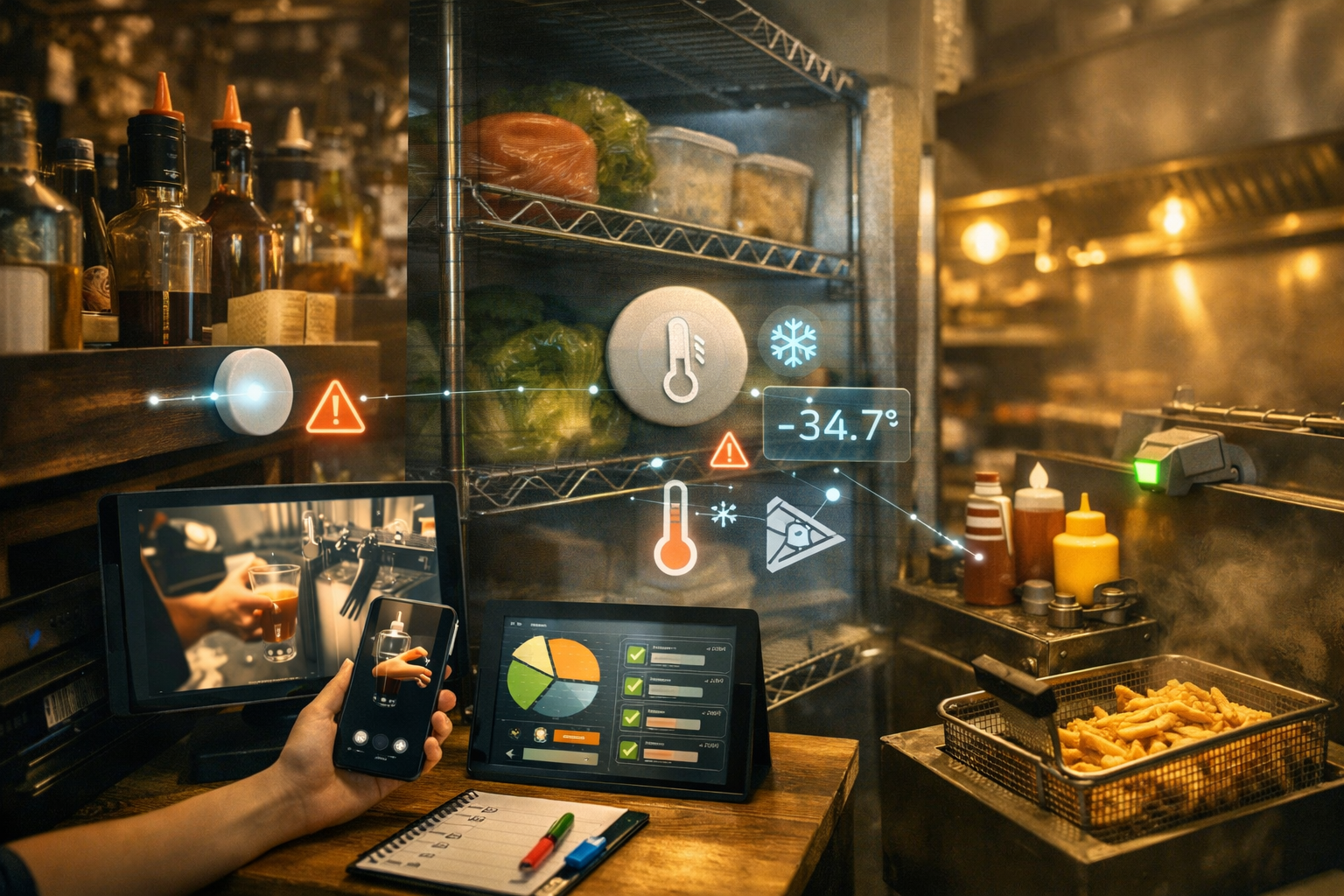
Remember the days of trudging into the walk-in with a clipboard, counting boxes of lettuce while your breath fogged up in the cold? Or squinting at liquor bottles under dim bar lights, trying to guess if that vodka was at 60% or 40% full? Those days are fading fast. The new heroes of restaurant inventory aren’t managers with tally sheets, they’re smart sensors.
Yes, you heard that right. Tiny IoT devices are quietly revolutionizing how restaurants track stock, reorder supplies and even catch theft before it drains your margins. It’s the hardware renaissance and it’s happening in your walk-in cooler.
What Do These Sensors Actually Do?
Think of them as your invisible inventory managers. Here’s how they work:
- Real-time tracking: Sensors monitor depletion as it happens. That case of chicken breasts? You’ll know the moment it drops below par levels.
- Automated reordering: No more “oops, we’re out of fries.” Sensors can trigger reorders directly with suppliers when stock dips below thresholds.
- Shrinkage alerts: If a bottle of whiskey mysteriously vanishes or waste spikes, managers get pinged instantly.
It’s like having a hawk-eyed assistant who never sleeps, never complains and never fudges the numbers.
Hypothetical Scenarios
- The walk-in whisperer
Imagine a sensor in your walk-in cooler that notices the lettuce bin is running low. Instead of waiting for a frantic prep cook to shout, “We’re out!” during the dinner rush, the system automatically places an order with your supplier. By the next morning, fresh greens arrive; no drama, no downtime. - The liquor room detective
A sensor tracks depletion in your liquor room. One night, it flags an unusual drop in tequila levels. Turns out a staff member has been “sampling” after hours. Instead of discovering it weeks later during manual counts, you get an alert the next morning. Problem solved before it spirals.
- The fry oil guardian
Sensors above the fryer measure oil quality and usage. When the oil degrades faster than expected, you’re notified. That means fewer complaints about soggy fries and less waste from tossing oil prematurely.
Why Operators Should Care
- Time saved: No more marathon inventory sessions.
- Accuracy: Sensors don’t get tired or distracted.
- Profit protection: Shrinkage alerts catch theft and waste early.
- Smarter ordering: Automated reorders prevent stockouts and overstocking.
Experts affirm that the industry that can benefit the most from IoT is the restaurant industry.
The Quirky Side of Sensors
Let’s be honest: there’s something funny about a tiny gadget knowing more about your liquor room than you do. Sensors don’t gossip, but they do snitch — on waste, theft and sloppy ordering habits. They’re the tattletales you actually want on your team.
And unlike human inventory managers, sensors don’t get grumpy when you ask them to check the walk-in at 2 a.m. They’re always on, always watching and always ready to ping your phone with a “hey, you’re low on fries” notification.
Implementation Tips for Operators
- Start small: Pilot sensors in one area — like the liquor room — before rolling them out everywhere.
- Integrate with POS: Link sensor data to your POS for seamless reordering.
- Train staff: Make sure employees understand sensors aren’t “Big Brother”, they’re tools to make everyone’s life easier.
- Monitor alerts: Don’t ignore notifications. Shrinkage alerts are only useful if you act on them.
- Celebrate wins: Share stories with staff about how sensors prevented a crisis. It builds buy-in.
Implementing IoT in your restaurant requires careful planning and consideration. So identify your strategy and proceed on a step-by-step basis.
The Punchline
Manual counting had its moment. It was messy, slow and prone to human error, but it got the job done. Now, smart sensors are stepping in with precision, speed and a touch of quirkiness. They don’t just count; they predict, reorder and protect.
So the next time you’re tempted to grab a clipboard and head into the walk-in, pause. Your new inventory manager — the one that never sleeps, never complains and never misses a bottle — has already done the work. Welcome to the hardware renaissance.