
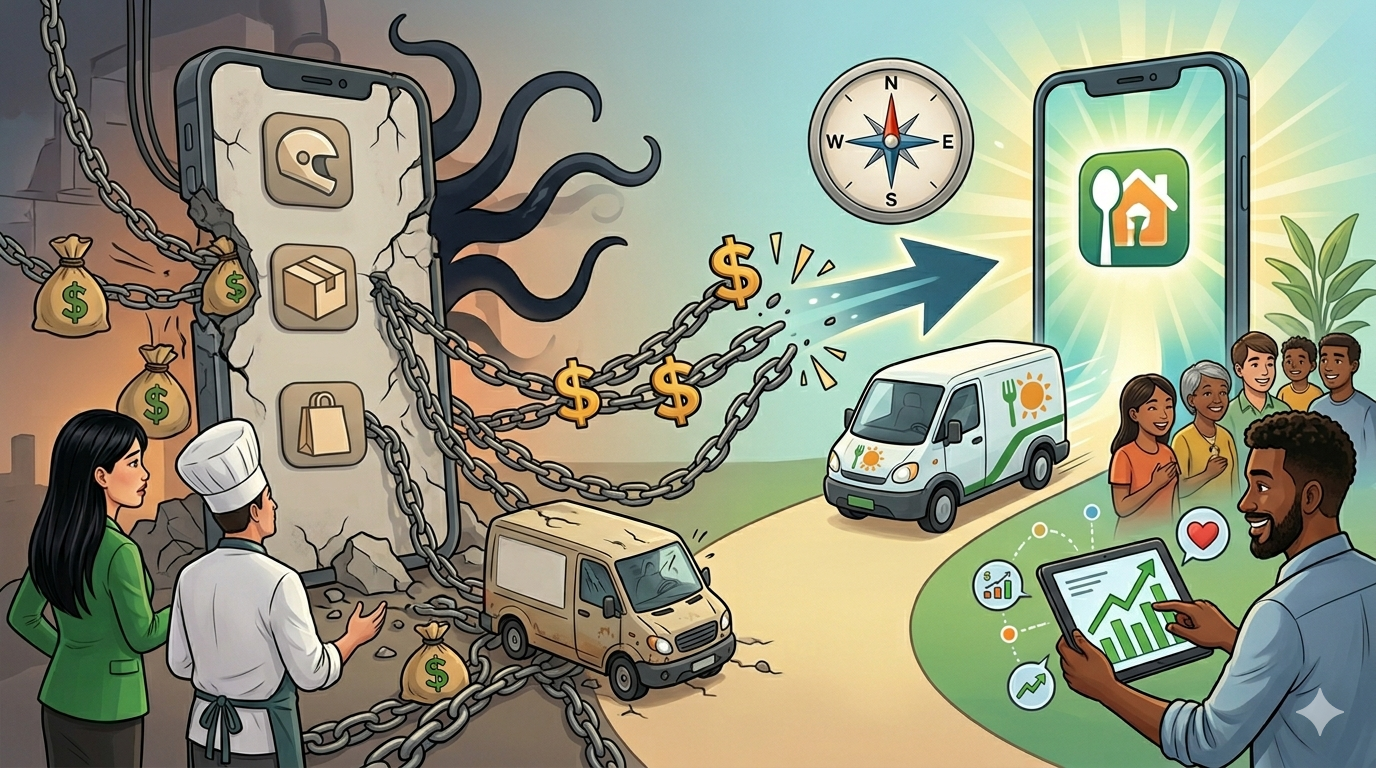
Let’s be honest: our relationship with third-party delivery apps has always been a bit… complicated. In the beginning, it felt like a whirlwind romance. They brought us new customers, handled the logistics and suddenly our food was everywhere. But by 2026, many of us have woken up to a bit of a “commission hangover.”
When you’re handing over 20% to 30% of every order just for the privilege of being on a platform, you aren’t just sharing the profit, you’re often giving it away entirely. Plus, there’s the “data wall.” You make the food, you pack the bag, but the app owns the customer. You don’t know if they loved the extra napkins or if they’re a regular who orders every Tuesday.
It’s time to take the power back. Breaking the third-party habit isn’t about disappearing from the apps overnight; it’s about a strategic move to first-party delivery. It’s about owning your guests, your data and, most importantly, your margins.
The “Why” Behind the Breakup
If you’re still on the fence, let’s look at the math. If a guest orders a $40 dinner through a major app, after commissions and hidden fees, you might see $28 of that. Subtract your food and labor costs and you’re basically working for free.
When you move that same order to your own website or app (First-Party), that $40 stays with you. Even after paying for a delivery driver or a flat-fee dispatch service, your take-home pay is significantly higher.
Beyond the cash, it’s about relationship management. On a third-party app, the guest belongs to the platform. When a guest orders directly from you, you get their email. You get their preferences. You get the chance to send them a “We miss you” coupon or a birthday treat. Repeat customers spend 67% more than new customers. Using customer data and fostering a rapport with your guests is good for business.
Step 1: The “Digital Front Door”
To break the habit, your own ordering experience has to be better than (or at least as good as) the big apps. If your website is clunky, slow or — heaven forbid — not mobile-friendly, guests will run right back into the arms of the third parties.
- Make it frictionless: Use “One-Click” ordering and save guest preferences.
- Loyalty is the hook: Offer “Direct-Only” rewards. Tell your guests: “Earn points toward a free pizza only when you order through our site!”
- The price gap: It’s perfectly acceptable (and increasingly common) to have slightly lower prices on your own site than on third-party apps. Guests are savvy. If they see they can save $3 by ordering direct, they’ll do it.
Step 2: Solving the Driver Dilemma
The biggest fear for independent operators is the “Last Mile.” How do you get the food to the house without hiring a fleet of drivers? In 2026, you have options that didn’t exist a few years ago.
- Hybrid delivery: Keep the third-party apps for “discovery” (finding new customers), but use a white-label delivery service (like DoorDash Drive or Uber Direct) to fulfill orders placed on your website. You pay a flat fee per delivery instead of a percentage of the check.
- The “hyper-local” fleet: If you have a high density of orders within two miles, consider one or two dedicated house drivers or even an e-bike. They become brand ambassadors. Plus, they can help with side-work in the kitchen during slow lulls.
Step 3: Managing the Migration
You don’t have to go “Cold Turkey”. Think of it as a migration. Your goal is to move your “Heavy Users” — the people who order from you three times a month — off the third-party apps and onto your own platform.
The “bag stuffer” strategy:
Every single third-party order that leaves your kitchen should have a flyer in the bag.
“Next time, order directly at OurRestaurant.com and get 15% off your first order! Use code: DIRECT15.”
It’s a small investment that pays off the very next time they order. You’re essentially “buying” the customer back from the platform.
The “One Big Beautiful Bill” Perspective
As we move through 2026, the financial landscape is rewarding efficiency. The shift toward first-party isn’t just a tech trend; it’s a survival strategy against rising labor costs. By capturing that 30% commission back into your own pocket, you have the capital to invest in better ingredients, higher wages for your team or even that “Digital Twin” modeling we talked about earlier!
Your Food, Your Rules
Breaking the third-party habit feels scary because those apps provide a “security blanket” of volume. But volume without profit is just “busy-ness.”
When you move to first-party delivery, you’re betting on yourself. You’re saying that your food is good enough that people will seek it out and your hospitality is strong enough that they’ll want to deal with you directly.
So, take a look at your delivery statement this month. Look at that commission line. Then, imagine what you could do with that money if it stayed in your bank account. It’s time to stop being a “tenant” on someone else’s app and start being the landlord of your own digital future.
Stay bold, stay profitable and keep cooking!